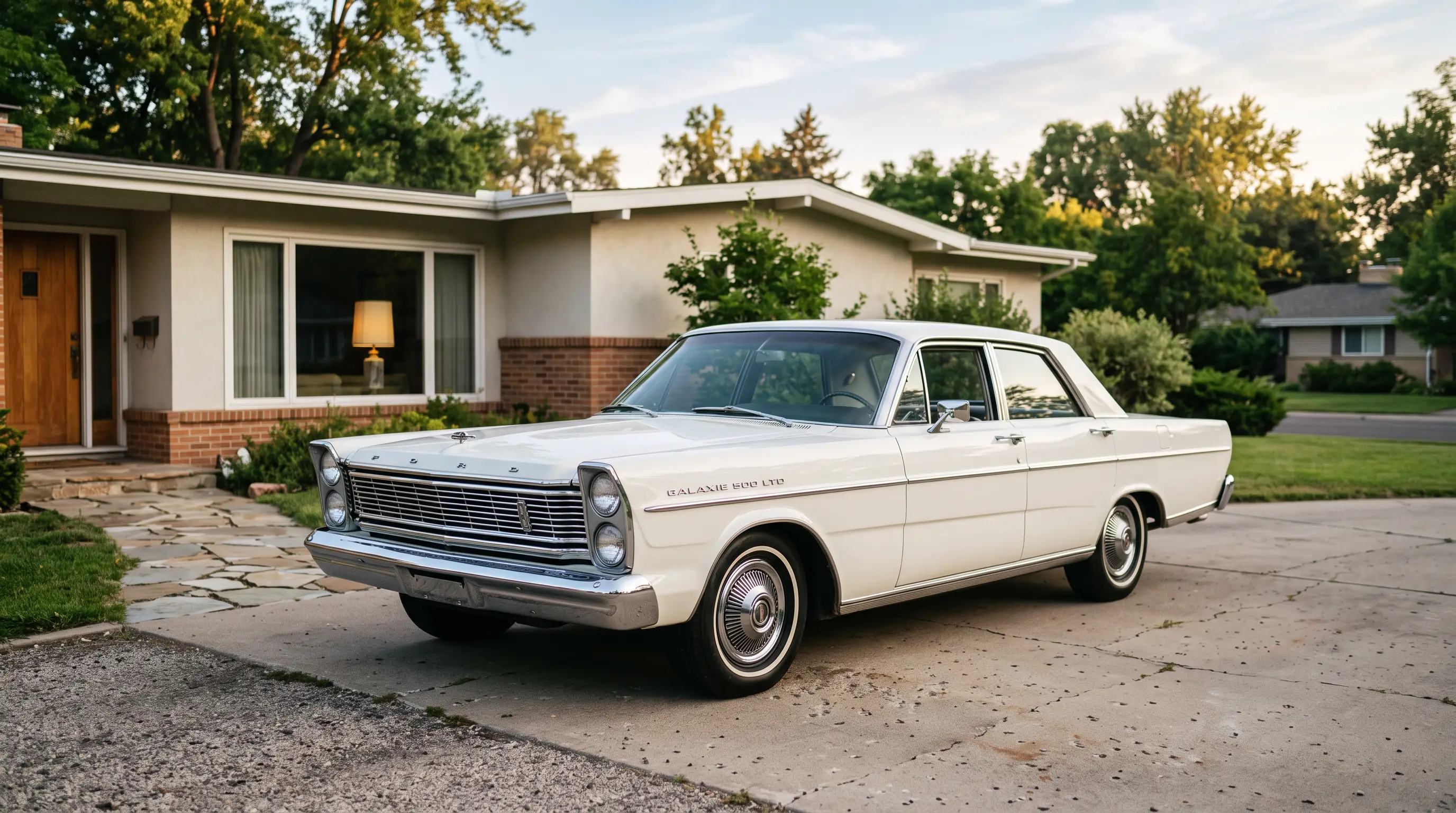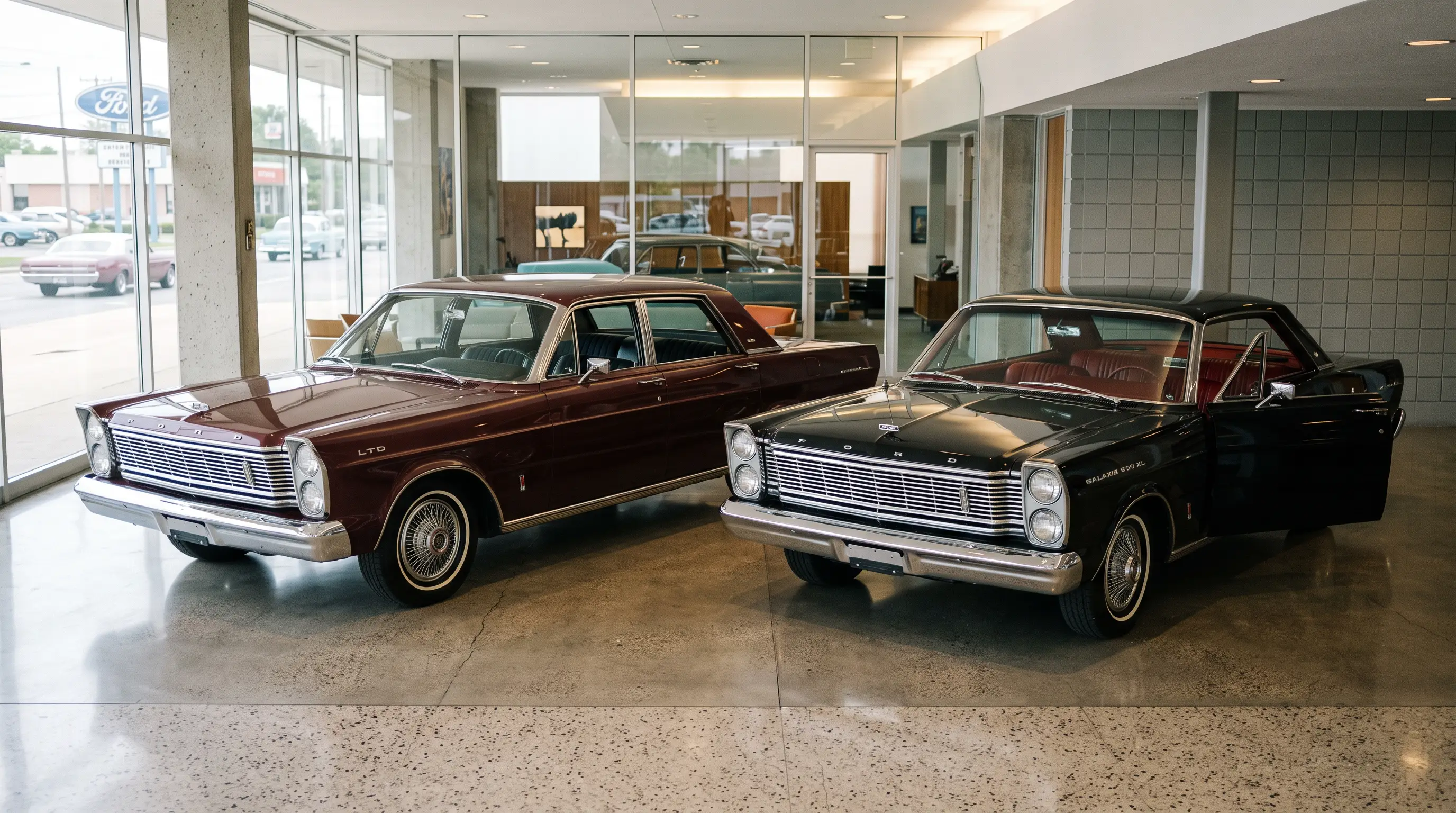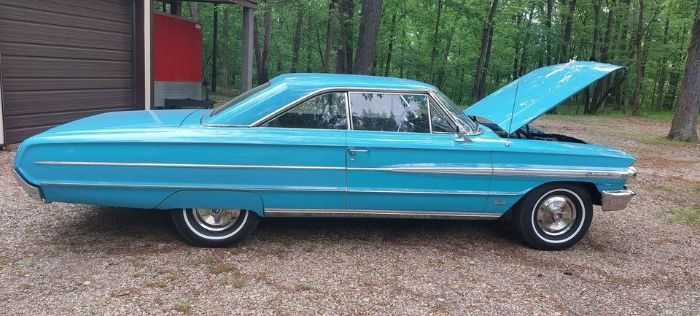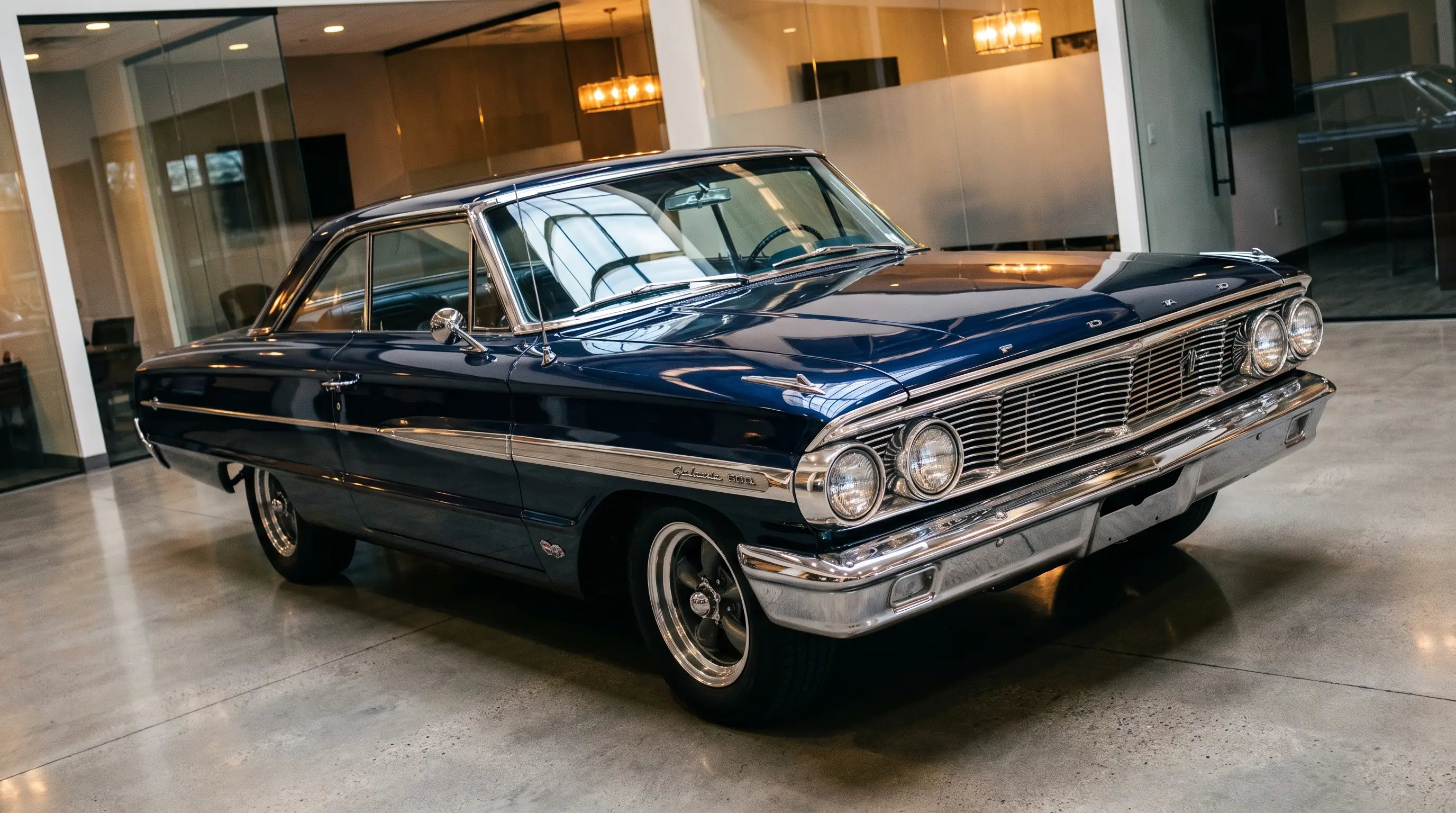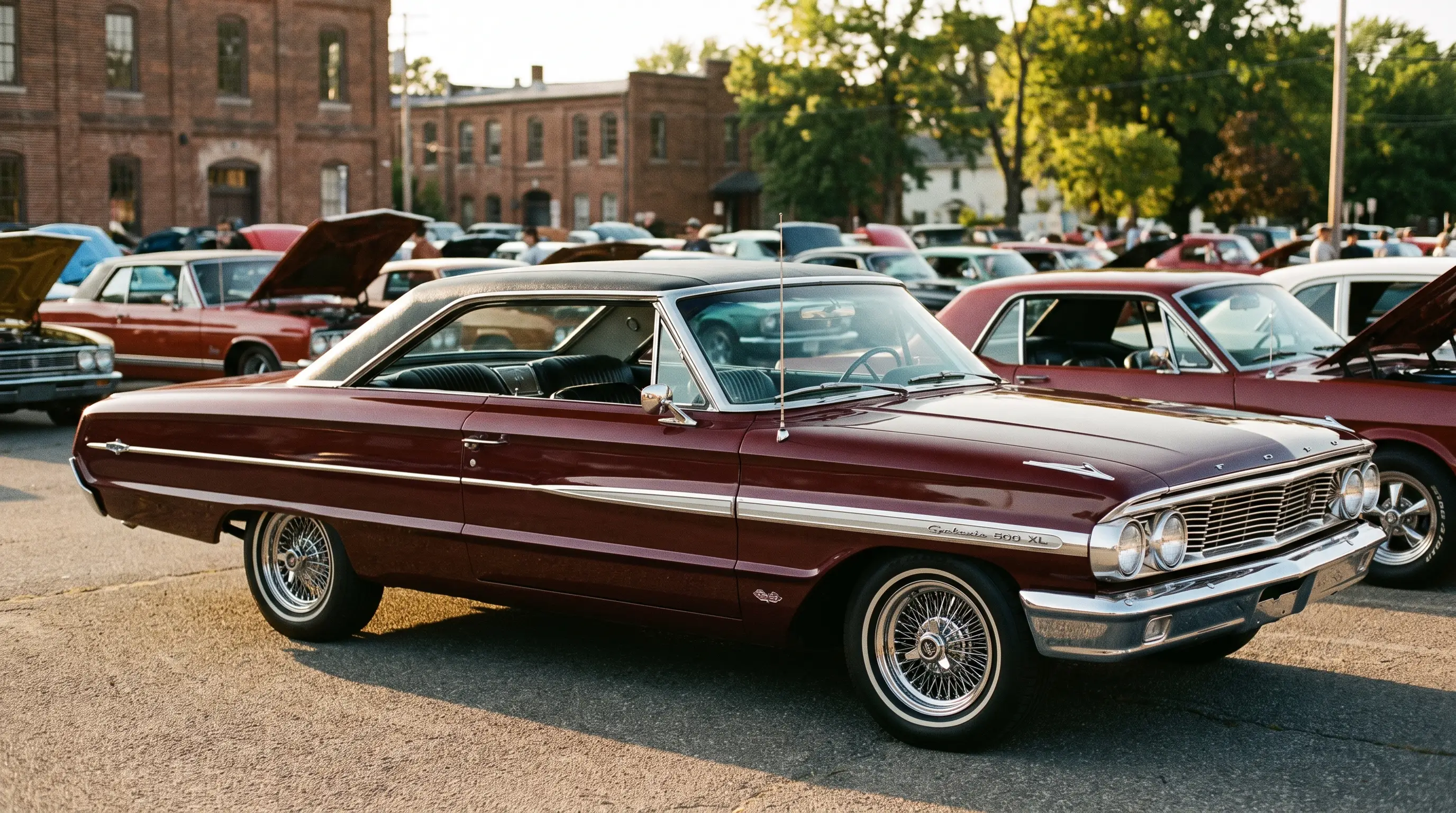
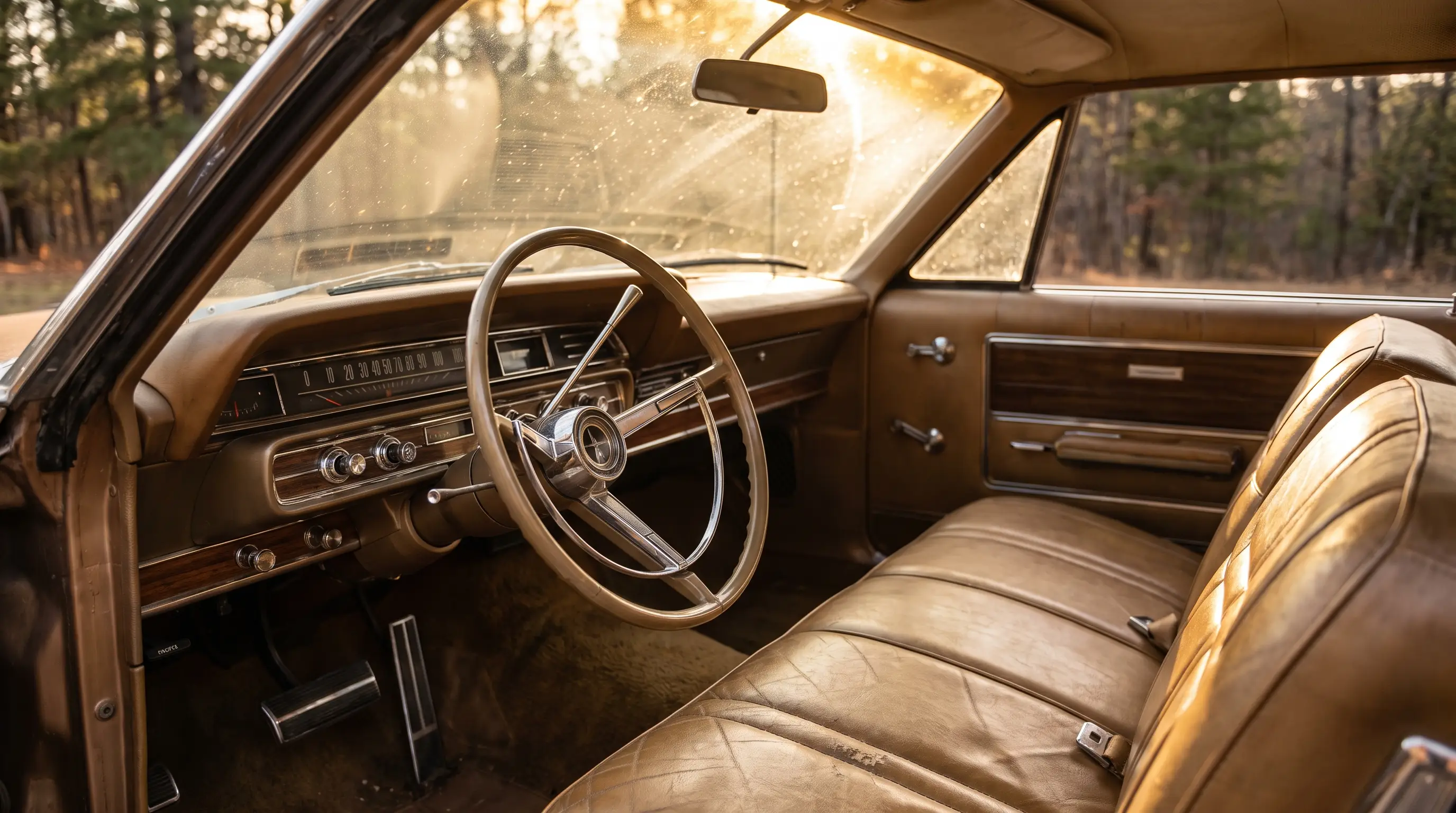
A woman named Ruth, according to a dealership story that has floated around Ford enthusiast circles for years, walked into a showroom in early 1965 looking for a Cadillac and drove home in a Galaxie instead. The salesman had shown her the new LTD interior, the padded dash, the extra hush behind the doors, and she reportedly said it felt like someone had finally listened to what women actually wanted from a family car. Whether the story is exactly true or slightly polished by repetition, it captures something real about the ford galaxie 1965 interior luxury shift: this was the year Ford stopped treating comfort as an afterthought and started treating it as the whole point.
A cabin built for the person, not the engine
Earlier full-size Fords had comfortable enough interiors, but comfort was never the headline. Horsepower was the headline. Styling was the headline. The 1965 Galaxie, especially in LTD trim, flipped that order for the first time in the nameplate's history. Ford's designers added extra sound insulation throughout the body, thickened the seat cushioning, and dressed the dashboard in simulated wood trim that, while not real wood, communicated something buyers understood instinctively: this car had been built to be lived in, not just driven.
That shift mattered to a specific kind of buyer who rarely got much attention from automakers focused on horsepower wars and racing headlines. Families cross-country on vacation, retirees who wanted quiet more than speed, professionals who spent hours behind the wheel commuting. Ford's engineers built the 1965 interior for all of them, and the sales numbers suggest those buyers had been waiting.
The sound of a quieter car
What people actually noticed first, according to period reviews, was not what they saw but what they did not hear. Road noise dropped noticeably in the LTD compared to a standard Galaxie 500, thanks to additional insulation Ford's engineers packed into the doors, floor, and firewall. It is easy to underestimate how much a quieter cabin changes the emotional experience of a car. Conversation becomes easier. Long drives feel shorter. A child asleep in the back seat stays asleep over rougher pavement. None of that shows up in a horsepower figure, but it shaped how an entire generation of families remembered their Galaxie.
Our complete history of the 1965 Galaxie covers the mechanical changes that made this quiet possible, but the emotional impact is harder to quantify than a decibel reading. People do not remember exact numbers. They remember that the car felt calm, that it felt like the outside world had been kept politely at bay.
Wood that was not wood, and nobody minded
The simulated wood trim across the LTD dashboard tells its own small story about how Ford understood its customers. Real wood trim was reserved for genuinely expensive cars in 1965, and Ford knew its buyers were not going to pay Cadillac prices. So the company offered the visual language of luxury, a warm wood-toned dash, without the cost, and buyers accepted the substitution without complaint. It was an honest kind of illusion, one that promised the feeling of an expensive interior rather than pretending to be something it was not.
That willingness to meet buyers halfway, offering the appearance of luxury at a price a working family could actually afford, is part of why the LTD resonated the way it did. People did not need the wood to be real. They needed the car to feel considered, and it did.
"Nobody remembers the exact decibel rating of a 1965 LTD's cabin. They remember how it felt to close the door and have the world go quiet for a moment. That is what Ford was actually selling."
- Nora Beckett
A shift the whole industry eventually copied
What happened inside the 1965 Galaxie did not stay contained to Ford's lineup for long. Within a few years, nearly every full-size American car had some version of the same idea: a plush trim package layered over a mainstream body, sold on quiet and comfort rather than horsepower or styling alone. Chevrolet, Plymouth, and even Dodge eventually ran their own versions of the same experiment, chasing the same buyer Ford had identified first. That makes the 1965 Galaxie's interior shift more than a nice detail in Ford's own history. It is arguably the moment the entire American full-size segment started thinking seriously about comfort as a selling point in its own right, not just a byproduct of a bigger car.
There is something worth sitting with in that fact. An entire industry-wide shift in how cars were marketed and built can sometimes trace back to a fairly modest set of decisions made by one company's interior designers and engineers in a single model year. Nobody at Ford in 1965 was necessarily thinking about starting an industry trend. They were thinking about winning back a specific customer who had been drifting toward Cadillac or simply staying loyal to whatever her father drove. The trend followed because the idea worked.
What the interior meant to the people who bought it
Talk to enough owners of original 1965 LTDs, or read enough letters preserved in old Ford enthusiast newsletters, and a pattern emerges. People rarely describe the car in terms of specifications. They describe how it felt to take a long drive in it, how a cross-country trip with kids in the back seat felt less exhausting than it had in whatever car came before. That kind of memory does not show up in a spec sheet, but it is exactly what Ford's engineers and designers were aiming for when they redesigned the Galaxie's cabin for 1965. The car was built to be remembered not for what it could do, but for how it made the people inside it feel over long hours on the road.
What survives of that feeling today
Finding an original, unmolested LTD interior today is harder than it should be. Vinyl and fabric from the mid-1960s do not hold up the way steel and chrome do, and many surviving 1965 Galaxies have replacement upholstery that, however well done, is not quite the original material Ford's engineers chose so carefully. When you do find a car with its original interior intact, something of that 1965 feeling is still there, the padding, the hush, the sense that someone designed this cabin around a person rather than an engine bay.
That is worth remembering the next time you sit in a properly restored 1965 Galaxie LTD. The engine may get the attention at a car show, but the interior is what actually changed how people felt about owning a full-size Ford. If that quiet, considered cabin appeals to you, it is worth taking the time to browse classic Galaxie listings and see how many original interiors have survived the decades since Ruth, real or not, drove her new Galaxie home instead of a Cadillac.