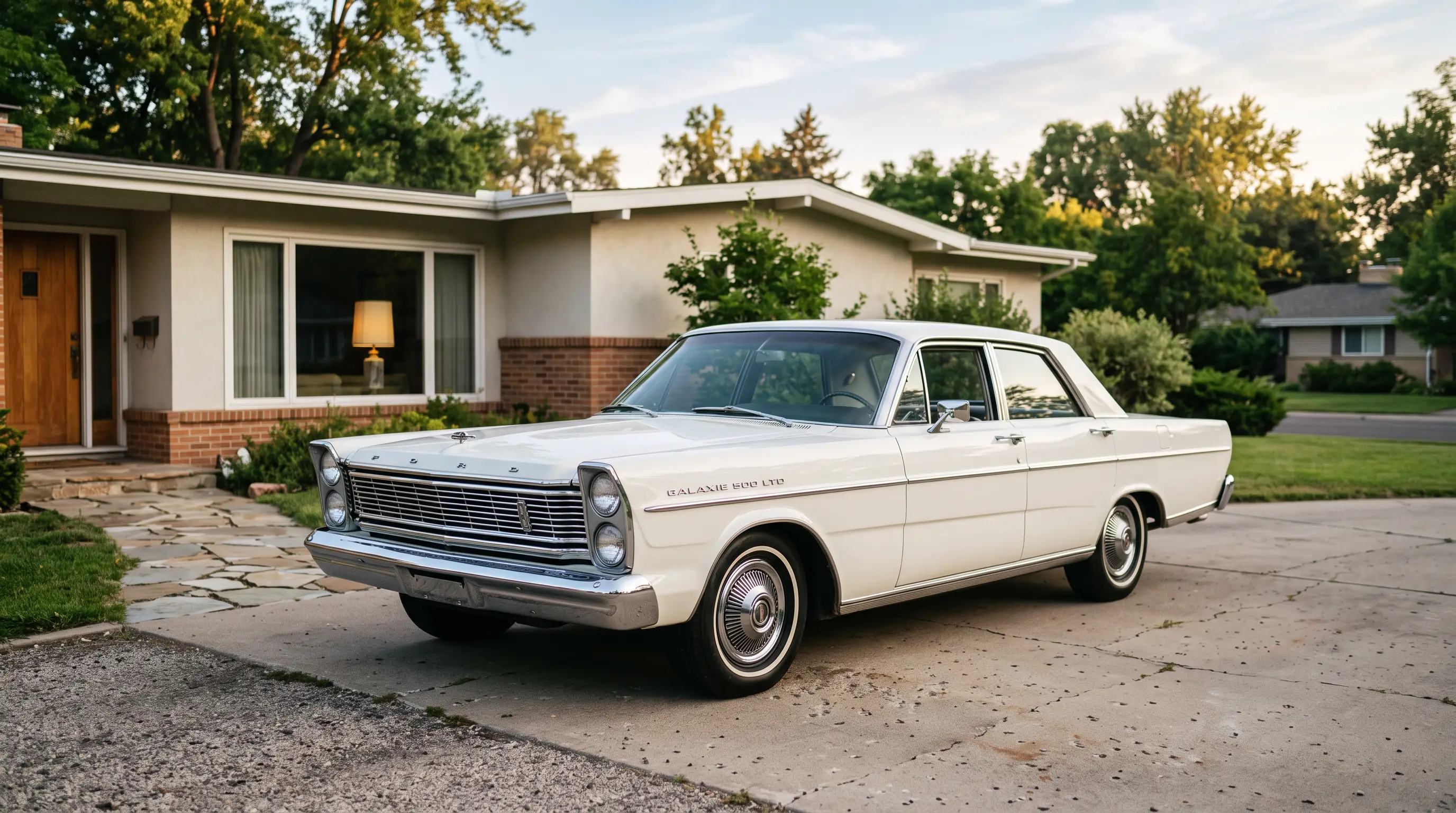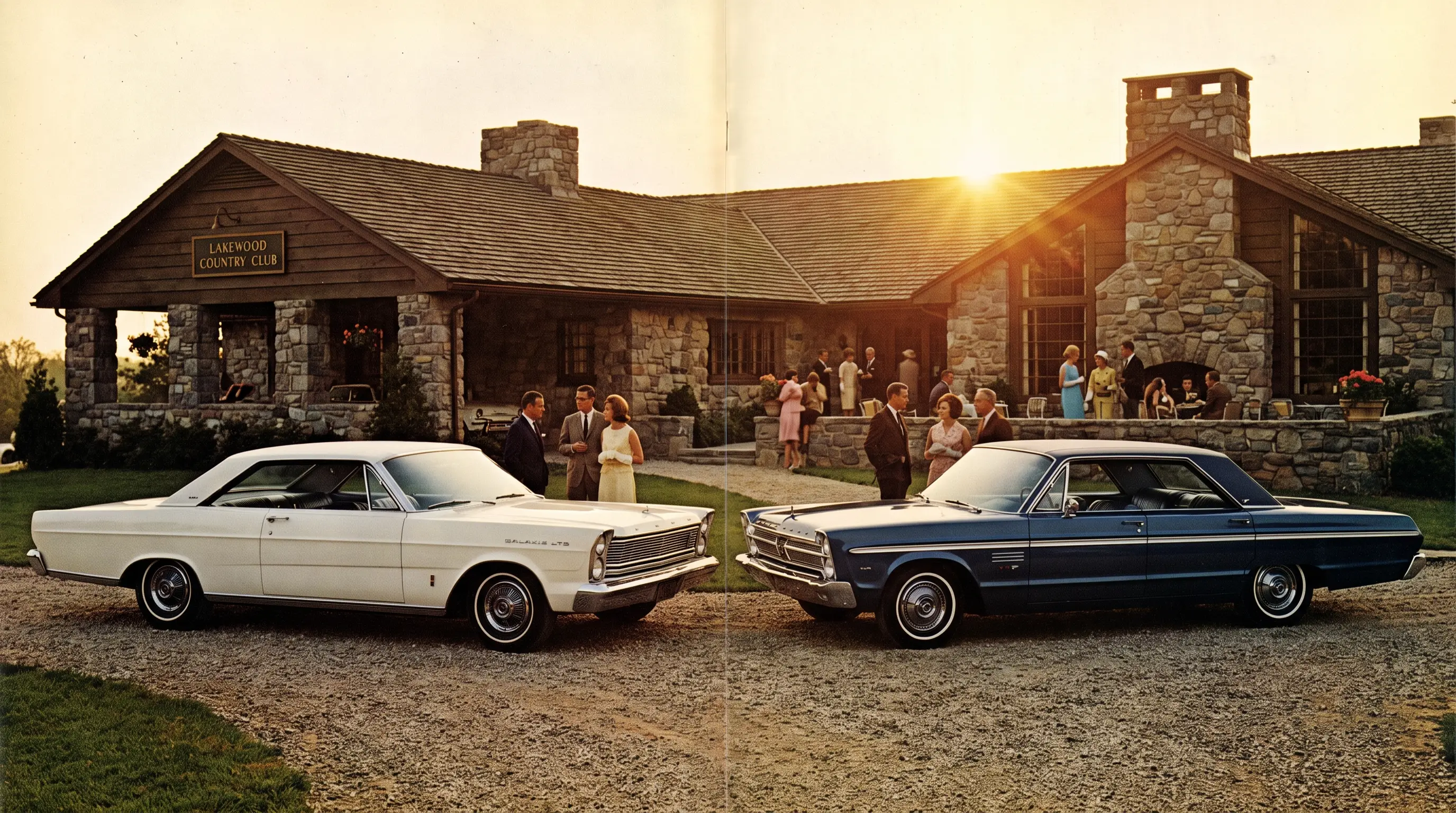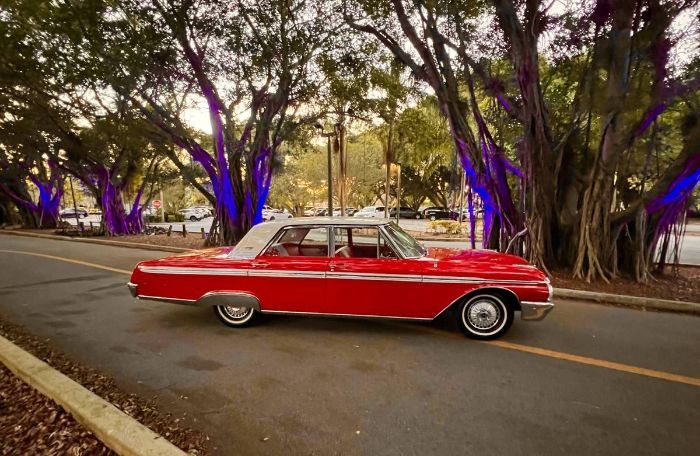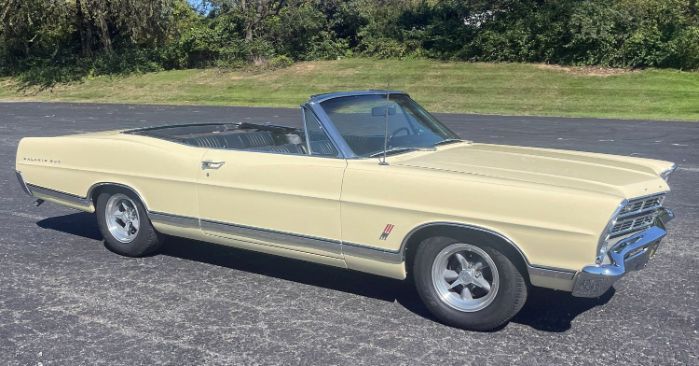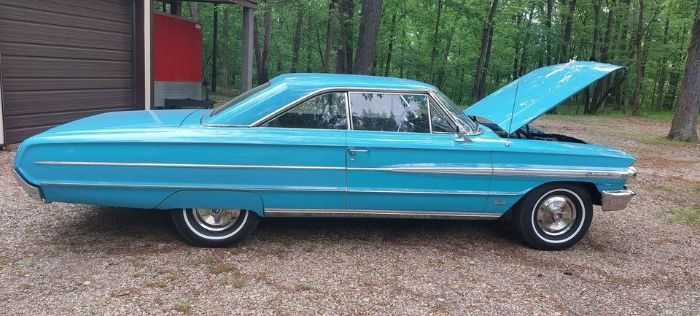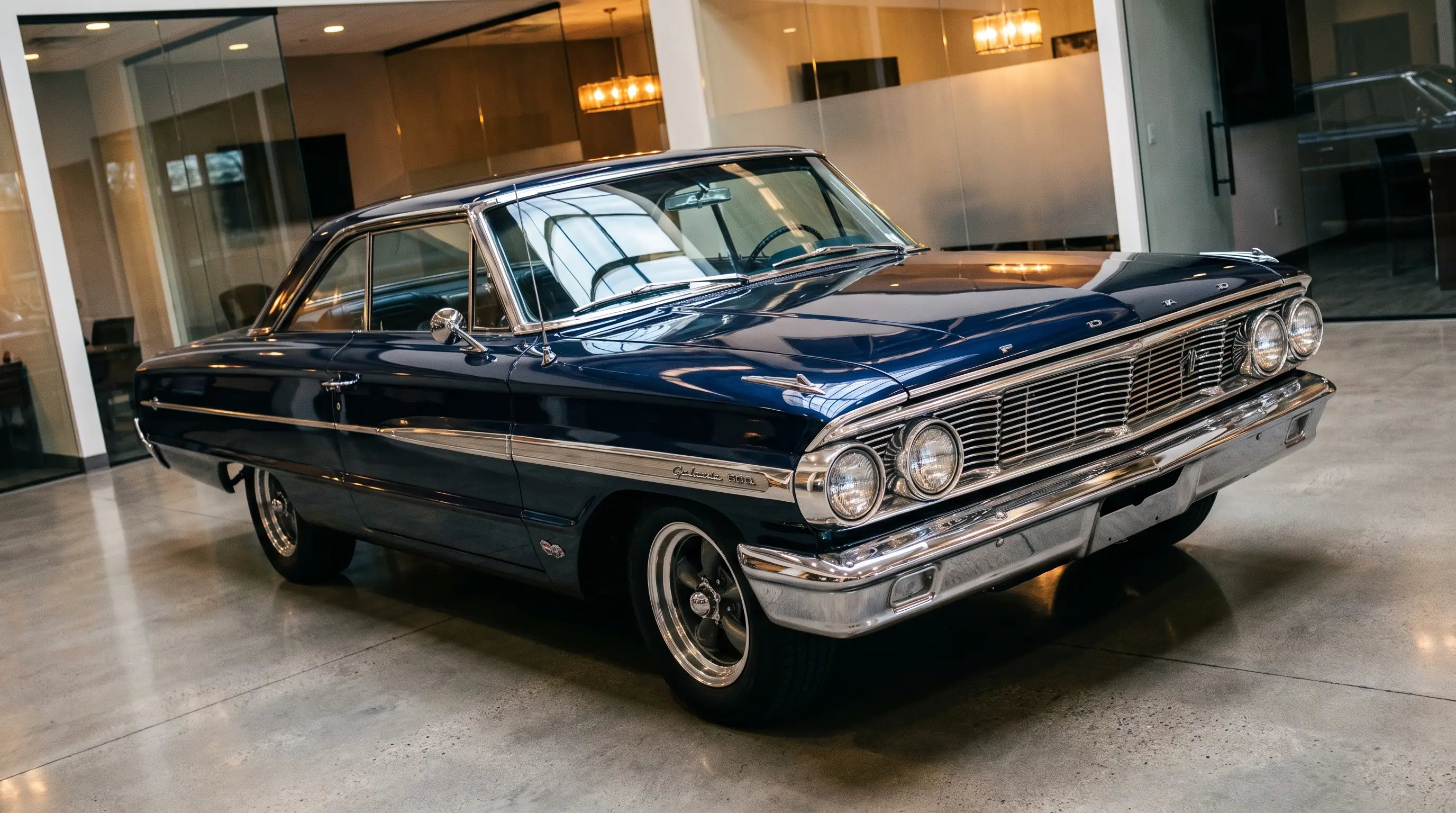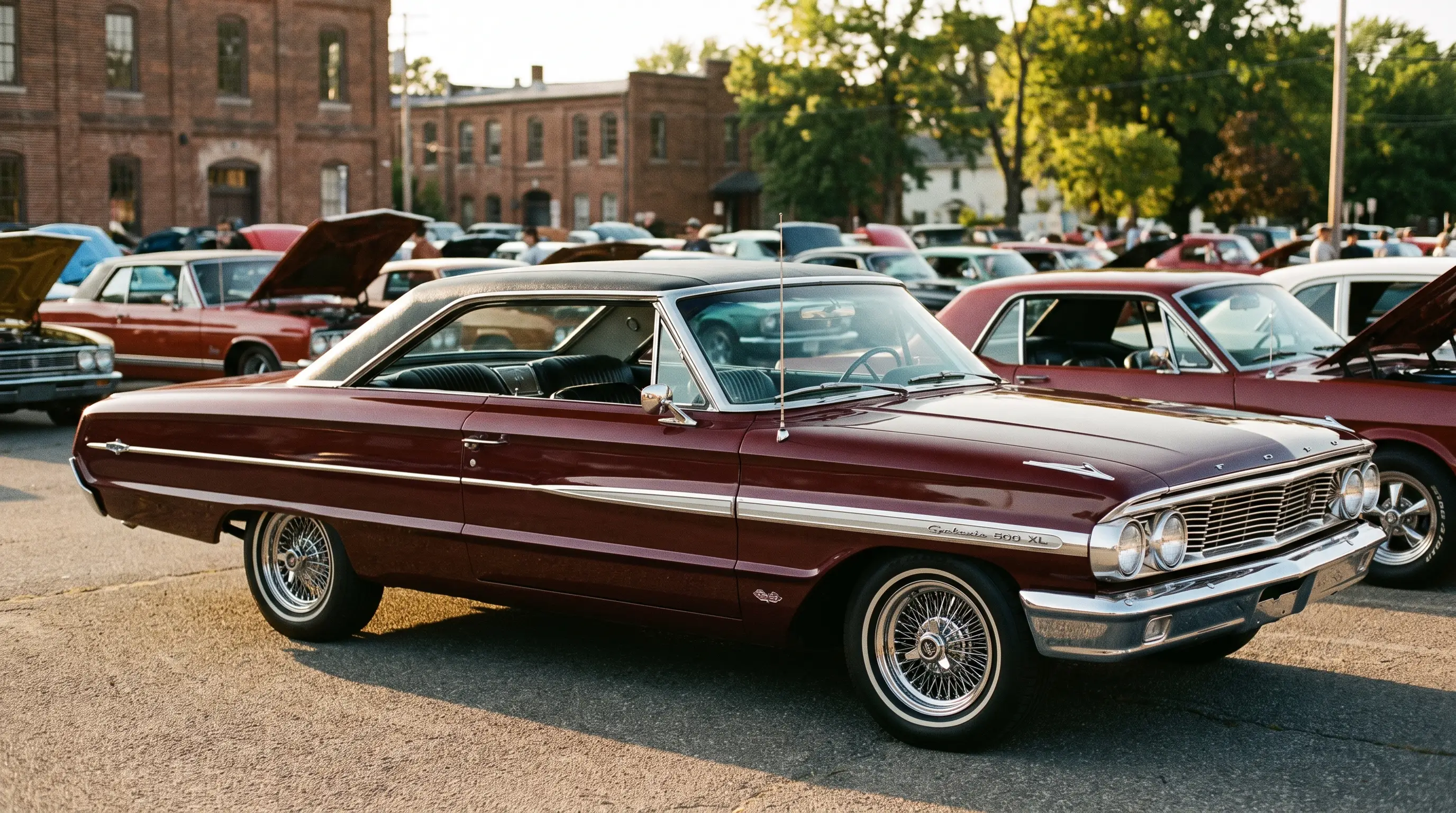
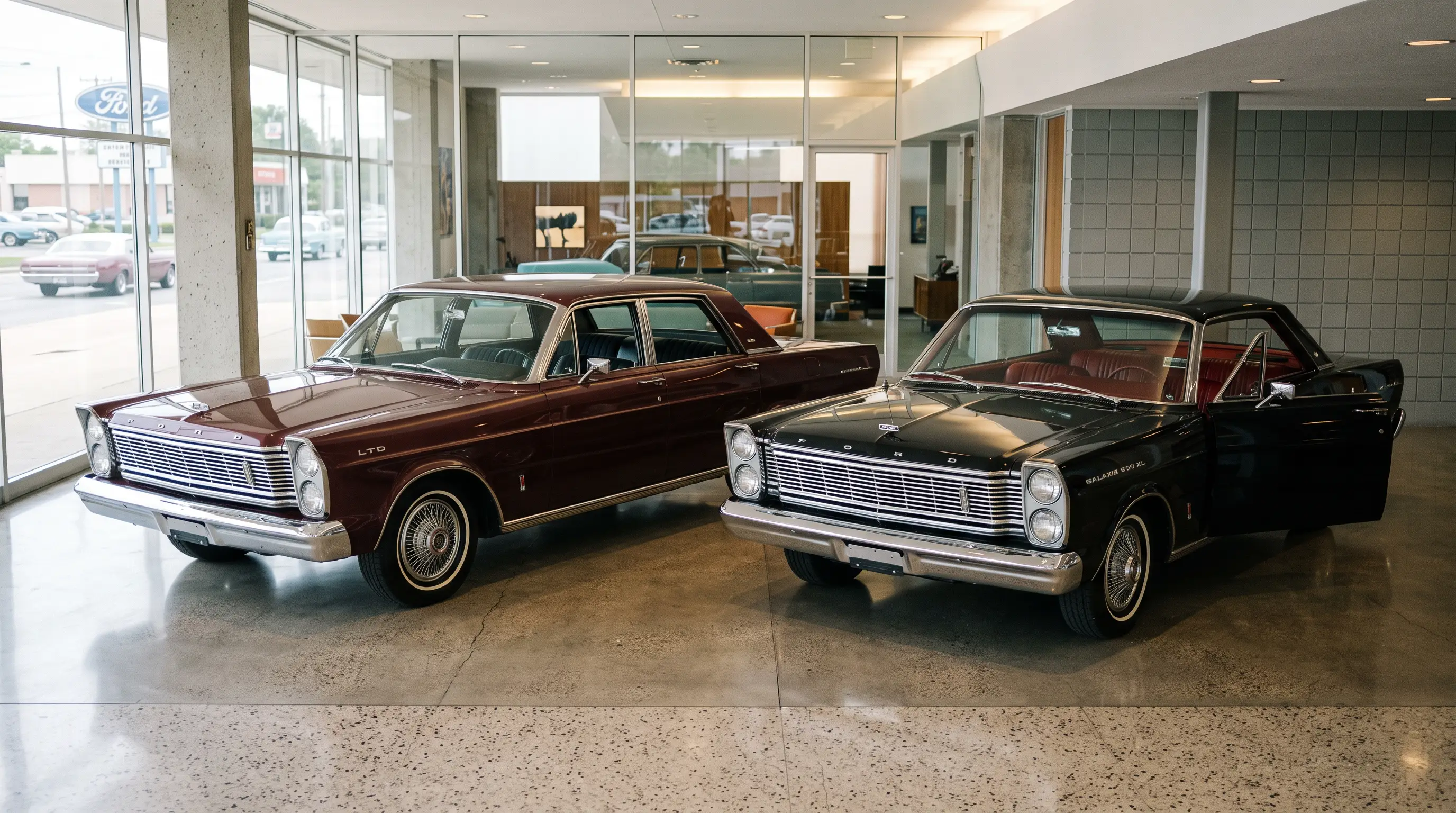
Ford gave 1965 Galaxie shoppers two distinct ways to spend extra money, and the choice said something about who you were. The ford galaxie 1965 ltd vs 500 xl debate was not really about horsepower or trim levels in isolation. It was about whether a buyer wanted their full-size Ford to feel like a small Lincoln or a big sports coupe, and Ford was smart enough to build a genuinely good version of both.
Two different promises from the same factory
The 500 XL had been around since 1962, built on the idea that a full-size Ford could carry bucket seats, a center console, and a sportier attitude without sacrificing the practicality buyers expected from the Galaxie name. The LTD arrived new for 1965, aimed squarely at comfort and quiet rather than any pretense of sportiness. Ford was effectively running two different sales pitches out of the same showroom, betting that different customers walking through the door wanted fundamentally different cars wearing the same basic body.
What is easy to miss now is how deliberate this split was. Ford's product planners were not guessing. They had watched buyers split along similar lines for several years and built the LTD specifically to capture the segment of the market that wanted a Galaxie 500 XL's price point but none of its sporting pretense.
What the 500 XL actually offered
A 1965 Galaxie 500 XL came standard with bucket seats, a console, and available performance engines up through the 427 R-code for buyers chasing genuine speed. The XL badge told other drivers something specific: this was the Galaxie built for someone who cared about the car's performance credentials, not just its ride quality. Ford leaned into that identity hard during the Total Performance years, and the XL's association with the brand's NASCAR success gave it a credibility the LTD never tried to claim.
Buyers who ordered a 500 XL with the 427 were choosing a genuinely quick full-size car, one that could hold its own against contemporary muscle-adjacent machinery despite its size. That combination of comfort-car dimensions with genuine straight-line performance is part of why 427-equipped XLs draw serious money from collectors today.
What the ltd actually offered
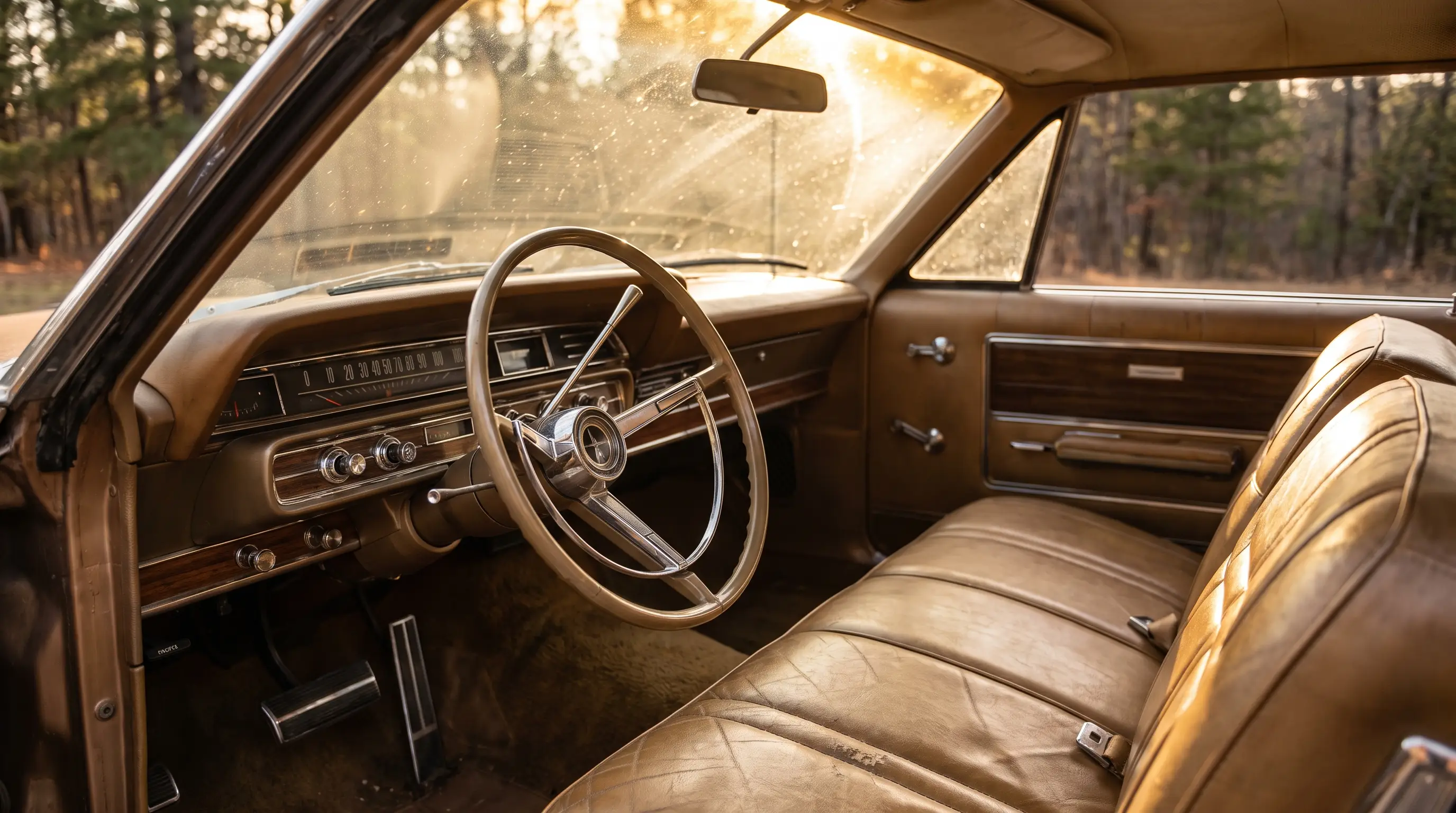
The LTD skipped the performance conversation entirely and doubled down on hushed comfort. Extra sound insulation, thicker seat cushioning, and simulated wood trim on the dashboard gave the LTD a noticeably different character behind the wheel than an XL riding on the same basic chassis. Where the XL wanted to be noticed, the LTD wanted to be quiet, and Ford's engineers clearly understood that those were two very different design briefs even though both cars shared a production line.
Sales confirmed that Ford had read the market correctly. The LTD sold well beyond initial projections in its debut year, validating the idea that plenty of full-size buyers wanted comfort over sportiness and were happy to pay extra for it. The full story of the 1965 Galaxie lineup treats the LTD's arrival as almost as significant as the styling change itself, because it reshaped how Ford thought about trim strategy for years afterward.
| Attribute | 1965 Galaxie 500 XL | 1965 Galaxie LTD |
|---|---|---|
| Character | Sporty, bucket seats, console | Quiet, plush, insulated |
| Engine focus | Up to 427 R-code performance | Comfort-oriented engine choices |
| Long-term fate | Badge faded within a few years | Became its own Ford model line |
"Ford was not indecisive when it built both the XL and the LTD in the same year. It was hedging two very different bets, and it turned out both bets were correct in their own way."
- Tom Ramirez
How dealers actually sold the split
Ford salesmen in 1965 were trained to read a customer within the first few minutes of a showroom visit, and the XL versus LTD choice was often the first real fork in that conversation. A younger buyer, or one asking about horsepower figures and rear axle ratios, got steered toward the 500 XL brochure. A buyer asking about ride quality, interior finish, or how the car compared to a Cadillac got the LTD pitch instead. This was not accidental. Ford's marketing materials from the period explicitly coached dealers to separate these two customer types rather than trying to sell one car to both.
That dealer-level segmentation is part of why the two trims rarely cannibalized each other's sales. A customer who wanted bucket seats and a four-speed was almost never cross-shopping the LTD's simulated wood trim, and a customer chasing quiet comfort had little interest in the XL's console-mounted shifter. Ford had, in effect, built two cars that shared sheet metal but almost never competed for the same buyer's dollar, which is a more sophisticated piece of product strategy than automakers usually got credit for in the mid-1960s.
Restoring one versus the other
Restorers approach these two cars very differently today, and the difference goes beyond parts availability. A 500 XL restoration tends to center on drivetrain authenticity, correct engine codes, and the details that separate a genuine 427 car from a re-engined tribute. An LTD restoration leans much harder on interior and trim authenticity, since the car's entire identity rests on details like the correct simulated wood grain, the specific seat fabric, and the extra sound insulation that most casual observers would never notice missing.
Neither restoration path is inherently easier, but they demand different expertise. A shop skilled at rebuilding period-correct 427 engines is not automatically equipped to source or reproduce LTD-specific interior trim, and vice versa. Anyone shopping for a restoration specialist for either car should ask pointed questions about which trim level the shop has actually worked on before, rather than assuming general Galaxie experience covers both cases equally.
Which one collectors chase harder today
The market has not treated these two cars equally. A documented 427 500 XL commands a real premium today thanks to its performance pedigree and genuine rarity, since few buyers ordered the top engine option in period. LTD cars, while historically significant, tend to trade for less because comfort-oriented full-size Fords simply do not generate the same collector adrenaline as a documented performance car, regardless of how well-built the LTD's interior actually was.
That gap says more about collector psychology than about which car Ford executed better. Both represent genuine engineering commitments from Ford in 1965, aimed at different customers with different priorities, and both succeeded at what they set out to do. Anyone cross-shopping the two nameplates today should be honest with themselves about which experience they actually want to own, rather than assuming one is simply the lesser version of the other.
If you are trying to decide between the two for a personal collection, the honest answer is that neither is objectively the better choice. It depends entirely on whether you want a full-size Ford that performs or one that pampers. Buyers can compare both trims directly by looking at classic Galaxie for sale listings and judging surviving examples of each on their own merits rather than on reputation alone.