
Ask a record-store clerk about Galaxie 500 and you will get a description of hushed guitars, brushed drums, and a voice that sounds like it is singing from the next room. Ask a Ford enthusiast the same question and you will get a full-size 1960s sedan with a 289 or 390 under the hood. Both answers are correct, and the overlap between them is the whole point of the ford galaxie 500 band namesake culture that has quietly followed one Boston trio since 1987. A band took a car's name off a dealer's brochure and, without meaning to, sent three decades of music fans down a rabbit hole about Ford's full-size flagship.
Car Features
7 min read
Galaxie 500 the Band: When a Ford Named an Indie Legend
A Cambridge dream-pop trio borrowed the name off a Ford sedan's fender badge in 1987, and the crossover between car culture and music culture has been sending fans down a rabbit hole ever since.
A name borrowed from the driveway, not the marketing department
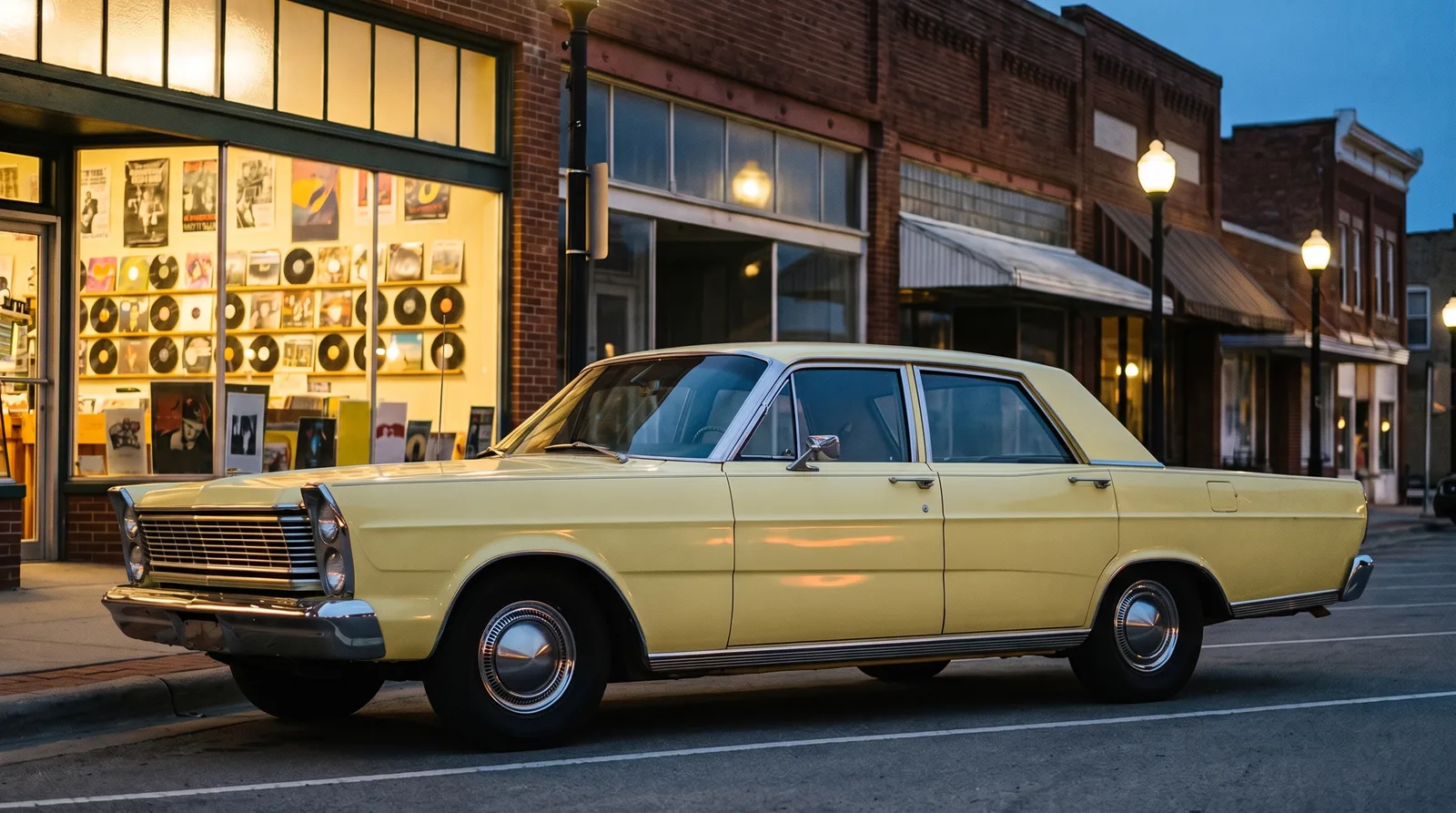
Galaxie 500 the band formed in Cambridge, Massachusetts, when Dean Wareham, Damon Krukowski, and Naomi Yang started playing together after meeting at Harvard. They needed a name for their first single, and the story that has circulated in liner notes and interviews for years traces it back to a car. By the band's own account, the name came from a friend's car, a Ford Galaxie 500, and the number attached to the trim level, whatever its actual meaning to Ford's product planners, struck the band as a good stand-in for speed and a certain broad-shouldered American cool. The friend's exact model year is not part of the documented record, and the name is not tied to the band's producer Kramer, who entered the story later when the group sent him a demo tape.
What matters for the culture around the name is that nobody in the band was a car person chasing a Marti Report or a build sheet. They were art students who liked the sound of the words together, "Galaxie" for the cosmic reach, "500" for the number that Ford itself used to suggest command and distance. The band never explained the car's options, its engine code, or its production numbers, because none of that was the point. The name was atmosphere, borrowed the way a songwriter borrows a stray phrase overheard on a bus.
Three albums and a sound that outlived the badge
Between 1988 and 1991 the band released three albums, "Today," "On Fire," and "This Is Our Music," on the independent label Rough Trade in the United States. The records moved slowly through college radio and import bins, then kept moving long after the band split in 1991, becoming reference points for what critics eventually filed under dream pop and slowcore. Reissues in the 2010s, plus Dean Wareham performing Galaxie 500 songs live under his own name starting in 2010 (Krukowski and Yang were not part of those shows), introduced the band, and by extension its borrowed name, to a generation of listeners who had never seen a real Galaxie 500 idling at a stoplight.
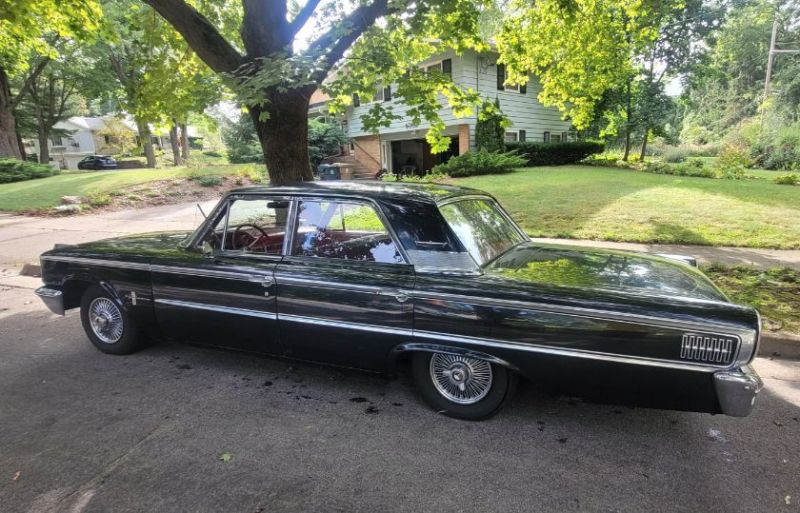
That generational gap is exactly why the namesake culture persists. A teenager discovering "Tugboat" or "Blue Thunder" on a streaming playlist in 2026 has no first-hand memory of Ford's full-size lineup and no reason to know a Galaxie 500 from a Chevrolet Bel Air. The band's name becomes their entry point, and a quick search turns up not a discography but a car, a big American two-door or four-door sedan with a specific place in Ford's early-1960s hierarchy above the base Galaxie and below the sportier XL. Music fans who want our complete history of that car end up learning far more automotive history than they expected when they typed a band name into a search bar.
Why the crossover keeps working
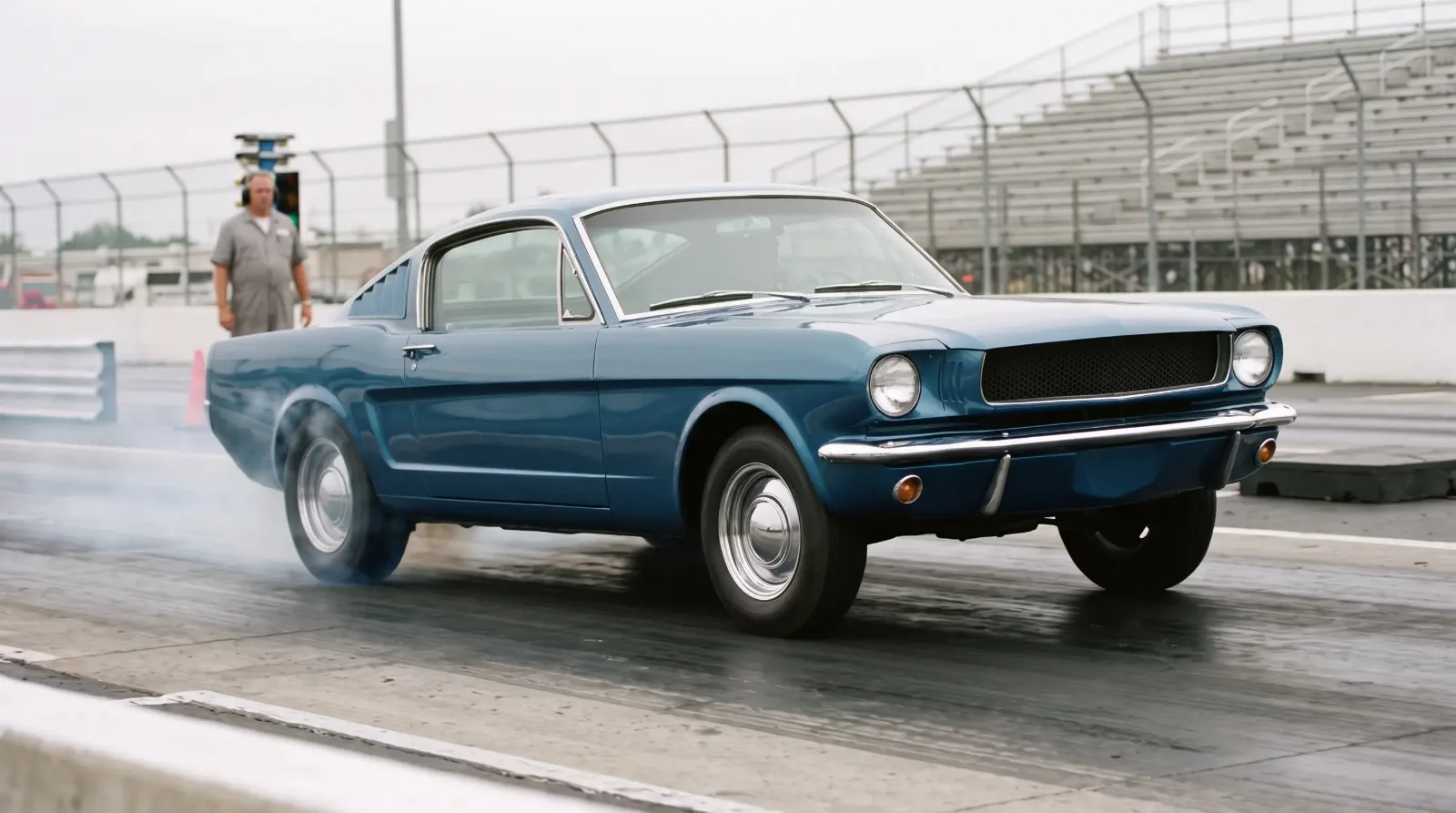
Car culture and music culture both run on nostalgia for a specific decade, and 1960s Detroit iron and 1960s American songwriting occupy the same mental shelf for a lot of collectors. A band naming itself after a family sedan instead of a muscle car is almost funnier than it looks at first glance, because the Galaxie 500 was never marketed as a performance flagship the way the 427 R-code cars were. It was Ford's comfortable, well-equipped mainstream choice, the car a schoolteacher or an insurance agent drove to work. The band's quiet, unhurried music actually matches that reputation better than it would match a Cobra Jet Mustang, which may be part of why the pairing has aged so well instead of feeling like a gimmick.
There is also a simple practical reason the culture keeps regenerating itself. Every time a music outlet writes a retrospective on the band, or a fan forum debates which album is the best entry point, someone drops in a photo of an actual Galaxie 500 to illustrate the post, and a new round of readers learns the car exists. The car, in turn, benefits from being attached to a name that keeps recirculating in playlists and best-of lists that have nothing to do with automobiles.
"Nobody in that band was thinking about wheelbase or trim codes. They heard a name on a dealer's fender badge and it sounded like a place they wanted to go. That is a different kind of research than a Marti Report, but it is research all the same, and it has sent more people looking up this car than any advertisement Ford ever ran for it."
- Nora Beckett
What the culture gets right about the car, and what it skips
The band's fans who wander into automotive history usually get the broad strokes right. They learn the Galaxie 500 sat in Ford's lineup through the 1960s and into the early 1970s as a well-trimmed full-size car, and they learn it shared showroom space with faster, louder relatives during Ford's Total Performance years. What the music side of the fandom tends to skip is condition, documentation, and the practical reality of owning one today, which is a separate conversation from why the name sounds good in a song title. Readers who want the fuller picture of what a real one is worth owning, and what to look for, can keep exploring past the name and into the car itself.
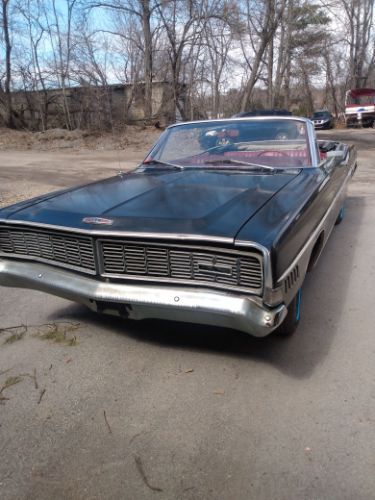
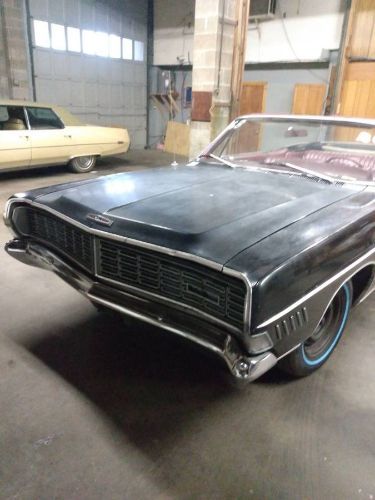
For anyone who has gone all the way from a streaming playlist to genuinely wanting one in the driveway, the next step stops being cultural trivia. A well-kept example of a classic Galaxie for sale is a tangible, drivable answer to a question that started as a curiosity about a record label credit. That is a strange path into car ownership, but it is not a rare one, and it is arguably a healthier on-ramp than most, because it starts with genuine affection rather than a spec sheet.
The band broke up more than three decades ago and the last Galaxie 500 rolled off a Ford assembly line even further back than that, yet both keep finding new audiences through each other. That is the quiet, self-sustaining loop at the center of the whole namesake story: a car nobody bought for bragging rights lent its name to a band nobody expected to last, and the band has been paying that loan back in curious new fans ever since.
Sources and notes
Related Reading
Have a
Ford Galaxie
for Sale?
Reach thousands of serious classic car collectors across the US.
Sell It Here →
Are You a Classic Car Dealer?
List your full inventory and connect with targeted classic car buyers.
Join as a Dealer →

About the author
Nora Beckett
Automotive features writer and photographer who tells the human stories behind the cars, from show fields to cross-country road trips.
Related Listings - Ford Galaxie
Comments (1)
T
Trevor Boyd
9 hours ago
Still learning here, so "500" was just a trim tier, kind of like the model number on a mixing board?