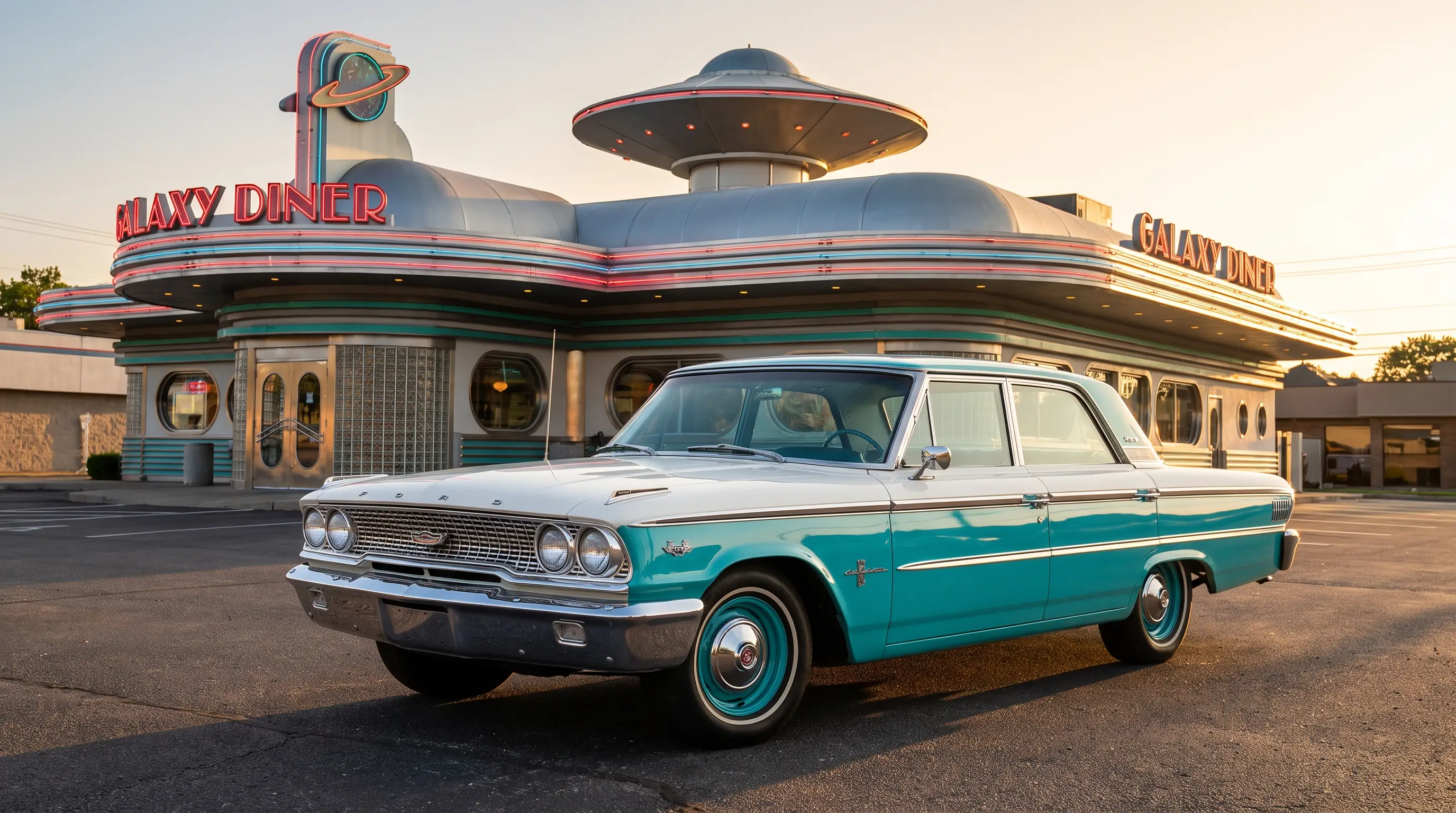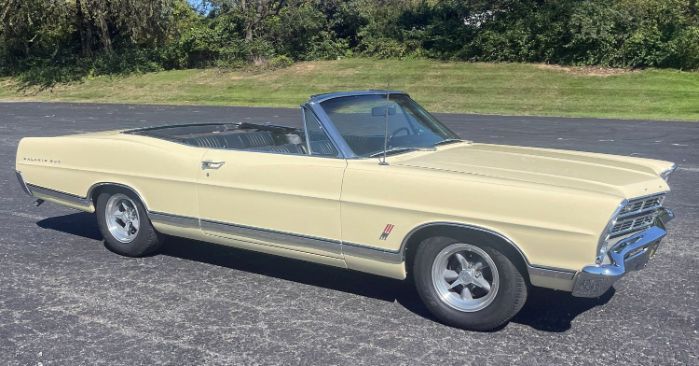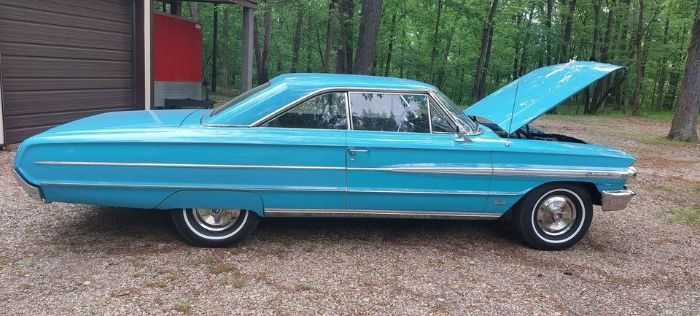
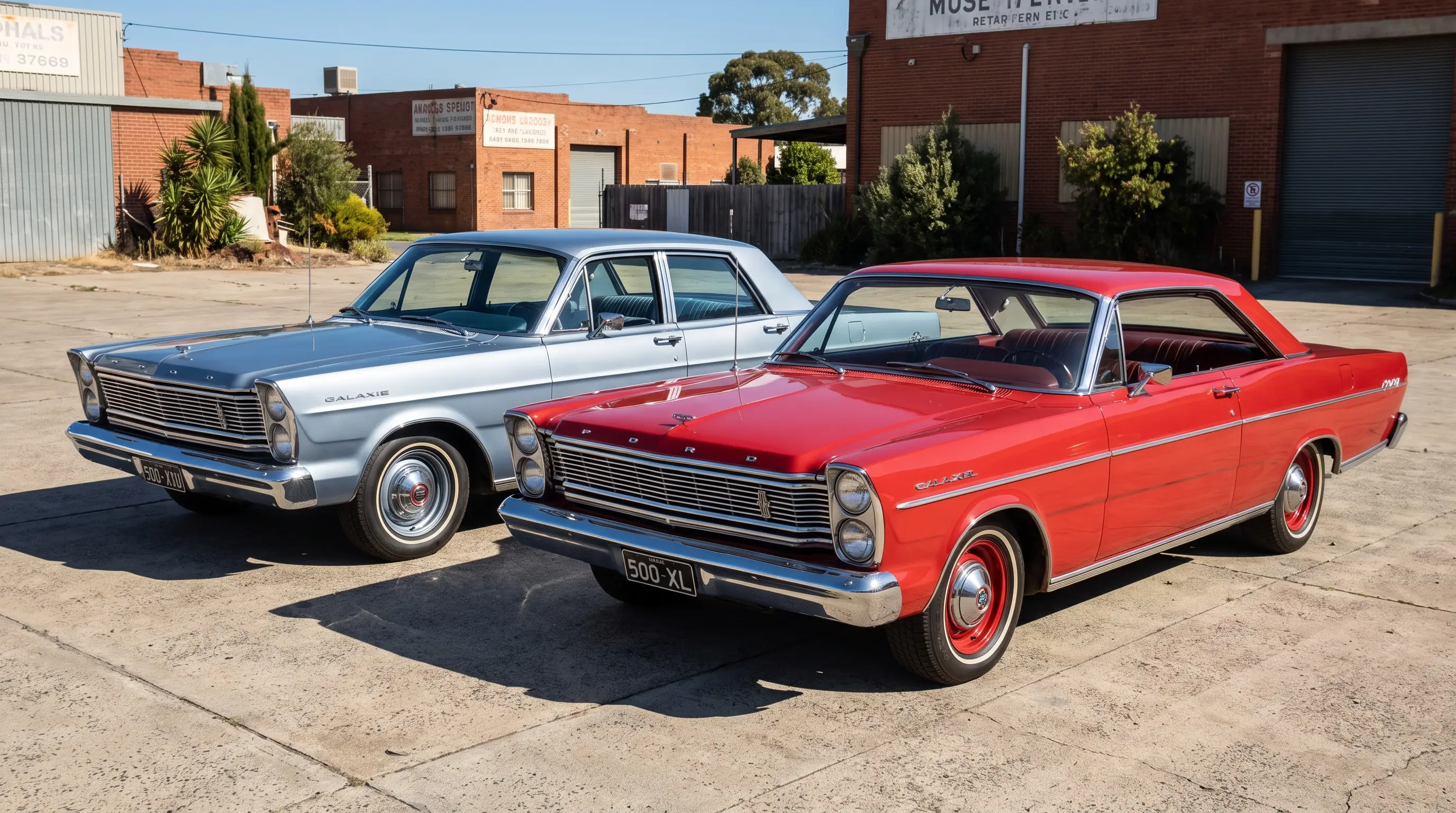
I once watched two members of our local club argue for a solid twenty minutes over whether a friend's car was "really" a 500 or a 500 XL, before somebody finally popped the trunk and found the build sheet tucked under the spare tire mat. That argument, and the paperwork that finally settled it, is basically the whole ford galaxie 500 galaxie 500 xl difference in miniature. These two cars look close enough at a glance to fool even experienced club members, but the differences between them tell you a lot about who Ford thought was buying each one.
The comfort car versus the sport car, same year, same lot
Ford built the Galaxie 500 as the volume trim, the one aimed at a family that wanted chrome and a little status without paying for options they would never use. The 500 XL arrived as the sportier sibling, introduced to give buyers who wanted bucket seats, a center console, and a more performance-oriented image something to reach for on the same showroom floor. Same basic platform, same body in most model years, but a genuinely different pitch to two different kinds of buyers standing at the same dealership.
You could walk onto a Ford lot in 1963 wanting a comfortable family cruiser and drive home in a Galaxie 500 bench-seat sedan, or you could walk onto that same lot wanting something that looked ready for a stoplight duel and drive home in a 500 XL with buckets and a console shifter. Ford was smart enough to know it did not need to choose one buyer over the other when it could sell to both from the same basic car.
What actually changes inside the cabin
The interior is where the difference becomes obvious the moment you sit down. The standard Galaxie 500 typically came with a bench seat front and rear, a straightforward dash layout, and trim that emphasized comfort over sportiness. The 500 XL swapped in bucket seats and a console as a defining feature, along with additional brightwork and trim details meant to signal that this was the step-up model without requiring a buyer to move all the way up to a different nameplate.
Club members who have owned both will tell you the bucket seats change more than the look. They change how the car feels to drive, holding you in place through a corner in a way a bench seat never will, which matters more than people expect once you have actually driven a 500 XL back to back with a standard 500 on the same road.
Engines and options that separated the two on paper
Both trims could be ordered with a range of engines across their production years, from modest six-cylinder and small-block options up through the big-block engines that made headlines, including the 427 in R-code form during the Total Performance era. The 500 XL leaned harder into the performance image with its available options list, but a savvy buyer could option a standard Galaxie 500 with just as much engine as an XL if they knew what to ask for and did not care about the console and bucket seats.
Exact production splits between standard Galaxie 500 and 500 XL units shifted meaningfully from year to year and by body style, with the XL generally representing a smaller slice of a much larger total Galaxie 500 run in any given model year. The precise breakdowns are worth flagging for anyone doing serious documentation research, since marque-specific production references and club statistics pages carry more reliable year-by-year figures than general recollection, and those numbers are worth checking directly before you cite a specific count.
"Half the fun of this hobby is the argument before somebody finds the paperwork. The other half is being right when they do."
- Wayne Coburn
Why the build sheet always wins the argument
This is the part every club old-timer eventually learns the hard way. Dealer-added trim, later owner modifications, and decades of parts swapping mean that a car's current appearance is not reliable proof of its original factory trim level. The only way to settle the question for certain is the original build sheet, door tag, or factory invoice, documents that list the actual codes Ford used to specify exactly what left the factory on a given VIN.
I have seen 500 models dressed up with XL trim pieces at a dealership decades ago, and I have seen genuine XL models stripped of their console by a previous owner who wanted bench seating for a growing family. Neither car is lying to you exactly, but neither one is telling you the whole story either, without the paperwork to back it up.
What this means if you are shopping for one today
If you are in the market and care about buying exactly what the seller claims, ask for documentation before you get attached to a specific car, not after. A genuine 500 XL with its original console and bucket seats generally commands a premium over a standard Galaxie 500 in comparable condition, so the financial stakes of getting this right are not trivial, especially at the price levels these cars have reached in recent years.
For the whole picture of how the Galaxie 500 fits into Ford's broader full-size lineup across the decade, that context helps explain why Ford felt the need to split the line this way in the first place. And when you are ready to actually go look at cars rather than just read about them, you can find a classic Galaxie and start comparing real examples, documentation and all, against everything covered here.
There is also a resale angle worth mentioning plainly, since it comes up at every club meeting eventually. A documented 500 XL in good condition tends to hold value better over time than a comparable standard 500, simply because collector demand skews toward the sportier trim and its more limited production numbers within a given year. That does not mean a standard Galaxie 500 is a bad purchase. Plenty of club members prefer the bench seat, the softer ride, and the lower purchase price, and there is nothing wrong with buying the car you actually want to drive rather than the one that scores better at auction. But if resale value factors into your decision at all, know going in which trim you are actually buying and why the paperwork matters as much as it does.
One last thing worth saying to anyone new to this hobby. Do not let a heated argument at a car show talk you out of trusting your own eyes and your own research. I have seen confident, longtime members get the trim level wrong on a car they swore they recognized, simply because a previous owner had swapped a detail decades earlier. Verify everything yourself before you repeat a claim as fact, whether you are buying, selling, or just settling a friendly disagreement over coffee after a club meeting.
That friend whose car started this whole argument, by the way, turned out to be right. The build sheet under the spare tire confirmed a genuine factory XL, console and all, ordered new by a young engineer who wanted the sportier seats for his commute. He kept the paperwork his whole life without ever thinking much of it, and it sat there for decades doing nothing until two stubborn club members needed it to settle a bet. That is this hobby in one small story. The documentation always matters more than anyone expects until the exact moment it settles an argument nobody else could.