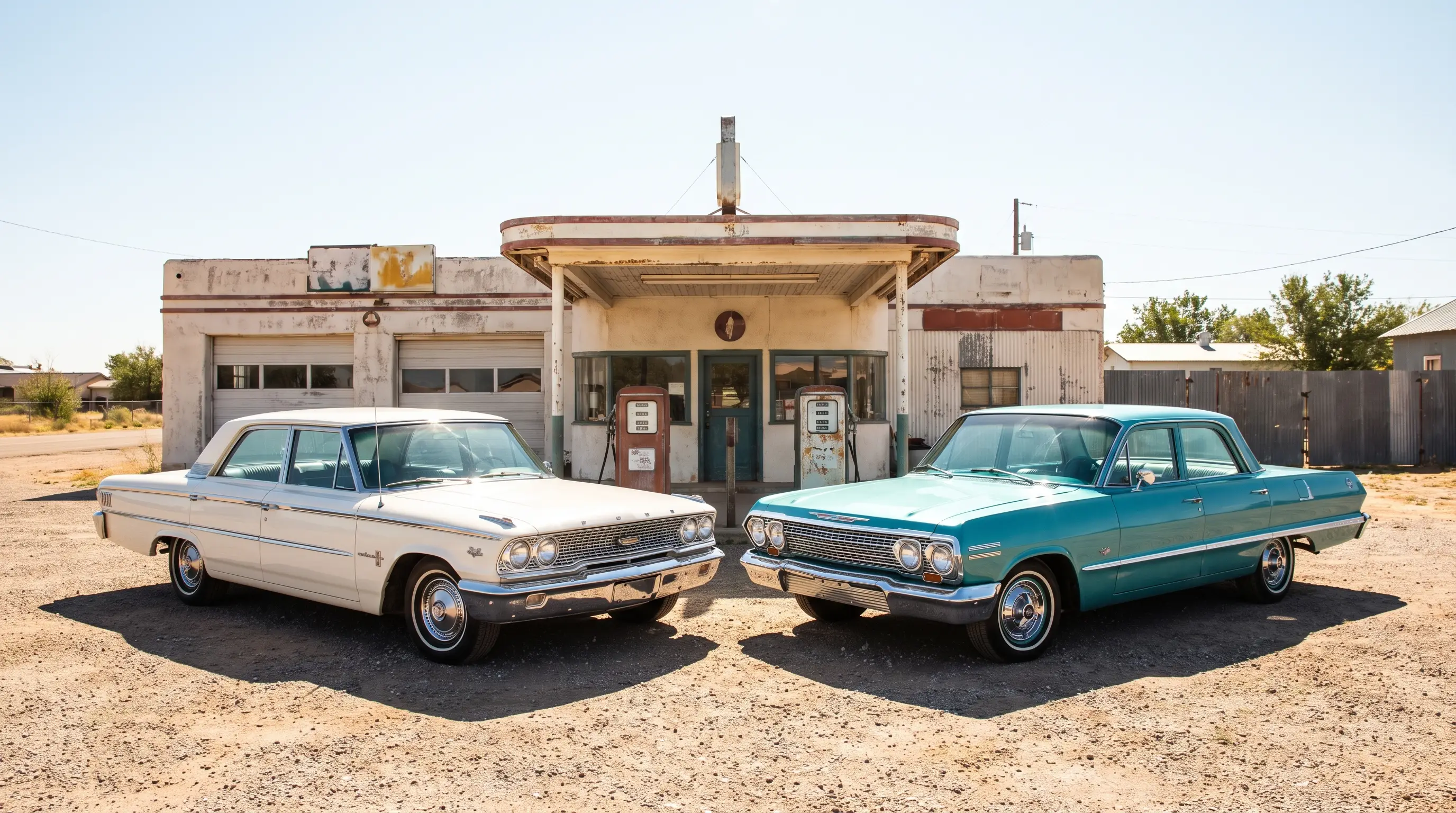
Ask ten guys at a cruise night which full-size ran the roads better in the early 1960s, a Ford Galaxie 500 or a Chevrolet Impala, and you will start ten arguments. That is the ford galaxie 500 vs impala full size rivalry in a nutshell. Nobody wins clean, but everybody has a story about the one they owned, the one their dad owned, or the one that beat them off the line at a stoplight in 1963. I have had both up on a lift more times than I can count, and I will tell you straight what I found under the skin of each.
Two full-size giants aiming for the same driveway
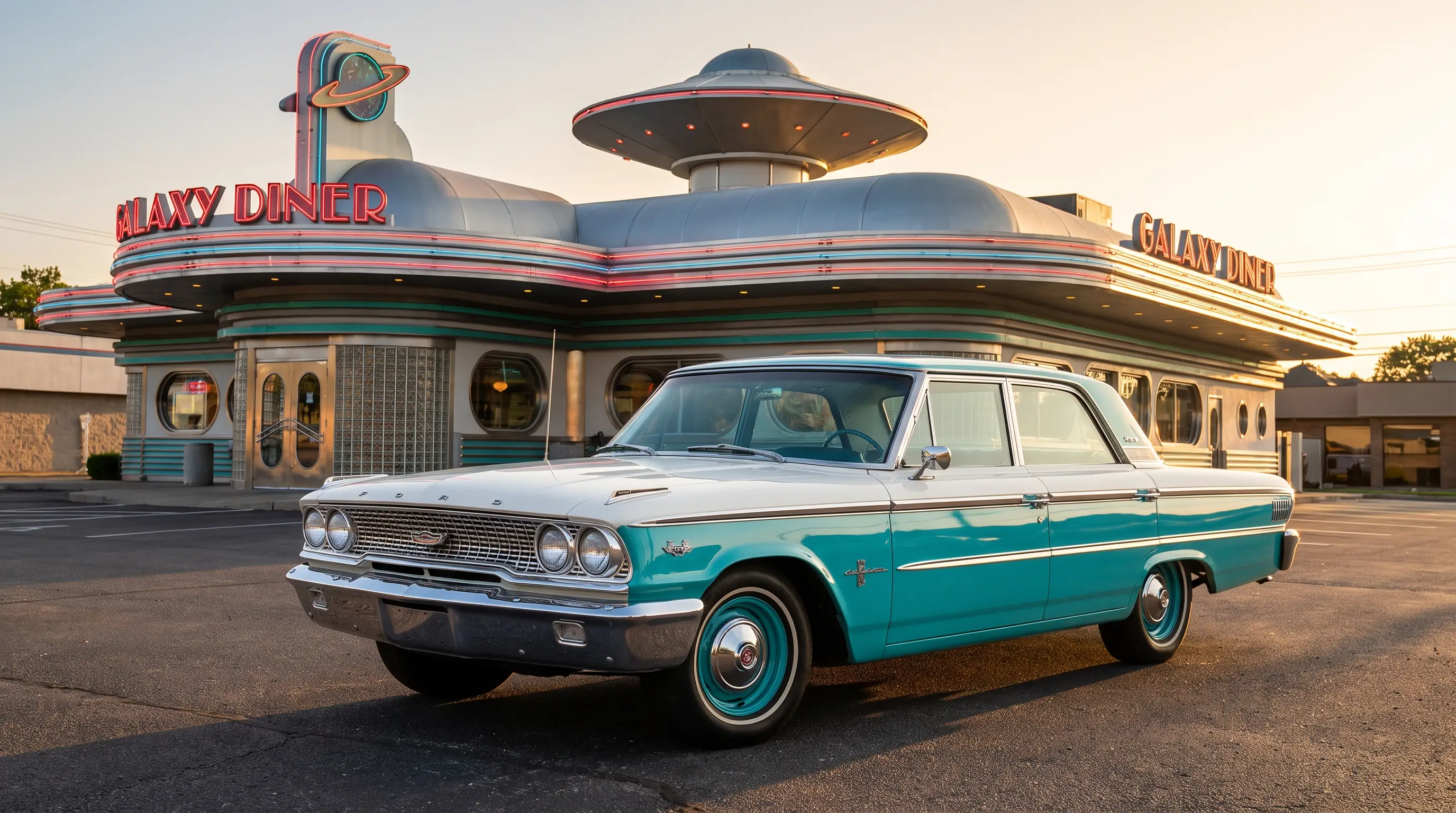
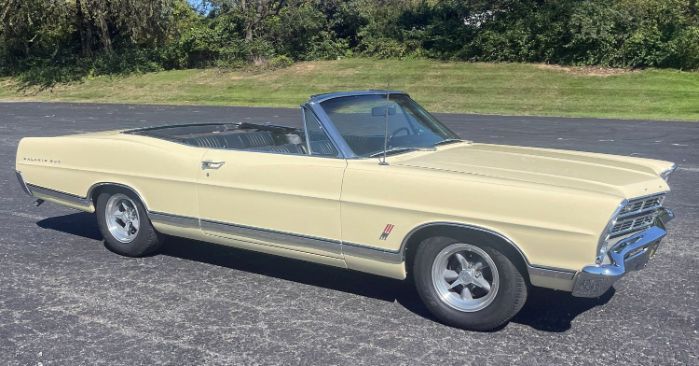
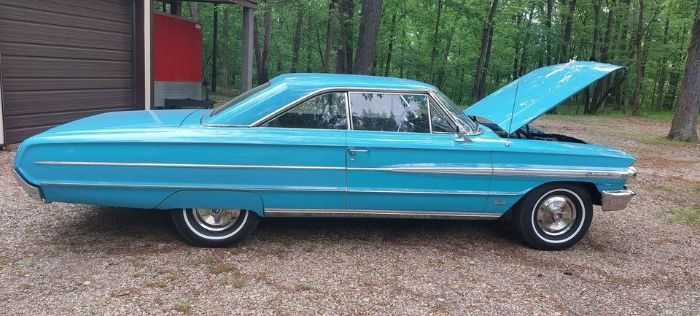
By 1959, Ford and Chevrolet were both selling full-size cars to the same buyer: a family man who wanted room for the kids, a trunk big enough for a week at the lake, and just enough attitude that he did not feel like he was driving his neighbor's station wagon. The Galaxie 500 slotted in above the base Galaxie and Fairlane 500, wearing a formal roofline and a chrome-heavy flank that Ford leaned on hard in advertising. Chevrolet answered with the Impala, which by 1961 had grown into its own model line separate from the Bel Air, with the same mission: comfortable, quick if you spec'd it right, and priced to move in volume.
Neither company built these cars for a magazine cover. They built them to sell by the hundreds of thousands, and that is exactly what happened. Walk any big car show today and count the Galaxies against the Impalas in the full-size row. It is close, and that closeness is the whole story.
Sheet metal and showroom war, 1959 to 1964
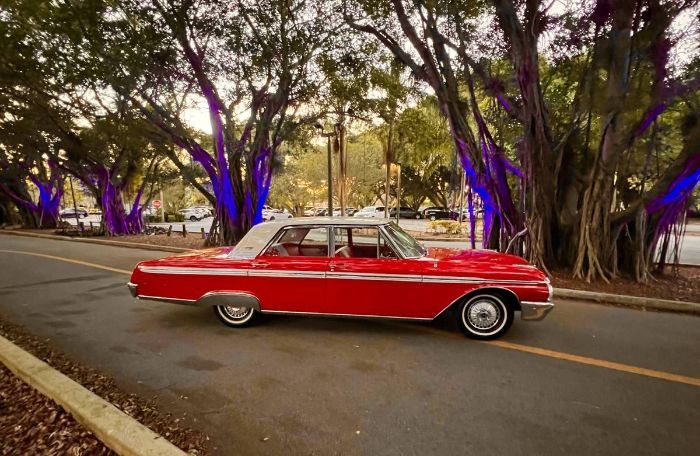
The Galaxie's formal, boxy roofline in 1960 and 1961 gave way to the swept, aircraft-inspired Starliner fastback and then to a cleaner, longer flank by 1963. Chevrolet went the opposite direction stylistically some years, but both companies were fighting the same battle of inches: wider taillights, longer hoods, more brightwork to signal that this was the top trim, not the price-leader model. A Galaxie 500 buyer in 1962 was choosing a car that looked like it cost more than it did. An Impala buyer got the same pitch from the other side of the showroom floor.
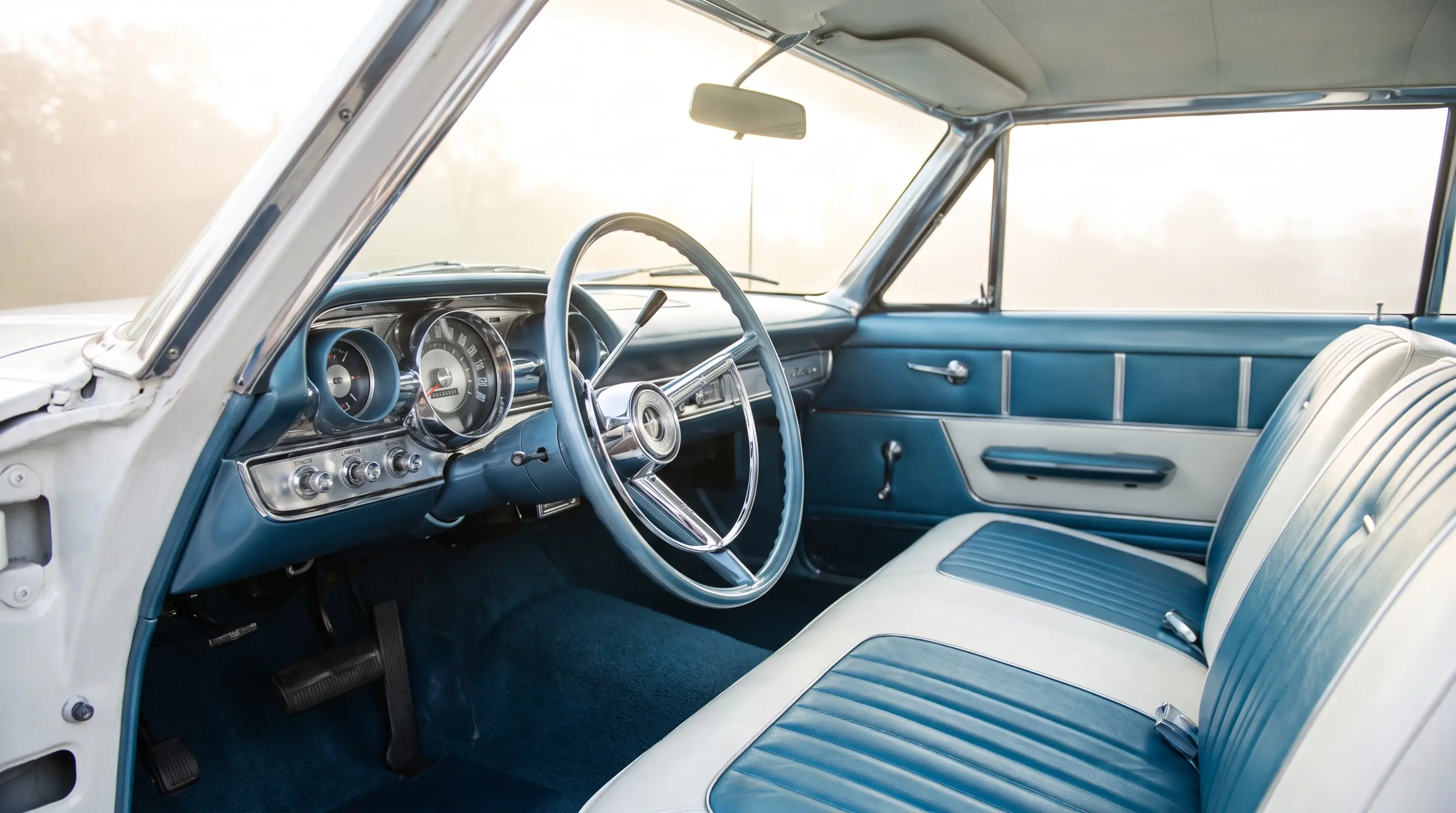
Inside, both cars offered bench seats standard, with buckets and consoles available as the muscle car era crept closer. Ford's interior trim on the 500 leaned toward padded vinyl and brightwork on the dash; Chevrolet answered with its own version of the same idea. If you sat a buyer in one blindfolded, told them the price, and let them feel the seat, most could not have told you which brand they were in. That is how close this fight really was.
Engines: the 406 and 427 answer to Chevy's 409
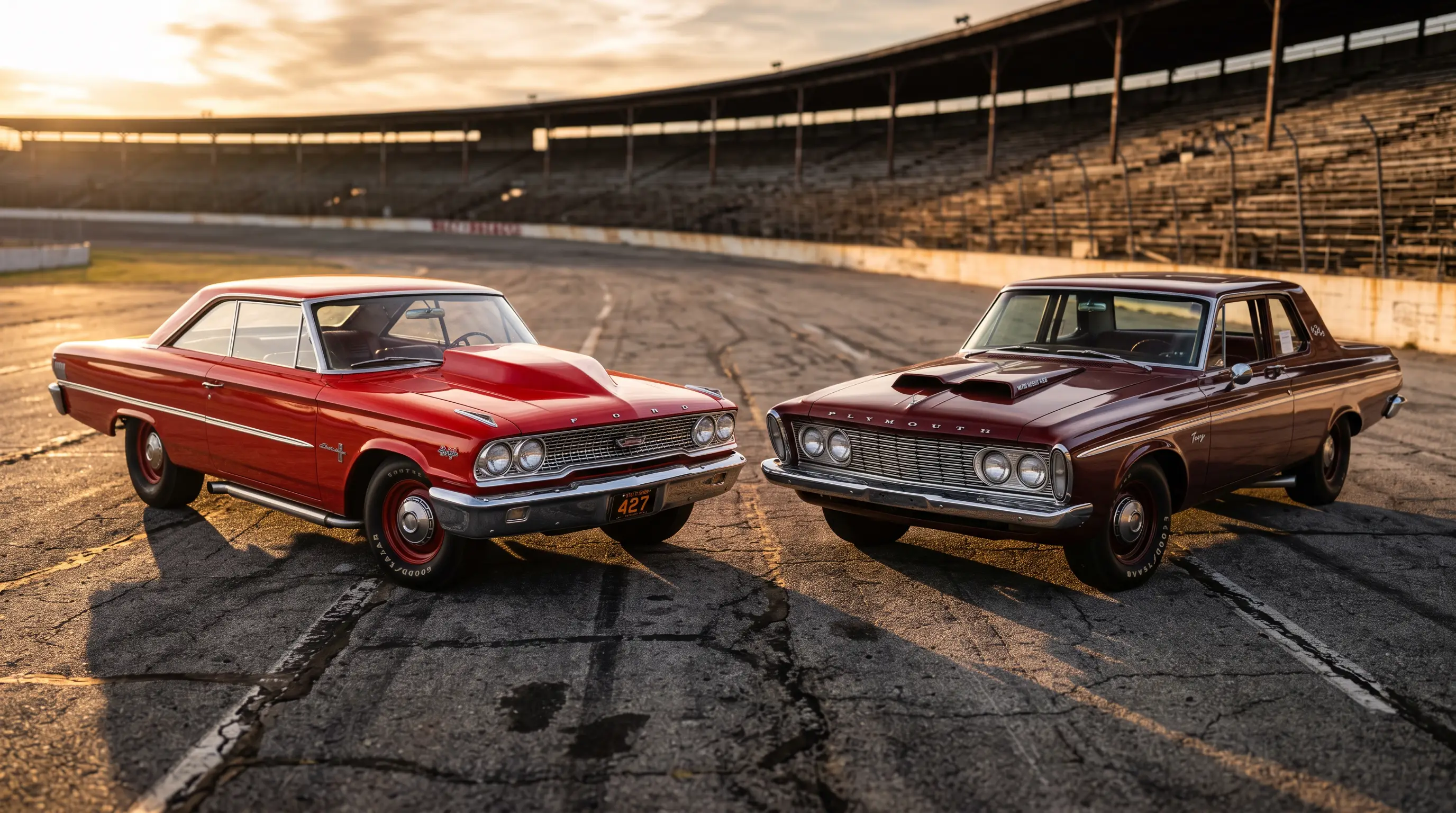
Where the rivalry got serious was under the hood. Chevrolet's 409 became a song before it became a legend, and Ford knew it needed a real answer. The 406 arrived for 1962, a big-block built to compete directly, and by 1963 Ford had moved to the 427, a genuinely serious engine that could be ordered with dual four-barrel carburetors in R-code form. Horsepower ratings from the era were famously conservative for insurance reasons on both sides, so take the factory numbers with a grain of salt, but a well-sorted 427 Galaxie could run with a 409 Impala all day and often walk away from it on a superspeedway, which is exactly where Ford wanted to make its point.
425 hp is the commonly cited advertised figure for the dual-quad 427 R-code, and it holds up against period factory literature and the cars that survive today. What is not in dispute is that both engines turned the full-size family sedan into something that could embarrass a sports car at a stoplight, which is a strange but wonderful thing to say about a car built to haul groceries.
I have rebuilt both engines and neither one is what I would call gentle to work on. The 427 needs a competent hand and the right parts, and the 409 has its own quirks that will bite a shade-tree mechanic who assumes it is just a small-block with extra cylinders. Respect either one or it will cost you.
Sales numbers and who actually won
On the showroom floor, Chevrolet usually outsold Ford in full-size volume through most of this era, and the Impala nameplate alone often moved more units than the entire Galaxie line. That is not a knock on the Galaxie. Ford's total full-size sales, spread across Galaxie, Galaxie 500, and later the 500 XL and LTD trims, were still enormous by any modern standard, just second place to a Chevrolet juggernaut that had a head start in full-size dominance going back to the 1950s.
Where the Galaxie 500 clawed back ground was in the performance and NASCAR-adjacent buyer, the guy who wanted a full-size car that could also embarrass a Corvette owner who did not see it coming. That buyer skewed toward Ford in 1963 and 1964, and dealers knew it. The rivalry was never really about total volume. It was about which brand's full-size car you would rather have parked in front of the drive-in on a Friday night.
"You can argue Chevy versus Ford until the shop closes, but put a 427 Galaxie and a 409 Impala side by side on a lift, and you will see two companies that were terrified of losing to each other. That fear built two of the best full-size cars of the decade."
- Mike Sullivan
What the rivalry means for buyers today
For someone shopping the classic market now, the practical difference between a Galaxie 500 and an Impala from the same model years is smaller than the internet debates suggest. Parts availability is decent for both, though Chevrolet's aftermarket support for the 409 and its Bel Air/Impala siblings has historically been a touch deeper than Ford's 406 and 427 support, simply because Chevrolet built more of them. That does not mean Galaxie parts are scarce, just that you may hunt a little longer for a specific trim piece or NOS emblem.
If you want the whole picture on where the Galaxie 500 fits into Ford's lineup and how it evolved through the decade, that is worth a read before you commit to a purchase. And if this rivalry has you leaning Ford's direction, you can shop classic Galaxie listings and see what is actually available right now rather than just arguing about it at a cruise night.
My honest take, having wrenched on both: buy the one that is in better mechanical shape, not the one with the badge you grew up rooting for. A tired 409 Impala is not a better car than a sorted 427 Galaxie, and vice versa. The rivalry sold cars in 1963. It should not decide your purchase in this decade.
One more thing worth saying plainly. Both of these cars have gotten more expensive at auction over the last several years, and both have gotten harder to find with matching numbers under the hood. If you find a Galaxie or an Impala from this window with a clean, verifiable engine and a title history that checks out, do not wait around comparing spec sheets for another six months. Cars like this do not sit on a lot for long anymore, and the gap between a project car and a driver-quality example has widened. Buy the good one when you see it, not the perfect one you keep waiting for.
Sources and notes
- Barn Finds: Unrestored R-Code 1963 Ford Galaxie 500 Dual-Quad 427
- autoevolution: 1963 Galaxie 500 XL R-Code 427, the 425-hp original
- ClassicCars.com Journal: Original-owner 427-powered 1963 Ford Galaxie
- Wikipedia: Chevrolet Impala
- Wikipedia: Ford Galaxie
- Curbside Classic: Vintage comparison test, Impala SS, Galaxie 500, Sport Fury