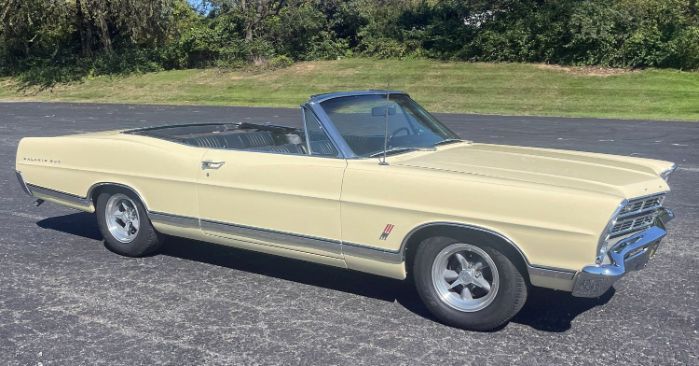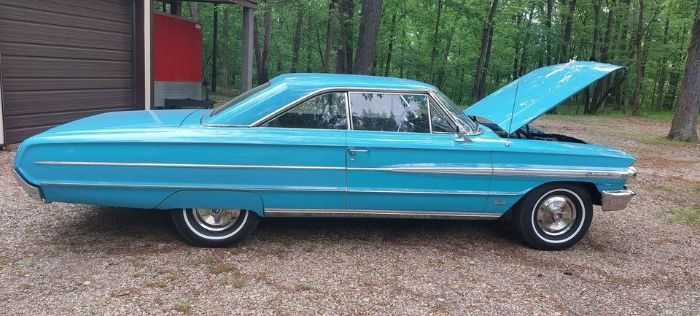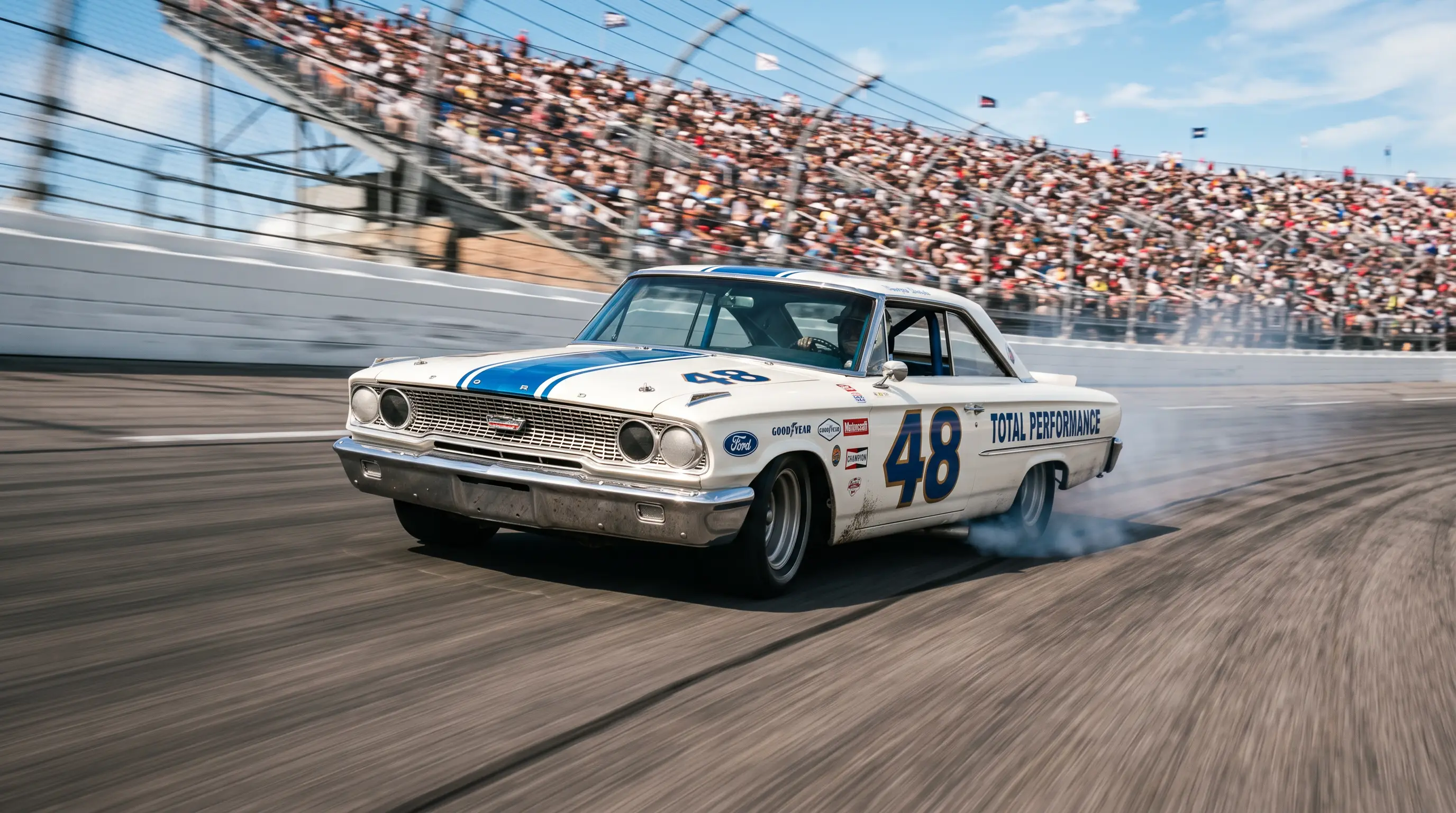
Every ford galaxie 500 nascar legacy overview has to start in the same place: a Ford boardroom decision in the early 1960s to stop pretending racing did not matter. Ford had spent years half-committed to motorsport, and the Galaxie 500 became the car that changed that posture entirely, turning a family sedan into a genuine superspeedway weapon within a couple of model years.
Total Performance changes the equation
Ford's Total Performance campaign, launched in the early 1960s, was a company-wide bet that winning races would sell cars, and the Galaxie 500 sat at the center of that bet on the NASCAR side of things. Where earlier Fords had raced almost apologetically, the Total Performance era meant factory engineering resources, factory money, and factory drivers all pointed at making the Galaxie 500 a winner on the biggest ovals in the country. That is a different animal than a privateer bolting speed parts onto a showroom car in a garage. This was Dearborn deciding that Sunday afternoons mattered to the bottom line.
The timing mattered too. NASCAR in this era was still closely tied to what a buyer could actually purchase at a dealership, so a Galaxie 500 winning at Daytona or Atlanta was not an abstract engineering flex. It was a direct sales argument aimed at anyone cross-shopping a full-size Ford against a Chevrolet or a Plymouth.
The 427 R-code and the horsepower that made it possible
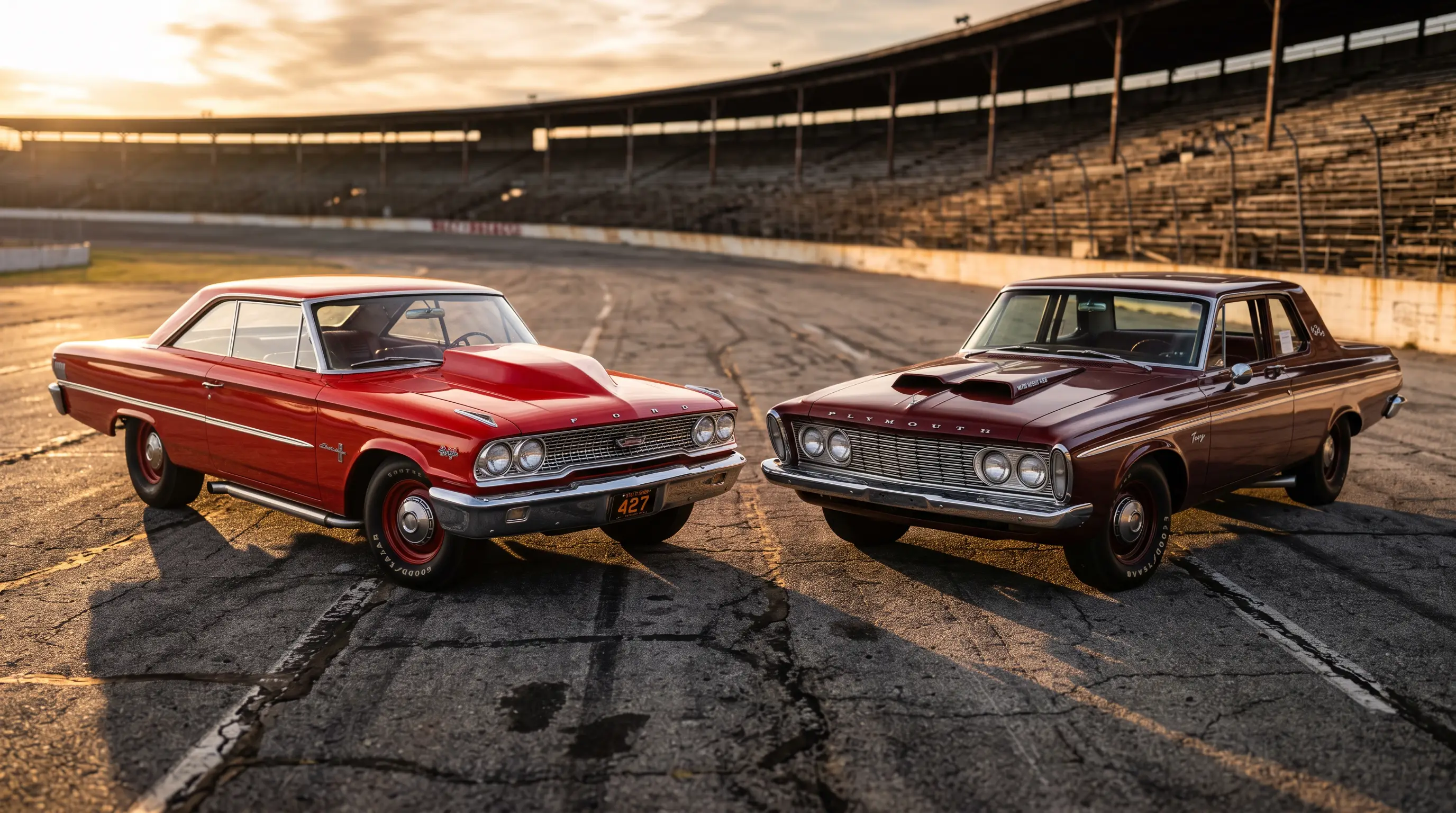
None of this works without the engine. Ford's 427 R-code, offered with dual four-barrel carburetors, gave the Galaxie 500 the muscle to compete with anything Chevrolet or Chrysler put on the same track. 425 hp is the commonly cited factory rating, though period ratings across the industry were notoriously conservative for insurance reasons, so treat that number as a starting point rather than settled fact. What is not in dispute is the way this engine transformed the Galaxie 500's reputation almost overnight, from a comfortable family car to something crew chiefs wanted in their stable.
Ford also worked on the car's aerodynamics during this period, refining the roofline and body shape specifically with high-speed stability in mind, a detail that mattered enormously once speeds climbed at tracks like Daytona. A fast engine without a stable body is a liability at 150 miles an hour. Ford understood that and built accordingly.
1963 and the Daytona breakthrough
The 1963 season is where the Galaxie 500's NASCAR legacy really solidifies. Ford-backed teams and drivers took the 427-powered Galaxie 500 to victory at some of the sport's biggest events that year, a result that validated the entire Total Performance investment and gave dealers something concrete to put in showroom advertising the following week. Fred Lorenzen became one of the faces of this success, a driver whose name became closely tied to Ford's competitive resurgence during this stretch of seasons.
This was not a one-race fluke either. The Galaxie 500 racked up multiple Grand National victories across 1963 and into 1964, a sustained run that put real pressure on Chevrolet and Chrysler to answer, and forced NASCAR itself to keep adjusting rules as manufacturers pushed the limits of what a "stock" car could legally carry to the track.
"You can tell how seriously a manufacturer takes racing by how fast they show up with an answer when they start losing. Ford showed up fast, and the Galaxie 500 is the proof."
- Patrick Walsh
Why the rule book kept changing around this car
Success on the track came with a cost. As the Galaxie 500 and its competitors kept getting faster, NASCAR officials repeatedly revised rules around body modifications, engine displacement, and what counted as a legitimate production option versus a purpose-built race part. This back-and-forth between manufacturers pushing boundaries and NASCAR pulling them back defined much of the mid-1960s in stock car racing, and the Galaxie 500 was at the center of more than a few of those rule discussions because its factory-backed teams were often the ones finding the edges of what was allowed.
That tension is part of why this era gets remembered so fondly by racing historians. It was a genuine arms race between manufacturers, fought partly on the track and partly in the rulebook, and the Galaxie 500's success is inseparable from that larger story of Ford, Chevrolet, and Chrysler all trying to out-engineer each other under NASCAR's evolving umbrella.
The legacy that survives in today's market
Decades later, the Galaxie 500's NASCAR legacy is a major reason the car commands genuine respect among collectors who care about motorsport history rather than just styling or comfort. A documented, period-correct 427 R-code Galaxie 500, especially one with any traceable connection to the racing programs of this era, is a different class of collectible than a standard six-cylinder example, and the market has recognized that difference for years now in what these cars actually sell for at auction.
If you want the full story of how the Galaxie 500 developed beyond its racing pedigree, including its full production run and trim history, that is a natural next stop after understanding this NASCAR chapter. And if the racing history has you interested in owning a piece of it, you can look at classic Galaxie for sale and see what genuine examples from this window are actually commanding today.
What strikes me most, having covered this era for years, is how briefly this window actually lasted. By the late 1960s, NASCAR's rules and the industry's focus had shifted enough that the Galaxie 500 was no longer the primary factory weapon it had been in 1963 and 1964. That brevity is exactly why the legacy matters. This was not a decade-long dynasty. It was a short, intense burst of factory commitment that happened to land on one of the best-looking full-size cars Ford ever built, and it left a mark on NASCAR history that outlasted the car's own time at the front of the field.
How the legacy gets misremembered
Talk to enough people at a car show and you will hear the Galaxie 500's NASCAR run described as longer and more dominant than it actually was, which is a common thing that happens to any brief but intense era of motorsport success. The truth is more interesting than the exaggeration. Ford did not simply show up with a bigger engine and win everything in sight. It took a coordinated push across engineering, aerodynamics, and driver development, sustained over a fairly narrow window of a couple of seasons, before Chevrolet and Chrysler recalibrated and the competitive balance shifted again.
That narrower, more honest version of the story actually makes the achievement more impressive, not less. Ford did not need a decade to make its point. It needed a couple of seasons, the right engine, the right driver lineup, and a willingness to spend money on racing that earlier Ford management had not been willing to commit. Understanding that specific, compressed window is what separates a real appreciation of the Galaxie 500's NASCAR legacy from the vaguer nostalgia that gets repeated without much scrutiny at swap meets and reunions.
For a collector or a fan trying to place this car correctly in NASCAR history, the honest framing matters. This was a short, sharp, factory-backed campaign, not a dynasty, and that distinction is worth defending whenever the conversation drifts toward exaggeration.