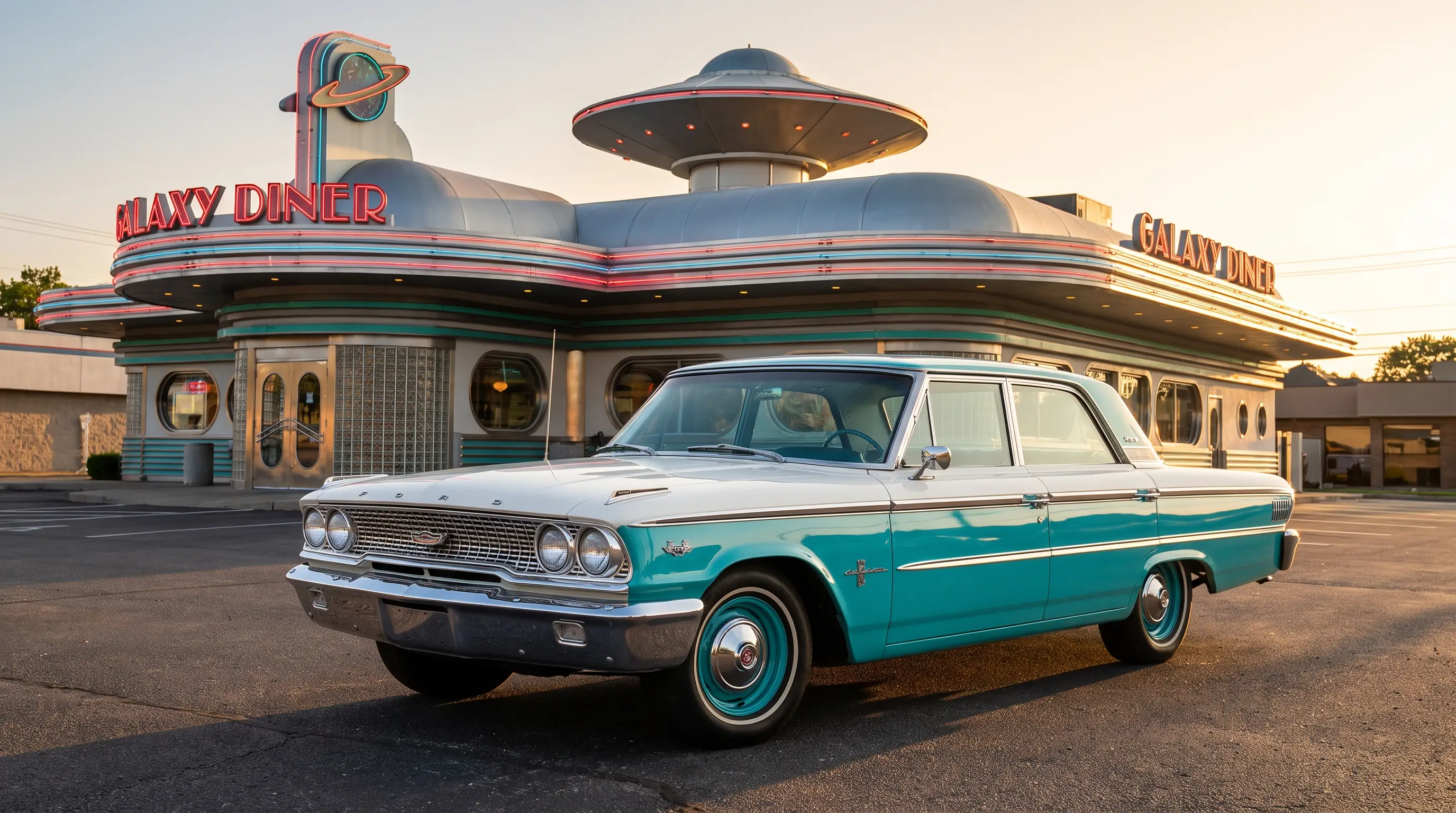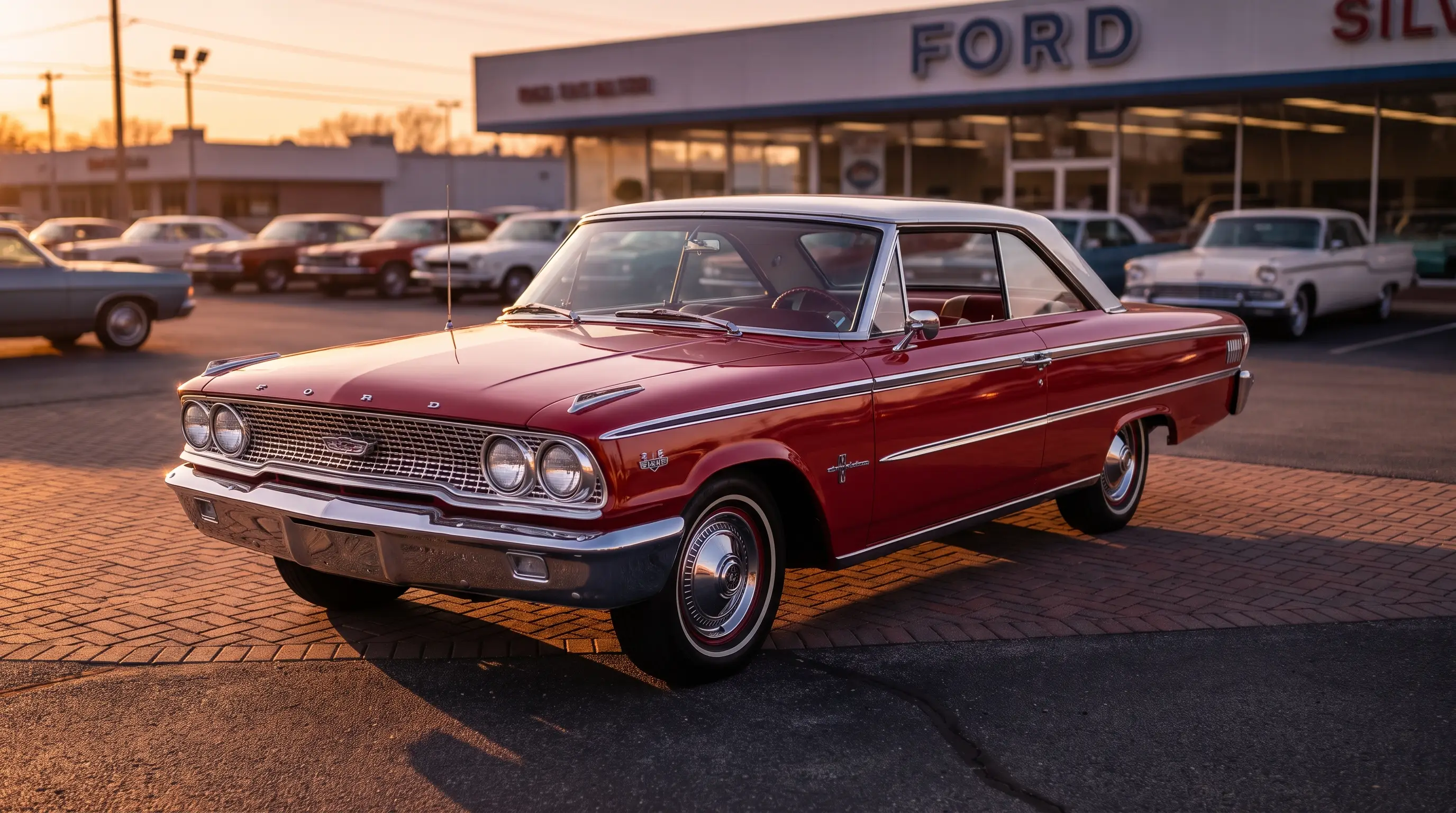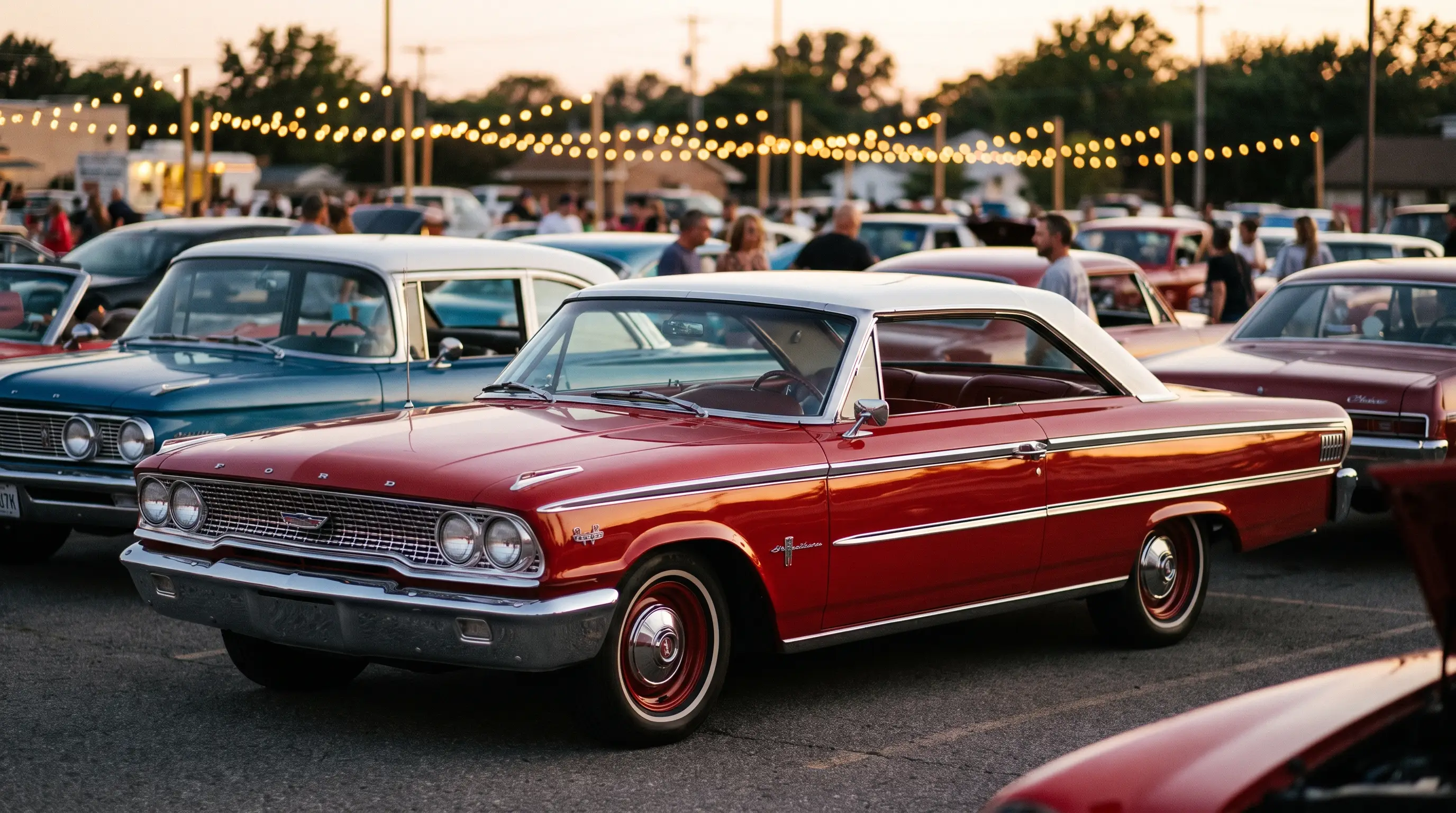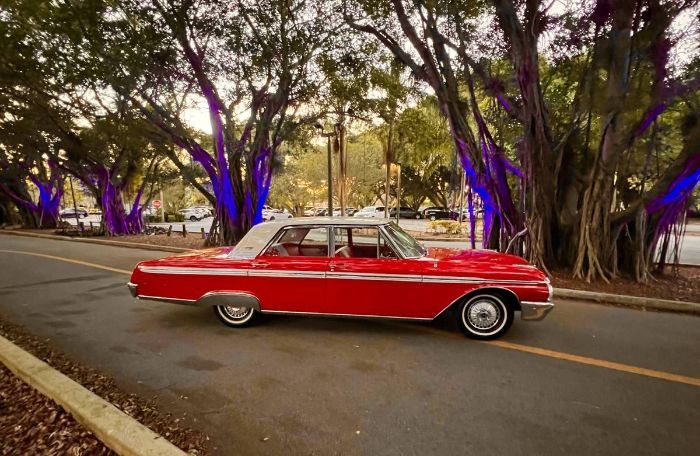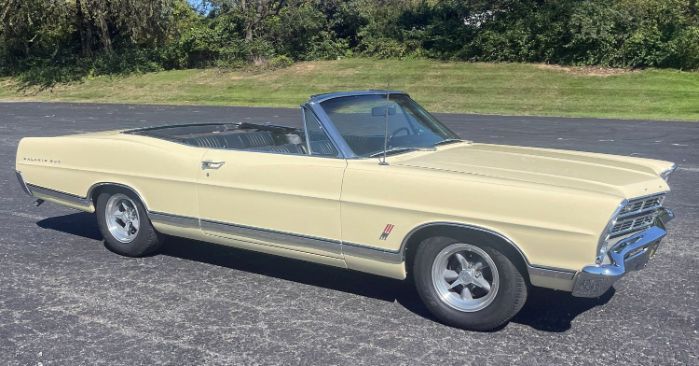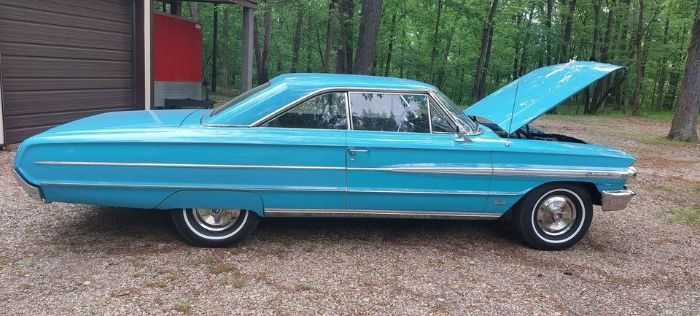
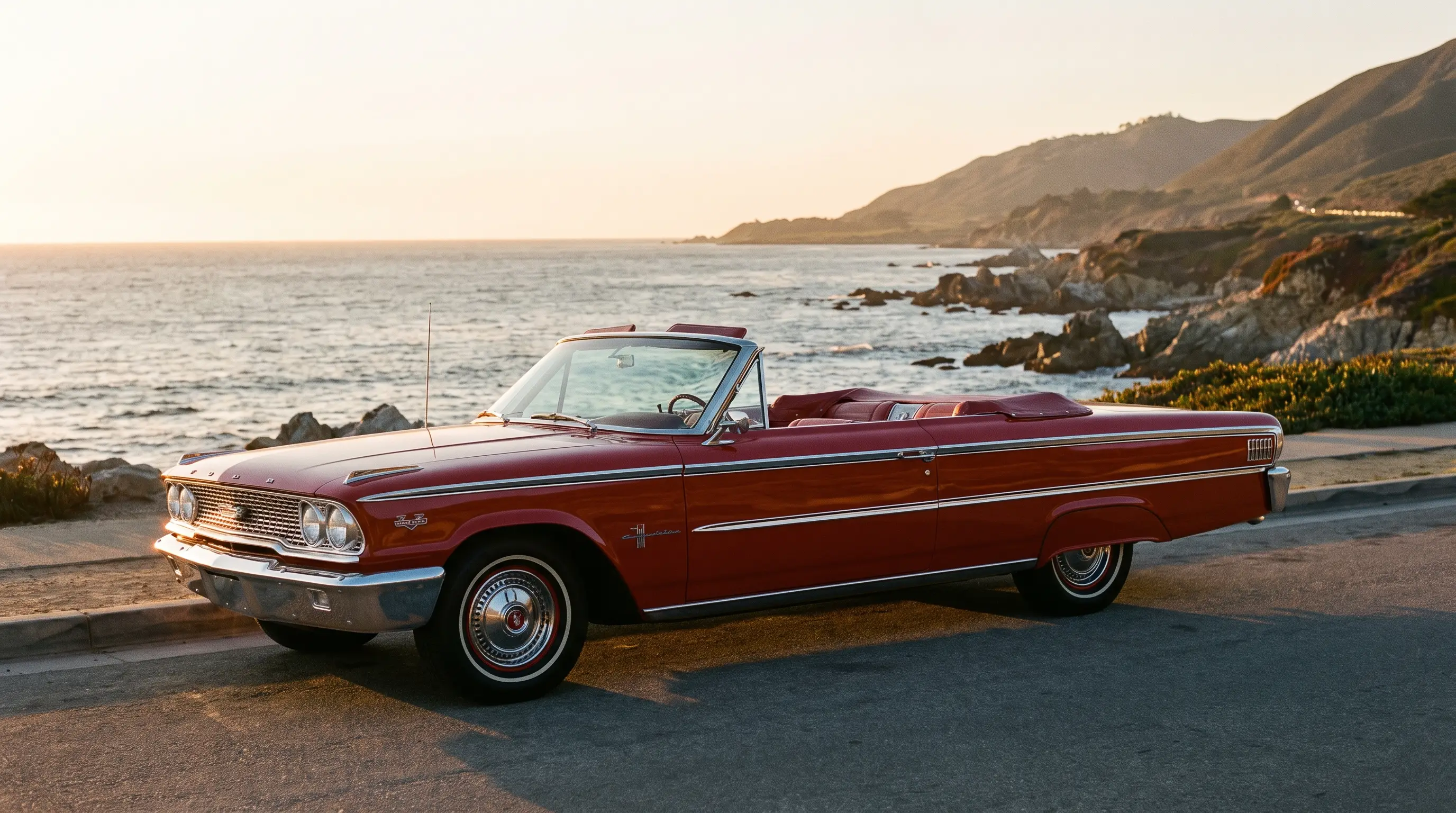
Picture a Sunday afternoon in 1963, top down, a wide chrome grille catching the light at a stoplight while the driver next to it in a plain sedan pretends not to look twice. That was the whole point of the ford galaxie 500 sunliner convertible, a car built to be the version of the Galaxie 500 you noticed from two lanes over. It was never the volume seller in the lineup, and it did not need to be. The Sunliner's job was to be the flagship's flagship, the body style that carried the Galaxie 500's showroom presence into open air.
A convertible name older than the 500 badge itself
"Sunliner" was not invented for the Galaxie 500. Ford had used the name on earlier full-size convertibles before the Galaxie nameplate even existed, and when the Galaxie 500 arrived at the top of the lineup, Ford carried the Sunliner name forward as the convertible variant of its new flagship trim rather than inventing something fresh. That continuity mattered. It told returning Ford buyers that the open-top tradition they already recognized was still alive under new badging, even as the sedan and hardtop bodies around it were getting entirely new names and a very different look.
What set the Sunliner apart mechanically and visually
Beyond the obvious folding top, the Sunliner carried reinforced structural elements that any full-size convertible of the era needed to compensate for the lost rigidity of a fixed roof. Ford engineers beefed up the frame and rocker panel structure to keep the big car from flexing and creaking the way lesser convertibles of the period were notorious for doing. The result was a car that felt more substantial than its open-top competitors, at the cost of some added weight the sedans and hardtops did not carry. Visually, the Sunliner got the same brightwork and interior treatment as other Galaxie 500 body styles of its model year, but the absence of a roofline changed the car's whole silhouette, giving it a lower, longer look that the hardtops could only approximate with careful trim placement.
"A hardtop Galaxie 500 photographs well parked. A Sunliner photographs well moving, top down, which tells you exactly which one Ford built for the brochure cover."
- Patrick Walsh
Why convertibles like this one are scarcer today
Convertible production numbers ran well behind hardtop and sedan numbers across the entire industry in this era, and the Sunliner was no exception. Fewer were built to begin with, and decades of exposure to weather, sun damage on interiors, and the simple wear that comes from being a car people actually drove with the top down have thinned the surviving population further than the raw production numbers alone would suggest. A well-preserved or properly restored Sunliner today represents a meaningfully rarer find than an equivalent hardtop from the same model year, and buyers who understand that scarcity tend to move quickly when a genuine, well-documented example surfaces.
Engine choices and how buyers actually spec'd one
Sunliner buyers in the early 1960s were not shy about ordering up. The convertible's role as the showroom halo made it a natural home for the bigger engine options Ford offered that year, and dealer order sheets from the period show a disproportionate number of Sunliners leaving with V8 power well above the base six-cylinder, compared to the sedan and hardtop bodies sitting on the same lot. That pattern makes sense once you consider who bought a convertible in the first place. A buyer willing to pay the premium for a folding top and reinforced structure was rarely the same buyer looking to save money on the engine bay, and dealers understood that well enough to steer convertible shoppers toward the stronger options whenever the order form allowed it.
| Consideration | Hardtop Galaxie 500 | Sunliner convertible |
|---|---|---|
| Structural reinforcement | Standard for body style | Additional frame and rocker reinforcement |
| Typical engine skew | Wider spread including base engines | Skewed toward higher-output V8 options |
| Surviving population today | More common | Meaningfully scarcer |
| Collector attention | Strong, especially XL trim | Among the strongest in the lineup |
The Sunliner's place in the Galaxie 500 story
The Sunliner never carried the sales volume of the sedans or the sportiness reputation of the XL hardtops, but it did something neither of those body styles could: it gave Ford's full-size flagship a genuine halo car, the version dealers put in the front window and the version that shows up disproportionately often in period advertising photography. That halo role is exactly why the convertible commands so much attention from collectors now, decades after the last one rolled off the line. For the broader arc of how the Galaxie 500 badge developed across all its body styles, more on the ford galaxie 500 covers the full history, and where this started traces the story back to the original Galaxie name before the 500 badge existed at all.
Open-top full-size cars from this era do not get built anymore, not really, not in the way Ford built the Sunliner with its reinforced structure and genuine road presence. Modern convertibles chase a different set of priorities entirely, weight savings, crash structure, folding hardtops that stow themselves at the push of a button, and none of that captures what made a car like the Sunliner feel special on a two-lane road in 1963. The Sunliner was heavy, simple, and utterly unbothered by subtlety, and that combination is exactly what collectors are chasing when they seek one out today rather than settling for something more modern and more practical. That is as much a reason to care about the surviving examples as any production number or auction result.
What to check before buying a Sunliner today
A convertible's top mechanism, frame condition underneath the reinforced rockers, and any history of water intrusion into the trunk or floors deserve more scrutiny on a Sunliner than they would on a hardtop of the same year, simply because open cars accumulate that kind of wear faster. A seller who cannot produce recent photos of the frame rails and floor pans on a convertible this old should raise a flag regardless of how clean the paint looks. Buyers who do their homework on structural condition first and cosmetic condition second tend to end up much happier with a Sunliner purchase than those who fall for a good paint job and skip the underside entirely. A convertible top in good working order is a fair, easy thing to verify on a test drive. A frame rail quietly rotting under a fresh coat of undercoating is not, and it is the kind of thing only a careful inspection catches before money changes hands.
If a Sunliner or one of its Galaxie 500 siblings has caught your interest, classic Galaxies on the market is worth a look before the good ones disappear into private collections for another decade.