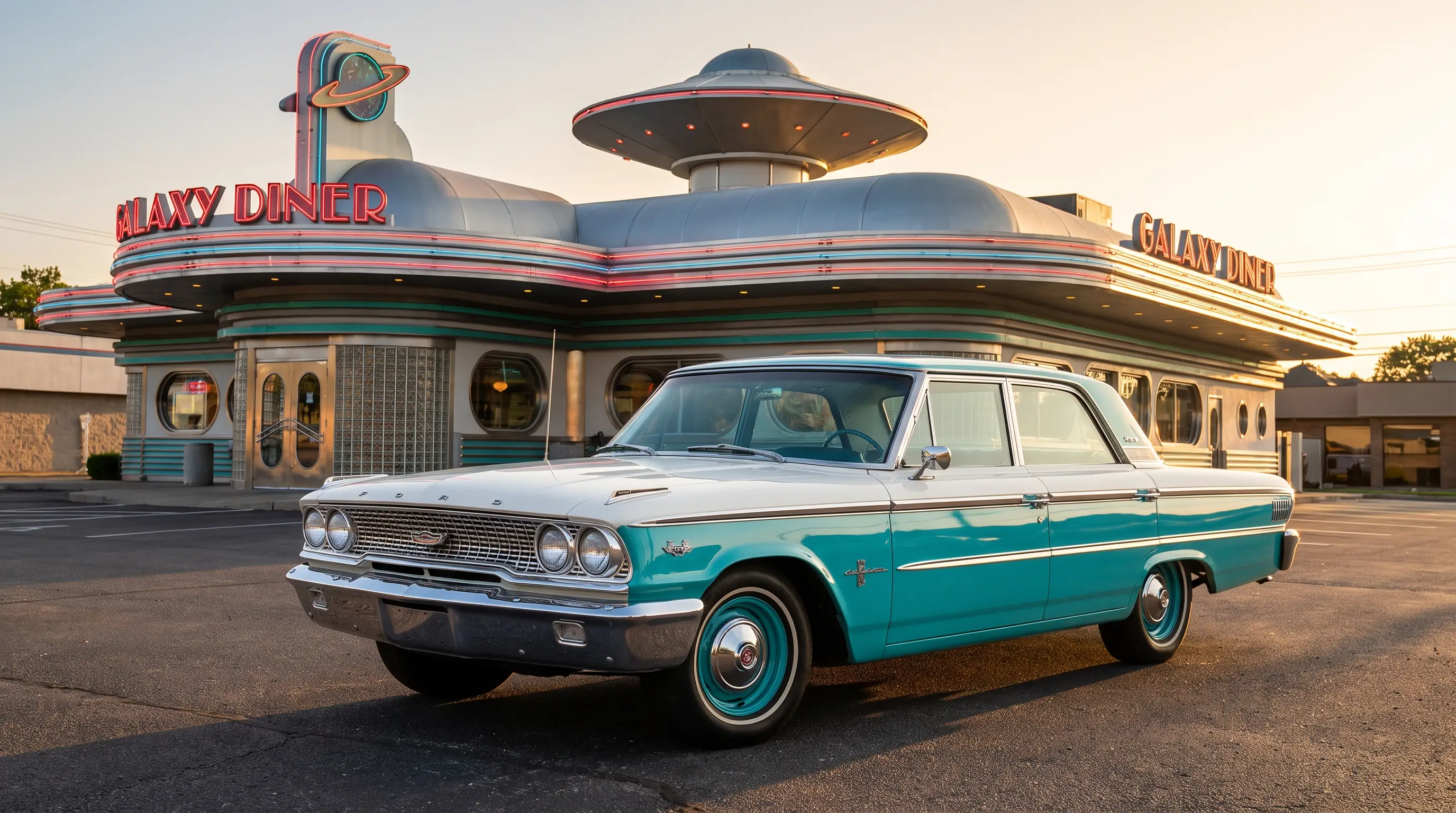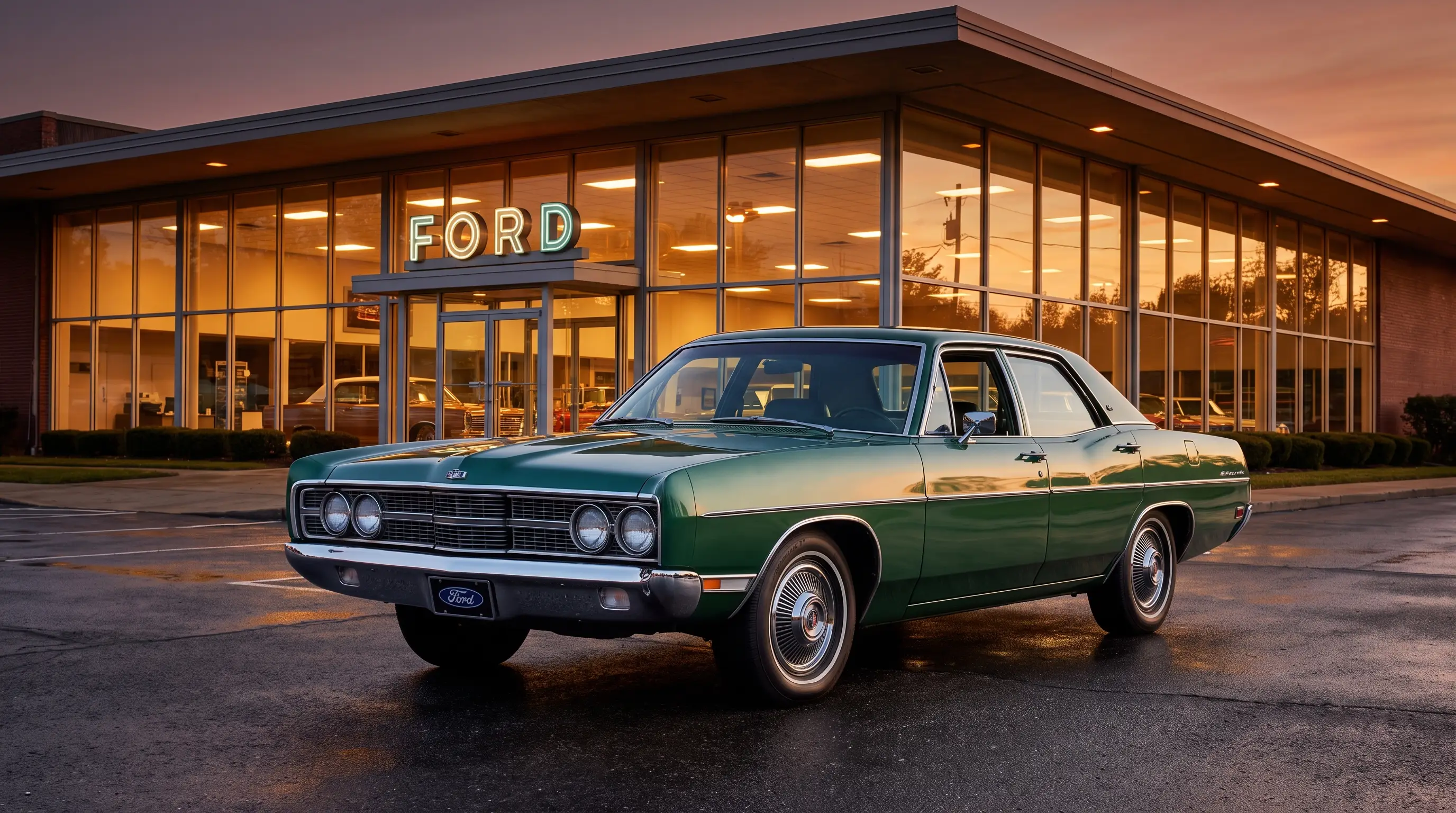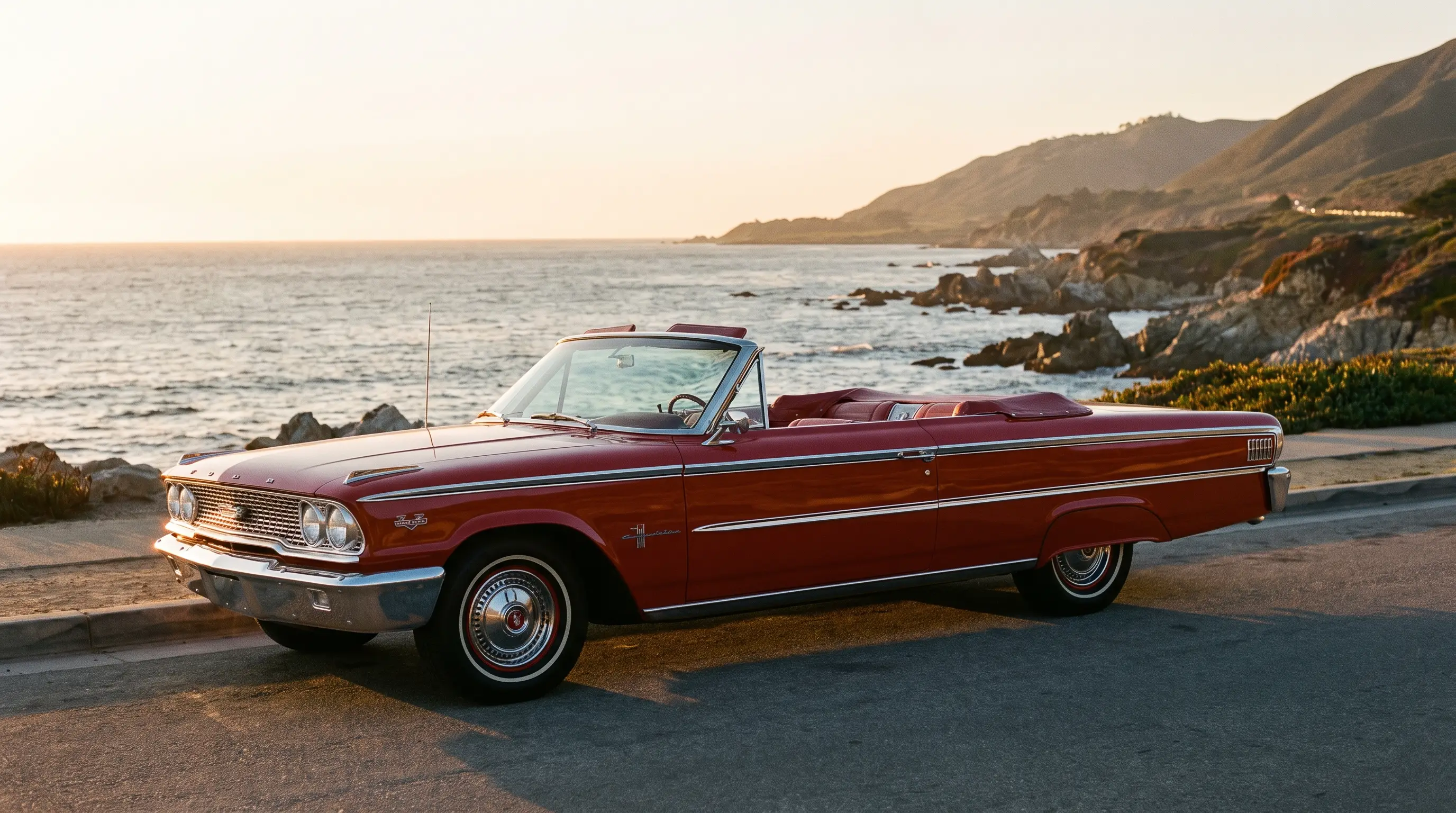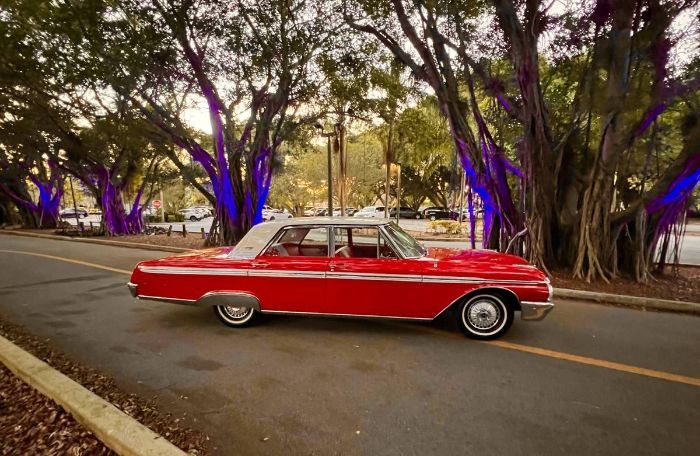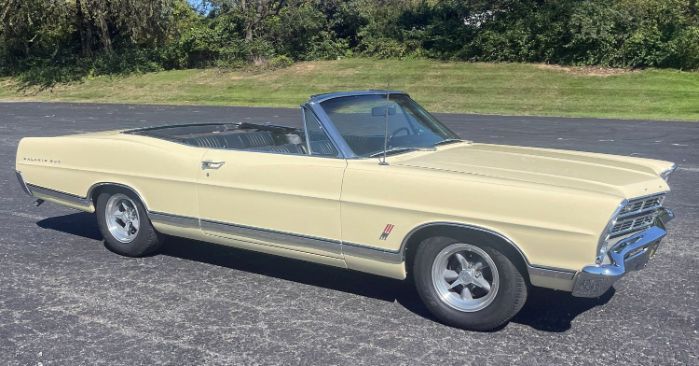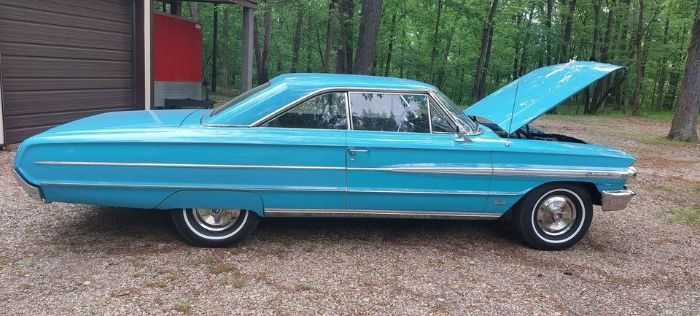
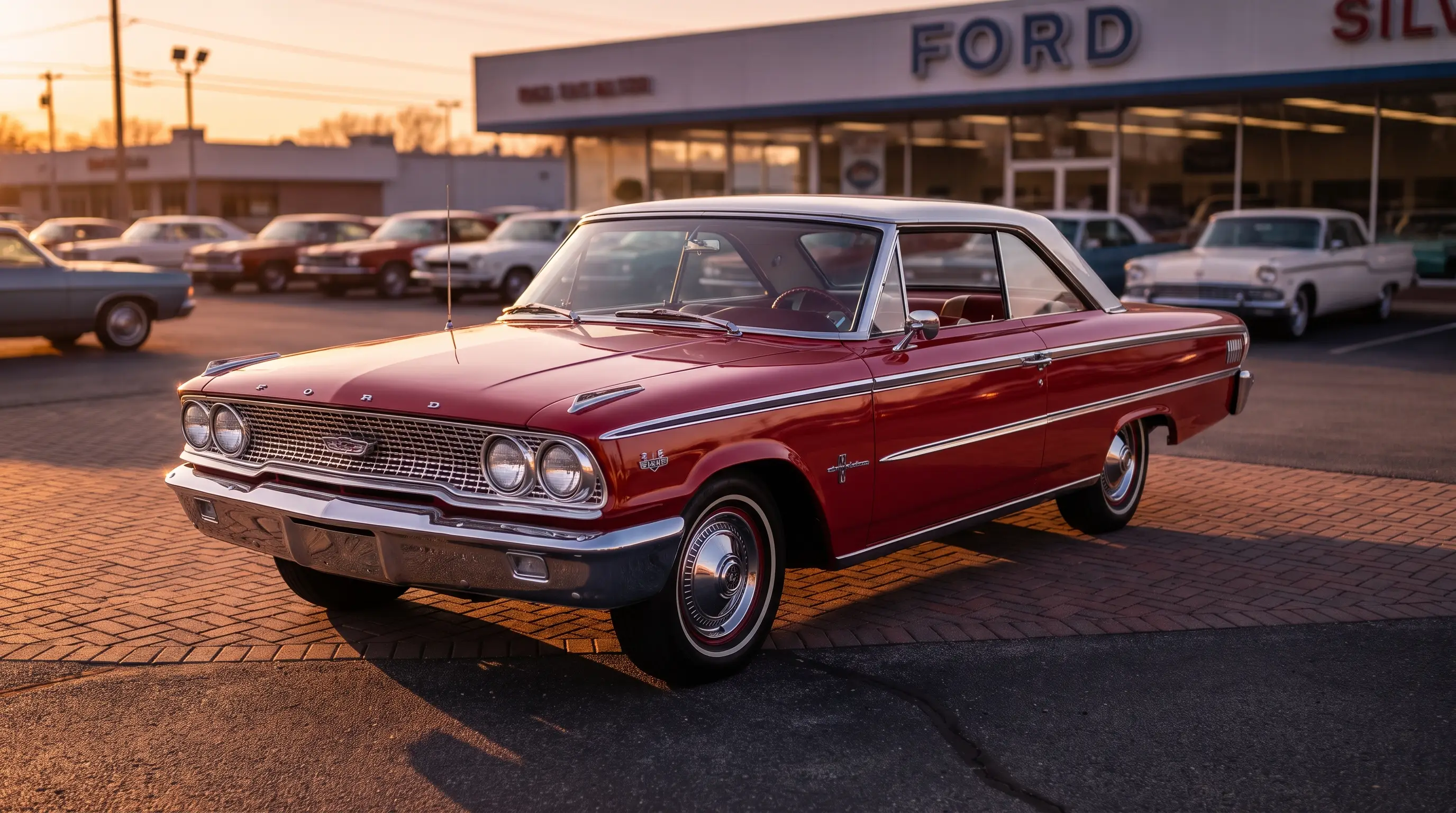
Every few months somebody brings a car into a swap meet, calls it a "Galaxie," and gets corrected by three different people who all insist it is a "Galaxie 500," and half the time nobody involved can actually explain the difference. The ford galaxie 500 vs base galaxie question sounds like trivia until you are the one trying to figure out what trim level you actually own, and it turns out the badge tells you more about the car than most people assume.
The base Galaxie was never meant to stick around
When Ford launched the Galaxie name for 1959, the plain Galaxie sat at the top of the full-size lineup by itself, holding that flagship spot through 1960 and 1961 as well. It carried the new roofline, extra brightwork, and flagship status the name was created for. That did not last forever. By 1962, when the Galaxie badge spread across Ford's whole full-size range, the 500 suffix arrived above it, and the base Galaxie got pushed down into a role it was never really designed for: the car you bought when you wanted the Galaxie look without paying for the Galaxie trim. From that point forward, "just a Galaxie" usually meant fewer standard features, plainer trim, and a lower price tag aimed at fleet buyers and budget-conscious families rather than the showroom-floor customer Ford wanted to impress.
What "500" actually bought you
The 500 suffix was not decoration. It came with real, tangible differences a shop guy notices the moment he is under the dash or pulling trim panels. Better interior materials, additional exterior brightwork, upgraded upholstery patterns, and access to option packages the base car simply could not get. Depending on the model year, the 500 also opened the door to the sportier XL package and its bucket seats and console, none of which a base Galaxie buyer could order regardless of budget. If you found a base Galaxie with bucket seats today, something has been swapped, and it did not leave the factory that way.
| Feature | Base Galaxie | Galaxie 500 |
|---|---|---|
| Market position | Value-oriented, fleet-friendly | Volume showroom trim, prestige-leaning |
| Interior trim | Basic cloth or vinyl | Upgraded materials, additional brightwork |
| Access to XL package | Not available | Available depending on model year |
| Buyer profile | Budget buyers, fleets | Retail customers wanting full-size prestige |
Why the base cars are harder to find now
Base Galaxies were built in smaller numbers than the 500 almost every year they coexisted, because Ford's own marketing pushed the 500 as the trim worth having, and dealers stocked accordingly. Fleet cars and stripped-down base models also got used up and worn out faster than the nicer trims people were more inclined to keep clean and maintain. The practical result is that a real, unmodified base Galaxie is scarcer today than a 500 of the same year, even though it started out as the cheaper car. Scarcity does not automatically mean value in this hobby, but it does mean a genuine base car deserves a second look rather than getting dismissed as "just the stripped one."
"Guys assume the plain Galaxie is the car nobody wanted. Half the time it is just the car nobody kept, which is a different problem entirely."
- Mike Sullivan
Telling them apart on a car in front of you
Badging is the first and most reliable clue, assuming it has not been swapped by a previous owner trying to dress up a plainer car, which does happen more than anyone would like. Beyond the badge, check interior trim quality, look for the brightwork differences specific to the model year, and if the car has bucket seats or a console, confirm whether that configuration was even offered on a base car that year before assuming it is original. Cross-referencing the build sheet or door tag against known specifications for that model year settles most disputes, and it beats arguing about it at a swap meet, especially with the guy who insists he has "seen a thousand of these" and is wrong about this one. For the fuller story of how the 500 badge fit into Ford's broader lineup across its whole run, read the background on the model's history.
What ends up bolted to a base car over the years
Fifty-plus years gives a car plenty of time to pick up parts that were never supposed to be there. A base Galaxie that has passed through three or four owners might have a 500's trim rings, a later interior swap for comfort or because the original wore out, or a badge somebody bolted on because they liked how it looked better than because they were trying to deceive anyone. None of that is necessarily a problem, but it is a problem if a seller is representing the car as something it never was from the factory. The honest move, whether buying or selling, is separating "what this car has on it now" from "what this car left the factory as," and being upfront about the difference. A shop that has done a few of these restorations can usually spot a mismatched trim combination within a couple minutes of walking around the car.
Door tags and build sheets exist for exactly this reason. They do not lie the way a swapped badge can, and they are the fastest way to confirm whether a car's current trim matches its original specification. Anyone shopping seriously in this space should ask for that documentation before assuming a car is what its badge claims.
Does the badge actually change what a car is worth
It should, and mostly it does, though not always by as much as people expect. A well-documented base Galaxie in excellent condition can still outsell a rough, incomplete 500 of the same year, because condition and originality carry more weight than trim level once you get past a certain point. That said, all else being equal, buyers consistently pay a premium for the 500 badge and an even bigger one for an XL-equipped car, because those trims carry more standard equipment and a stronger reputation among collectors. If a Sunliner convertible specifically interests you, worth a look too covers that body style's own trim quirks in more detail. Bottom line: know which car you are looking at before you decide what it is worth, and do not let a swapped badge or a hopeful seller talk you into paying 500 money for a base car. The badge is a starting point for a conversation about value, not the final word on it, and condition, documentation, and originality will always carry more weight in the end than which trim name happened to be stamped on the fender.
Once you know what to look for, shop classic Galaxie listings gets a lot easier to navigate with confidence.