
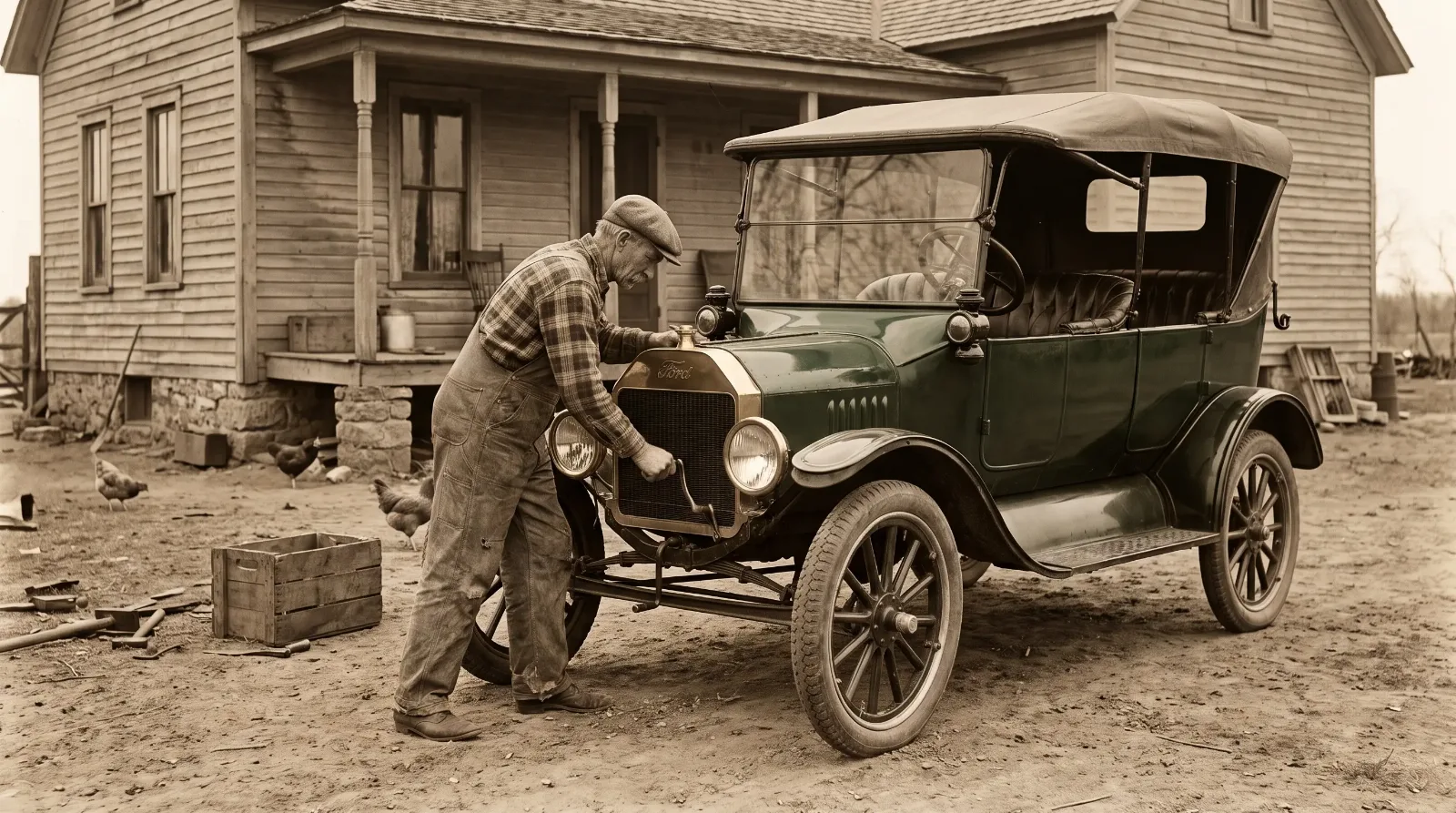
I've had more grease under my nails from Model T's than any other car, and I still say nobody who wasn't there can fully explain what that car did to this country. My grandfather bought his in 1919, a used one even then, and he drove it until the fenders rusted through. That's the story a lot of guys my age grew up hearing, and it's not sentimental exaggeration. The Model T changed who got to own a car, and by the time the Roaring Twenties hit full stride, it had already done the heavy lifting.
Car Features
6 min read
Ford Model T: The Car That Put America on Wheels
Henry Ford didn't invent the automobile, but the assembly line he built around the Model T made car ownership possible for millions of ordinary Americans.
How the Model T got so cheap
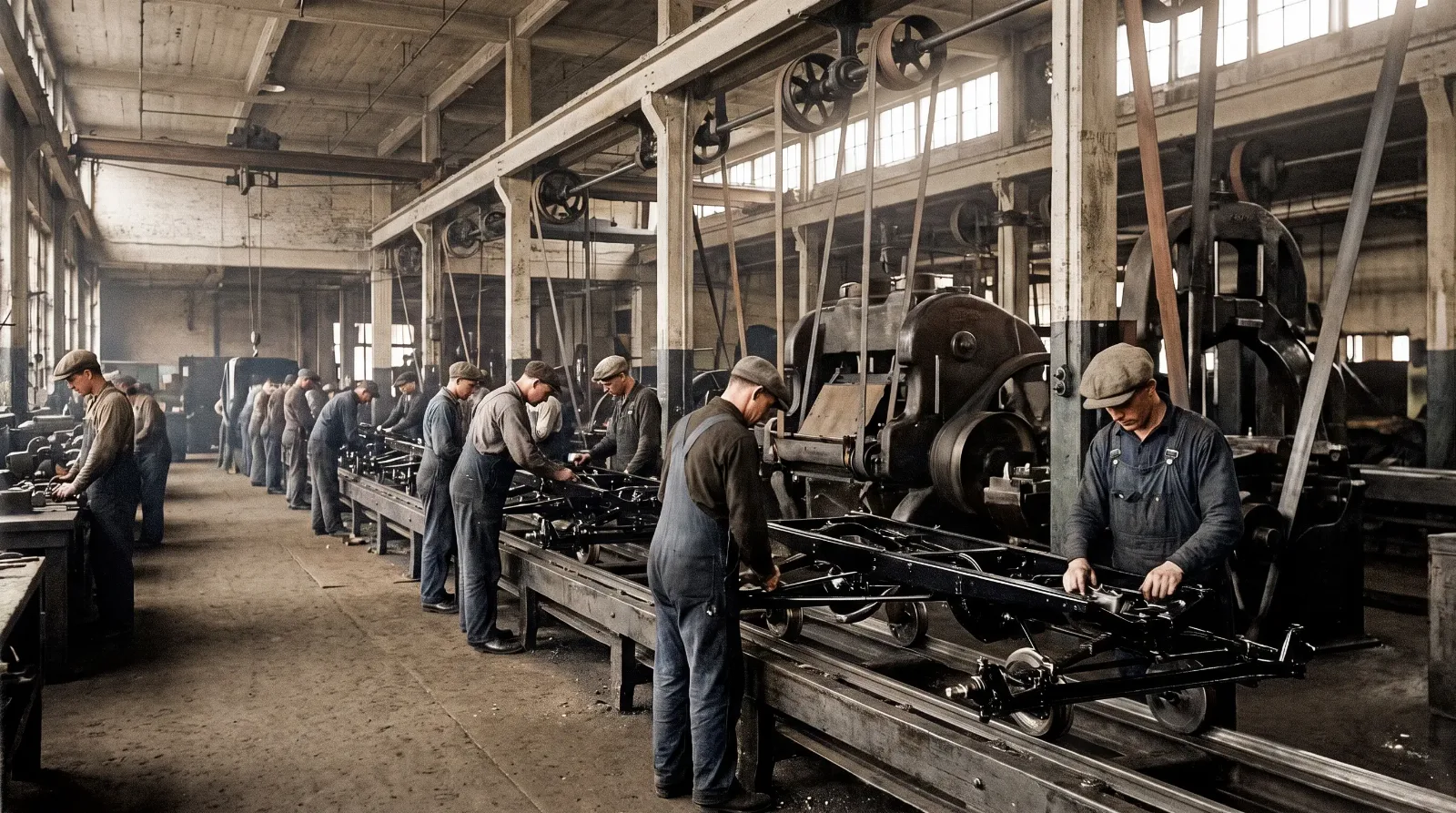
Henry Ford didn't invent the automobile, and he'd be the first to tell you that if he were still around to argue about it. What he built was a system. The moving assembly line at Highland Park, running by December 1913, cut the time to build a chassis from over 12 hours down to about 93 minutes. That's the number that gets repeated at every car show, and it's dead accurate. Prices followed the labor savings down. A touring car that ran $850 in 1908 was selling for around $290 to $415 by the early 1920s, and Ford kept squeezing costs out of the process every year he could.
The trade-off was sameness. Ford famously offered the car in any color you wanted as long as it was black, at least in the years when fast-drying black lacquer was the only paint that could keep pace with the line. That single fact tells you more about the era than a page of specs. Speed of production was the whole ballgame.
What it was like to actually drive one
People today assume a car from a hundred years ago must have been simple to operate. It wasn't, not in the way we think of simple now. The Model T used a planetary transmission worked with foot pedals instead of a floor shifter, a hand throttle on the steering column, and spark timing you adjusted yourself with another lever. Starting one meant pulling the choke, setting the spark and throttle just right, and cranking the front by hand until it caught, hoping the engine didn't kick back on you. Plenty of men broke a wrist doing it wrong. The electric starter didn't show up as an option until 1919, and even then a lot of rural buyers stuck with the crank because it was one less thing to go wrong out on a dirt road forty miles from the nearest garage.
By the 1920s the T was riding on a chassis that hadn't changed all that much since 1909, and that consistency is part of why farmers and small-town families trusted it. Every mechanic in every county had seen a hundred of them and knew exactly how to fix whatever broke.
"You didn't need a dealership to keep a Model T running. You needed a barn, a set of wrenches, and a Sears catalog for parts. That's the real reason it put America on wheels, not just the price tag."
Gary Nowak
The car that reached farms and Main Street alike
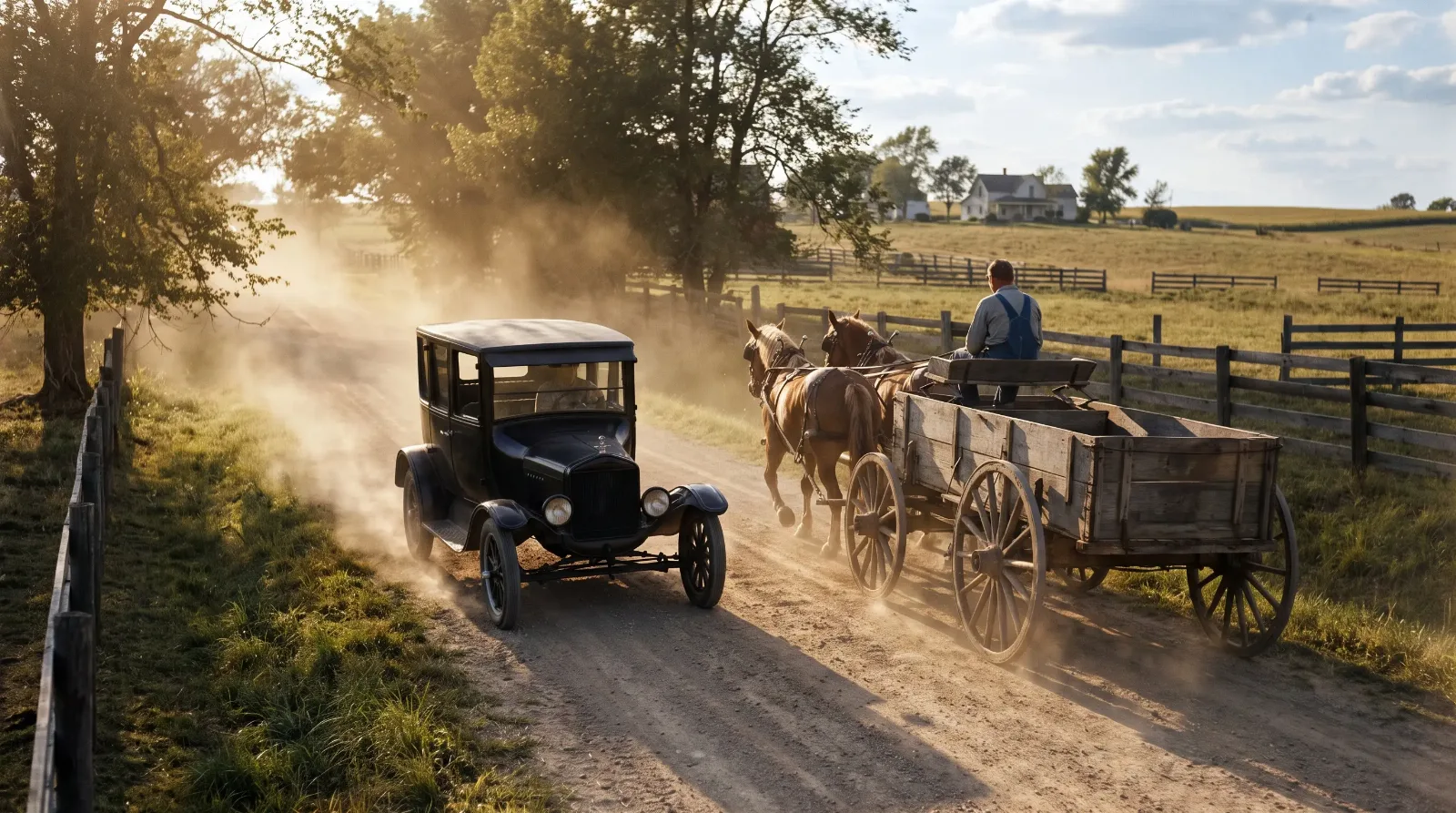
Before the T, owning a car was a city thing, a rich man's toy that needed paved roads and a chauffeur half the time. Ford aimed his advertising straight at farmers, and it worked. The Model T could be jacked up and belted to a stationary pulley to run a saw, a water pump, or a threshing machine, so it wasn't just transportation, it was a piece of farm equipment that also happened to get you to church on Sunday. Rural free delivery routes and better county roads grew up alongside Model T sales, each one pushing the other along.
In town, the T reshaped daily life just as much. Workers could live farther from the factory gate and still get to their shift on time. Families that had never traveled more than a day's wagon ride from home started taking Sunday drives to the next county over. For a fuller look at the wider cultural shift, more on ford model t history covers how the whole decade's car culture built on what the T started.
Why the Twenties finally killed it
The same stubbornness that made the T a legend eventually sank it. Ford held onto the basic design so long that by the mid-1920s, buyers who could afford a step up were choosing Chevrolet's more modern six, or a Dodge, or one of the closed sedans that didn't leave you freezing on a January commute. Closed bodies were becoming the norm rather than the exception, and the T's open touring layout started to feel old-fashioned to a generation that had grown up riding in one. Ford finally pulled the plug in 1927 to retool for the Model A, and dealers reportedly sold off the last of their T inventory at a loss just to clear the lots.
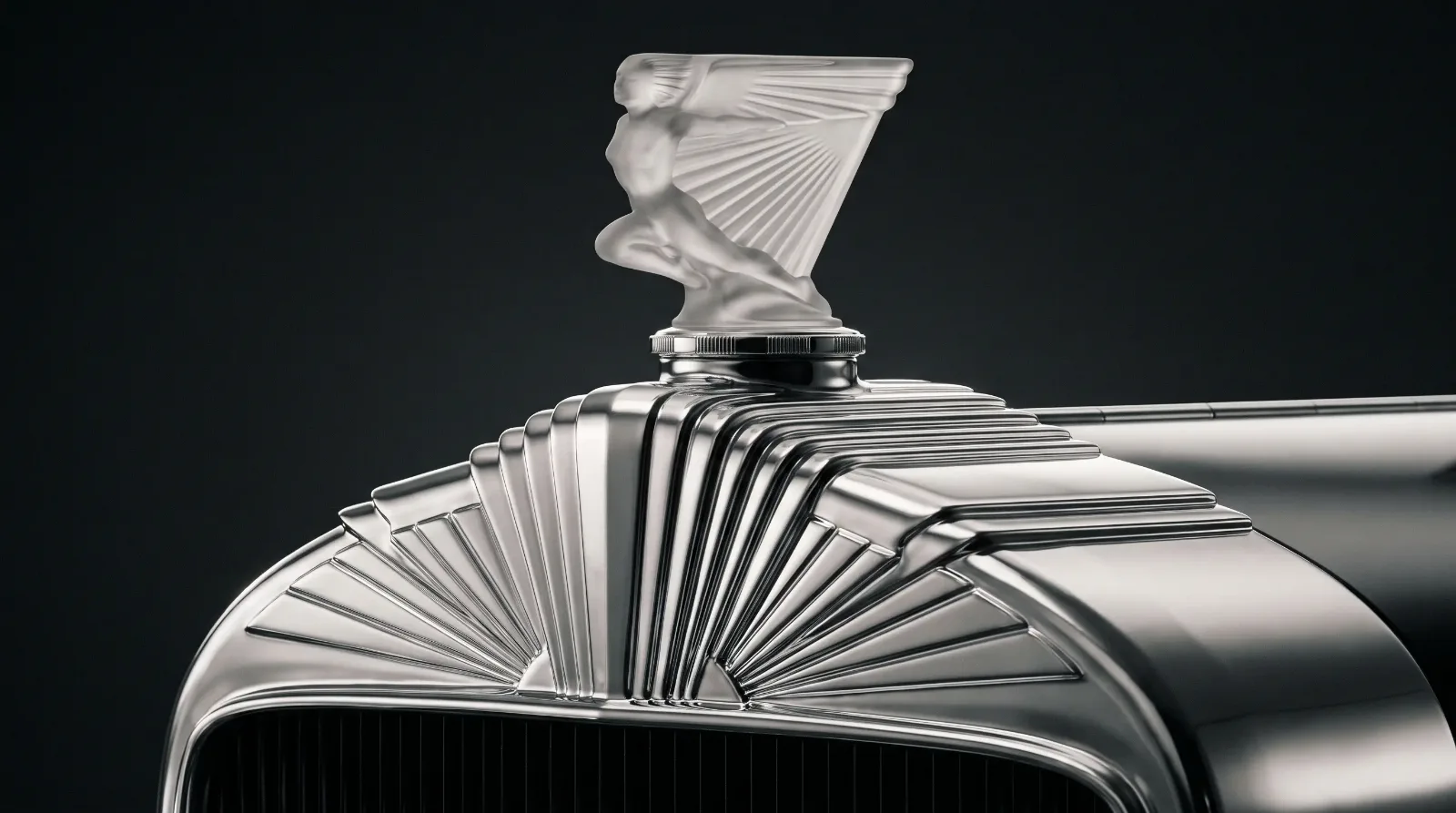
Still, nothing about the shift erases what the car did first. It's worth reading keep reading if you want to see how design sensibility moved on from the T's utilitarian shape toward something flashier as the decade wore on.
| Spec | Model T (early 1920s touring) |
|---|---|
| Engine | 2.9L inline-four, side-valve |
| Horsepower | 20 hp |
| Top speed | roughly 40-45 mph |
| Transmission | Two-speed planetary, pedal-operated |
| Price (touring, early 1920s) | around $290-$415, varying by year |
Finding and living with one today
The T's simplicity that made it beloved on the farm makes it forgiving for a modern hobbyist too, at least compared to a lot of pre-war iron with more delicate coachwork. Parts are still plentiful because so many were built, and the community around these cars is generous with knowledge. If you want to see the wider arc of what came before and after the T, the full pre-war story lays out how the whole era of American automaking developed. And if this has you itching to actually put your hands on one, there are always 1920s antiques for sale worth a look, T's included, though a good original one takes some patience to track down.
What sticks with me, every time I see one puttering down a parade route with a family waving from the front seat, is how ordinary the Model T was meant to be. It wasn't built to impress anybody. It was built so everybody could have one, and for a couple of decades in this country, that was enough to change everything.
Sources and notes
Related Reading
Have a
Classic Car
for Sale?
Reach thousands of serious classic car collectors across the US.
Sell It Here →
Are You a Classic Car Dealer?
List your full inventory and connect with targeted classic car buyers.
Join as a Dealer →

About the author
Gary Nowak
Lifelong Midwest rodder who has been building and driving traditional pre-war hot rods since the 1970s.




Comments (1)
B
Bill Cassidy
3 months ago
My neighbor has run one of these as a driver for eleven years. No trailering, no shows, just enjoying the car. That perspective doesn't get enough coverage.