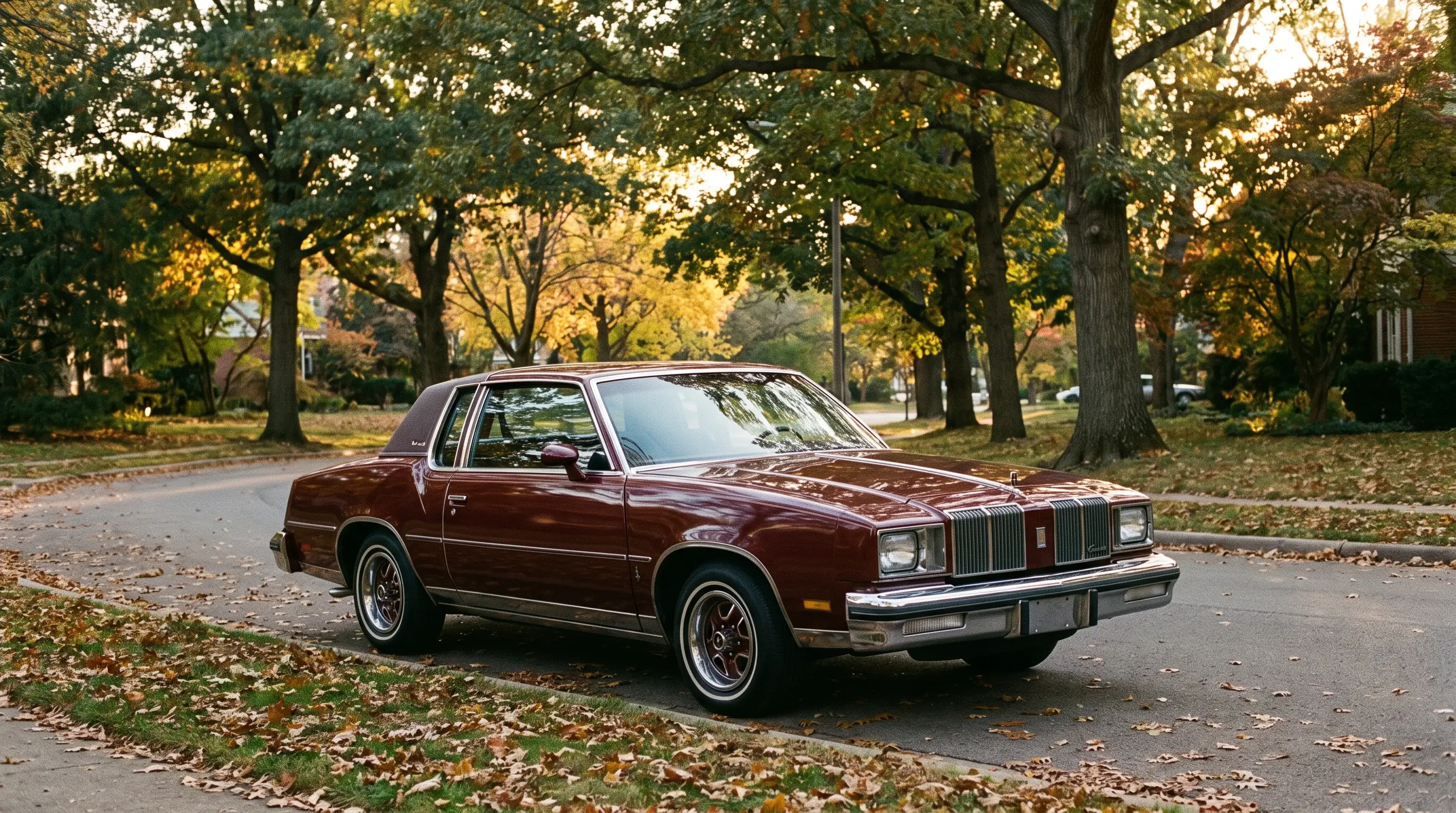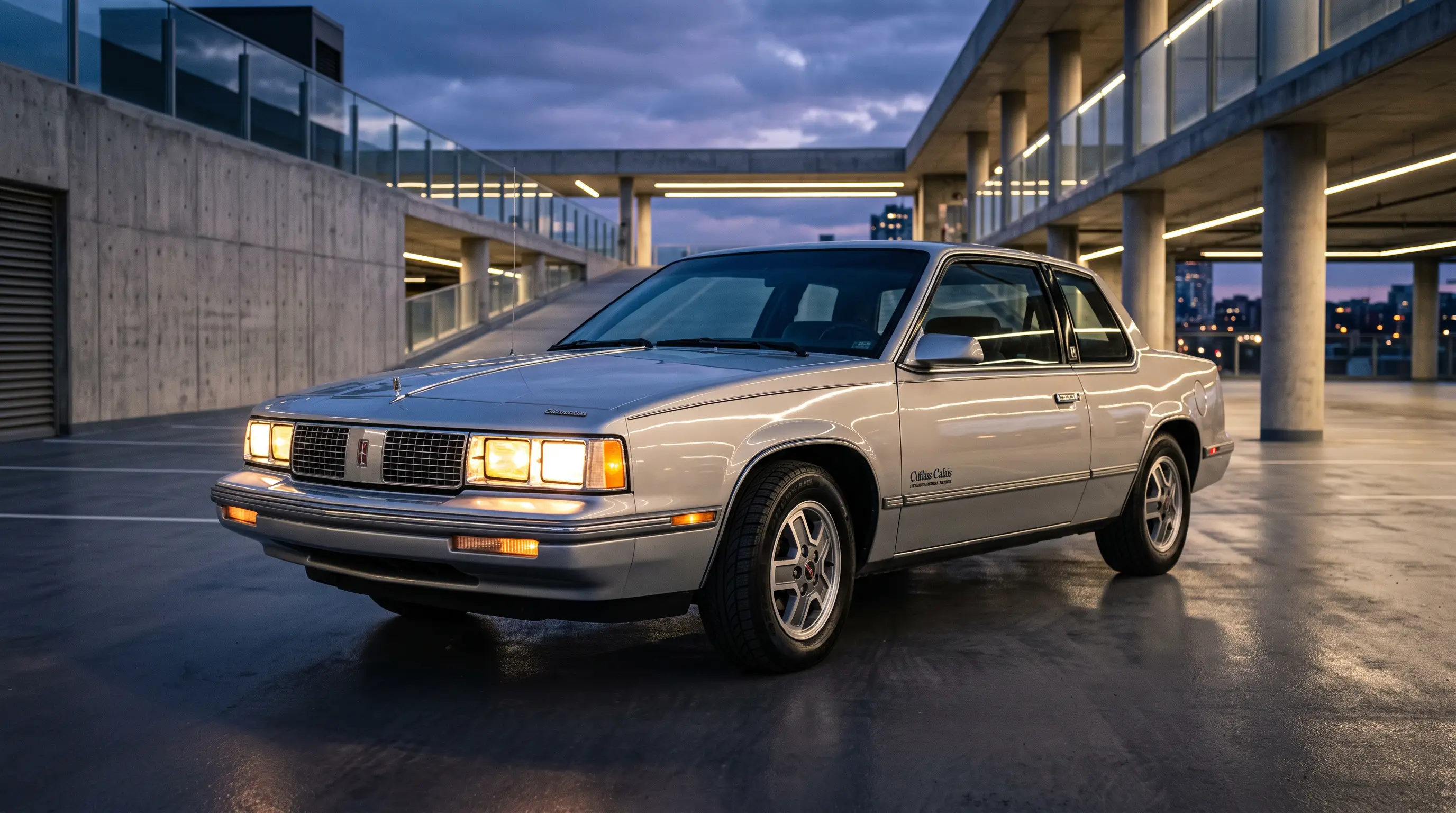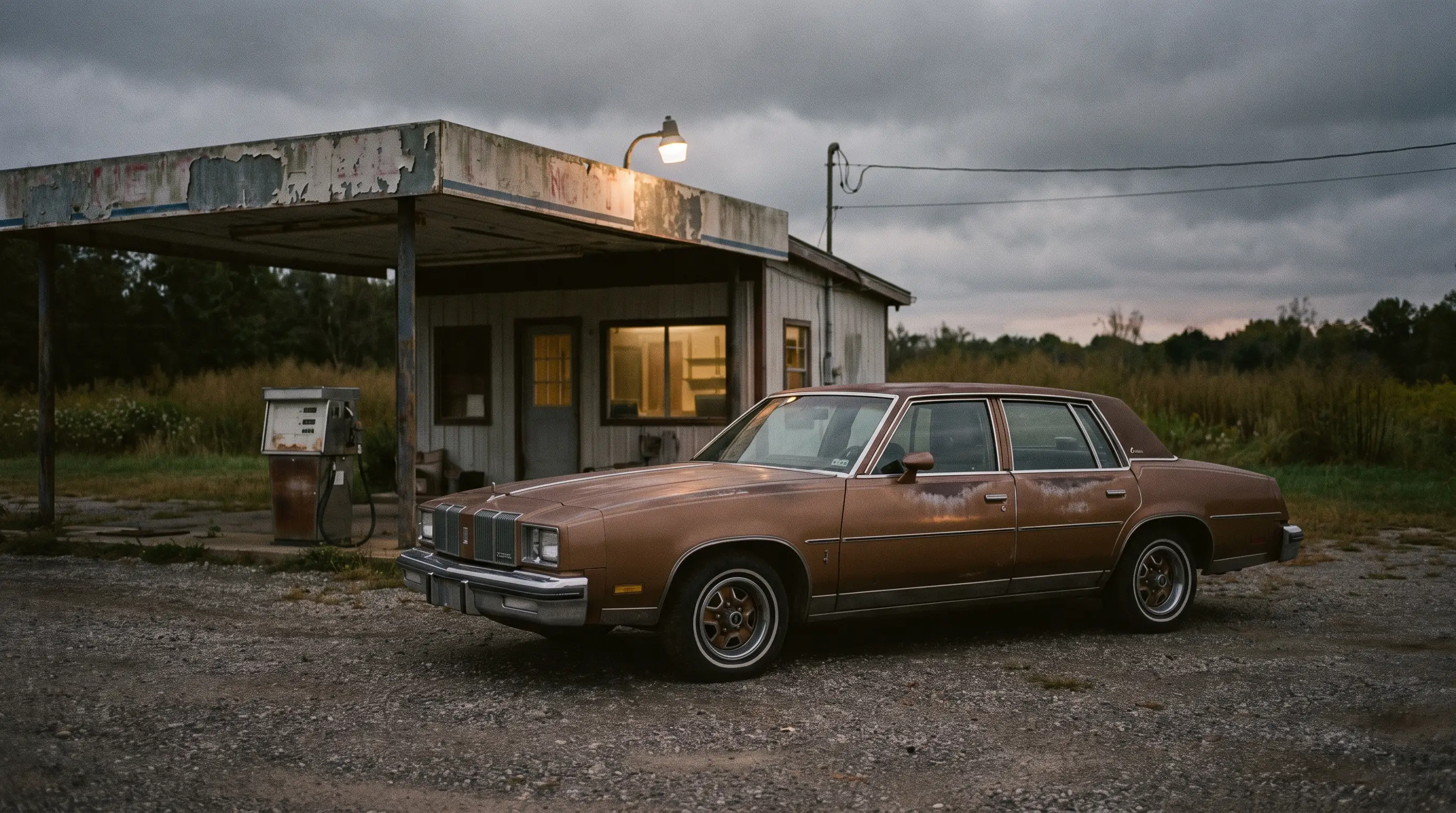
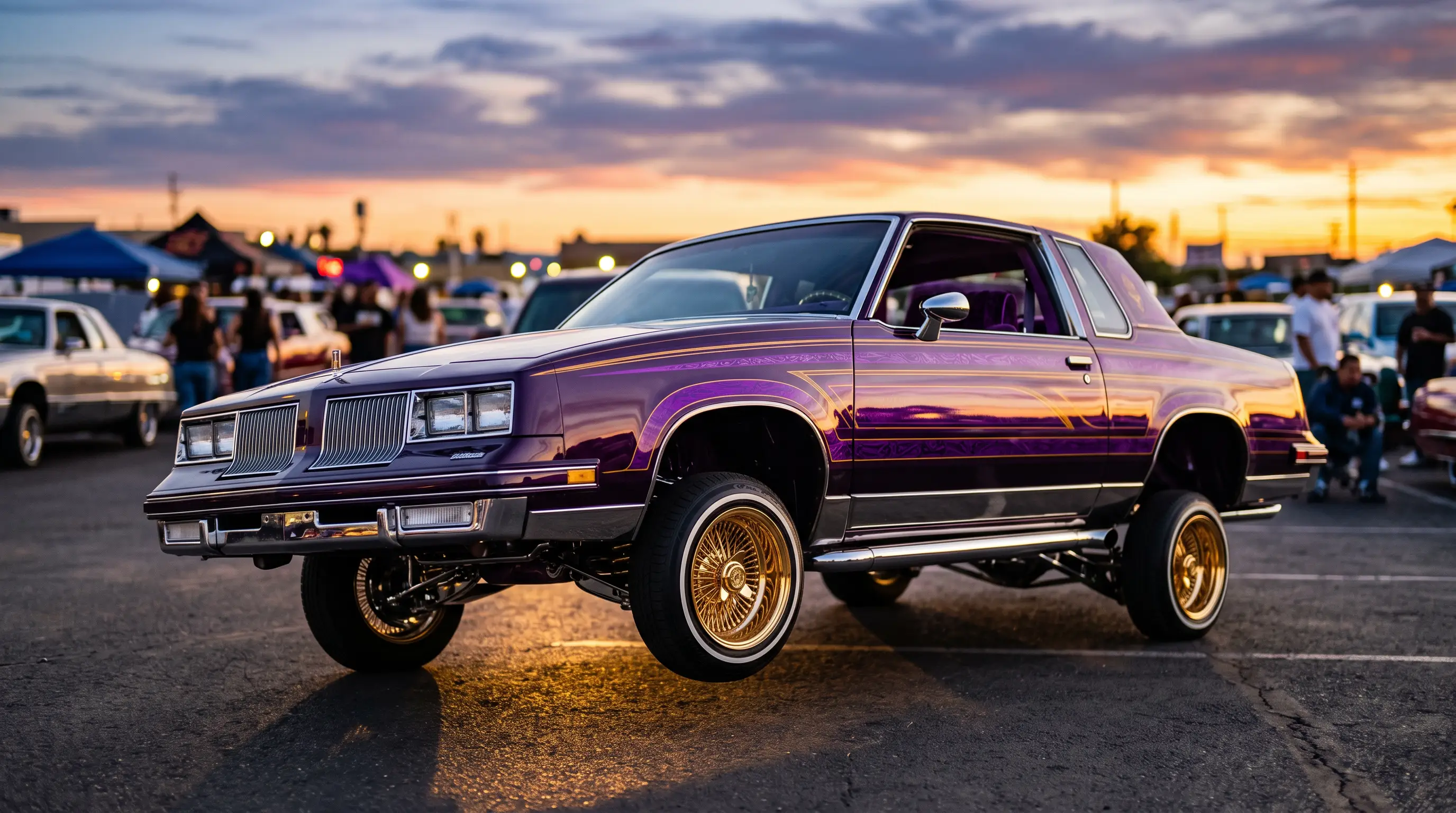
Ask ten people why they love the G-body Cutlass and you get ten different cars. One guy points at a stock 1979 Supreme with a vinyl roof and says that is the real thing, the family car his grandmother drove to church for a decade. Another walks past it toward a 1986 coupe riding low on wire wheels, candy paint catching the sun, sound system louder than the small-block underneath. A third wants to talk about drag radials and a built 307. None of them are wrong, and that is exactly why the g body cutlass cult classic label has stuck. Few American cars from the late 1970s and 1980s get claimed by so many different corners of car culture at once.
What makes this strange, in a good way, is that Oldsmobile never designed the G-body to be beloved by anybody in particular. It was a downsizing exercise, a response to gas prices and insurance tables, built to be sensible rather than iconic. The affection came later, assembled piece by piece by people who found the car cheap, willing, and endlessly adaptable.
A car nobody expected to become special
The G-body Cutlass sold in enormous numbers through the late 1970s and 1980s, which is precisely why it became a cult object rather than staying a footnote. Millions of these coupes, sedans, and wagons rolled off assembly lines in Lansing and elsewhere, and for years they were simply the used car on every corner, the one your neighbor drove to work and eventually handed down to a teenager learning to drive stick or, more often, an automatic that shifted like a sigh.
That ubiquity meant two things happened at once. First, the car earned no particular reputation, good or bad, while it was new. Second, once the original owners moved on, an enormous supply of cheap, mechanically simple coupes landed in the hands of exactly the people who like to take an ordinary car and make it their own. If you want the fuller account of how the platform got here in the first place, the downsized Cutlass covers the redesign and the reasoning behind it. The short version is that Oldsmobile built a practical car, and practicality turned out to be the perfect foundation for obsession.
The economics that built a cult
Cult status in the car world almost always has a financial story underneath the emotional one, and the G-body's is straightforward. These cars were built on a chassis shared with the Chevrolet Monte Carlo, the Buick Regal, and the Pontiac Grand Prix, which meant suspension bushings, brake components, and interior trim interchanged across four GM divisions. A part that was hard to find for a Monte Carlo was often sitting on a shelf under a Cutlass listing instead, and vice versa. That shared parts bin never really dried up.
Add an engine bay generous enough to swallow the original Oldsmobile V8, a Chevrolet small-block, or eventually an LS swap without much drama, and you have a car that rewarded curiosity instead of punishing it. Nobody felt guilty cutting one up for a project, because for most of the 1990s and 2000s a decent driver-quality coupe cost less than a good set of wheels. Cheap parts plus cheap cars plus a chassis that tolerates modification is the exact recipe that turns a used car into a cult classic, and the G-body hit all three at once.
Three subcultures, one coupe
The clearest evidence of cult status is that more than one community claims the car as its own, and the G-body Cutlass has managed at least three. Drag racers liked the light body, the strong rear axle, and a chassis that responds well to a built small-block and a set of slicks. Street builders liked the flat, honest sheet metal, which takes paint and graphics beautifully and never looks fussy no matter what era of custom style gets applied to it. And an entire lowrider scene, which grew up around the coupe's roofline and formal proportions, saw a car that looked exactly right sitting low over a set of spoke wheels, a story that deserves its own telling elsewhere in this series.
None of those groups were thinking about each other when they picked the car. They were thinking about what the platform let them do cheaply, and the platform said yes to all of them. That is a rarer trait than it sounds. Plenty of old coupes are cheap. Few of them flex in three completely different directions without losing what made them appealing in the first place.
"I have stood at the same show and watched a bone-stock Supreme owner and a slammed lowrider owner argue about whose car is the real Cutlass, and neither one budged an inch. That argument, repeated at every show across the country, is the whole reason this car has a cult following instead of just a fan club."
— Patrick Walsh
What actually owning one feels like
Part of the cult appeal is simply how forgiving the car is to live with. The G-body was never fast in stock form, and the base engines, a 231 V6 or a 260 or 307 Oldsmobile V8, were built for cruising rather than competing. But that same modesty means the mechanical systems are simple enough for a patient owner to sort out in a driveway with hand tools, carburetors and points-era electronics included on the earliest examples. There is very little on this car that requires a specialist, which matters enormously to a hobby built on people learning as they go.
The community around the car reflects that same accessibility. Online forums dedicated to G-body Oldsmobiles, Buicks, Chevrolets, and Pontiacs trade parts numbers and swap advice constantly, and because the cars share so much hardware, advice from a Monte Carlo thread often solves a Cutlass problem without translation. Few classic car communities are this cooperative across brand lines, and that cross-pollination is part of what keeps the cult growing rather than aging out.
Why the affection keeps spreading
The most telling sign that a car has crossed from used to cult is that younger enthusiasts, who never owned one new and have no nostalgia for the original showroom experience, keep adopting it anyway. That is exactly what has happened with the G-body Cutlass. Builders in their twenties and thirties are buying coupes their grandparents might have driven, not out of sentiment but because the car still does what it always did: it takes modification well, it costs less than most alternatives, and it looks right doing almost anything you ask of it.
Prices have climbed from the five-hundred-dollar era, and a clean, unmolested Supreme or a documented performance trim now commands real money. But relative to nearly everything else from the muscle and personal-luxury eras, the G-body Cutlass remains one of the more attainable ways into serious car culture. That balance, interesting enough to matter and cheap enough to actually own, is the entire definition of a cult classic, and it is why this particular Oldsmobile keeps finding new believers instead of fading into a swap meet memory.
For more on where the story goes from here, the next story in this set covers a very different chapter in this same platform's history.
Sources and notes
- General Motors G platform (RWD), Wikipedia
- Oldsmobile Cutlass Supreme, Wikipedia
- GM G-Body Engine ID Guide, Ground Up Motors
- 1978-1988 Oldsmobile Cutlass Supreme G-Body Guide, Moto Gallery
- The Final G-Body Oldsmobile Is Becoming a Genuine Classic, Hagerty Media
- Oldsmobile Cutlass Generations Guide, HotCars