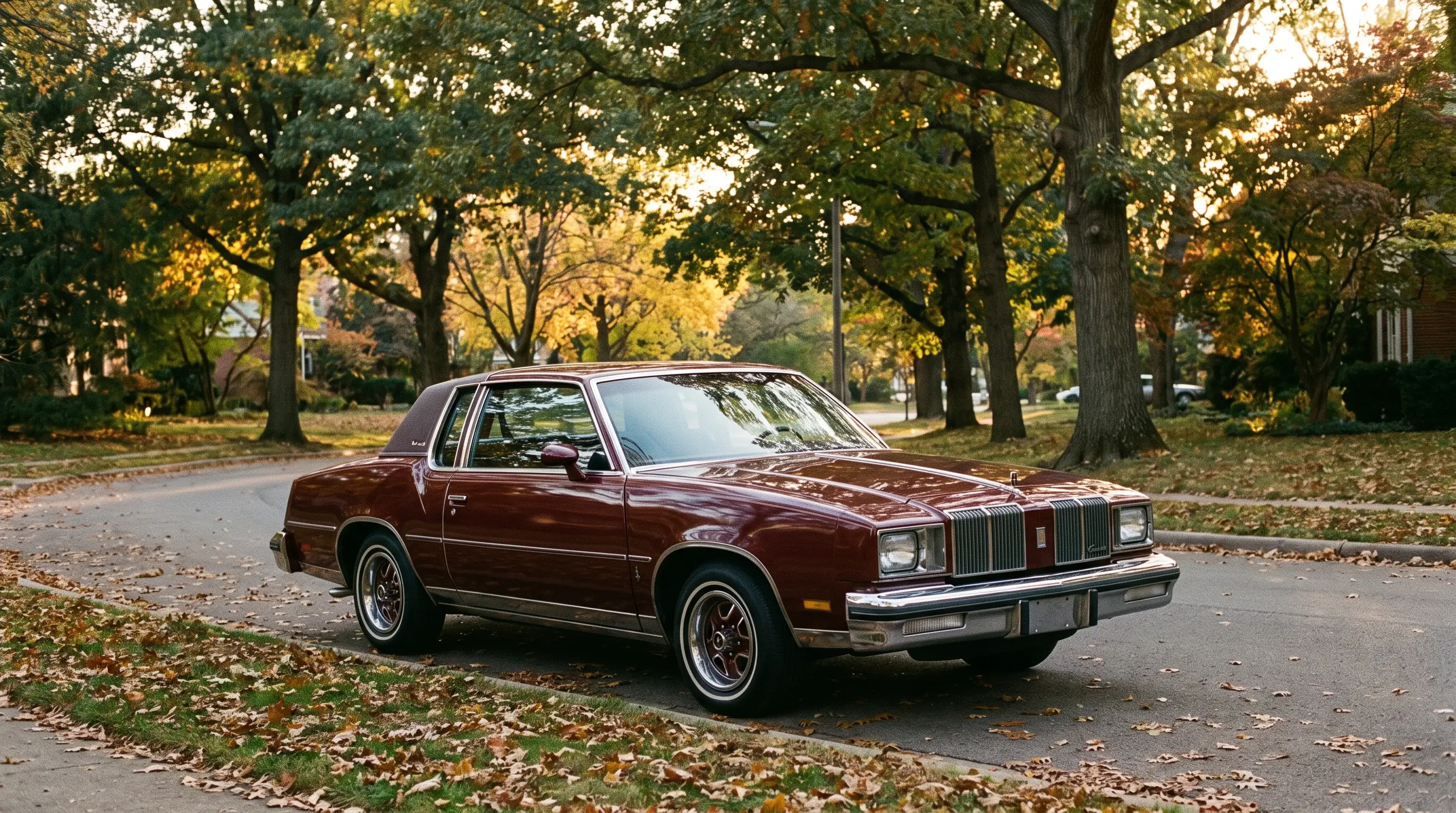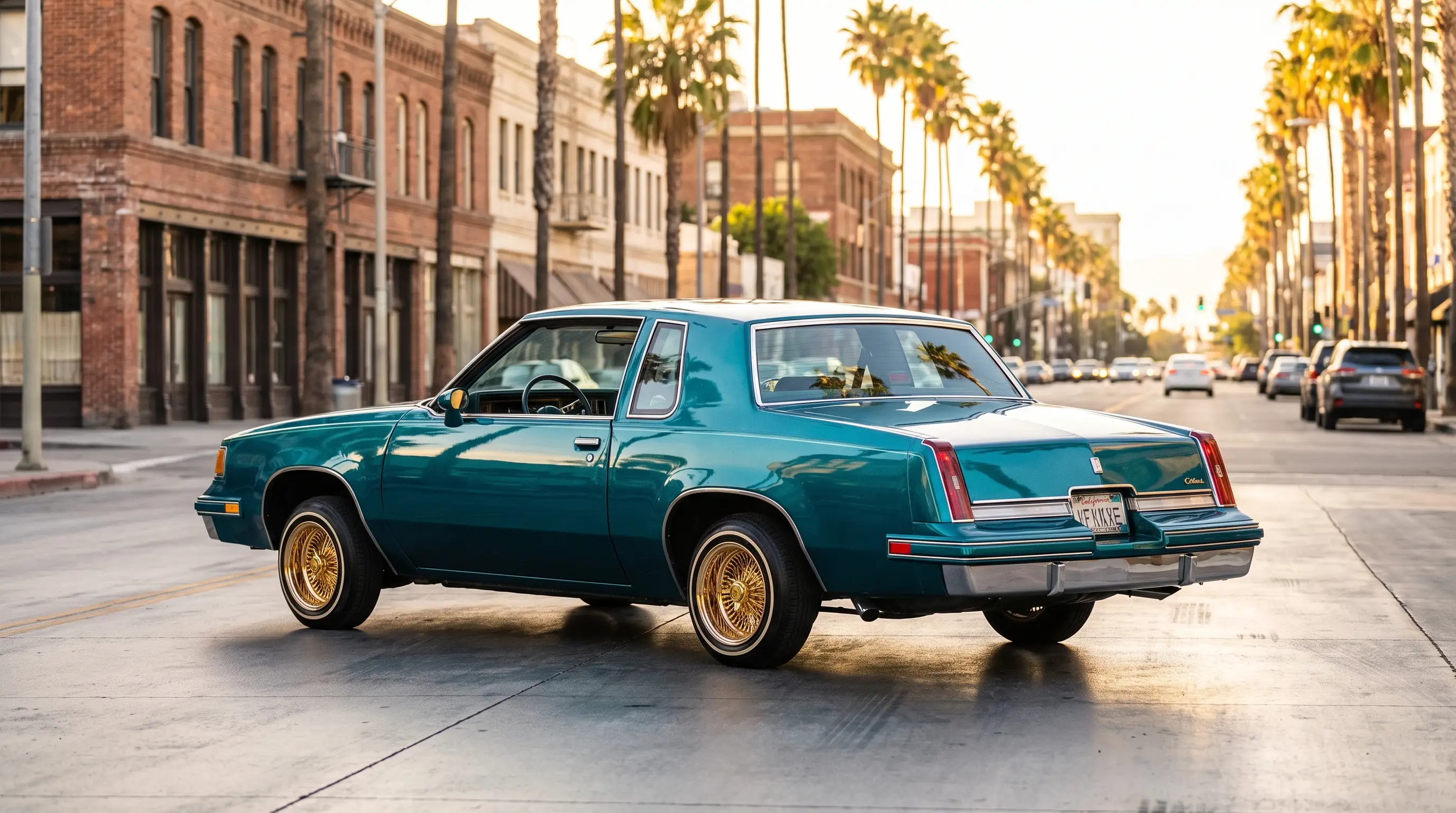
A retired schoolteacher in Ohio still has the window sticker from the Cutlass Supreme Brougham her father bought new, folded into a kitchen drawer for four decades, and she can recite the options list from memory faster than most collectors can look up a build sheet. That kind of devotion rarely attaches to a plain coupe. It attaches to the g body cutlass special editions, the Broughams and appearance packages and anniversary trims that Oldsmobile layered onto the basic Cutlass Supreme throughout the 1978 to 1988 run, giving ordinary buyers a way to feel like they had bought something a little more considered than the car in the next driveway.
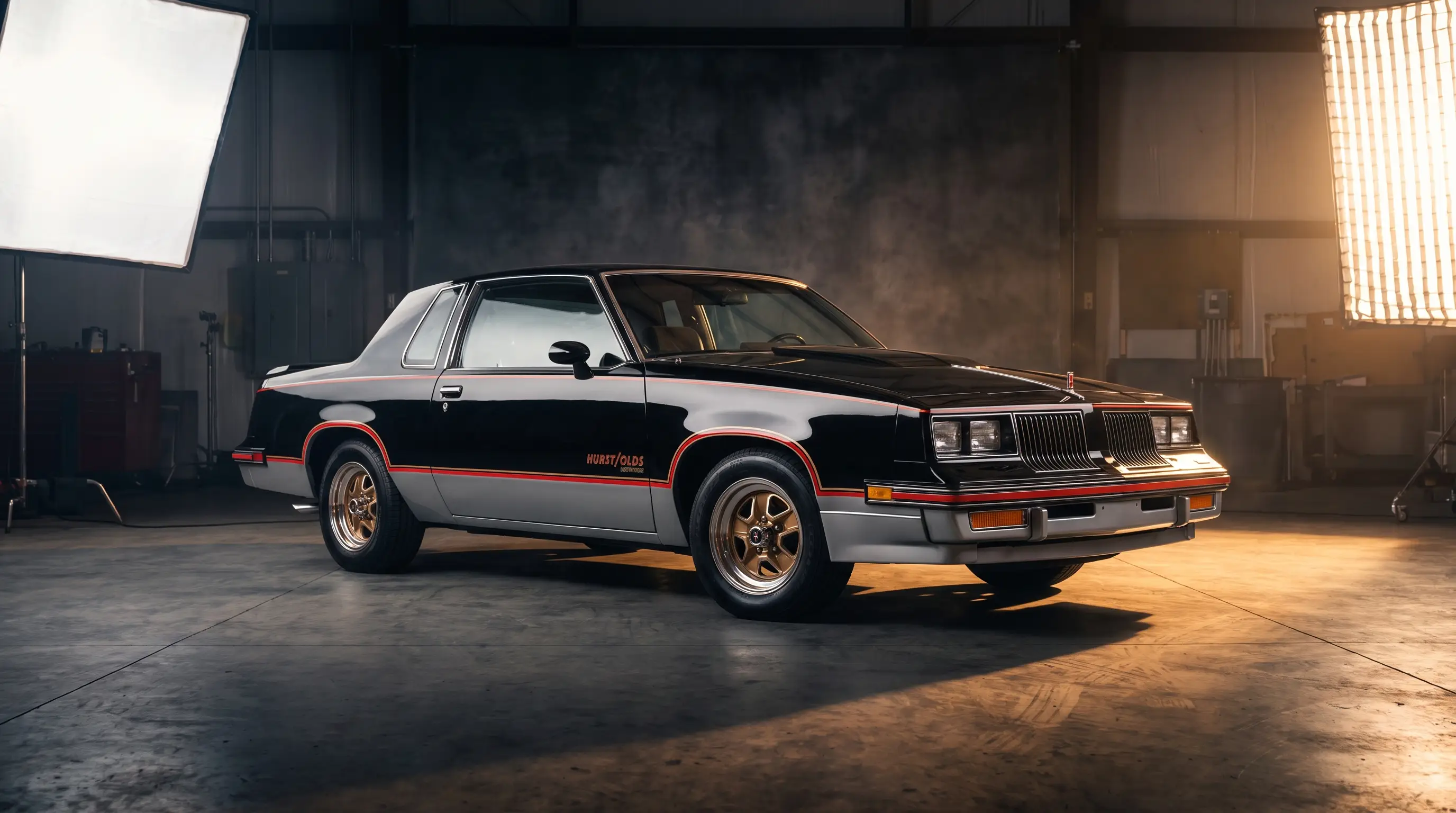
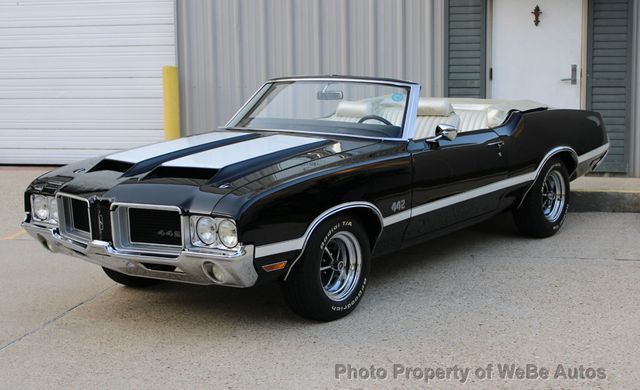
These were never performance cars in the way the Hurst/Olds or the revived 442 were performance cars. They sold on comfort, brightwork, and the simple pleasure of a well-appointed interior, and today they represent one of the more overlooked corners of the whole Cutlass story.
Walk any decent-sized car show today and you'll see plenty of 442s and Hurst/Olds cars getting the crowd. Walk the same show a little slower and you'll usually find one or two Brougham or anniversary Cutlass Supremes parked quietly nearby, owned by someone who bought the car new or inherited it, and who will talk your ear off about the fabric choice and the dealer who ordered it if you let them. That quieter devotion is exactly what makes this corner of the hobby worth a longer look.
The Brougham approach to a plain coupe
Oldsmobile understood, better than most of its GM siblings, that a large slice of the American car-buying public wanted comfort dressed up as prestige rather than outright speed. The Cutlass Supreme Brougham trim answered that appetite directly, adding a padded vinyl roof, additional sound insulation, plusher upholstery choices, and exterior brightwork that separated it visually from the base Supreme coupe sitting one trim level down.
None of this changed what was under the hood. A Brougham buyer was still choosing between the same 231 V6 and Oldsmobile V8 options as anyone else on the lot. What they were buying was presentation, and Oldsmobile leaned into that hard, running Brougham advertising that emphasized quiet cabins and comfortable rides over anything resembling a 0-to-60 number. It worked. The Brougham became one of the most common ways buyers dressed up an otherwise ordinary G-body coupe, and it remains one of the more affordable ways to own a factory special edition today.
Anniversary badges and appearance packages
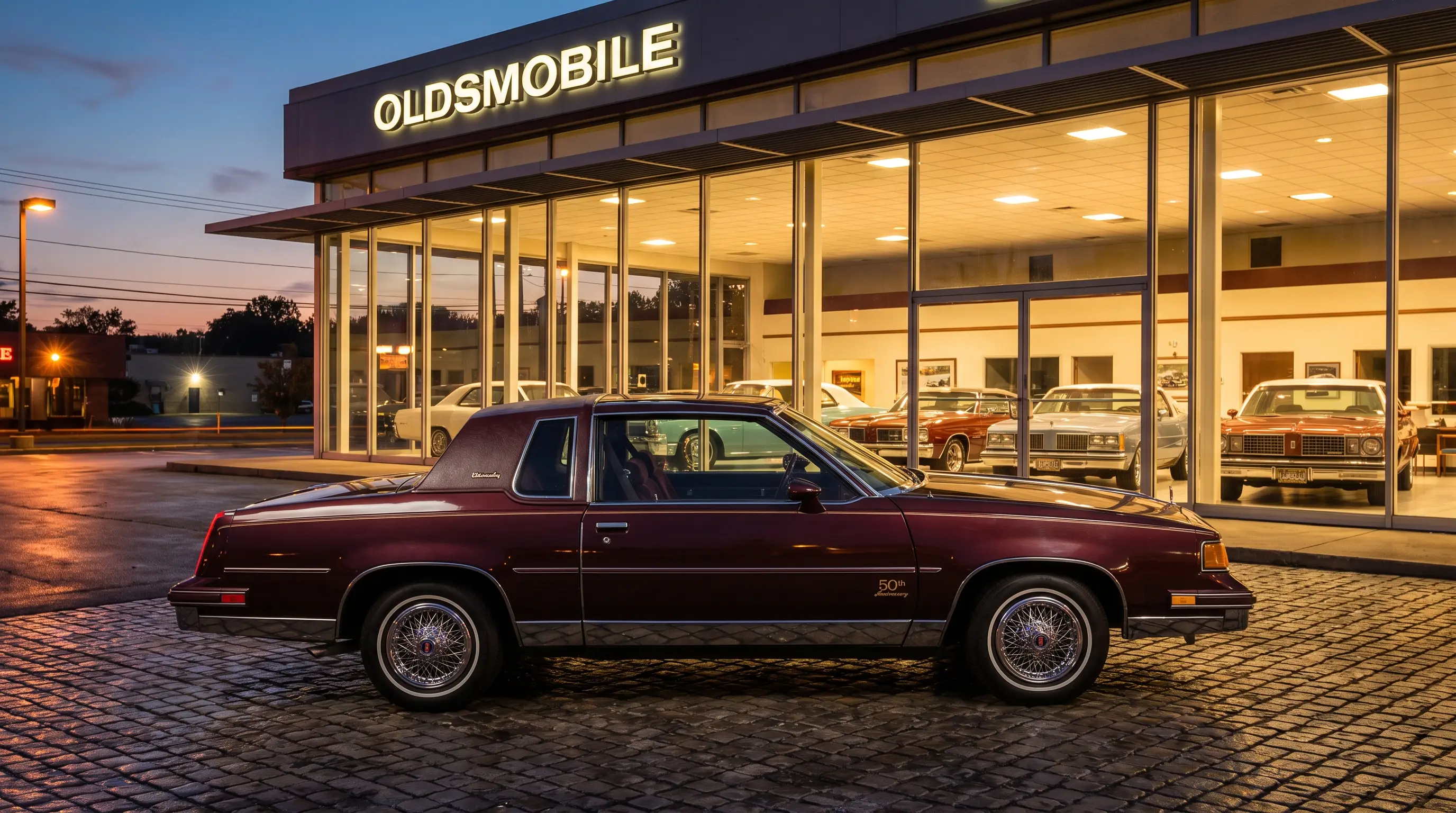
Beyond the Brougham, Oldsmobile ran a rotating set of appearance packages across the G-body years, often tied to dealership promotions rather than a national brochure listing. Oldsmobile itself was founded in 1897, which made 1972 its 75th anniversary and 1987 its 90th, and the division marked milestone years across its lineup from time to time. The clearest documented example on a G-body platform is the Hurst/Olds itself, which carried 15th-anniversary badging for the 1983 model year to mark Hurst/Olds' 1968 debut (the mechanically identical 1984 car dropped the anniversary logos), rather than the Cutlass Supreme carrying Oldsmobile's own corporate anniversary. Cutlass Supreme appearance packages of the era leaned more on special emblems, two-tone paint treatments, or limited color and interior combinations offered for a single model year than on anniversary numbers.
These packages rarely changed the mechanical character of the car. What they offered instead was scarcity, a combination of color, stripe, and trim that a dealer only ordered in limited numbers, which is exactly why they interest collectors now even though they made no performance claims when new. A buyer walking a dealer lot in, say, 1985 might have chosen a Cutlass Supreme in a specific two-tone combination simply because it looked sharp, with no idea that decades later a documented, correctly optioned example of that same package would draw real attention at a show.
Regional and dealer specials
Because the Cutlass Supreme sold in such enormous volume, individual dealer groups and regional zones sometimes worked with Oldsmobile to create their own limited packages, bundling specific option combinations under a unique name for local advertising purposes. These regional specials rarely show up in national brochures, which makes them some of the hardest G-body variants to research today. A collector chasing one of these cars is often relying on old dealer advertising, period newspaper clippings, or word of mouth from someone who remembers the original promotion, rather than a clean factory reference.
That obscurity is part of the appeal for a certain kind of buyer. A documented, dealer-special Cutlass Supreme, verified through period paperwork rather than a national option code, offers a genuinely rare story inside a car that most people assume was built by the hundreds of thousands with no meaningful variation at all.
"Everybody assumes a Cutlass Supreme is a Cutlass Supreme. Then someone pulls out a dealer flyer from 1984 advertising a color and stripe package nobody has seen since, and suddenly the conversation changes completely. That is the whole appeal of chasing these special editions. The rarity was hiding inside a car everyone thought they already understood."
— Patrick Walsh
How the Cutlass Supreme stacked up against its GM siblings
The Cutlass Supreme shared its G-body bones with the Buick Regal, the Chevrolet Monte Carlo, and the Pontiac Grand Prix, and every one of those divisions ran its own version of the same comfort-and-prestige playbook. What set the Oldsmobile version apart wasn't a mechanical advantage, since the underlying platform and drivetrains overlapped heavily across all four cars. It was the specific way Oldsmobile positioned the Cutlass Supreme as a slightly more attainable, slightly less flashy alternative to the Buick, while still outselling every one of its siblings for most of the G-body run.
That sales dominance explains why special editions matter so much to collectors chasing this era now. A car built in enormous volume needs something to separate one example from the next hundred thousand, and Oldsmobile's answer was never a bigger engine. It was always a badge, a color, or a trim level that made a buyer feel like their particular Cutlass Supreme had been considered rather than mass-produced. A Regal buyer got a similar pitch in Buick language. The Cutlass Supreme just did it at a scale none of its siblings matched, which is exactly why there's more variety to chase within the nameplate today.
What holds value among collectors today
Among the special editions, the ones that draw the most serious collector interest tend to share two traits: verifiable documentation and a limited, identifiable production run. A Brougham with clear paperwork, a correctly matched interior, and an unmodified drivetrain will always find a buyer, since the trim's comfort-first appeal has aged well with owners who want a pleasant classic to drive rather than a project. Anniversary and dealer-special packages command more depending entirely on how well the specific combination can be proven, since badges and stripe kits are the easiest thing on any car to fake or add later.
| Package type | What to verify |
|---|---|
| Cutlass Supreme Brougham | Correct interior trim level, factory padded roof, matching option codes |
| Anniversary appearance packages | Correct badging, factory two-tone paint combination, build sheet if available |
| Dealer or regional specials | Period dealer advertising, original invoice, or documented provenance |
For anyone drawn to this quieter side of Cutlass collecting, the research is half the fun, and the payoff is a genuinely uncommon car hiding behind one of the most common nameplates of its era. To understand how these trims fit into the wider G-body story, the G-body chapter lays out the full lineup these special editions were built from, and if color and appearance is what drew you to this piece, another angle on the same cars is worth exploring next.
Sources and notes
- Oldsmobile Cutlass Supreme - Wikipedia
- Curbside Classic: 1986 Oldsmobile Cutlass Supreme Brougham Sedan
- Curbside Classic: 1978 Cutlass Supreme Brougham
- Rare Classic: 1983 Hurst/Olds 15th Anniversary Edition - Curbside Classic
- 15th Anniversary Model: 1983 Oldsmobile Hurst/Olds - Barn Finds
- History of Oldsmobile - Oldsmobile Club of America