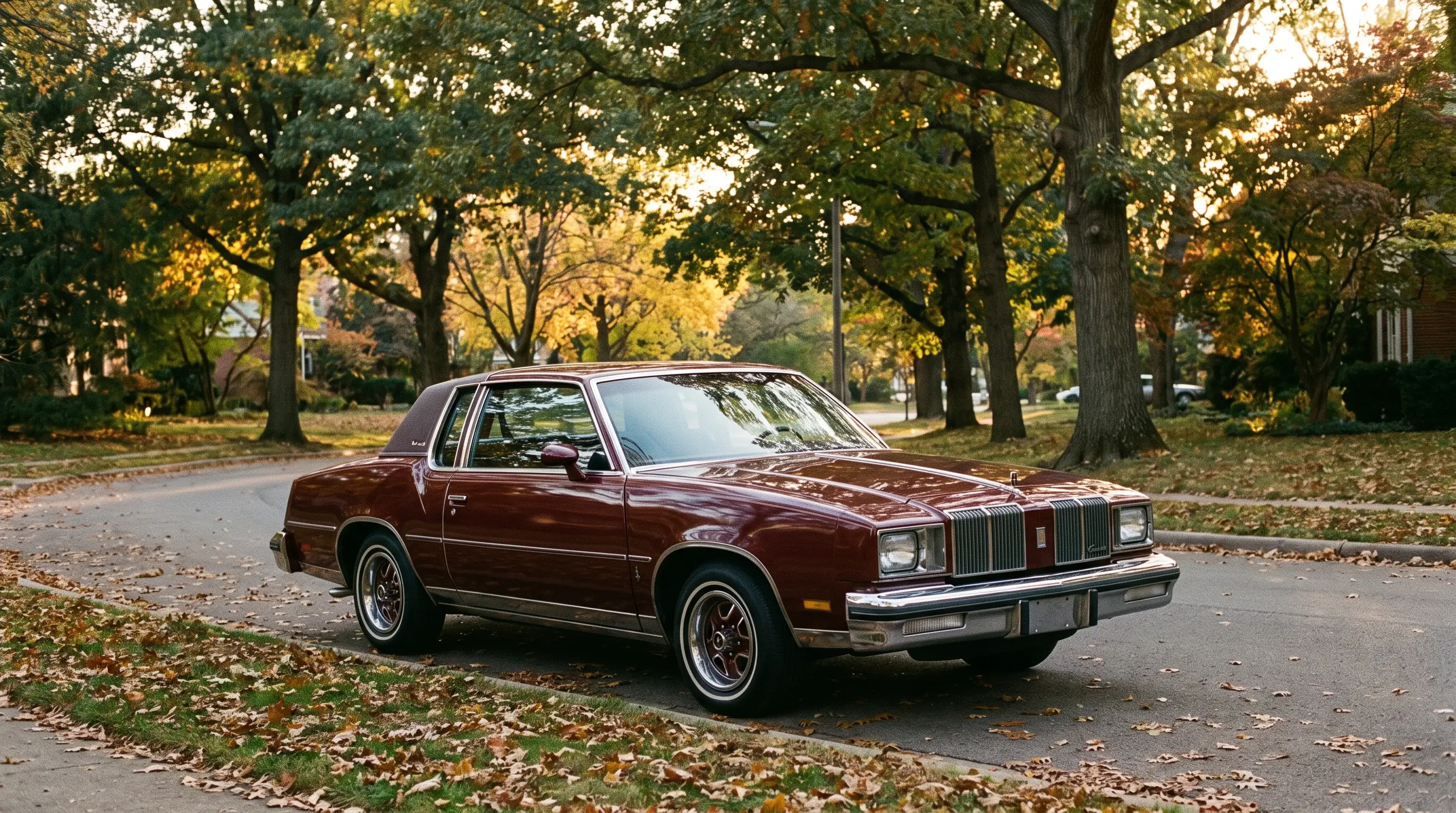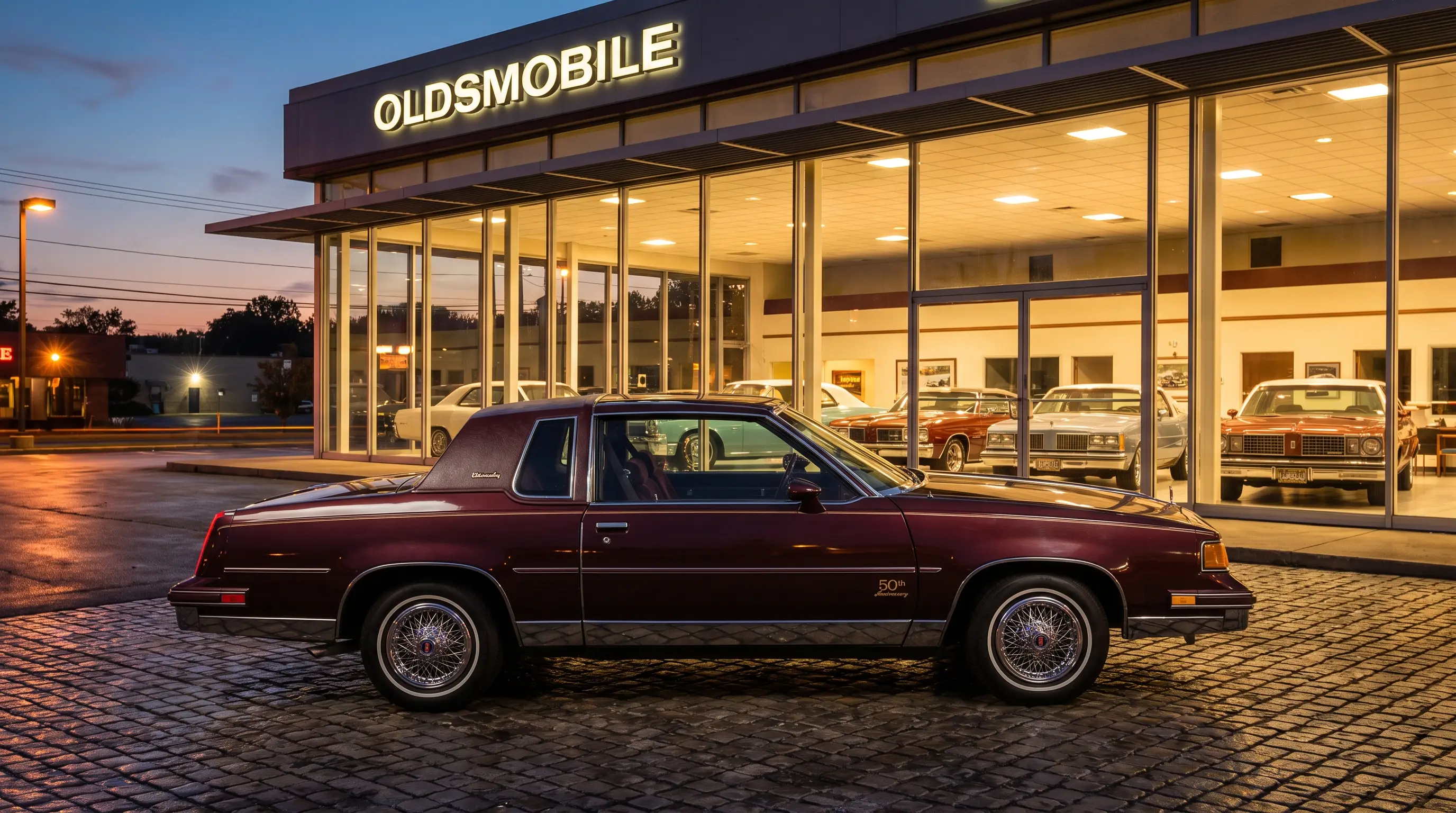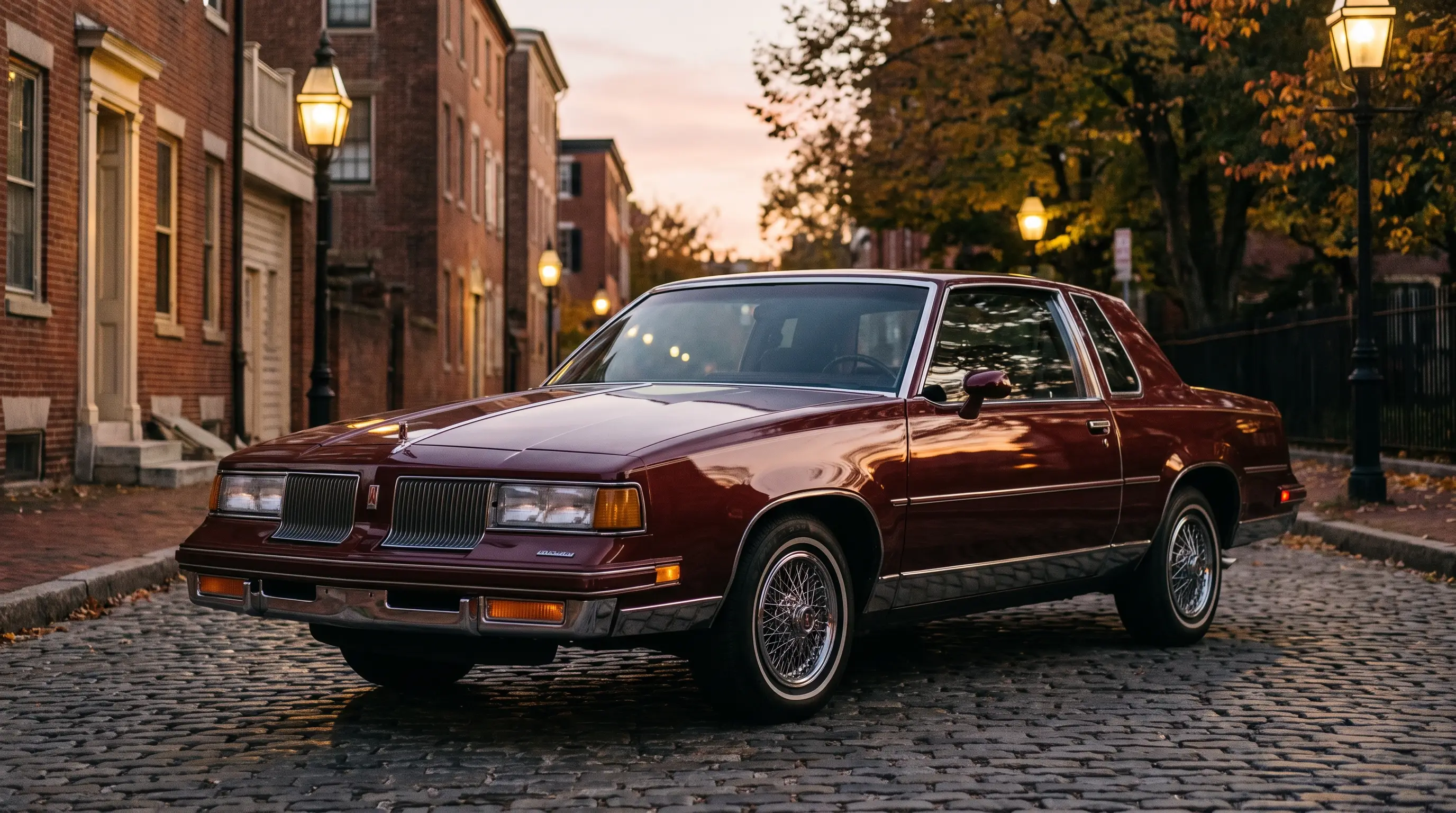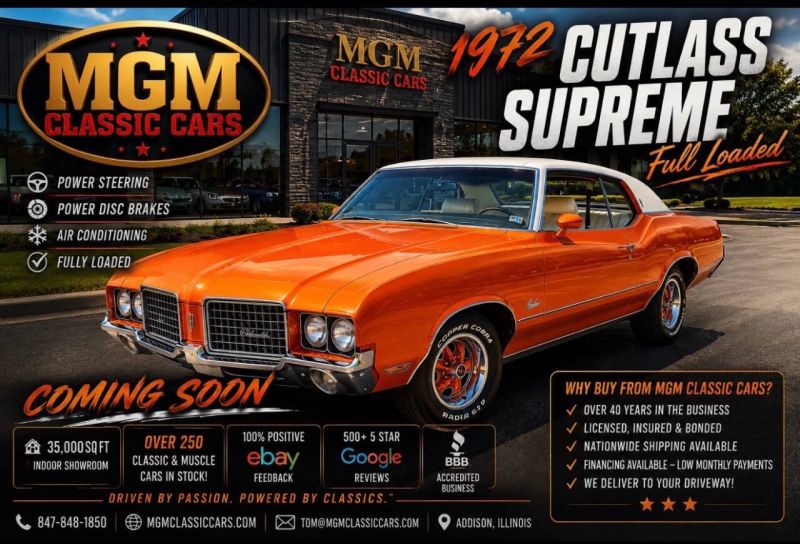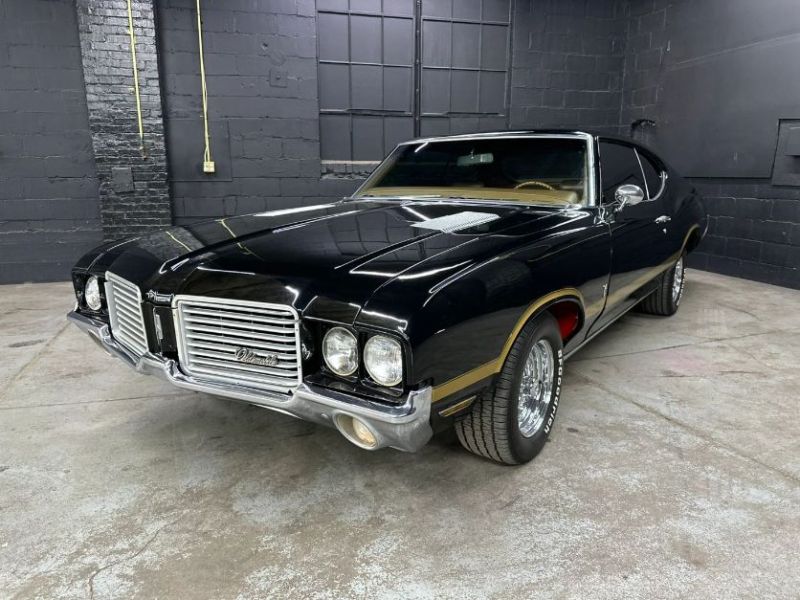
Pull up to a G-body Cutlass Supreme show display and the paint says as much about the era as the sheet metal does. A row of 1979 through 1987 coupes in Colonial Yellow, Firethorn Red, and Cameo White reads like a color chart of late-1970s and 1980s American taste, moving from earthy browns and yellows toward brighter reds, blues, and two-tone combinations as the decade wore on. The Oldsmobile Cutlass Supreme was the best-selling car in America for several years running in that stretch, and its color palette had to do a lot of work: appeal to a retired couple buying a Brougham and a younger buyer eyeing a Hurst/Olds in the same showroom.
The early G-body years, 1978 and 1979, carried over a lot of the muted, sun-baked color sensibility of the mid-1970s. Camel Tan, Bittersweet, and Sable Brown Metallic were common on Salon and Brougham trims, usually paired with a matching or contrasting vinyl half-roof. It was a look built for suburban driveways, not stoplight drag races, and it matched a buyer base that wanted a smaller, more efficient Cutlass without giving up the formal Brougham identity. Beige and tan interiors reinforced the same mood: comfortable, a little conservative, aimed at someone cross-shopping a Buick Regal or a Chevrolet Monte Carlo.
Wagon and sedan buyers, before those body styles moved over to the front-wheel-drive Ciera in 1982, tended to order even more conservative colors than the coupe crowd. Sable Brown, Yellow Beige, and Sherwood Green Metallic showed up disproportionately on Cutlass Cruiser wagons, often paired with simulated wood-grain side paneling that added its own layer to the color story. That wood-grain treatment, standard on many wagons and optional on some Salon coupes, meant the paint underneath had to be chosen carefully so it didn't clash with the amber-toned trim running down the flanks.
How the palette shifted through the early 1980s
By 1981 and 1982, Oldsmobile's color offerings had brightened noticeably. Medium Blue Metallic, Bright Red, and Charcoal Gray Metallic pushed the lineup toward a crisper, more formal look, while two-tone paint treatments, a darker lower body with a lighter upper, became a standard option rather than a novelty. The two-tone scheme did real visual work on a car this size: it broke up the Cutlass Supreme's tall doors and long deck, making the coupe look lower and tighter than its actual proportions.
Vinyl roof colors mattered just as much as the paint underneath them. A Landau half-vinyl top in white, dark red, or camel over a body color that didn't quite match was common enough that Oldsmobile dealers rarely blinked at the combination. That mismatch, jarring to a modern eye trained on monochrome cars, was simply how a formal American coupe presented itself in 1982. The G-body chapter of the Cutlass story covers why that formality mattered so much to Oldsmobile's buyers, and the paint and vinyl combinations were the visible proof of it.
The Hurst/Olds palette broke the mold
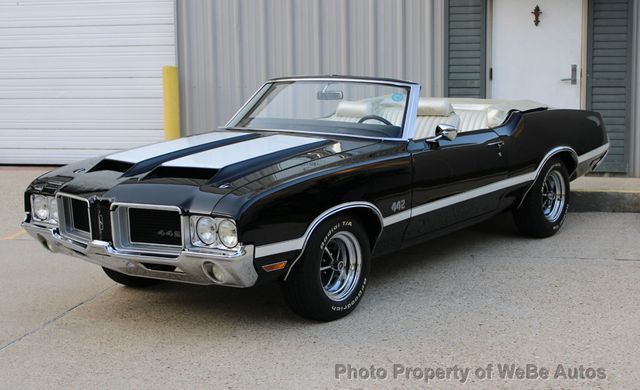
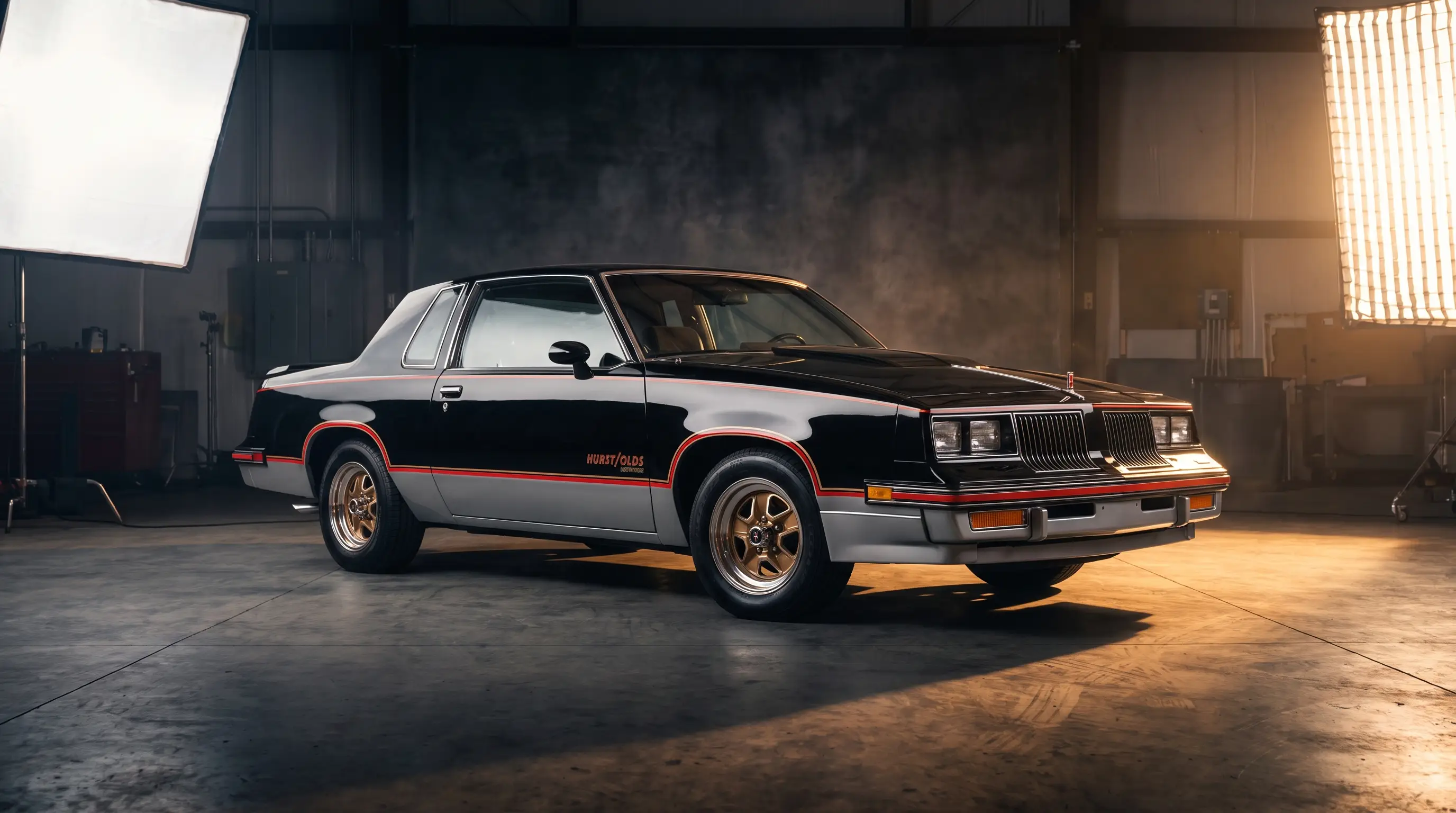
Nothing in the standard Cutlass Supreme catalog looked like the 1983 and 1984 Hurst/Olds. Oldsmobile and Hurst Performance Products revived the collaboration for a 15th-anniversary run built on the G-body, and the paint scheme was deliberately loud: for 1983, a black body with a silver lower half separated by red accent stripes, and for 1984, the scheme reversed to a silver body with black rocker panels and red-and-silver striping. It was the opposite of the beige-and-tan formula that dominated the rest of the lineup, built to be seen from three lanes over, and it signaled that a genuinely quick car was hiding under that formal Cutlass Supreme roofline.
Colors that defined the late G-body years
As the Cutlass Supreme coupe carried on past 1985, when the sedan and wagon versions had already been replaced by the front-wheel-drive Ciera, the color palette leaned harder into the brighter, cleaner tones that would define the mid-1980s: Bright Red, Cameo White, Silver Metallic, and a deepening Black became the volume sellers, especially on Brougham and Salon coupes aimed at buyers who wanted the last of the traditional rear-drive Oldsmobile without the fussier two-tone treatments of a few years earlier.
| Model year range | Typical color mood | Common examples |
|---|---|---|
| 1978-1980 | Earthy, conservative | Camel Tan, Sable Brown Metallic, Bittersweet |
| 1981-1983 | Brighter, more formal | Medium Blue Metallic, Bright Red, Charcoal Gray Metallic |
| 1983-1984 (Hurst/Olds) | High-contrast performance | 1983: black over silver; 1984: silver over black, red/silver stripes |
| 1985-1988 | Clean, late-era | Cameo White, Silver Metallic, Black |
Interior colors tracked the exterior mood closely. Early cars leaned on camel, chestnut, and buckskin cloth or vinyl, while later Cutlass Supremes offered cleaner blues, reds, and grays that matched the brighter exterior catalog. A Brougham buyer in 1986 could still order a genuinely plush cloth interior in a color that would have looked dated on a 1979 car, proof that Oldsmobile kept tuning the palette even as the platform itself aged into its final years.
"Ask a Cutlass Supreme owner what year their car is and half of them will answer with the color first. Nobody says 'it's a '82.' They say 'it's the blue one' or 'it's the black and silver Hurst car.' The paint did more to define these cars in memory than any spec sheet ever did."
— Patrick Walsh
Why the color story still matters to buyers today
Original paint and factory-correct two-tone combinations carry real weight in the current G-body Cutlass Supreme market. A restored car wearing an incorrect color, or a modern respray that skips the factory two-tone break, loses credibility with serious buyers fast. Judges at G-body-focused shows and knowledgeable private buyers both check the paint code tag before they check anything under the hood, because getting the color right is the cheapest, most visible way to prove a restoration was done with real research behind it rather than guesswork from a rattle can.
That's part of why color-correct examples, especially rarer combinations like a factory Hurst/Olds scheme or a well-documented two-tone Brougham, tend to command a premium over a car that's been resprayed in a color it never wore from the factory. The paint isn't just decoration on these cars. It's a timestamp, and increasingly, it's a value driver.
Verifying the original color is usually straightforward if the cowl tag or door jamb build sheet survived, since Oldsmobile stamped a paint code alongside the trim and option codes on every G-body Cutlass Supreme built. Matching that code against a period color chart takes a few minutes and settles most arguments before they start, which is more than can be said for plenty of other things buyers argue about on these cars. For anyone chasing a specific two-tone combination or a documented Hurst/Olds scheme, that tag is the first thing worth checking, long before a test drive or a mechanical inspection even enters the conversation.
For more on where that value is heading across the G-body Cutlass range, keep reading the series.