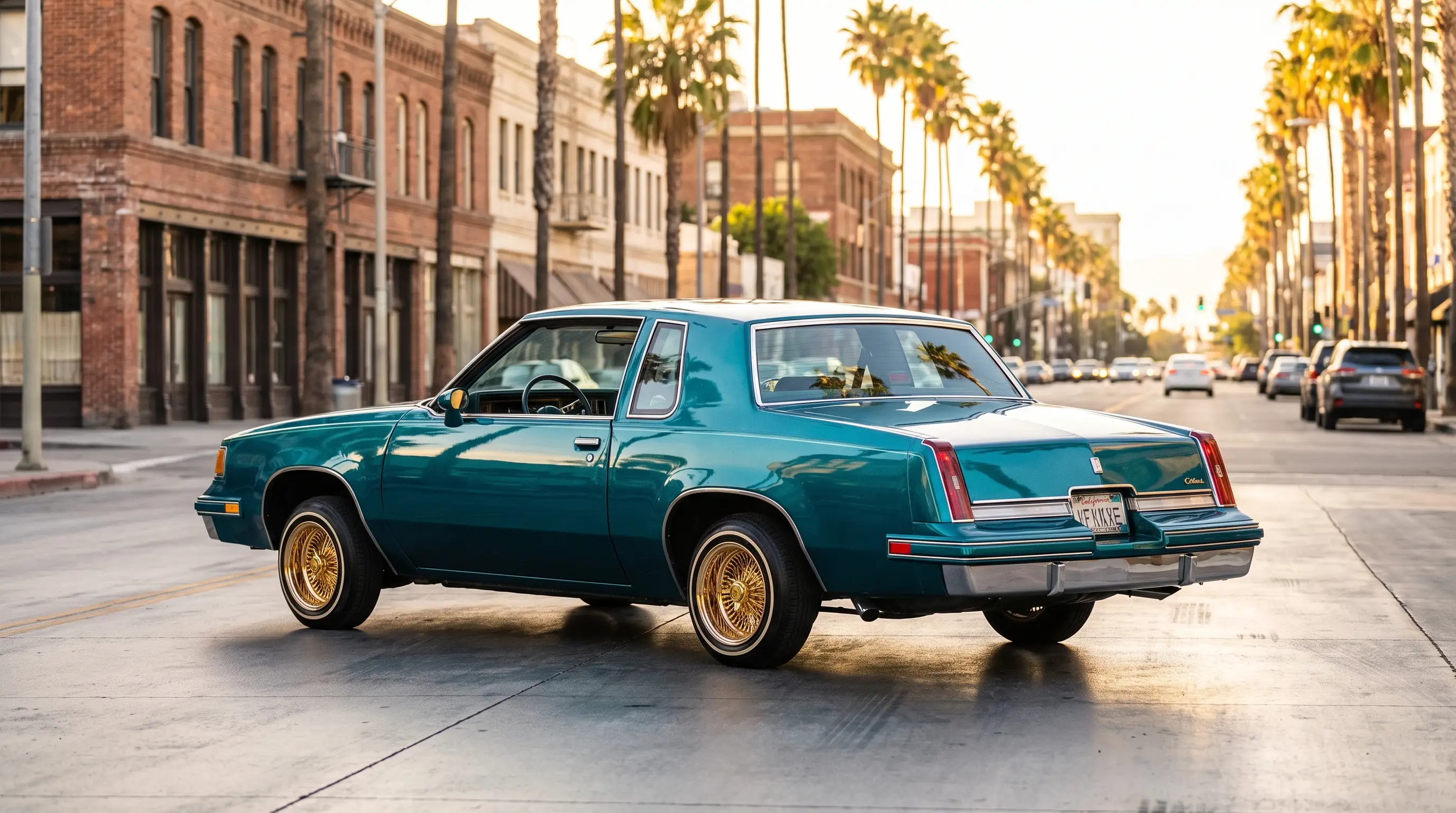
On a Sunday evening in East Los Angeles, a Cutlass Supreme rolls down the boulevard at walking speed, front end bouncing gently on command, chrome wires catching the last orange light of the day. Nobody in the crowd on the sidewalk needs to be told what car that is. The g body cutlass lowrider look, low over gold spokes, candy paint deep enough to look wet, has become as recognizable as any factory badge Oldsmobile ever put on a fender, and the story of how a sensible Midwestern coupe ended up at the center of a West Coast art form is one of the best surprises in the whole Cutlass history.
Oldsmobile was not building a canvas when it downsized the Cutlass for 1978. It was building an economical family car for a country worried about gas prices. What happened next belonged entirely to the builders who found it.
A shape that photographs and paints beautifully
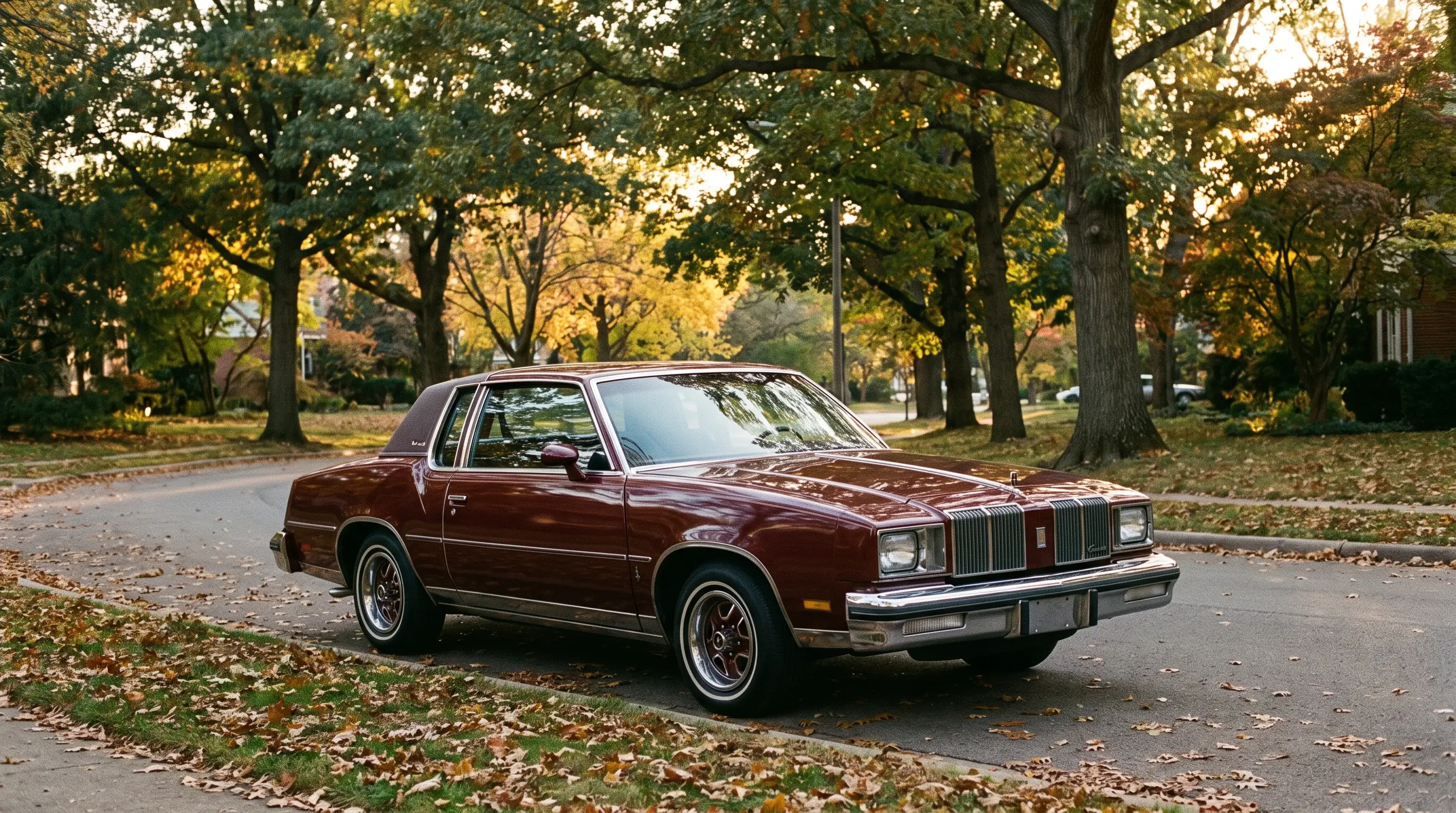
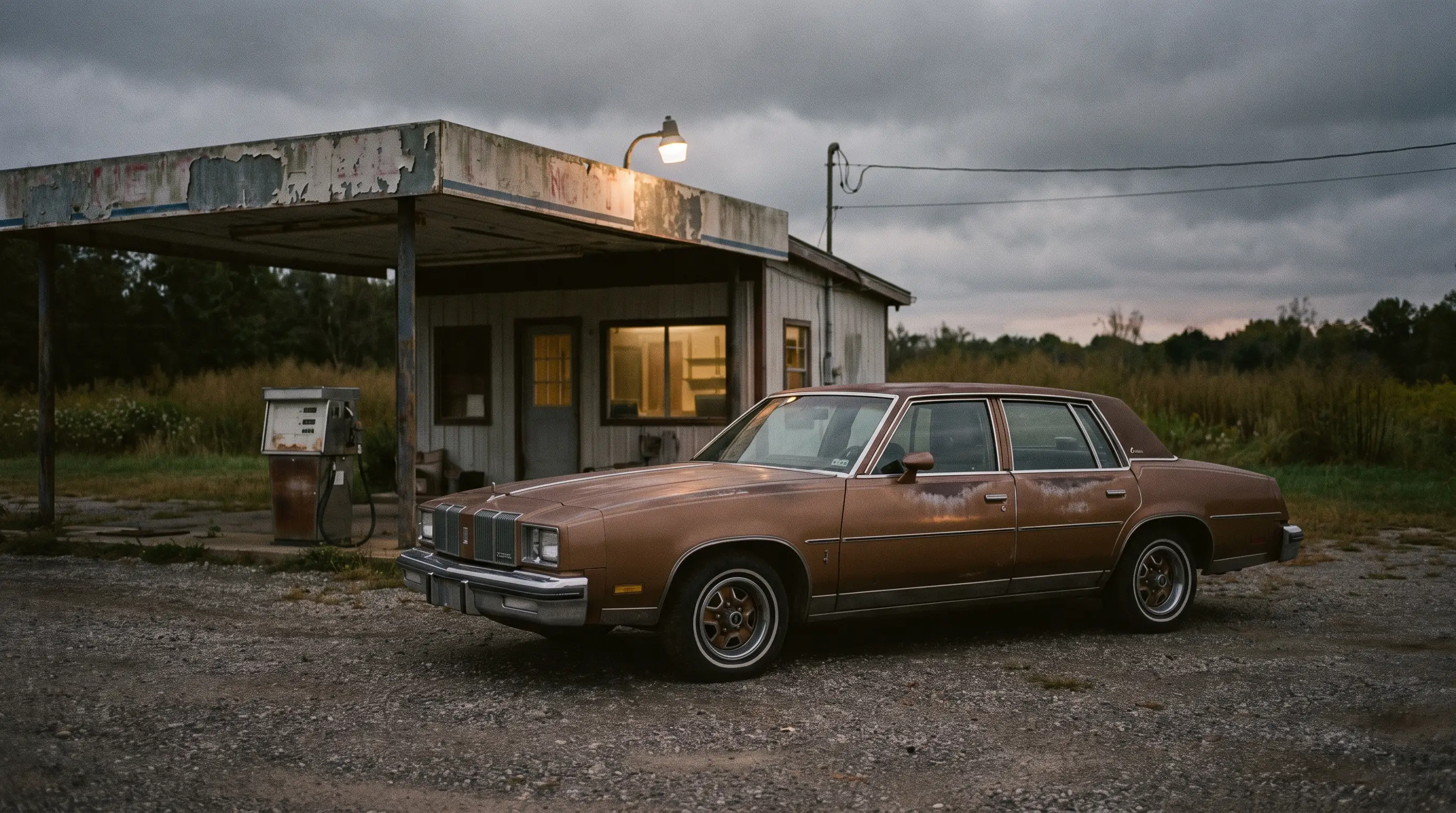
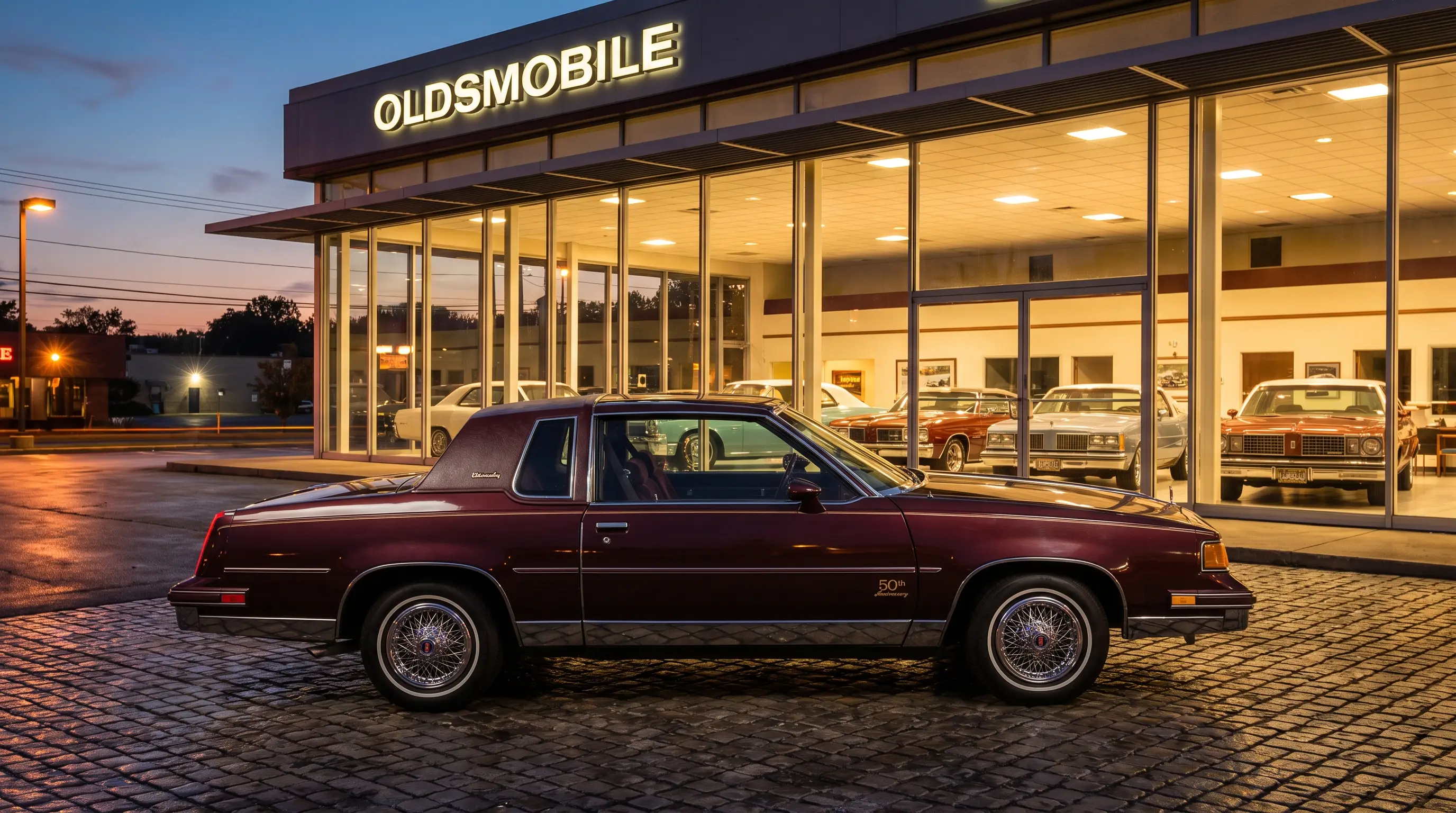
The G-body coupe brought something specific to the table that lowrider culture prizes above almost anything else: proportion. The formal roofline, the long hood, the flat, honest sheet metal running from fender to fender without a lot of busy character lines, all of it gave painters and builders a shape that reads as elegant the lower it sits. A car with too much clutter in its bodywork fights a low stance. The Cutlass Supreme coupe, especially the notchback version that dominated sales through the early 1980s, never had that problem.
There was a practical side too. Rear-wheel drive, a separate frame, and a solid rear axle made the G-body an easier platform to fit with hydraulic setups than the front-wheel-drive cars that came to dominate American showrooms later in the decade. Builders working in garages across Los Angeles, and soon across the country, gravitated toward a chassis that simply cooperated with what they wanted to do to it. If you want the full account of how that chassis came together in the first place, the G-body chapter covers the downsizing decision that, without anyone at Oldsmobile intending it, created the perfect lowrider platform.
Hydraulics, paint, and the craft behind the look
What separates a real lowrider build from a car that is simply lowered is the depth of craft underneath the surface. Hydraulic suspension systems, built from pumps, accumulators, and switches wired to give the driver control over ride height at the touch of a button, turned the Cutlass into something closer to a performance art piece than a commuter car. A skilled builder could make the front end dance, dip the rear for a photograph, or drop the whole car to a hair above the pavement for a slow roll down the boulevard.
The paintwork carried its own tradition entirely. Candy colors, laid in translucent layers over a metallic base, and murals depicting everything from religious imagery to neighborhood pride, turned these coupes into rolling canvases. None of it happened quickly or cheaply. A serious build could take years and represent thousands of hours of labor from painters and hydraulics specialists who treated the work as a genuine craft, passed down the way any trade is passed down, from someone who already knew the tricks to someone patient enough to learn them.
From backyard builds to a national stage
What started as a regional scene concentrated in Los Angeles neighborhoods eventually grew into a national and international movement, with car clubs forming chapters across the country and lowrider shows drawing thousands of spectators. The G-body Cutlass, alongside its Monte Carlo and Regal cousins on the same shared platform, became a fixture at those shows precisely because so many examples were available and so many builders already understood how to work with the chassis.
Magazines dedicated entirely to the culture gave these builds a wider audience than any car show alone ever could, and the Cutlass Supreme appeared on covers and in feature spreads often enough that it became one of the platform's signature vehicles, alongside full-size Chevrolet Impalas from an earlier era. The car had, without anyone at Oldsmobile planning it, become a canvas recognized far beyond the neighborhoods where the culture began.
"I once watched a builder spend four years on a single Cutlass Supreme, and when I asked why he did not just buy something nicer to start with, he looked at me like I had missed the entire point. The car was never the finished product. The years were."
— Patrick Walsh
Buying into the culture today
Finding a genuine, well-documented lowrider build today means something different than shopping for a stock Cutlass. Provenance matters enormously, because a car built or maintained by a known club or a respected builder carries value that goes beyond its mechanical condition. Buyers should ask who did the hydraulics work, who laid the paint, and whether the car has a history at recognized shows, the same way a buyer of a documented muscle car asks about numbers-matching parts.
Whether the goal is a stock Supreme or a serious hydraulics build, the G-body Cutlass remains one of the most accessible entry points into this entire corner of American car culture, and classic Oldsmobile Cutlass for sale listings still turn up examples worth a second look. For the fuller arc of how this coupe fits into Oldsmobile's history overall, our Cutlass retrospective traces the nameplate from its earliest days through every chapter that followed, including this one. And there is more to this particular era still to cover, so keep reading the series for a very different side of what the G-body Cutlass became.
Sources and notes
- Lowrider, Wikipedia
- General Motors G platform (RWD), Wikipedia
- Oldsmobile Cutlass Supreme, Wikipedia
- The Final G-Body Oldsmobile Is Becoming a Genuine Classic, Hagerty Media
- 1978-1988 Oldsmobile Cutlass Supreme G-Body Guide, Moto Gallery
- The Vibrant History of Lowrider Car Culture in L.A., Smithsonian Magazine