
Ten and a half to one down to eight to one in less than a decade. That is the compression ratio story of the Pontiac GTO in one sentence, and it explains more about why the car changed character through the early 1970s than any horsepower figure by itself ever will. Compression ratio is not a footnote spec buried in a brochure. It is one of the primary levers that determines how an engine actually makes power, and watching it fall across the GTO's production run is watching the muscle car era get strangled in real time by forces well outside Pontiac's engineering department.
Car Features
8 min read
Compression Ratios Through the Years: How the GTO Lost Its Punch
Ten and a half to one down to eight to one in less than a decade. Here's how emissions rules and the shift to unleaded fuel reshaped the GTO's compression ratios, and its character.

What compression ratio actually does
Compression ratio measures how much the engine squeezes the air-fuel mixture in each cylinder before ignition, expressed as a ratio between the cylinder's volume at the bottom of the piston stroke and its volume at the top. A higher ratio squeezes that mixture more tightly, which extracts more energy from each combustion event and generally produces more power and better throttle response, all else being equal. The tradeoff is that higher compression demands higher-octane fuel to avoid detonation, commonly called knock or pinging, where the fuel-air mixture ignites prematurely or uncontrollably instead of on a clean, controlled burn triggered by the spark plug. Get the compression too high for the fuel octane available and you risk real engine damage, not just a rough-running motor.
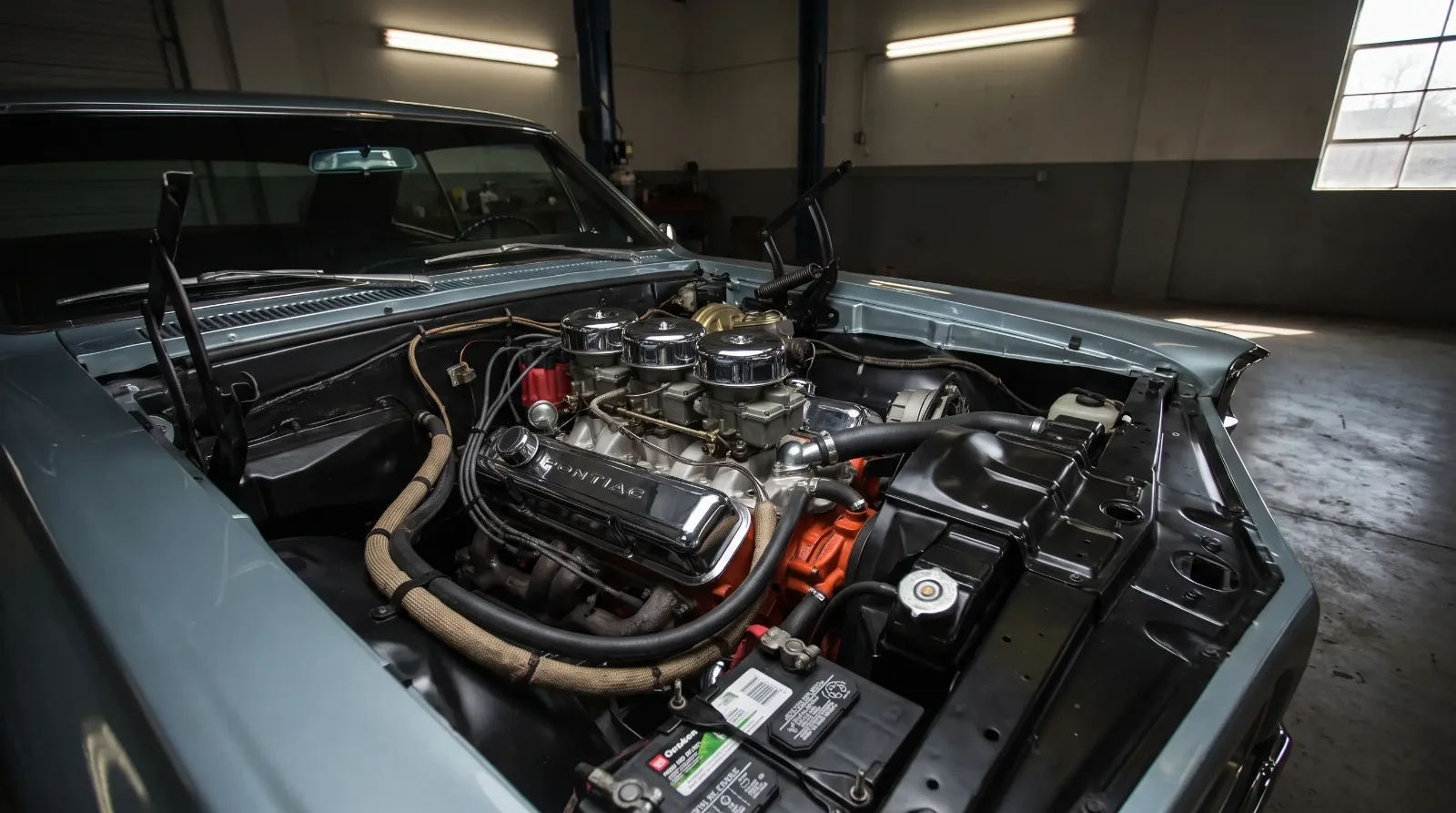
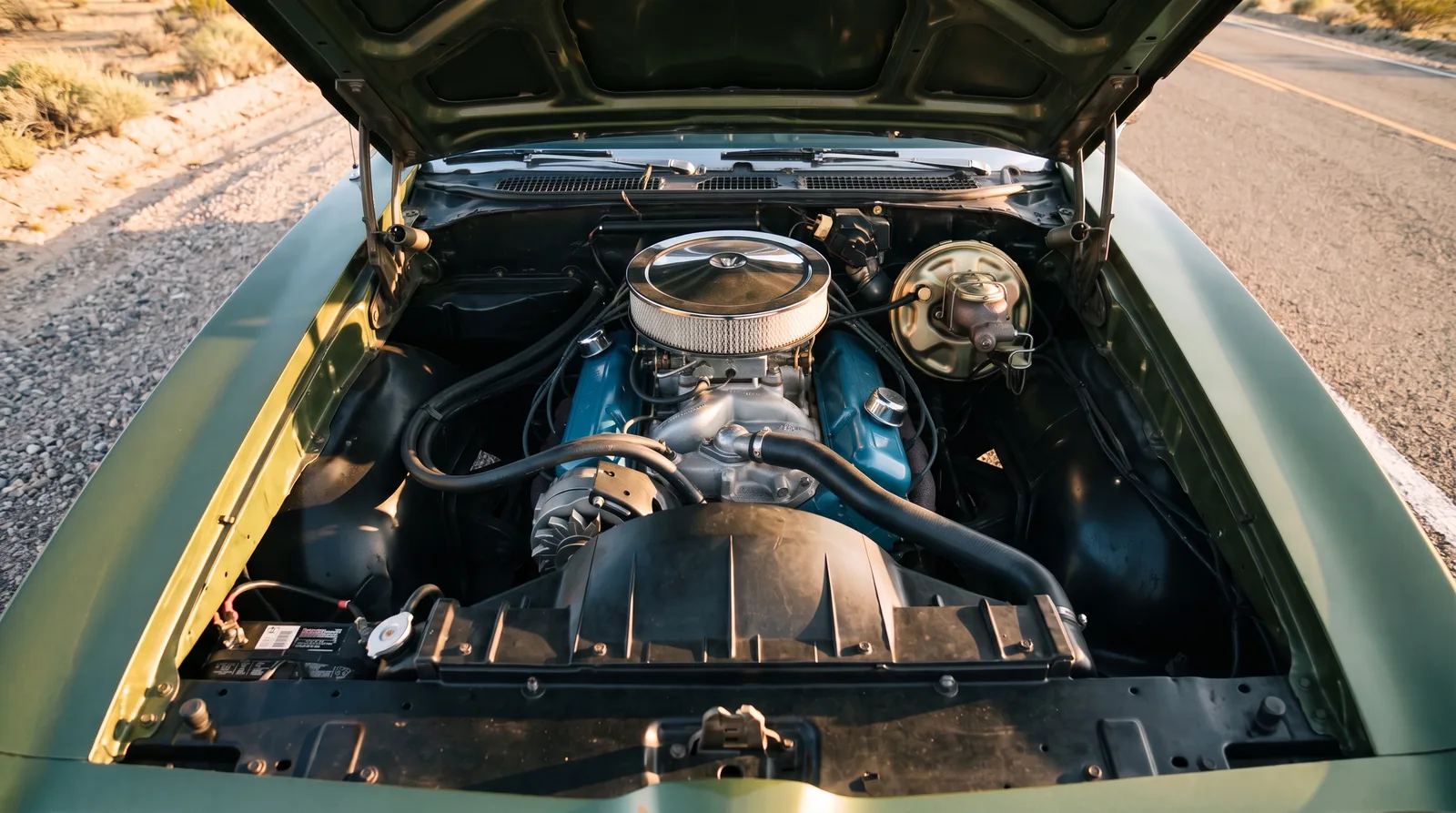
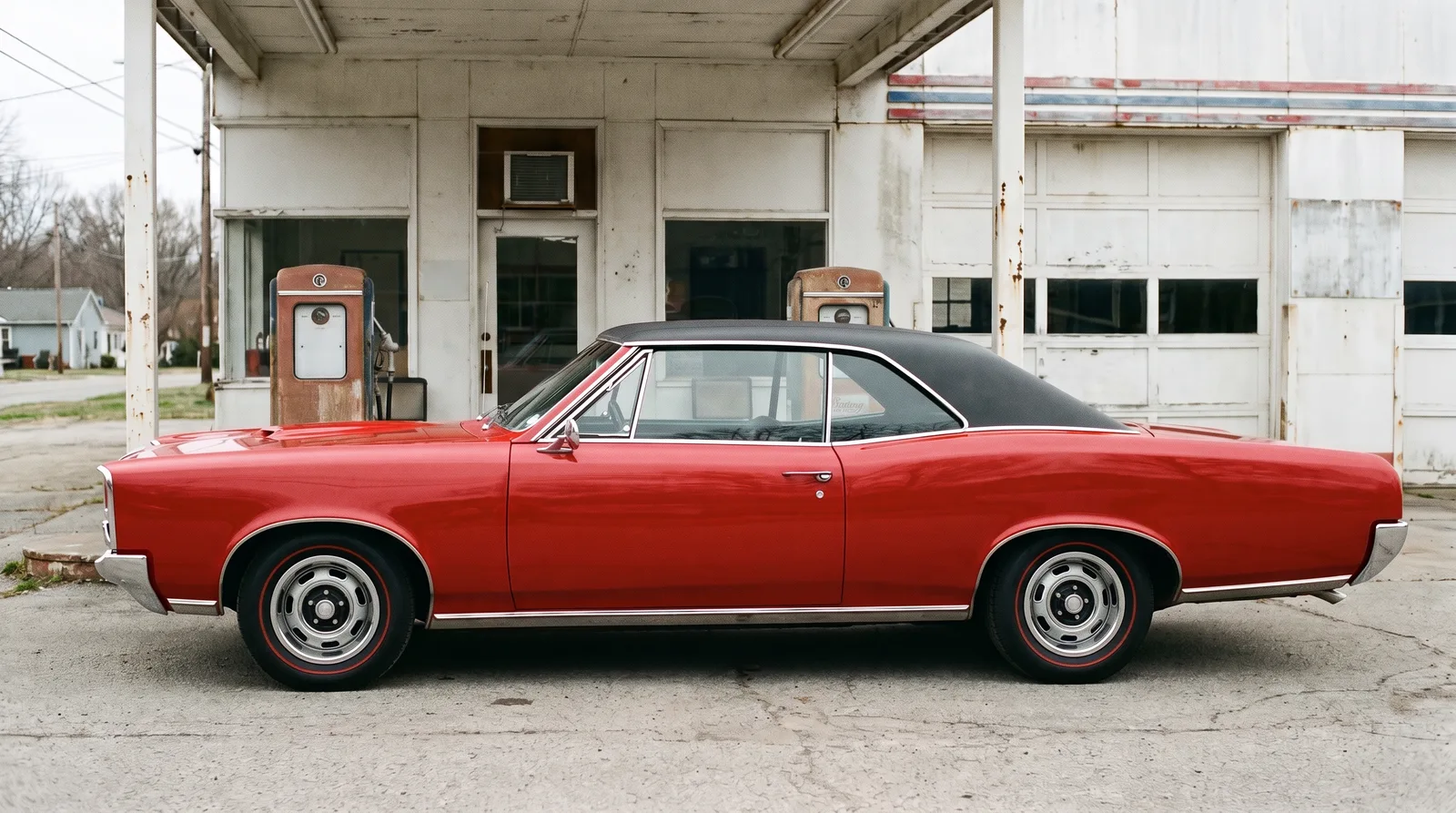
Pontiac's GTO engines through the mid to late 1960s ran genuinely high compression ratios by any standard. Every 1964-66 GTO, whether it carried the standard four-barrel 389 or the Tri-Power version, ran a 10.75:1 compression ratio, and the 400s that followed for 1967-70 held similarly high ratios before the drop hit. That was standard practice across the entire performance car industry at the time, when premium leaded fuel with high octane ratings was cheap and widely available, and manufacturers had every incentive to chase compression as one of the more straightforward ways to extract more power from a given displacement.
What changed, and why it wasn't Pontiac's choice
The story of falling compression ratios across the entire American auto industry in the early 1970s is not really an engine design story. It's a regulatory and fuel story that every manufacturer had to respond to at the same time, whether they wanted to or not. Two separate pressures hit simultaneously. First, tightening emissions regulations pushed manufacturers toward lower compression as one of several tools to reduce combustion temperatures and emissions output. Second, and just as important, the industry-wide move toward unleaded fuel, driven by the introduction of catalytic converters that leaded fuel would destroy, meant lower-octane fuel was about to become the norm at the pump, and engines designed around high-octane leaded premium simply could not run high compression on the lower-octane unleaded fuel that was coming.
| Era | General compression trend | Primary driver |
|---|---|---|
| Mid-to-late 1960s | High, commonly 10.5:1 or above | Performance-focused design, cheap high-octane fuel available |
| Early 1970s | Falling steadily year over year | Emissions regulation and transition to unleaded fuel |
| Mid-1970s | Low, commonly 8:1 range or below | Full compliance with emissions and unleaded fuel standards |
By the time the GTO reached its final classic-era model year in 1974, built on the smaller Ventura platform, the sole engine, a 350 cubic inch V8, ran just 7.6:1 compression and was rated at 200 net horsepower, a huge drop from the 10.75:1 engines of a decade earlier. This wasn't a Pontiac problem or a GTO problem specifically. Every domestic manufacturer went through the same compression retreat at roughly the same time, which is a big part of why the entire muscle car era, not just one model from one company, wound down through the same few years.
How this actually changed the way the cars drove
Lower compression doesn't just mean a lower number on a spec sheet. It changes throttle response, changes the engine's willingness to rev, and generally softens the immediate, eager feel that defined the high-compression engines of the late 1960s. A high-compression 389 or Ram Air 400 wants to rev and responds sharply to throttle input. A lower-compression engine from a few years later, even one with a similar displacement, tends to feel more relaxed and less urgent, trading some of that sharp response for an engine that can survive on lower-octane fuel without pinging itself into an early rebuild. Drive a peak-compression late-1960s GTO back to back with an early-1970s example and the difference in character is immediate, even before you look at either car's horsepower rating.
The full picture of how Pontiac's engine lineup evolved through this whole period, from the original 389 through the compression peak of the Ram Air years and into the lower-compression engines that closed out the classic GTO's run, is covered start to finish in GTO powertrains. Understanding compression ratio trends is a big piece of understanding why a 1970 GTO and a 1973 GTO, despite sharing a nameplate and a lot of engineering DNA, feel like genuinely different cars from the driver's seat.
What this means for buyers and owners today
A high-compression original GTO engine that's still running on pump gas today needs attention paid to fuel octane, since modern pump premium generally does not match the octane rating of the leaded premium these engines were originally designed around, and an owner running a high-compression engine on inadequate octane risks detonation and real damage over time. Some owners address this with modern fuel additives, retarded ignition timing, or in some cases a mild compression reduction during a rebuild, each with its own tradeoffs between originality, reliability, and outright period-correct performance. There's no single right answer here, only a tradeoff every serious owner of a high-compression original engine eventually has to make peace with.
The octane math owners actually deal with
Leaded premium in the peak muscle car years commonly rated well above 100 octane by the research method most period pumps advertised, fuel that simply is not sold at a normal gas station today. Modern pump premium in most of the country tops out well below that historic figure, which leaves an owner of an original high-compression Pontiac engine with a real gap to close before that engine can run reliably on what's actually available at the pump. Some owners close that gap with octane-boosting additives blended into every fill-up, which works but adds real cost over a season of driving. Others retard ignition timing slightly from the factory-specified setting, trading a bit of throttle response and outright power for a wider margin against detonation on lower-octane fuel. A smaller number opt for a mild compression reduction during a planned rebuild, milling the heads slightly or swapping to a factory-correct lower-compression piston used in a later model year, which sacrifices some originality and outright power for an engine that simply does not need to worry about modern fuel quality at all.
None of these approaches is objectively correct for every owner, and the right call depends heavily on how the car is actually used. A trailer queen that only fires up for a handful of show appearances a year can tolerate a compromise that a car driven regularly on modern highways cannot. I generally tell owners planning real seat time in a high-compression original engine to take the timing and additive route first, since it preserves the original internals completely, and only consider a compression reduction if detonation problems persist despite those adjustments, which in my experience is the less common outcome once timing and fuel octane are properly matched.
"Everybody blames the horsepower drop on emissions rules like it's one simple story. It's really two stories happening at once, emissions and fuel, and compression ratio is where both of them landed hardest on the engine itself."
Dan Reeves
Compression wasn't the only lever tuners reached for to squeeze more performance out of these engines either, and one Pontiac dealership in particular built its entire reputation on finding extra power the factory left on the table. read on for how the Royal Bobcat tuning package became a legend of its own.
Sources and notes
Related Reading
Have a
Pontiac GTO
for Sale?
Reach thousands of serious classic car collectors across the US.
Sell It Here →
Selling a classic? Here's how: compare the places to sell classic cars
Are You a Classic Car Dealer?
List your full inventory and connect with targeted classic car buyers.
Join as a Dealer →

About the author
Dan Reeves
Performance engine builder from North Carolina's motorsports corridor, focused on swaps, forced induction and making real, repeatable power.
Related Listings - Pontiac GTO



Comments (2)
3
396Rusty
5 days ago
Buddy's '66 runs the 10.75 389 on pump 93 and pings uphill. Pull timing or pour booster in every fill? His wallet wants to know.
L
Linda Kowalski
1 week ago
A question from the Ford side of the aisle. I was under the impression that GM cut compression across the board for 1971, a year ahead of the unleaded fuel, and that the 1971 GTO 400 was already down near 8.2:1. Was that the steepest single-year drop?