
Every dealership in the muscle car years had a guy who could make a car run better than the factory intended. Royal Pontiac in Royal Oak, Michigan, had more than one guy, and what they built together didn't stay a local secret for long. The Royal Bobcat kit turned a showroom GTO into something the factory never quite dared to sell, and it did it with a wrench, a distributor, and a level of attention most dealers couldn't be bothered to give a car once the check cleared.
Car Features
9 min read
The Royal Bobcat Kit: Dealer-Tuned Pontiac Power
Royal Pontiac's dealer-tuned Bobcat kit recalibrated GTOs beyond factory spec. Here's what the treatment really involved and how to spot a documented car.
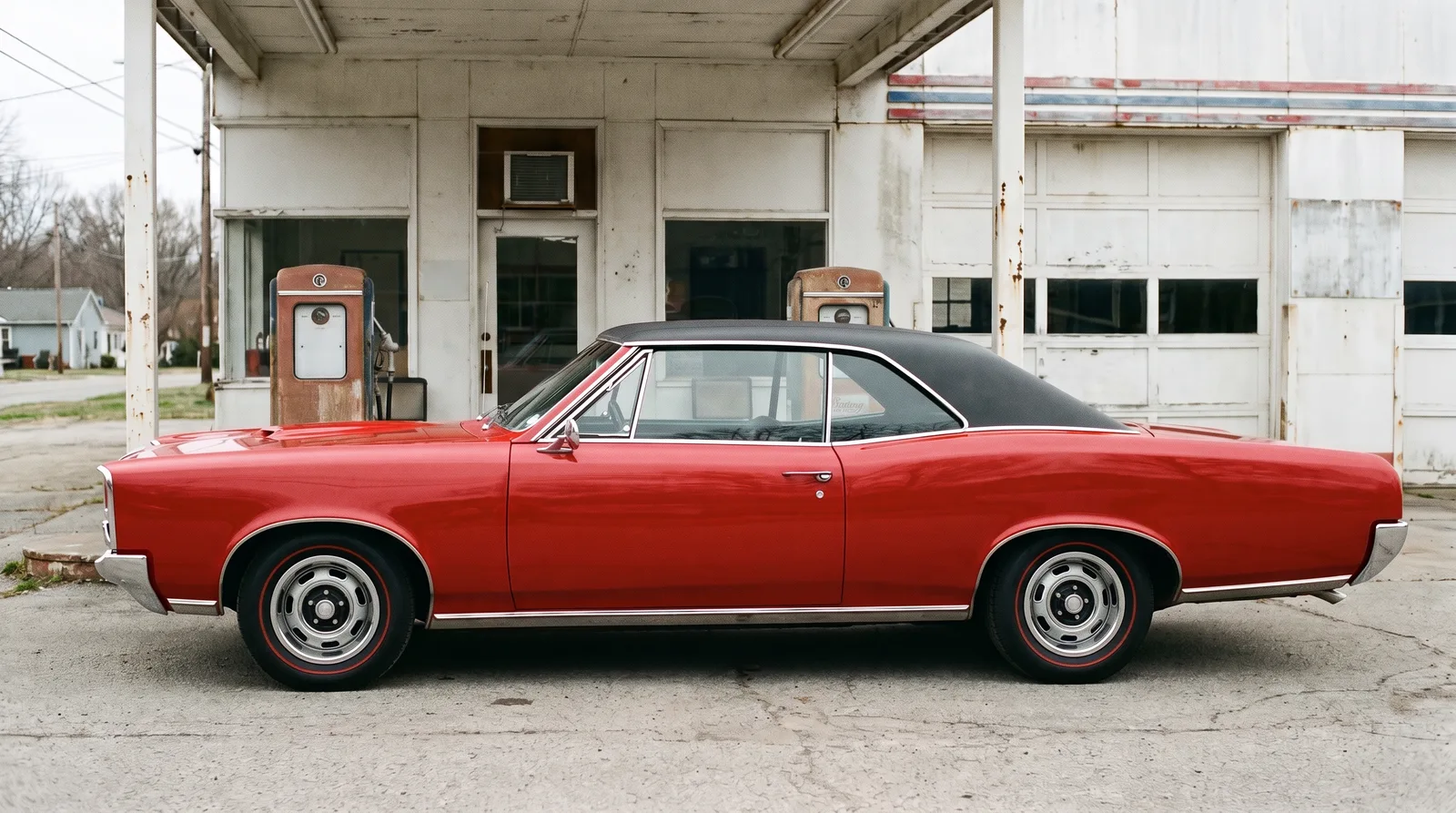
The shop's reputation grew out of drag strip results, not brochures. Royal Pontiac ran cars at the strip, kept notes on what worked, and turned those notes into a service package any customer could order across the counter. That's the part people forget. This wasn't a backroom hot-rodding operation hiding from the manufacturer. It was a dealership selling a documented performance upgrade, with an invoice and a decal to prove you'd paid for it.
Where the Bobcat name came from
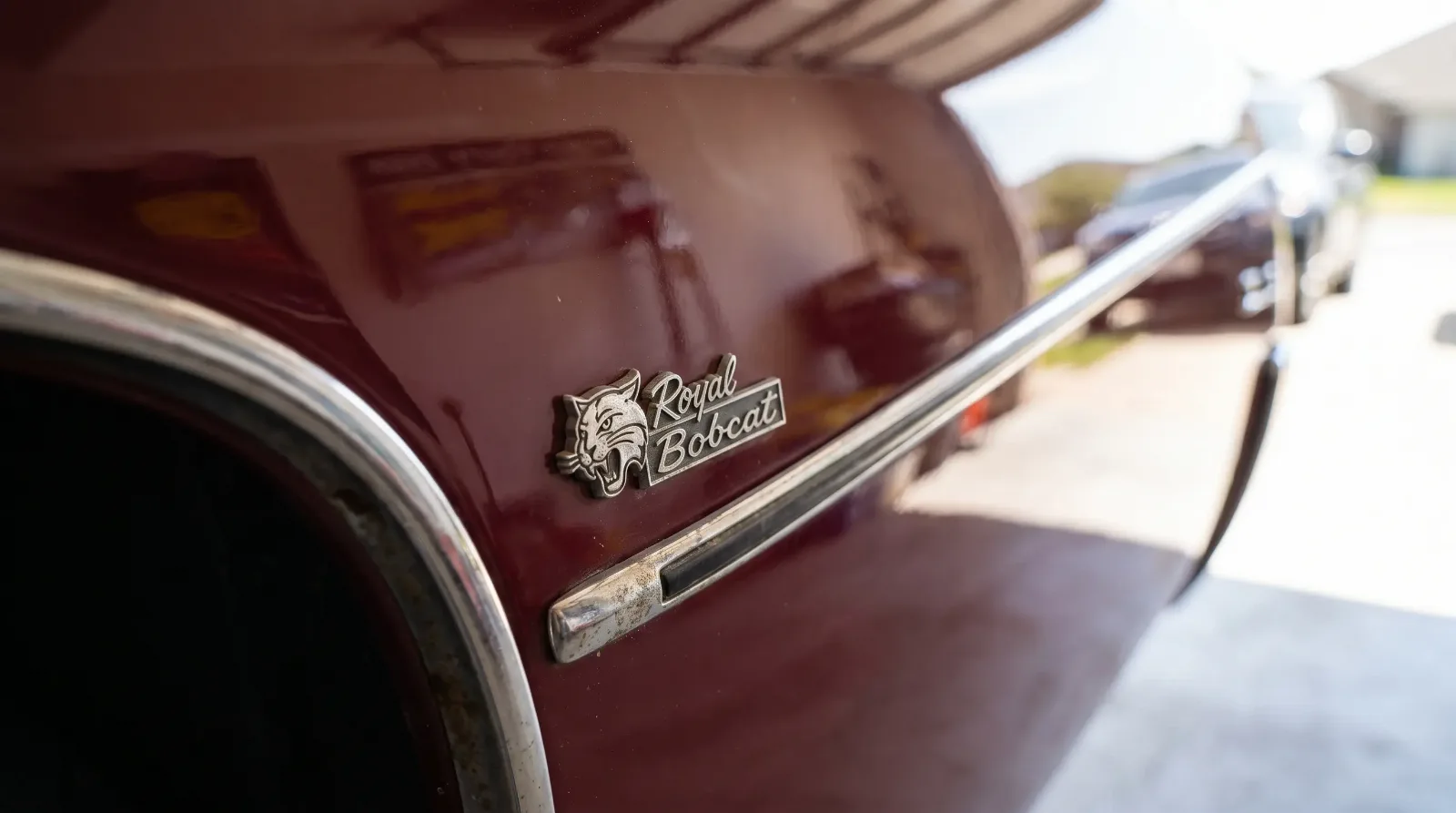
The "Bobcat" name has a genuinely odd origin story. Jim Wangers is credited with suggesting it, and the reason had nothing to do with cats and everything to do with spare parts: the letters needed to spell BOBCAT could be pulled from Pontiac's existing BONNEVILLE nameplate blocks and dropped straight into the pre-drilled holes on a Catalina's trim, no new tooling required. Royal Pontiac built its first Bobcats on Catalinas in the 1961 model year, years before the GTO existed. By the time the GTO engine story reached Royal Pontiac's service bays, the Bobcat name had already earned a following among Detroit-area buyers who knew where to ask. A GTO that went through the full treatment left with a Bobcat identification decal, usually mounted low on the rear quarter panel, small enough that a lot of people missed it and big enough that the guys who knew what to look for never did.
That decal mattered more than it should have to a resale value forty years later. A documented Bobcat car, with the paperwork or at least a credible chain of ownership pointing back to Royal Pontiac, commands real attention from collectors who understand what the kit actually did. A car with just the decal and no history behind it is a different conversation, and buyers who've been burned once tend to ask for more than a sticker before they pay a premium.
What the kit actually changed
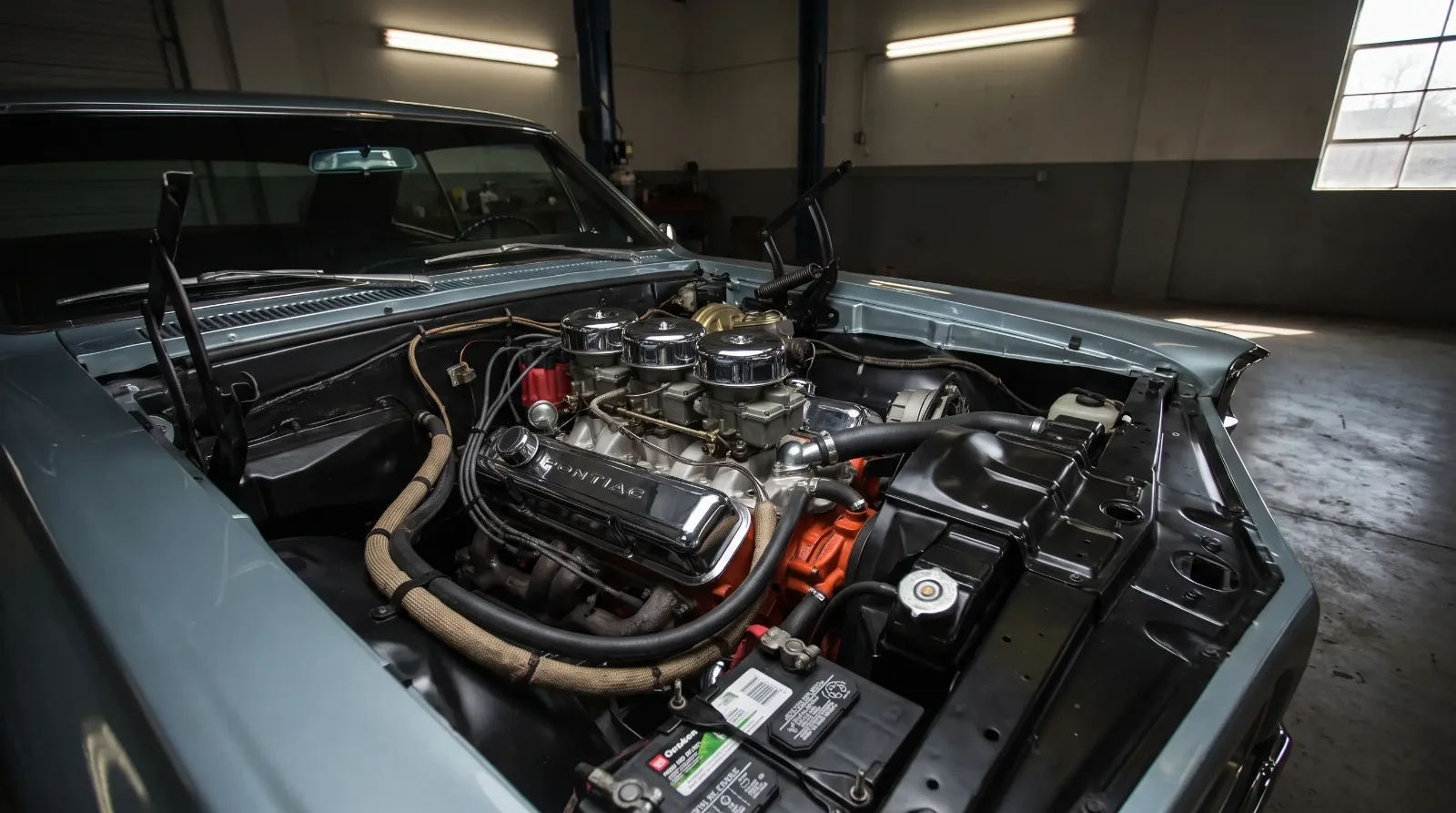
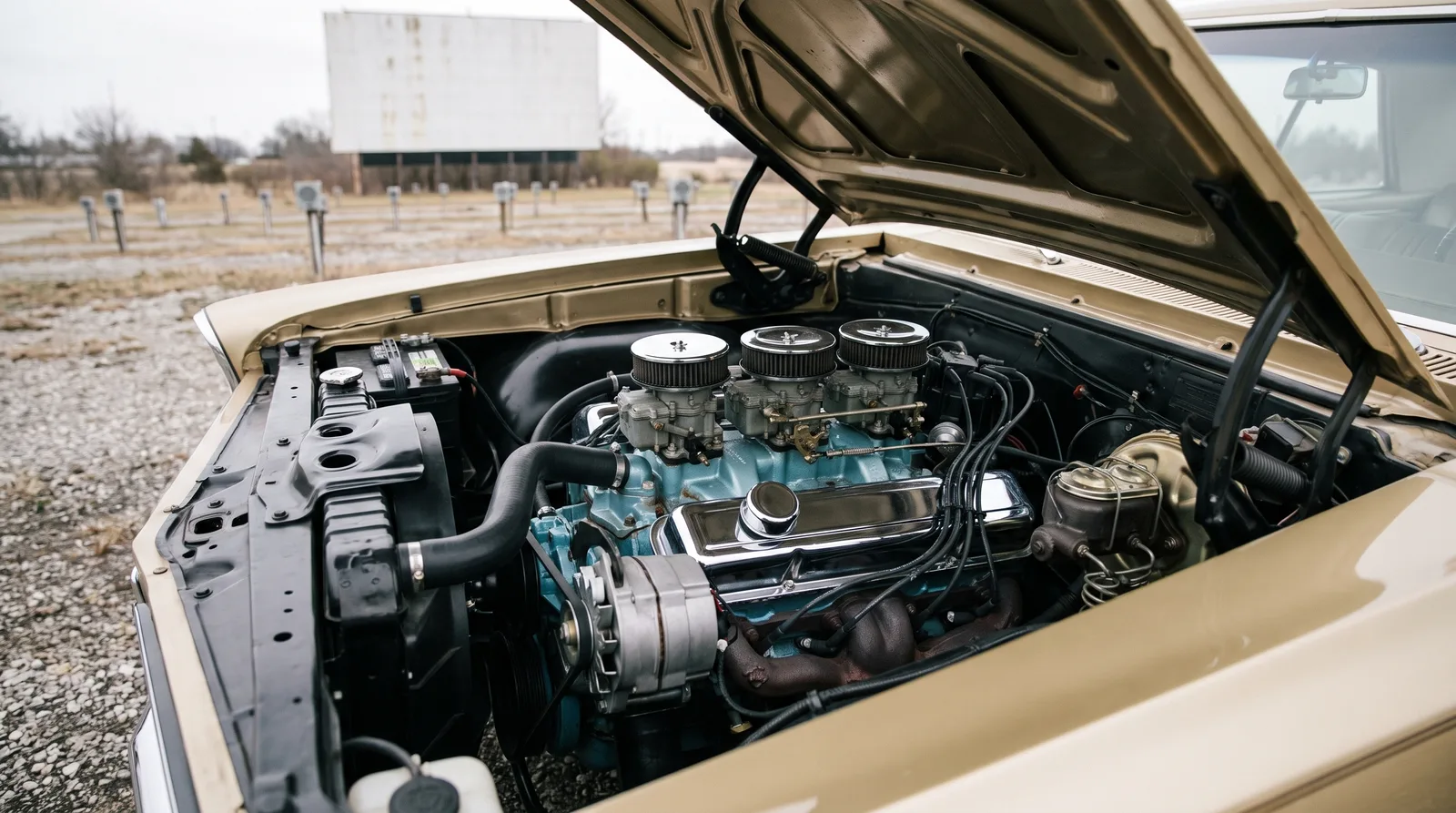
The core of the Bobcat treatment wasn't exotic parts. It was recalibration. Royal's technicians, working under performance manager Milt Schornack, went after distributor advance curves, carburetor jetting on Tri-Power and later Ram Air setups, and ignition timing, tuning each car to run leaner and hit its power band harder than it would have left the factory floor. On some cars that meant swapping in a hotter distributor or richer primary jets. On others it was mostly a matter of getting the timing and the carb linkage to agree with each other, which sounds simple until you've watched a factory setup fight itself under load.
Beyond the tuning work, a full Bobcat package could include a low-restriction air cleaner setup, recommended spark plug heat ranges, and in some configurations a change to the exhaust that let the engine breathe the way the compression ratio wanted it to. None of this required aftermarket parts nobody could get. That was the point. A dealership technician with the right knowledge could do most of the work with parts already sitting on the shelf, and that kept the kit affordable next to what independent tuners were charging for less consistent results.
| Element | What it addressed |
|---|---|
| Distributor recurve | Advance timing matched to the engine's actual power band instead of the factory's emissions-conscious curve |
| Carburetor jetting | Tri-Power or single four-barrel rejetted for the car's actual state of tune |
| Ignition timing | Base timing advanced beyond factory spec, within limits the engine could tolerate on pump gas |
| Air cleaner / breathing | Reduced restriction on intake side to let the recalibrated carb work as intended |
| Identification | Royal Bobcat decal applied to document the work, usually on the rear quarter panel |
The gains from a proper Bobcat tune weren't the stuff of tall tales, even if the stories that followed the cars around got taller with each retelling. Car and Driver ran a Royal-built 428-powered GTO, a car that went well beyond the base recalibration into a full Royal engine swap, in February 1968 and recorded a 13.8-second quarter mile at 104 mph, well ahead of the roughly 14.5-second, sub-100-mph runs a stock Ram Air 400 GTO turned in around the same period. That was the extreme end of what Royal offered. A straightforward Bobcat recalibration on an otherwise stock engine gained less, but the direction of the improvement was consistent across every level of the treatment. Some owners stopped at the base tune. Others kept coming back for more.
Ordering one and what it cost a buyer
A customer could order the Bobcat treatment two ways. Some bought a GTO off the Royal Pontiac lot already tuned, the dealership having run every performance car through the shop before it went out the door. Others brought in a GTO bought elsewhere and paid for the service separately. Pricing wasn't uniform. A base recalibration cost a fraction of what a full package with breathing and exhaust changes ran, and Royal's technicians would talk a customer through what their car and their budget could support rather than pushing the most expensive option by default.
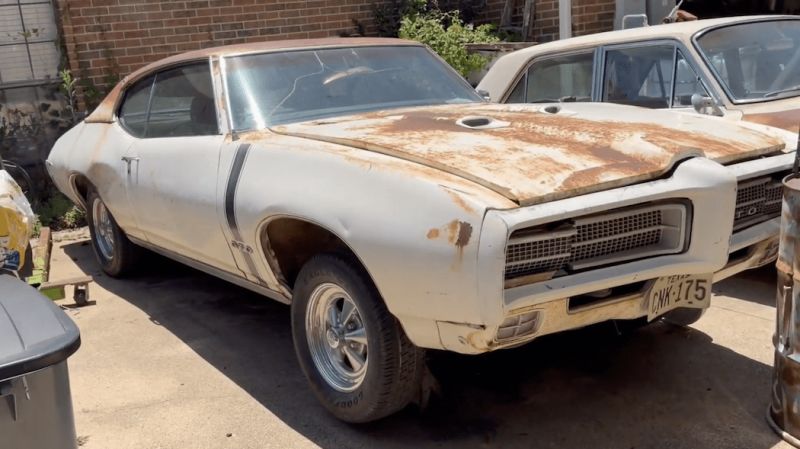
That flexibility is part of why so many "Bobcat" GTOs on the market today don't match each other spec for spec. One owner's car got a distributor recurve and nothing else. Another's got the full treatment plus a set of headers installed by a friend down the street who wasn't affiliated with the dealership at all. Both cars might wear a decal. Only one of them got the complete factory-documented Royal Pontiac experience, and separating the two takes real research, not just a glance at the quarter panel.
🔧 Inspection Priorities
- Decal placement and condition. A reproduction decal slapped on recently to inflate a sale price is common enough that it shouldn't move the number on its own. Look for wear patterns consistent with the car's actual age and paint history.
- Distributor and carburetor originality. If the distributor or carburetor has been swapped since the supposed Bobcat work, the tuning that made the car special may be long gone, whatever the decal says.
- Paper trail. Original invoices, a dealership service record, or period documentation referencing Royal Pontiac by name carry far more weight than a verbal history passed down through two or three owners.
- Consistency with known Bobcat specs. A car claiming the full package should show evidence of every element, not just the parts that were cheap and easy to fake.
What it means for buyers today
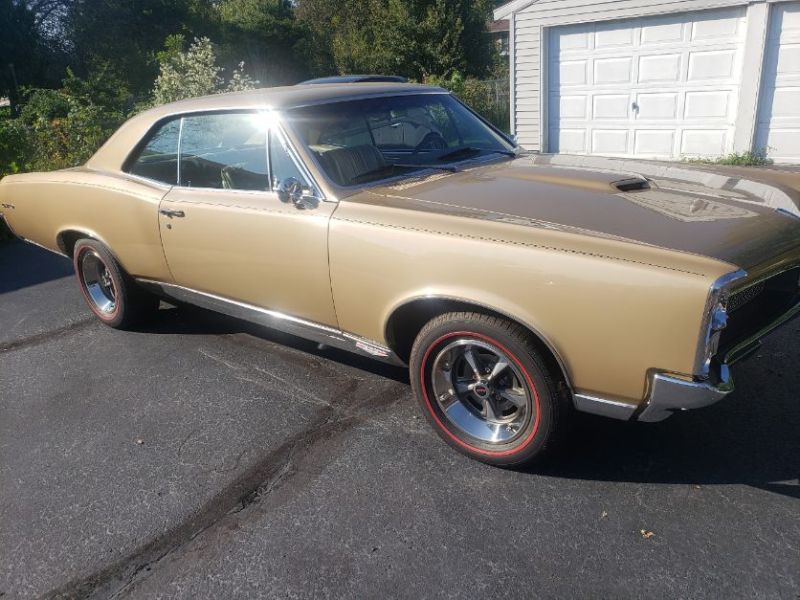
A verified Royal Bobcat GTO is a different animal from a garden-variety Tri-Power car, and the market treats it that way. The premium isn't just nostalgia. It reflects a documented performance upgrade done by people who knew exactly what they were doing to these engines, at a dealership with a track record you can actually trace. That's rarer in this hobby than most sellers want to admit, and it's worth paying for when the documentation backs it up.
Buyers chasing a Bobcat car for the story alone should slow down and ask for specifics before they get attached. A seller who can point to a name, a date, and a service description is offering something real. A seller who just points at a decal and asks for a premium over an otherwise identical GTO is asking you to take their word for it, and in this corner of the hobby, that word isn't worth what it used to be. For buyers who want the fuller technical picture behind these engines before they start shopping, the deeper breakdown of the 389 is worth a look, so read on before you write a check.
"Everybody's got a Bobcat story these days. I've heard guys swear their granddad's GTO went through Royal Pontiac and the timeline doesn't even work, the car was built two years before the dealership started doing the work. Ask for paper before you pay for the legend."
Gary Nowak
The Royal Bobcat kit is a reminder that some of the most interesting performance history in this hobby didn't come out of Detroit's engineering offices at all. It came out of a dealership service bay where a handful of guys who understood these engines better than the factory paperwork suggested kept tuning cars until they ran the way they were supposed to run. That's a legacy worth verifying, and worth paying for once you have.
Sources and notes
- Silodrome - 1968 Pontiac GTO Royal Bobcat 428
- Curbside Classic - The Royal Bobcat kit, screwdriver tune-up
- Curbside Classic - 1964 Car and Driver GTO review, the ultimate ringer
- Autoevolution - 1968 GTO 428 Royal Bobcat one-off
- Motorious - 1968 GTO Royal Bobcat 428 heading to Mecum
- Car Origins - Royal Pontiac Bobcat GTO history
Related Reading
Have a
Pontiac GTO
for Sale?
Reach thousands of serious classic car collectors across the US.
Sell It Here →
Selling a classic? Here's how: the best sites to sell a classic car
Are You a Classic Car Dealer?
List your full inventory and connect with targeted classic car buyers.
Join as a Dealer →

About the author
Gary Nowak
Lifelong Midwest rodder who has been building and driving traditional pre-war hot rods since the 1970s.

Borrowed BONNEVILLE letters. Clever joinery.