
A Detroit option package named after a car built in Maranello. That is the short, slightly uncomfortable summary of where "GTO" came from, and it is a story that says as much about American confidence in 1964 as it does about the car itself.
Car Features
7 min read
What the GTO Borrowed from the Ferrari Playbook (and What It Didn't)
GTO stood for Gran Turismo Omologato at Ferrari first. Pontiac borrowed the initials and the prestige, then built a car that shared almost nothing else with it.
Where the letters actually come from
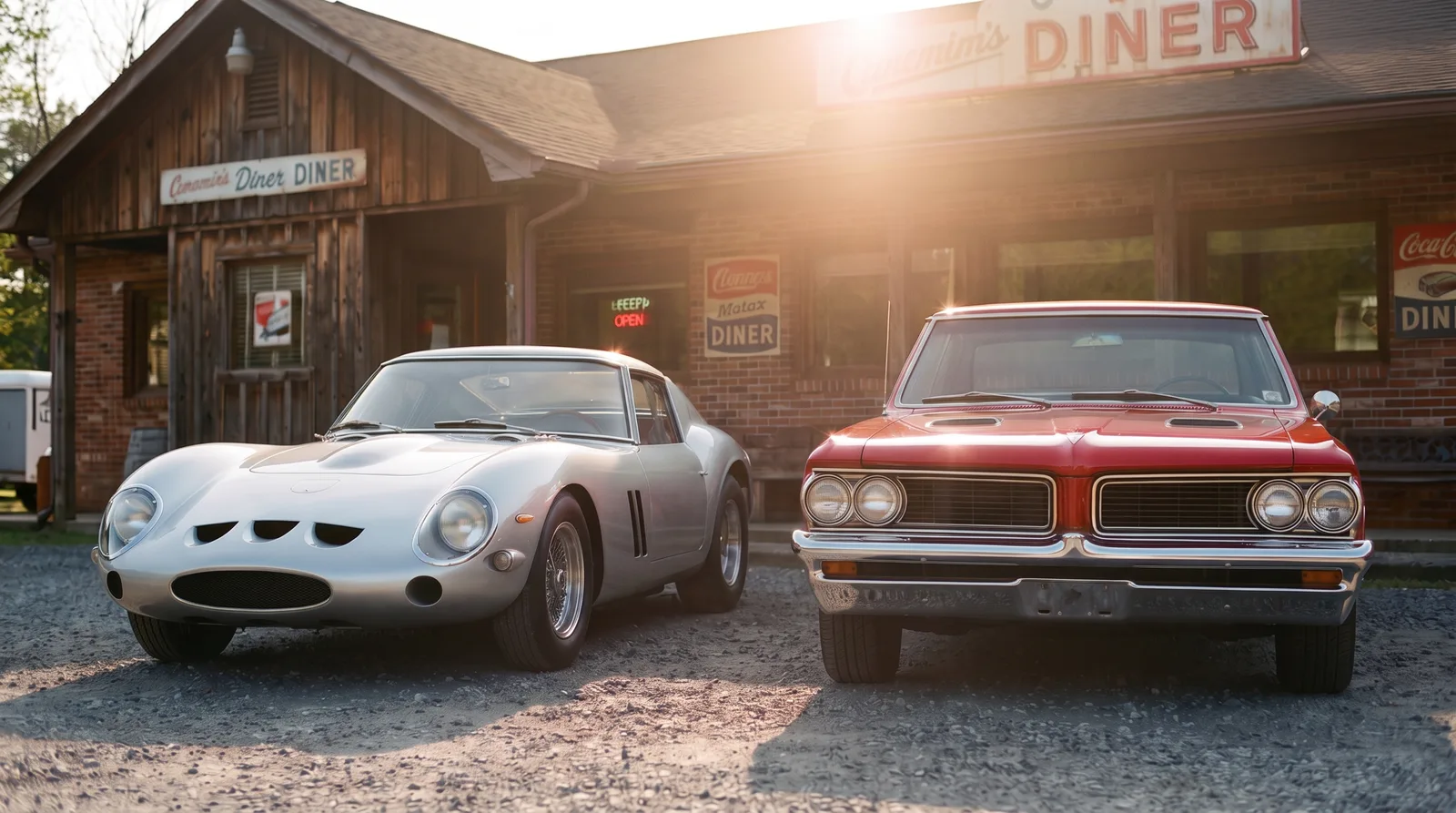
GTO stands for Gran Turismo Omologato, Italian for grand touring homologated, and the name belonged first to Ferrari, specifically the 250 GTO, a racing car built in the early 1960s to meet homologation requirements for GT class competition. The Ferrari 250 GTO was, by the time Pontiac borrowed the name, already building a reputation as one of the most desirable and successful racing cars to come out of Italy. Pontiac's engineers and marketers knew exactly what they were doing when they attached those three letters to a mid-size American car with a big-block V8 stuffed into it. They were borrowing prestige, not just an acronym.
That borrowing happened at the same moment Pontiac was quietly working around GM's internal displacement rules to get the car built at all, a story told in full in the first GTO. The naming decision and the engineering workaround came out of the same push inside Pontiac to build something that felt bigger than its actual budget and platform.
What Pontiac's GTO actually shared with Ferrari's
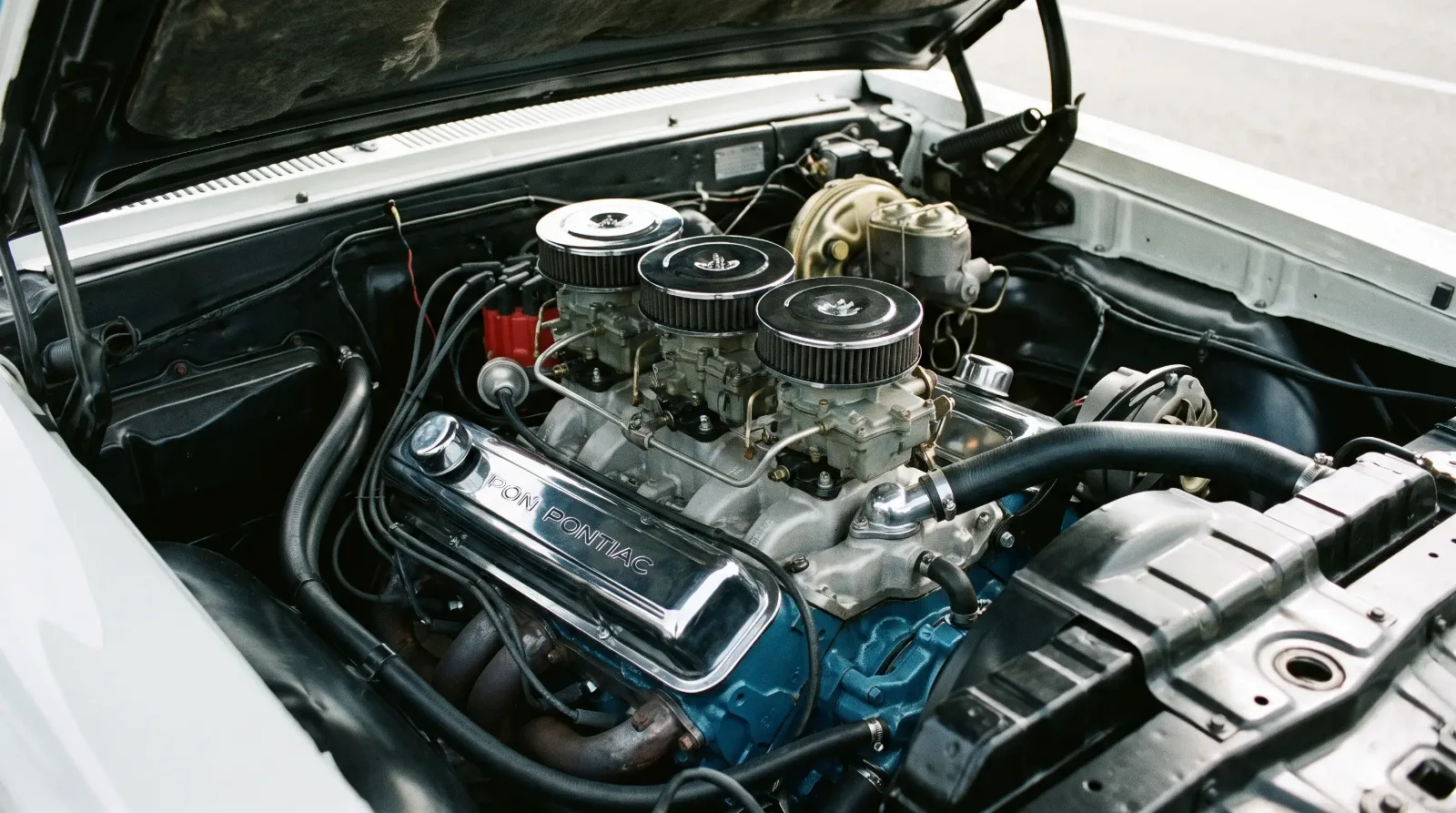
Almost nothing, mechanically. The Ferrari 250 GTO was a hand-built, low-volume racing homologation special with a V12 engine and a chassis developed specifically for competition, built in numbers that stayed in the low dozens. The Pontiac GTO was a mass-production American option package built on a Tempest-based LeMans, with a pushrod V8 borrowed from Pontiac's full-size line, sold to ordinary buyers through a normal dealer network in numbers that reached into the tens of thousands within its first year. The two cars occupied opposite ends of the automotive world: one an exclusive competition tool for wealthy racing teams, the other a democratized performance package for a working buyer.
What they did share was an idea, even if the execution could not have been more different. Both cars represented an attempt to build something faster and more focused than what a manufacturer's regular lineup offered, using homologation-style thinking as the justification. Ferrari did it to go racing. Pontiac did it to sell cars, but the underlying logic, a specialized performance variant built on an existing base, was close enough that the name transfer made a kind of sense, even if Ferrari never signed off on it.
| Spec | Ferrari 250 GTO | 1964 Pontiac GTO |
|---|---|---|
| Engine | 3.0-liter V12 | 389 cu in V8 |
| Production run | 36 cars (1962-1964) | 32,450 in year one |
| Purpose | GT-class homologation racer | Street performance option package |
| Buyer | Factory racing teams, wealthy collectors | Ordinary dealer-network customers |
| Chassis origin | Purpose-built competition chassis | Tempest/LeMans A-body platform |
Why nobody stopped them
Trademark enforcement across international automotive brands in the 1960s worked very differently than it does today, and Ferrari's 250 GTO, while celebrated among racing enthusiasts and collectors, was not a household name to the average American car buyer the way it would eventually become decades later. Pontiac's marketing team was betting that most of their target buyers would associate the initials with speed and European racing glamour in a general sense, without necessarily knowing the specific Ferrari model behind them. That bet paid off. Most GTO buyers in 1964 were not cross-shopping against Ferraris. They were buying into an idea of performance prestige, borrowed wholesale from a world they would never actually compete in.
How the two GTOs occasionally cross paths
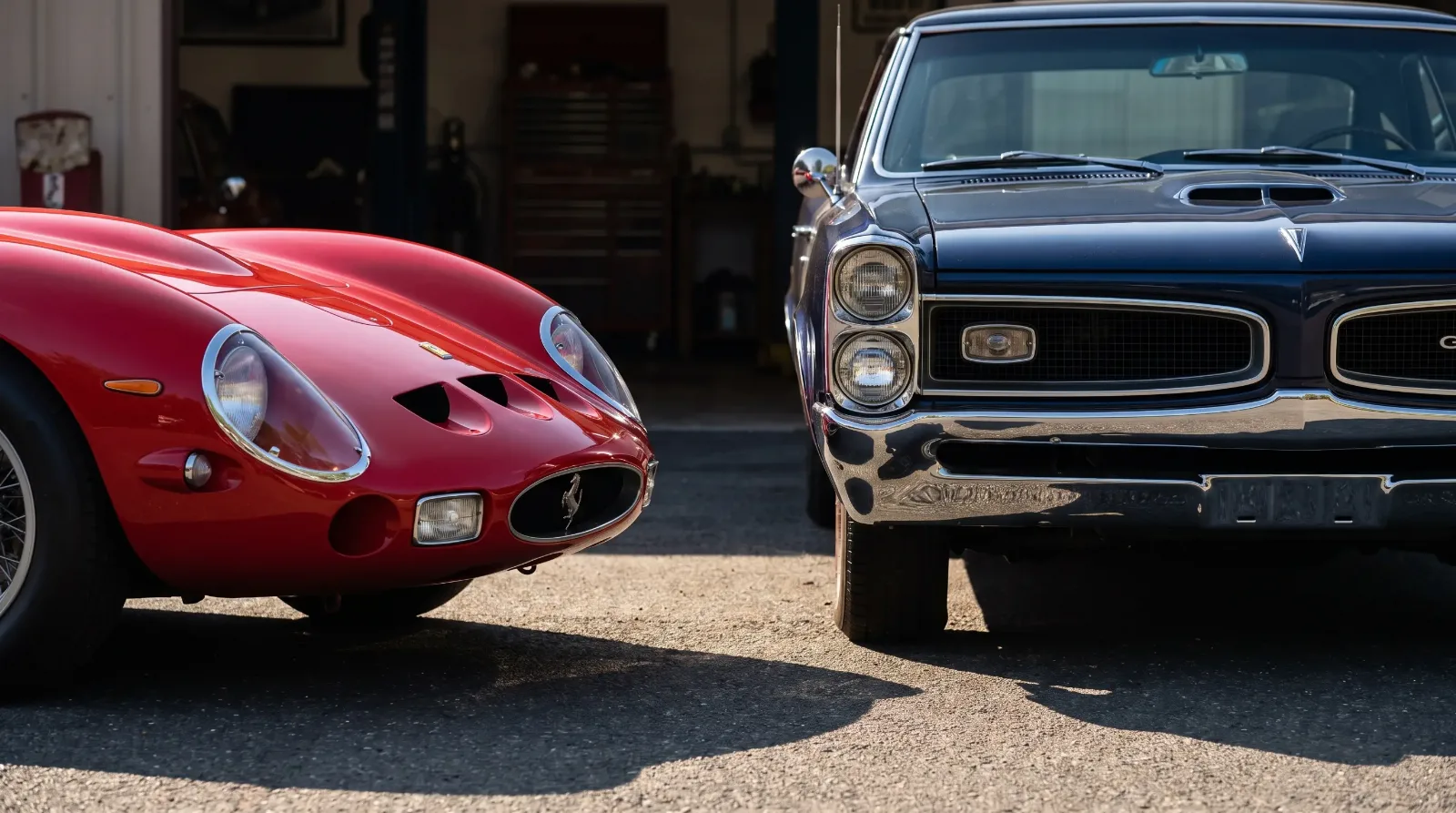
Every so often, someone puts a Ferrari 250 GTO and a Pontiac GTO side by side, whether at a show, in a magazine feature, or simply parked next to each other at a large enough gathering, and the comparison tends to produce the same reaction every time: quiet disbelief that these two cars share a name at all. The Ferrari is small, low, and built almost entirely around aerodynamics and lightweight construction for road racing. The Pontiac is a full-size American intermediate by comparison, built around straight-line acceleration and everyday drivability rather than sustained high-speed cornering.
The value gap between the two cars today is enormous, with an original Ferrari 250 GTO ranking among the most expensive cars ever sold at auction, while even a pristine, documented 1964 Pontiac GTO occupies a very different, far more accessible tier of the collector market. That gap is, in its own way, a fitting coda to the naming story. Ferrari built an extraordinarily rare, extraordinarily expensive racing machine. Pontiac built a name that borrowed the glamour and handed it to a much wider audience, and both cars, in their own separate markets, still carry real weight because of it.
Concours organizers and show promoters have leaned into that contrast more than once, and the pairing tends to draw a crowd whenever it happens. Spectators who know both cars well tend to linger on the visual mismatch as much as anything else. The Ferrari looks like it was sculpted around the engine and the driver with nothing extra allowed to survive. The Pontiac looks like what it is, a mainstream American coupe wearing a big engine and a set of stripes, built for a showroom floor rather than a pit lane. Neither car suffers from the comparison exactly, but the exercise makes clear how much weight a name alone can carry once it separates from the object it originally described.
A name that eventually stood on its own
Within a few years, the Pontiac GTO had built enough of a reputation, on the street, at the drag strip, and in popular culture, that the name no longer needed the Ferrari connection to carry weight. By the time the GTO became its own standalone model in 1966, most American buyers thought of GTO as a Pontiac name first, an unusual outcome for a badge that started life as a straight borrow from an Italian racing legend.
That reversal is rare in the automotive world. Names usually flow the other direction, with a smaller or newer brand borrowing credibility from an older, more established one and never quite escaping the association. The GTO managed something closer to the opposite, absorbed so thoroughly into American car culture that later generations sometimes had to be told the name came from somewhere else at all.
"There's something very American about the whole thing. Take a name that means something specific to a small, wealthy racing world, put it on a car a factory worker can actually afford, and let the new meaning eventually swallow the old one. That's exactly what happened here."
Patrick Walsh
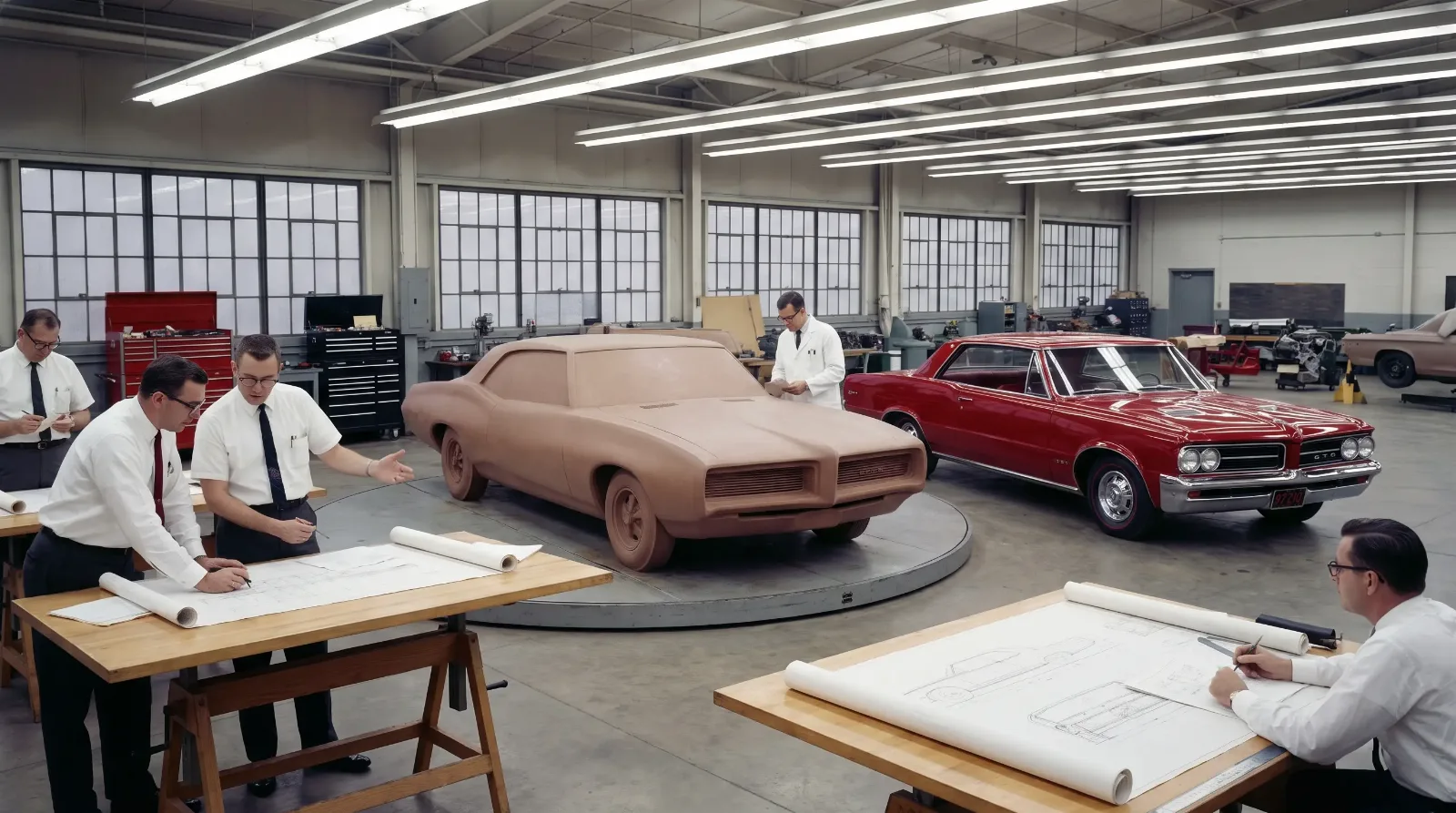
The man most associated with pushing that borrowed name through Pontiac's approval process is a familiar figure in muscle car history, and his role in the car's origin runs deeper than the naming decision alone. read on for the fuller account of John DeLorean's part in getting the GTO built at all.
Sources and notes
Related Reading

Have a
Pontiac GTO
for Sale?
Reach thousands of serious classic car collectors across the US.
Sell It Here →
Are You a Classic Car Dealer?
List your full inventory and connect with targeted classic car buyers.
Join as a Dealer →

About the author
Patrick Walsh
Automotive journalist covering classic car shows, events, and the enthusiast community across North America.
Related Listings - Pontiac GTO

Comments
Be the first to comment on this article.