
Pontiac's engineering staff in 1963 answered to a corporation that had, on paper, walked away from performance. General Motors' internal policy capped intermediate-car engines at 330 cubic inches, a rule written in the wake of the 1957 Automobile Manufacturers Association racing ban and reaffirmed inside GM's own executive suite. John DeLorean, who took over as Pontiac's chief engineer in 1961, inherited a division built on speed and a corporate memo telling him to stop selling it. What he did next did not break the rule. It went around it, and the difference mattered.
Car Features
7 min read
How John DeLorean Smuggled the GTO Past GM's Brass
GM had capped intermediate engine size on paper. Here is how Pontiac's engineering team read the fine print and built the GTO around it anyway.
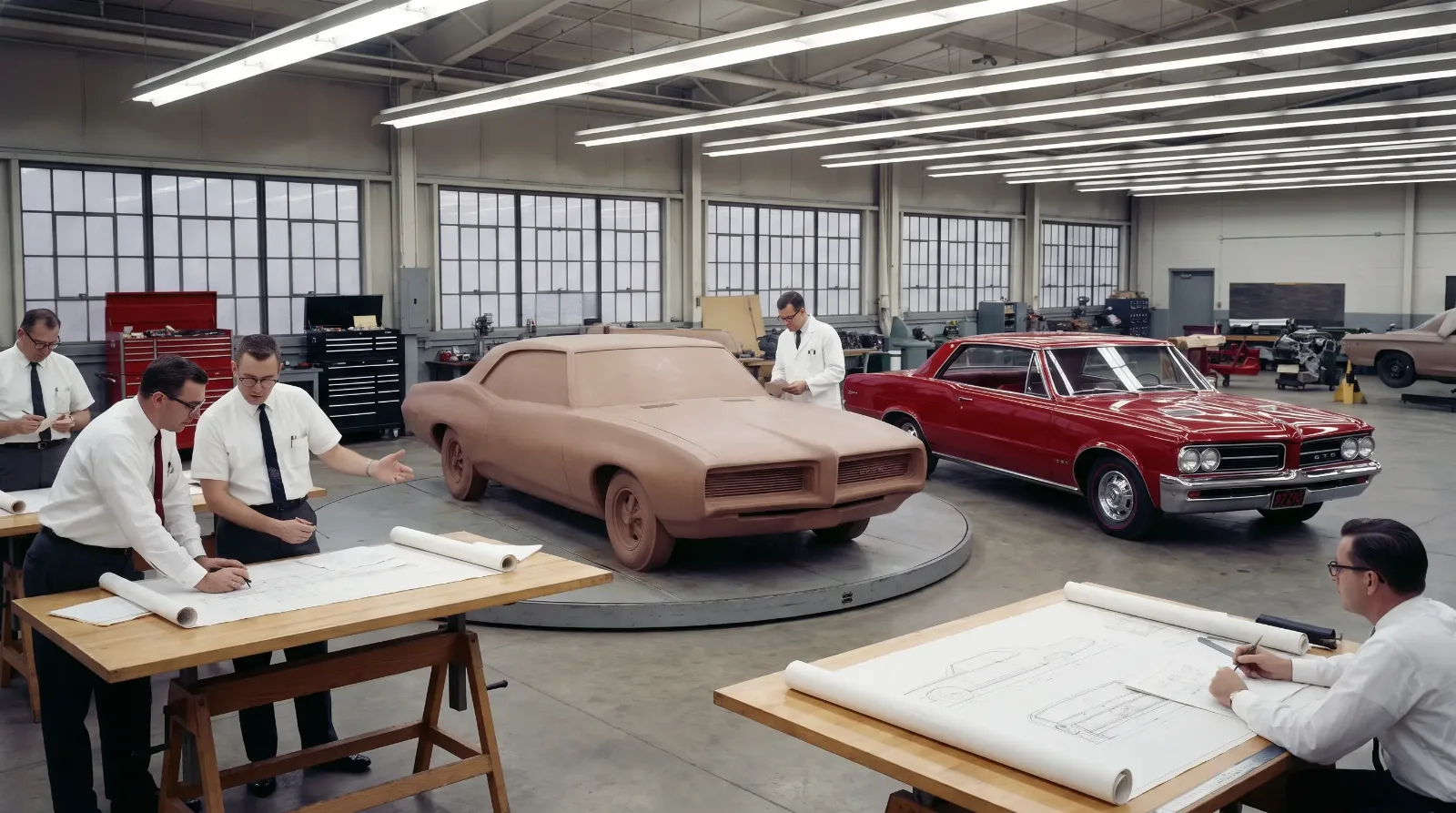
A displacement cap with a door left open
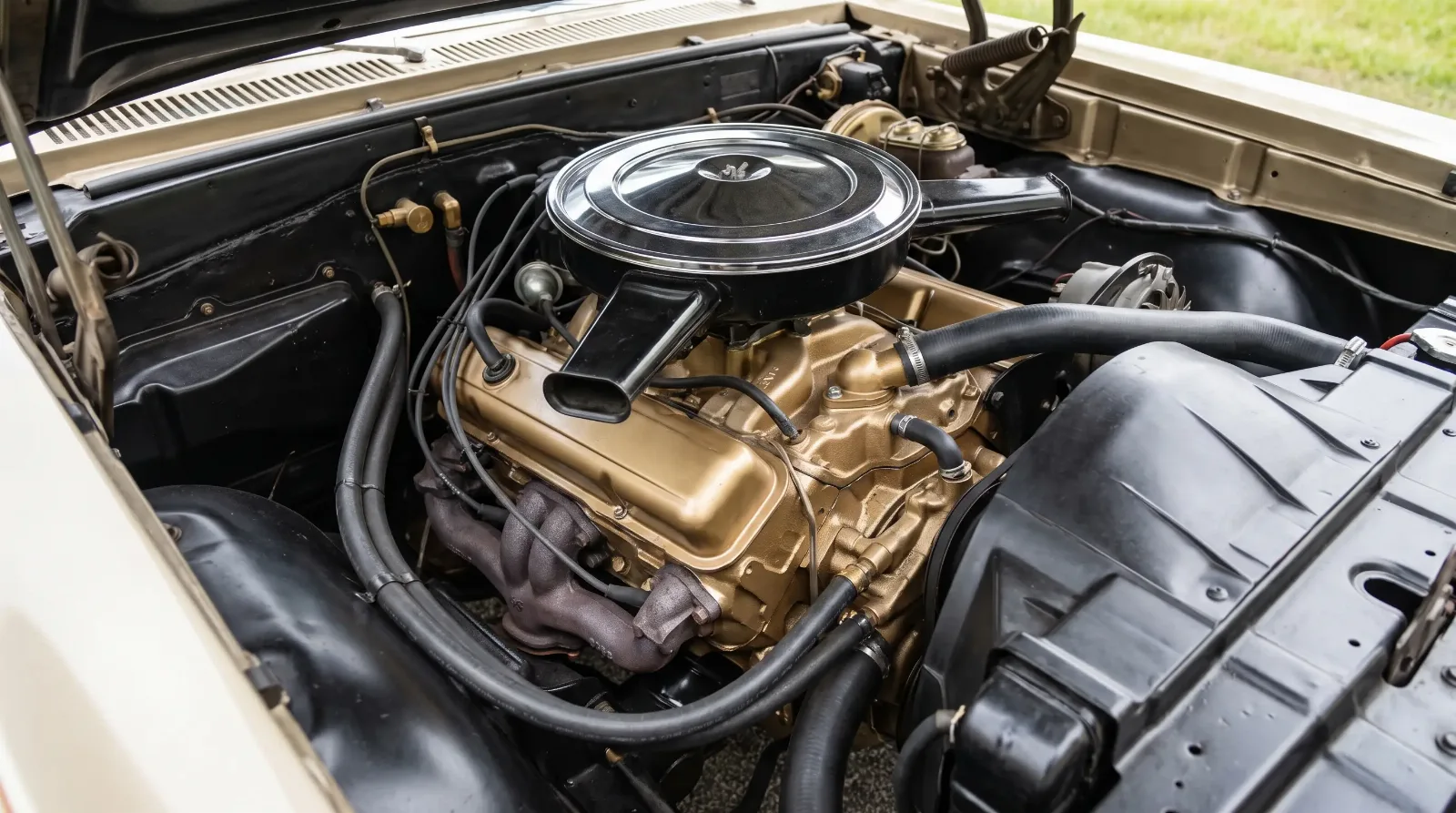
GM's policy governed engines installed at the factory in a given body class. It said nothing about what a dealer-ordered option package could contain once a car left the base configuration behind. DeLorean, along with Pontiac engineers Bill Collins and Russell Gee, read that gap literally. The Tempest and LeMans for 1964 rode on GM's new A-body platform, a car light enough and roomy enough under the hood to accept Pontiac's 389 cubic inch V8, an engine drawn straight from the full-size Catalina and Bonneville lineup.
Rather than build a new model and ask corporate for approval on a car that plainly violated the displacement policy, Pontiac's team packaged the 389, a heavier suspension, dual exhaust, and a floor-shifted transmission as option code 382, available on the LeMans coupe, hardtop, and convertible. Read the 1964 GTO story for the full arc of how that package became its own legend, but the mechanism itself was Pontiac's real innovation: nothing about an option package required a sign-off from the same committee that policed engine displacement in regular production models.
Selling the plan inside Pontiac before selling the car
DeLorean did not act alone, and he did not act in secret from his own management. Pontiac general manager Pete Estes approved the option package, and the case DeLorean made internally leaned on sales logic as much as engineering pride. Pontiac had spent the earlier part of the decade rebuilding its image around speed, first through NASCAR and drag racing programs, then through advertising built on youth and performance. The GM racing ban of 1963 had cut off the racing budget, but it had not cut off demand. An option package aimed at buyers who wanted a factory hot rod filled that vacuum without a single race entry.
Pontiac sales manager Frank Bridge, who doubted the package would find much of a market, insisted on capping planned first-year volume at around 5,000 units. Actual 1964 GTO production reached 32,450 cars, more than six times Bridge's forecast, which is part of why the story of the launch reads as improvisation that worked rather than a strategy executed on schedule.
The man behind the memo
DeLorean did not arrive at Pontiac as an outsider looking to shake up a stodgy division. He had come up through Packard and then GM's own engineering ranks, building a reputation as a genuine technical talent before he ever touched the GTO program. By the time he took the chief engineer job at Pontiac in 1961, he was already known inside GM for pushing past convention, favoring engineering solutions that solved a problem cleanly rather than ones that simply satisfied a committee. That instinct is exactly what the GTO option package reflects: a technically minor change, a heavier engine and suspension bolted into an existing platform, executed through a process nobody had explicitly closed off.
Popular retellings of the GTO's creation, echoing DeLorean's reputation as a natural self-promoter, tend to cast him as the sole architect of the loophole. Pontiac's own marketing chief Jim Wangers credited DeLorean, Bill Collins, and Russell Gee jointly for the car's creation, and Tom Ramirez's read of the internal record backs that fuller picture without denying DeLorean's central role in pursuing the idea.
Corporate discovers the option after the car is already selling
Accounts differ on exactly when GM's fourteenth floor executives fully grasped what Pontiac had done, but the general shape of the story holds up across most retellings. By the time anyone at the corporate level raised serious objections, dealers already had cars on their lots and orders on the books. Killing the option after launch would have meant public embarrassment for GM and for Pontiac specifically, at a moment when the car was drawing exactly the kind of press attention the division wanted.
Tom Ramirez has spent years working through Pontiac's internal production and option documentation, and his read on the episode is closer to organizational drift than open defiance.
"People like to tell this as DeLorean sneaking one past his bosses in the dead of night. The paper trail says something more mundane: an option code got approved at the divisional level, corporate's review process didn't catch the displacement conflict until the car was already in dealer showrooms, and by then reversing it cost more than living with it."
Tom Ramirez
Why the loophole mattered more than the engine
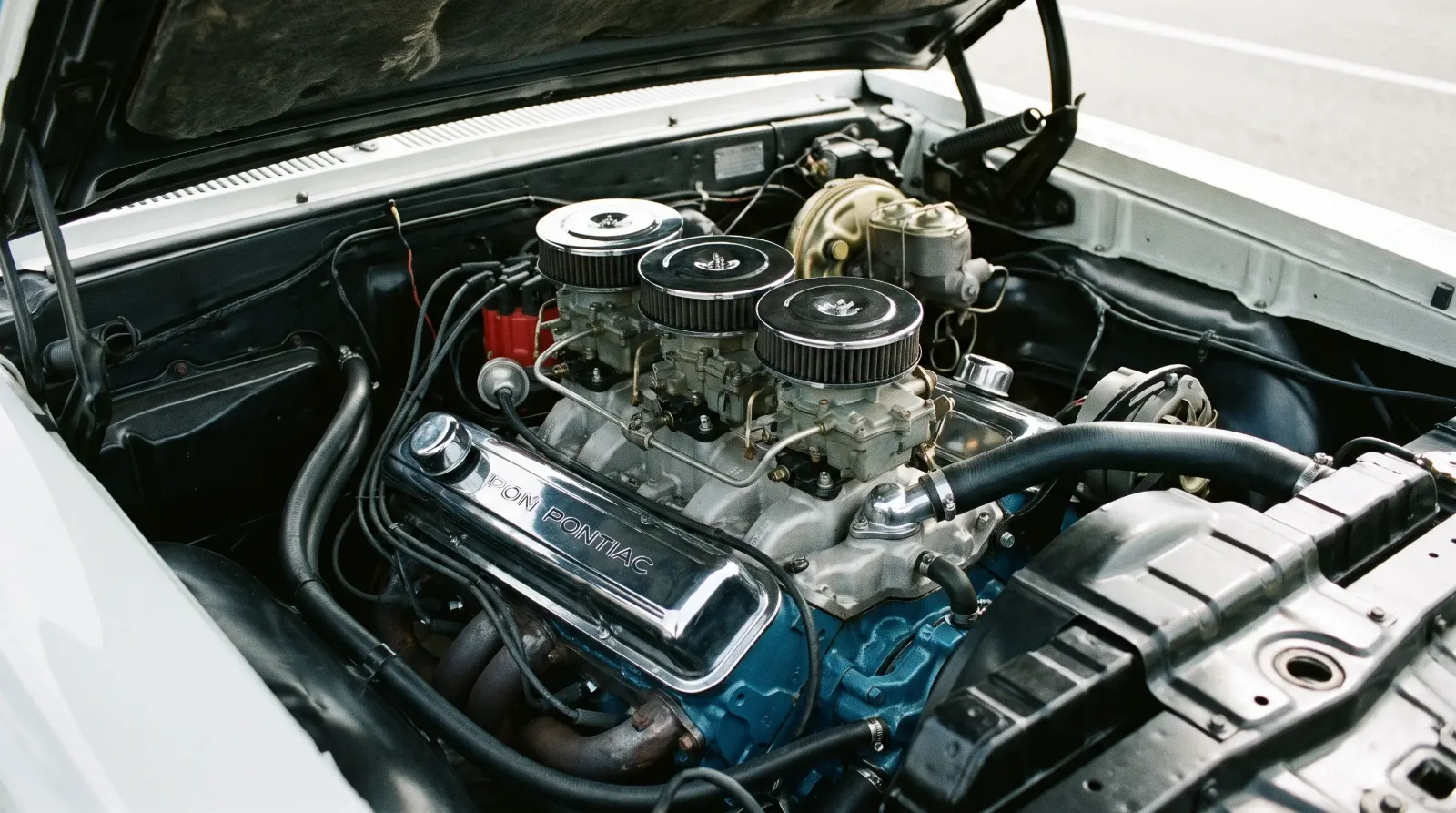
Plenty of Pontiac's engineering choices for 1964 were competent but unremarkable. The 389 was a proven engine, the A-body chassis was shared with three other GM divisions, and Tri-Power carburetion had already appeared on full-size Pontiacs. What made the GTO different was administrative, not mechanical: a mid-size car with a big-car engine, sold as a simple checkbox on an order form instead of a separate model line requiring its own approval chain. That structure is what every subsequent muscle car from Oldsmobile, Buick, and eventually Ford and Chrysler would copy. Read on for a closer look at exactly how that option-package structure worked and why it was so hard for GM to unwind once dealers had already sold the cars.
For a broader look at how this single decision reshaped an entire Pontiac model line across the following decade, the Pontiac GTO story traces the option package through its evolution into a standalone model by 1966.
What the loophole cost GM afterward
The GTO's success did not go unnoticed at the corporate level, and GM's response over the following years shows how seriously the fourteenth floor eventually took the episode. Corporate review of divisional option packages tightened considerably by the late 1960s, with new engines and performance packages facing closer scrutiny before reaching dealers. By the time Pontiac wanted to push the GTO further, larger displacement, the Judge package, GM's oversight process had adapted specifically because of what the 1964 launch had exposed. In a real sense, the GTO's own runaway success closed the same door it had walked through, making later performance launches harder to slip past corporate rather than easier.
DeLorean's career benefited enormously from the GTO's reception regardless of how the internal politics played out. He became Pontiac's general manager in 1965, one of the youngest people to hold that title at GM, and the GTO's sales success was central to the case for promoting him. Whatever the precise mechanics of who approved what and when, the car made DeLorean's name inside the industry, and that reputation followed him through the rest of his GM career and beyond.
What the record actually supports
Separating myth from documentation on this episode is worth the effort because the mythology has calcified into something close to folklore. DeLorean did not defy a direct order. He and his engineering team found an administrative gap, Pete Estes signed off on using it, and GM's corporate review process was slow enough that the car reached the public before anyone higher up could stop it. The GTO's origin is a story about organizational structure exploited by people who understood it better than the people meant to enforce it, which is a less romantic story than the one usually told, but a more useful one for understanding how the entire muscle car era got started.
Sources and notes
- Wikipedia: Pontiac GTO
- Wikipedia: John DeLorean
- HotCars: how the GTO option package borrowed Ferrari's name
- Ate Up With Motor: DeLorean Motor Company history and DeLorean's Pontiac years
- Goodreads: On a Clear Day You Can See General Motors, J. Patrick Wright and John DeLorean
- The Pop History Dig: John DeLorean and the GTO
Related Reading
Have a
Pontiac GTO
for Sale?
Reach thousands of serious classic car collectors across the US.
Sell It Here →
Are You a Classic Car Dealer?
List your full inventory and connect with targeted classic car buyers.
Join as a Dealer →

About the author
Tom Ramirez
Corvette researcher and historian based in Bowling Green, Kentucky. Two decades documenting Corvette production history from original factory records.
Related Listings - Pontiac GTO


Comments
Be the first to comment on this article.