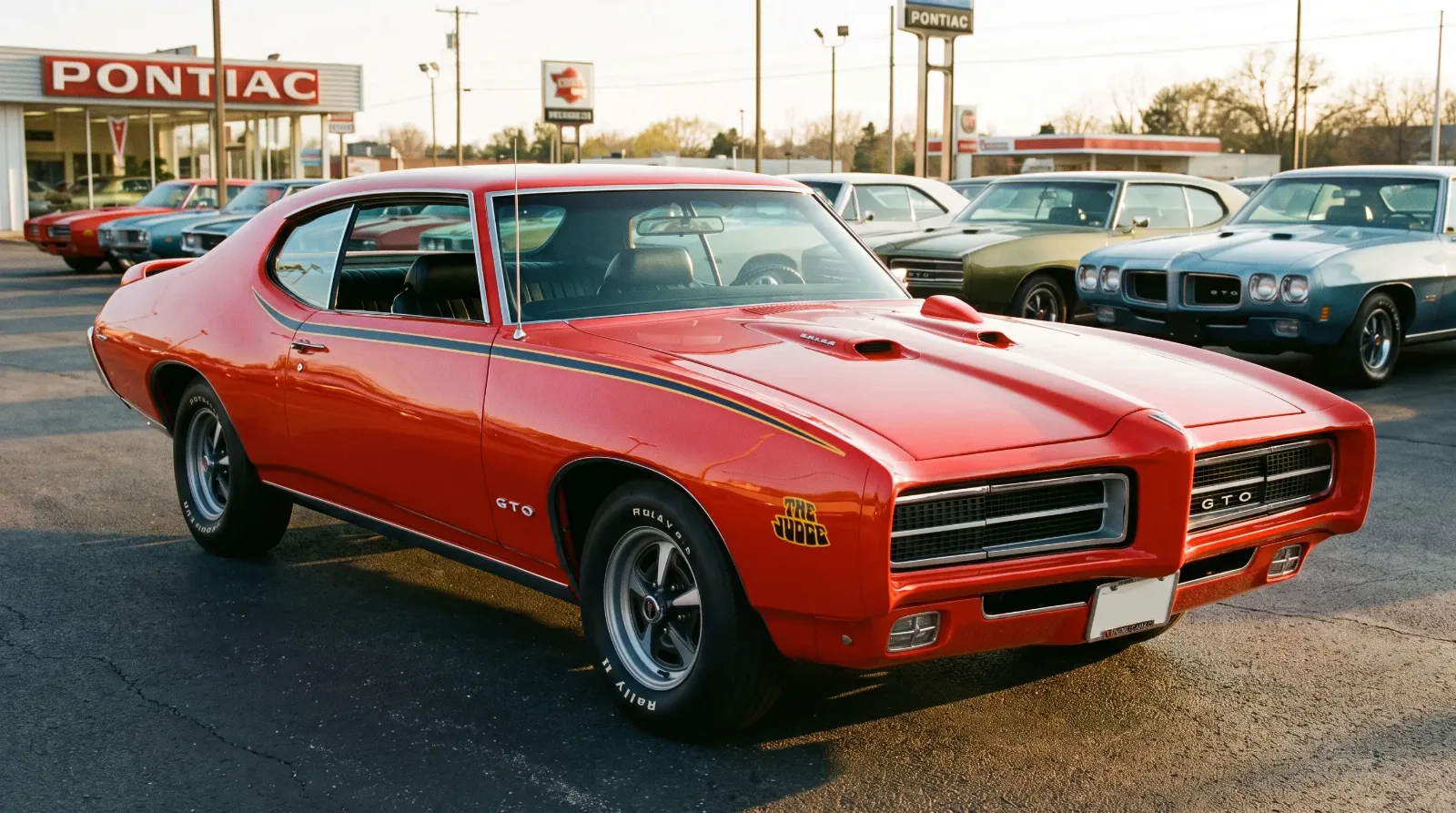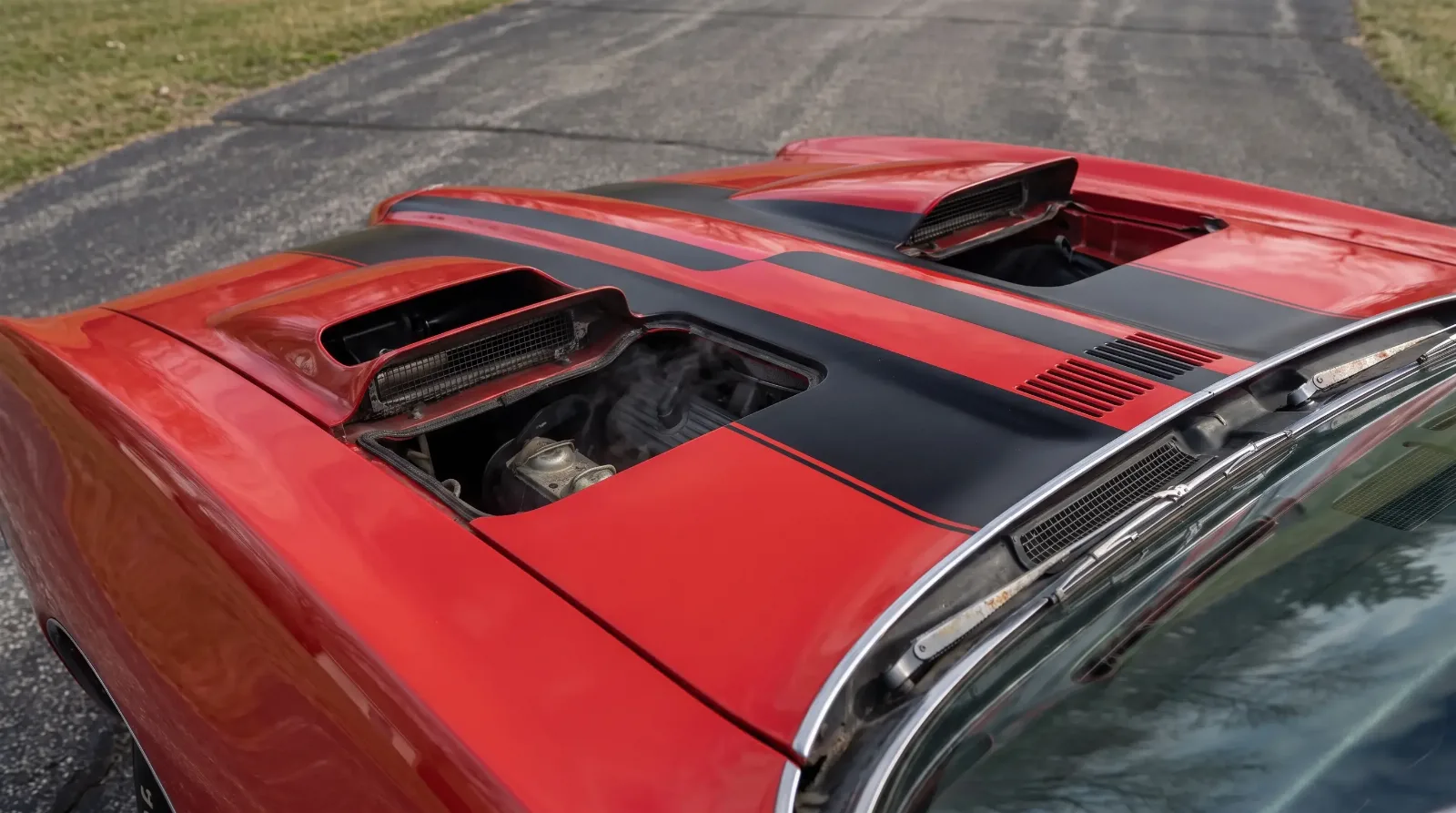
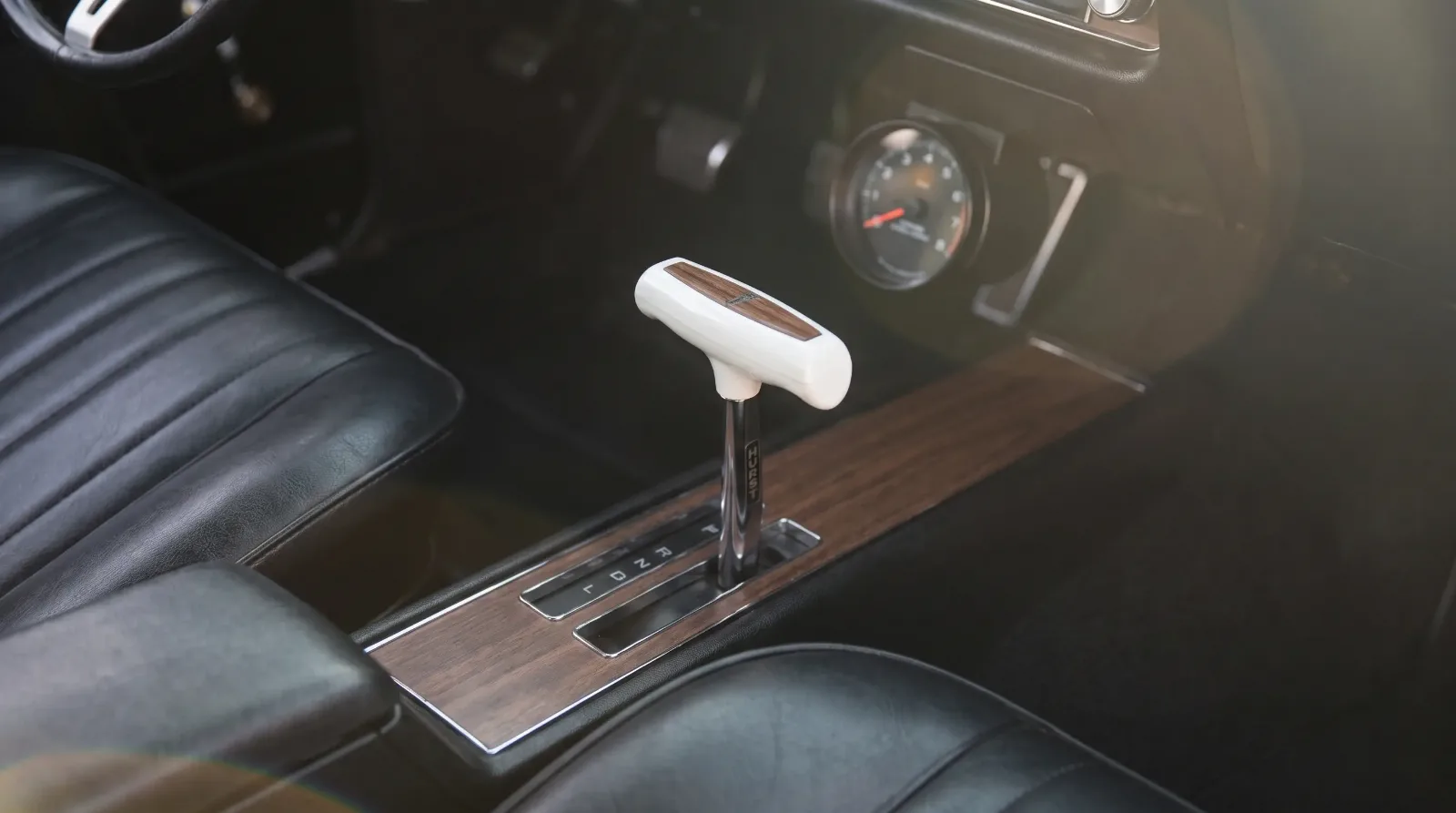
You want to know the first thing I noticed the first time a buddy let me row through the gears in his Judge back when these cars were just used cars sitting on used car lots? It wasn't the wing. It wasn't the stripes. It was that white T-handle shifter sitting there in the console like it meant business. I've told the story of the Judge to a lot of younger guys at shows over the years, and I always end up circling back to that shifter, because it's the one part of the car you actually touch every single time you drive it.
Hurst wasn't just a name, it was a promise
By the late sixties, Hurst had built a reputation that meant something to a guy standing on a dealer lot deciding between two nearly identical cars. A Hurst shifter told you the linkage wasn't going to feel like stirring a pot of soup. It told you the throws were going to be short, the engagement was going to be positive, and you weren't going to miss second gear at a stoplight in front of your girl's father. Pontiac knew exactly what they were doing putting that name and that hardware into the Judge, because the whole package was built to appeal to a buyer who wanted the performance credentials to be real, not just implied by a badge.
The T-handle itself, usually finished in white with a wood grain insert or a similar treatment depending on the year, wasn't just decoration either, even though it sure looked good doing double duty as a styling statement. It gave you real leverage on the shift, which mattered when you were working a four-speed hard on a Sunday afternoon and didn't want your hand cramping up by the third gear change.
The Hurst His/Hers connection people forget
Hurst had already made a name for itself with the Dual-Gate shifter in the Hurst/Olds, the setup gearheads nicknamed "His and Hers" because it let a driver choose between full automatic operation or manual gear selection through the same gate, and by the time the Judge came around, the Hurst brand carried a kind of cultural cachet that went beyond the hardware itself. Putting a Hurst-branded shifter in the Judge wasn't just an engineering decision about linkage geometry. It was a marketing decision, tying the car to a name that gearheads already trusted and that showed up in magazine ads buyers had been reading for years.
I remember guys at the local drive-in comparing notes on whose car had the Hurst linkage and whose didn't, like it was a status marker separate from horsepower entirely. A car could have a big engine and still get talked down at the counter if the shifter felt sloppy. Nobody wanted to admit their four-speed felt like a spoon stirring gravel.
What the transmission choice actually meant
Buyers ordering a Judge could get it with a manual four-speed running through that Hurst linkage, or with the automatic transmission for folks who wanted the look and the power without rowing their own gears. The manual cars are the ones that get talked about most at cruise nights, and there's a reason for that beyond nostalgia. A well-set-up Hurst-linked four-speed rewards a driver who knows how to use it, and that hands-on connection between driver and machine is a big part of why these cars still mean something fifty-plus years later.
The automatic cars deserve their own respect too. Not everybody wanted to work a clutch in stop-and-go traffic, and Pontiac wasn't about to leave that customer on the table. But ask any longtime Judge owner which transmission gets brought up first at a show, and nine times out of ten it's the stick, with that white-handled Hurst shifter sitting right there as the visual centerpiece of the whole conversation.
| Transmission option | Shift linkage | Typical buyer |
|---|---|---|
| Four-speed manual | Hurst T-handle linkage | Performance-focused, hands-on driver |
| Three-speed automatic | Console or column-mounted shifter | Buyer wanting Judge image with easier daily use |
Track nights and what the shifter meant at the line
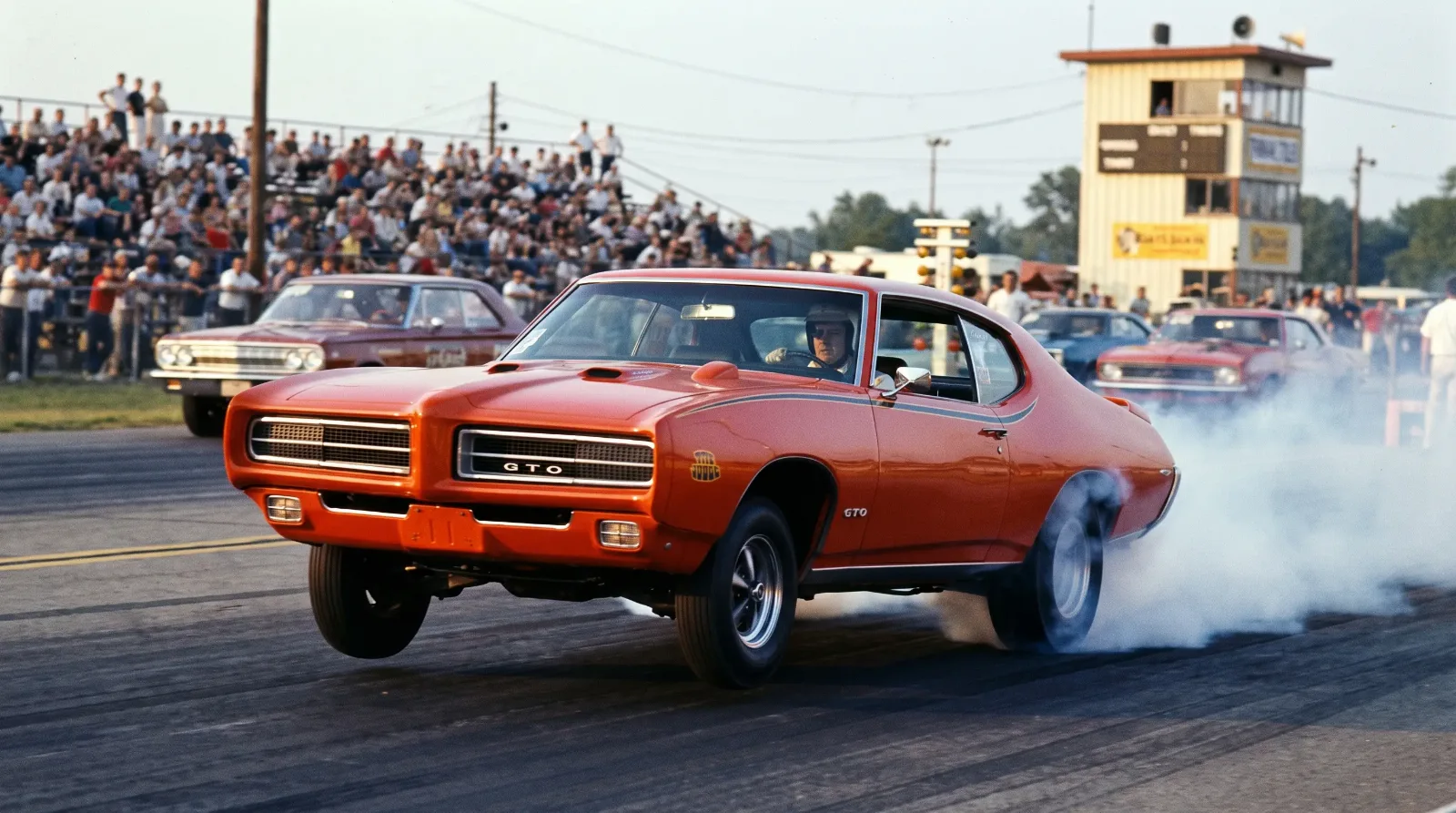
Out at the strip on a Friday night, that Hurst linkage wasn't just for show. Guys leaving the line hard needed a shifter they could bang through the gears without worrying about missing a shift or grabbing false neutral between second and third. I saw more than one otherwise strong pass ruined by a cheap aftermarket linkage that let a driver's hand slip past the gate under hard acceleration. A Judge with the factory Hurst setup didn't have that problem nearly as often, and word got around fast in a small town where everybody knew everybody's car.
That reputation followed the Judge off the strip and into everyday driving too. A shifter that held up under repeated hard launches was going to hold up fine getting you to work and back, and that kind of durability under stress is exactly the sort of thing that built long-term trust in a car nameplate. It wasn't flashy the way the wing was flashy, but it did its job every single time you asked it to, and that reliability under real use is worth just as much to a period buyer as anything printed in a brochure.
Why it still matters when you're buying one today
If you're out shopping for a Judge now, don't just glance at the shifter and move on. Get your hand on it. Work it through the gears if the seller lets you. A tired, sloppy linkage on a car claiming to be numbers-matching original is a tell that something's been swapped, rebuilt cheap, or neglected for decades. A correctly restored or well-preserved Hurst linkage should still feel tight and positive, the same way it did rolling off the lot in Pontiac, Michigan.
"I've bought and sold a lot of these cars over the years, and I still put my hand on that shifter before I even start the engine. If it doesn't feel right, nothing else about the deal is going to feel right either."
— Gary Nowak
Parts sourcing has gotten easier over the years, which is a mixed blessing depending on how you look at it. Reproduction Hurst linkages are out there now, built well enough that a lot of owners run them without any guilt, especially on a driver-quality car that sees regular road time. But if you're chasing originality on a numbers-matching restoration, you want the real factory-sourced piece, or at least a correctly documented replacement, because judges at the concours level know exactly what the original casting and knob shape should look like, and a slightly-off reproduction will cost you points every time.
That little piece of chromed hardware sitting between the seats did more to sell the Judge's performance promise than half the graphics package ever did. It's easy to walk right past it looking at the wing and the stripes, but the shifter is where the car actually talks to you. And speaking of things bolted to the back of the car that everybody notices first, read on for the story behind that rear wing.