
I remember standing at a cruise night a few summers back next to a fella whose 1966 GTO had every mechanical box checked, the right engine, the right transmission, documentation to back it up. And still, half the crowd walked past his car for one parked two spots down with a set of Rally I wheels and a fresh set of redline tires. Same era, same basic car, completely different reaction. That is the power those wheels and tires had, and honestly still have.
Car Features
7 min read
The Redline Tires and Rally I Wheels That Defined the Look
Rally I wheels and redline tires turned a well-built GTO into a showstopper. Here is why that combination mattered so much to period buyers.
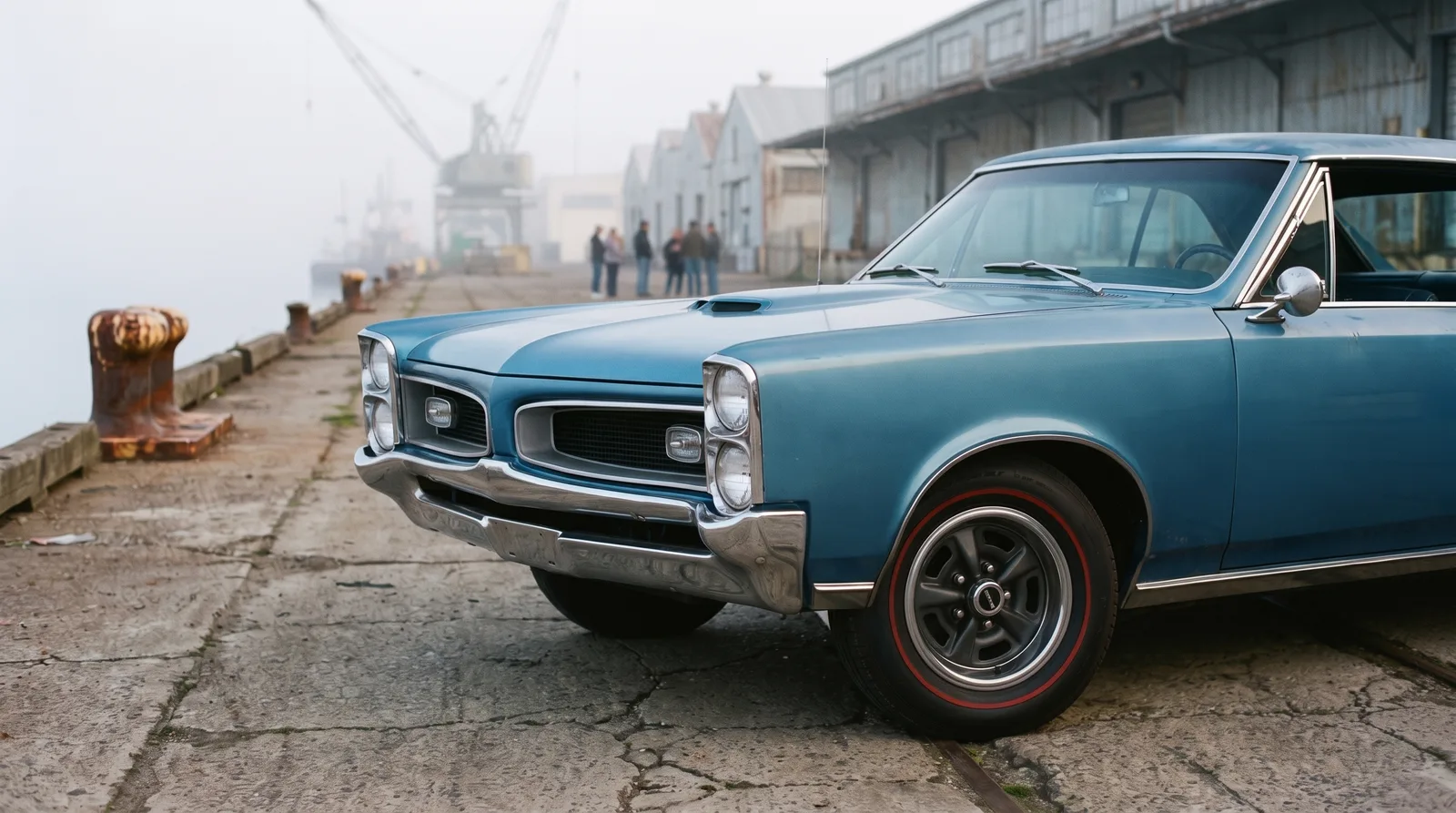
Where the redline look came from
Wide-oval tires with a thin red stripe running around the sidewall showed up on GTOs from the very start of the model in 1964, and the look quickly spread across the industry as tire makers chased a sportier look to match the muscle car boom. But the GTO wore them better than almost anything else on the road, partly because Pontiac's stylists understood that the tire itself was part of the car's visual language, not just a rubber afterthought. Redlines gave the car a finished, purposeful look at the one point where the sheet metal meets the pavement, and buyers noticed.
Goodyear and Firestone both ran redline tires in their performance lineups through the mid-1960s, and the stripe itself was a manufacturing choice as much as a styling one. Tire makers had already been offering whitewall tires for decades, and the switch to a thinner red line was a way to signal "sport" without going full whitewall, which by 1966 was starting to read as an older man's tire on a car aimed at a younger buyer. A GTO with whitewalls looked like somebody's dad had ordered the wrong option box. A GTO with redlines looked like it belonged to somebody who understood what the car was for.
Rally I wheels change the whole stance
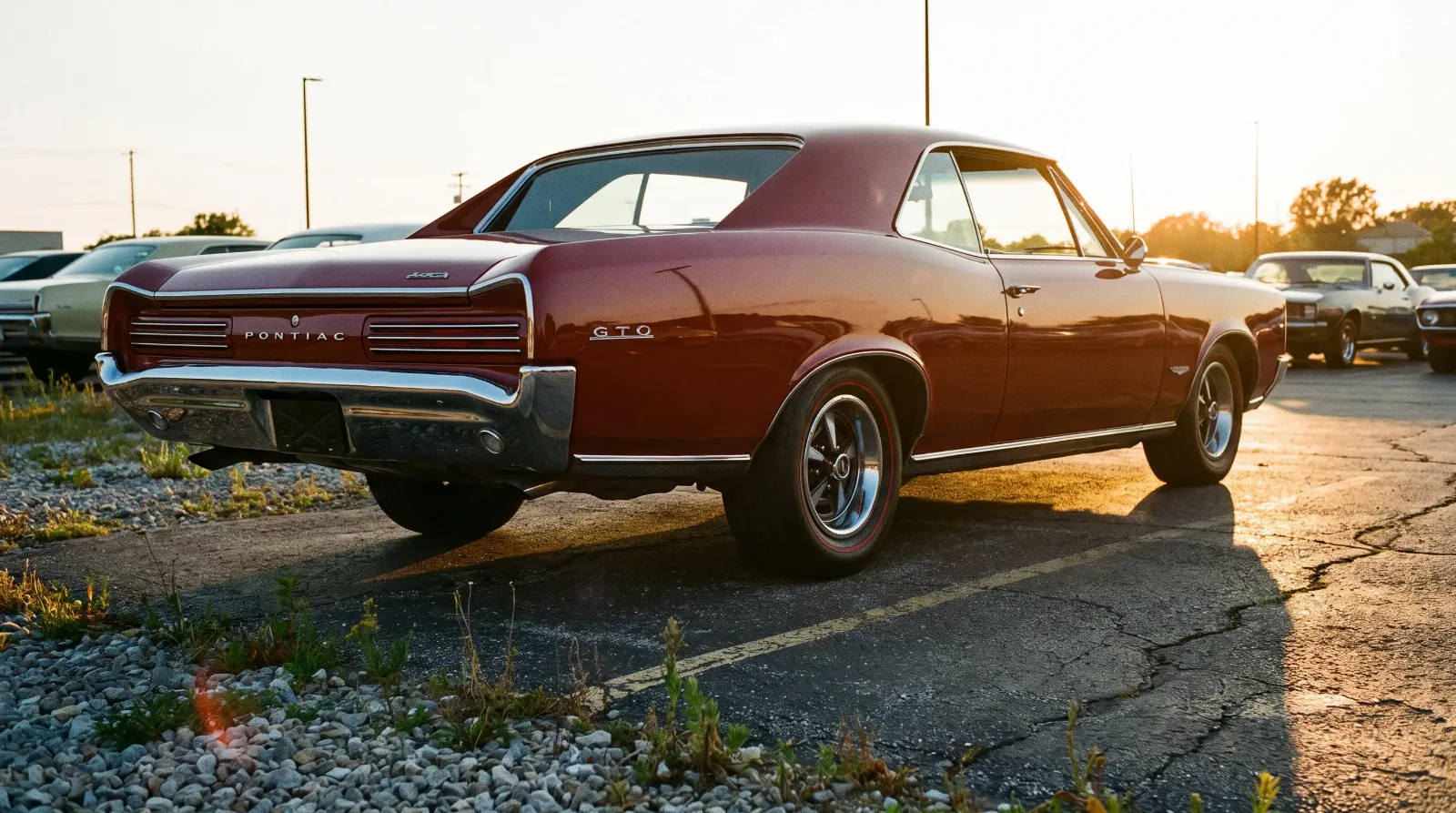
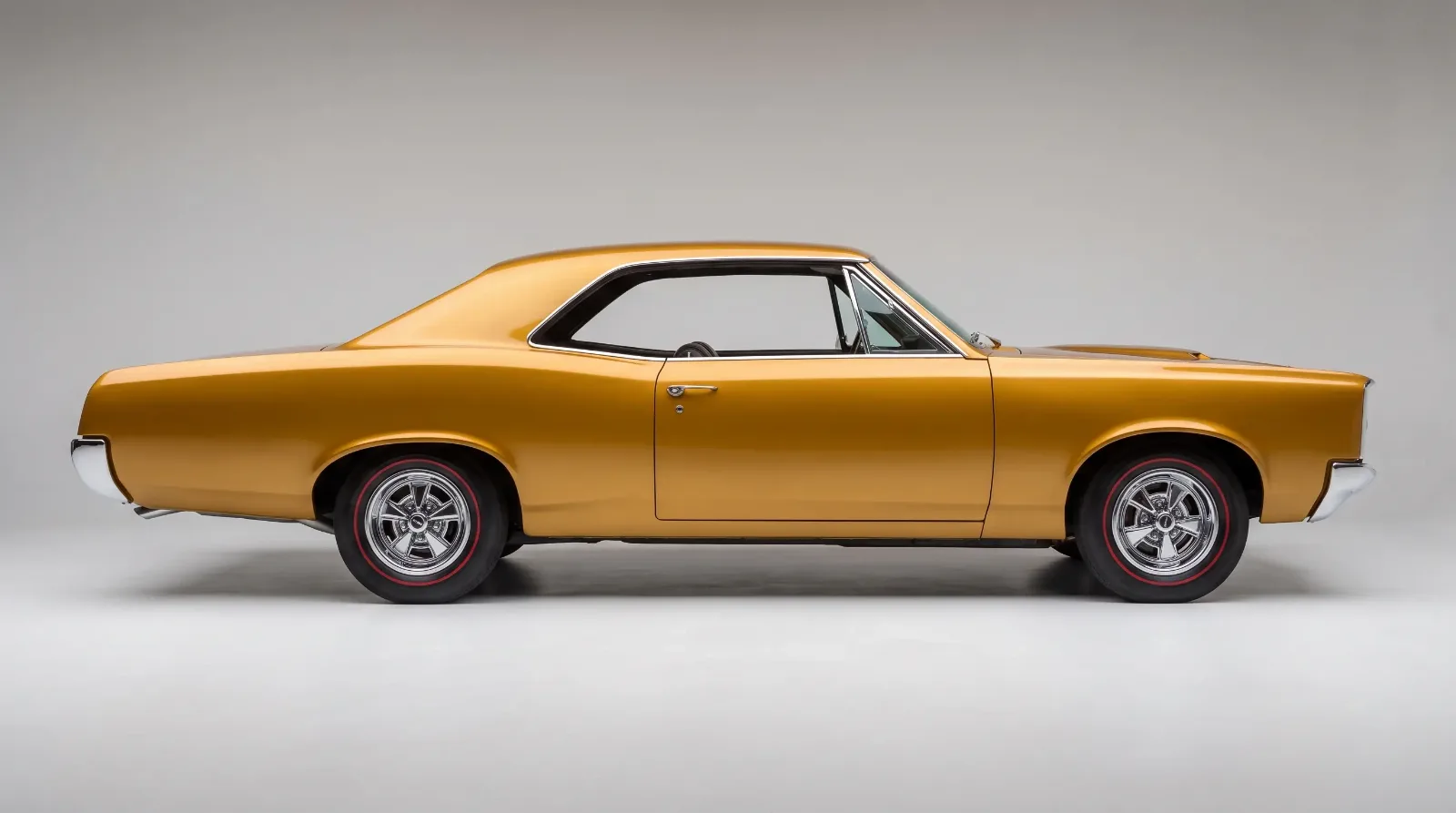
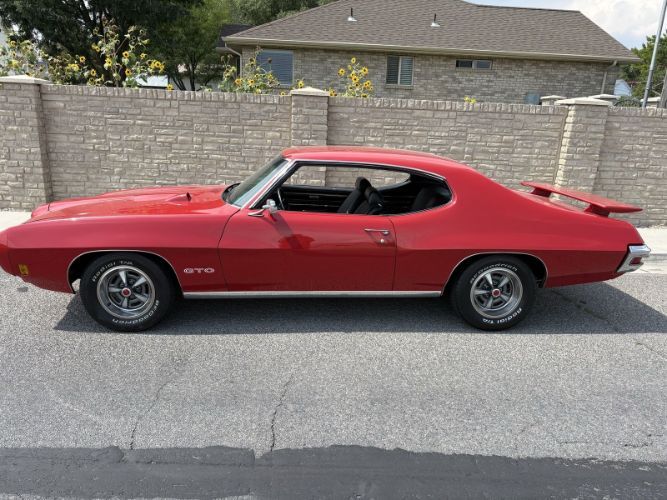
The Rally I wheel, Pontiac's stamped-steel performance wheel option, showed up in this era with a distinctive five-slot design and a bright trim ring that caught light in a way plain hubcaps never could. Pair that wheel with a redline tire and you get a combination that does something almost every GTO enthusiast will tell you the same thing about: it makes the car look lower, wider, and meaner without a single mechanical change underneath. It is one of the cheapest options Pontiac ever sold that had that big an effect on how a car reads from across a parking lot.
Part of what made the Rally I work so well visually was how it handled negative space. A full wheel cover hides the brake drum and backing plate entirely, which flattens the whole wheel opening into one smooth disc. The Rally I's slots let shadow and depth show through, so the wheel actually looks like a mechanical object doing a job, not a decorative cap bolted over one. That difference matters more than people expect when you are looking at a car from twenty feet away in a parking lot, which is honestly how most people experience most cars most of the time.
| Detail | Description |
|---|---|
| Wheel option | Rally I, stamped steel, 5-slot design |
| Tire style | Wide-oval redline, thin red sidewall stripe |
| Years covered here | 1966-1967 Coke-bottle GTOs |
| Visual effect | Wider, lower stance perception vs. base wheel covers |
| Typical trim ring finish | Bright chrome-plated steel ring |
Why this stuff matters more than people think
Talk to enough old-timers who were actually buying these cars new and you hear the same thing over and over: the wheel and tire package was a status symbol among GTO owners in a way that is hard to explain to somebody who did not live through it. It said you spent the extra money, that you cared about how the car looked stopped as much as how it looked moving. During the Coke-bottle GTO years, when the body itself already had that flared, muscular shape, the right wheel and tire combination was the finishing touch that made the whole package click.
There was also a practical side nobody talks about as much. Wide-oval tires actually put more rubber on the road than the narrower bias-ply tires GTOs wore standard, which meant a car ordered with the wheel and tire package braked and cornered a little better than a base car, not just looked the part. It was one of the rare styling options in this era that also delivered a small, real functional benefit, which is probably part of why so many buyers checked that box even when money was tight elsewhere on the order sheet.
"You could always spot the guy who ordered his GTO right. It was never just the engine code on the paperwork, it was whether he bothered with the Rally wheels and the redlines too."
Gary Nowak
Finding the right stuff today
Original Rally I wheels and correct-period redline tires are both reproduced today, which is good news for anybody restoring a car that lost its factory wheels somewhere along the way, and bad news for anybody trying to verify originality on a car being sold as all-original. Trim ring condition, casting marks on the wheel itself, and tire sidewall markings are all things worth checking closely if the seller is claiming factory-original rolling stock. A car wearing the right look does not always mean it is wearing the actual parts that left the factory with it.
The engine that made the whole package worth having
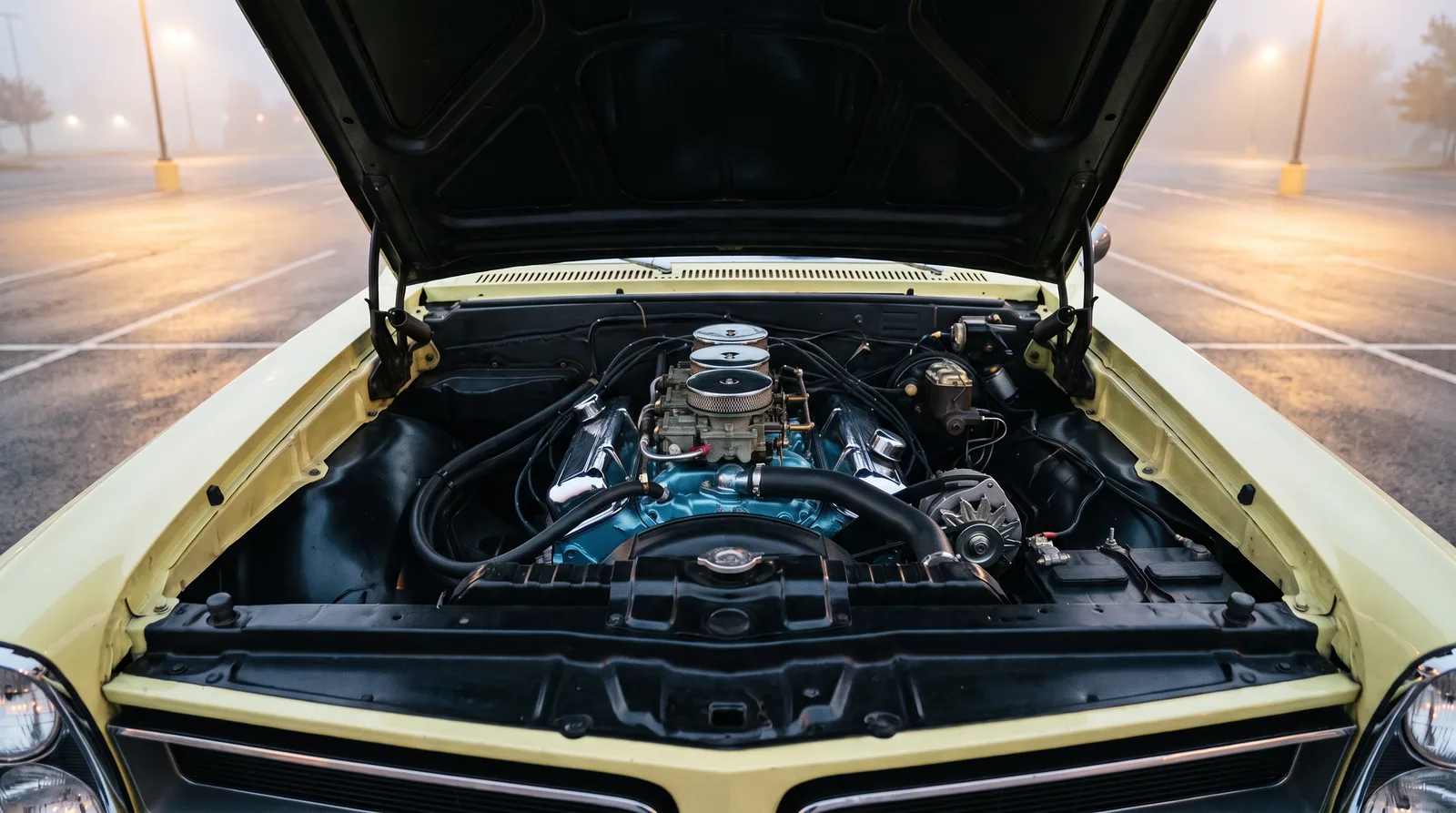
None of this stance and style talk matters much if the car underneath cannot back it up, and nothing backed it up in this era quite like the Tri-Power 389. That engine, and the year it truly rewrote what people expected from a muscle car engine bay, is a story worth its own telling, so read on.
What the option cost, and what it says now
The redline tire and Rally I wheel package was never expensive relative to the engine and drivetrain options on the same order form, which is exactly why it turns up on such a wide range of GTOs today, base 326-adjacent Tempests aside. A buyer stretching to afford the Tri-Power engine could still usually find room in the budget for the wheel and tire upgrade, and plenty did. That affordability is part of why the look became so closely associated with the car itself rather than with any one trim level or price bracket. It was the option nearly everybody who cared about how the car looked chose, regardless of what else was checked on the sheet.
Still turning heads
Sixty years later, walk any cruise night and you will still see it happen: the correctly optioned Rally wheel and redline tire GTO pulls eyes that a mechanically identical car on plain steel wheels just does not get. Some details age out of fashion. This one never really did.
Sources and notes
Related Reading
Have a
Pontiac GTO
for Sale?
Reach thousands of serious classic car collectors across the US.
Sell It Here →
Are You a Classic Car Dealer?
List your full inventory and connect with targeted classic car buyers.
Join as a Dealer →

About the author
Gary Nowak
Lifelong Midwest rodder who has been building and driving traditional pre-war hot rods since the 1970s.
Related Listings - Pontiac GTO
Comments (1)
T
Theresa
1 week ago
Were Rally I trim rings always chrome-plated steel, or did some get stainless? They read differently on camera, and I shoot one next week.