
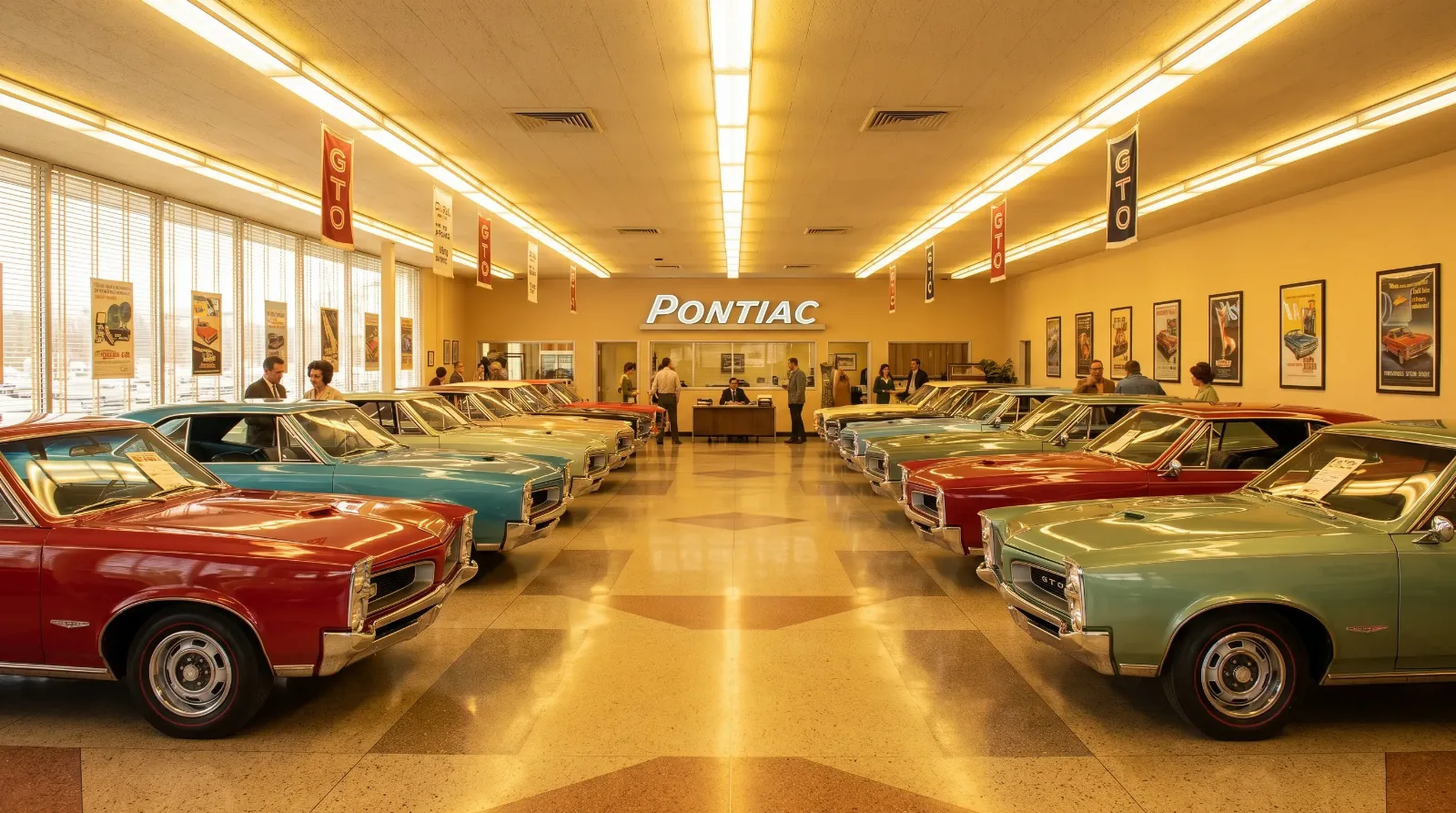
Numbers get thrown around loosely in muscle car conversations, so let me be precise about this one: 1966 was the single best sales year the GTO ever had, and it was not particularly close. 96,946 GTOs left Pontiac dealerships that year, a figure the model never matched again in any subsequent season, including years with more engine options and more aggressive marketing behind them.
Car Features
7 min read
How the 1966 GTO Broke Muscle Car Sales Records
1966 stands as the GTO's all-time production peak. Here is why it happened, and why high volume means documentation matters more than ever when buying one.
The context that made 1966 possible
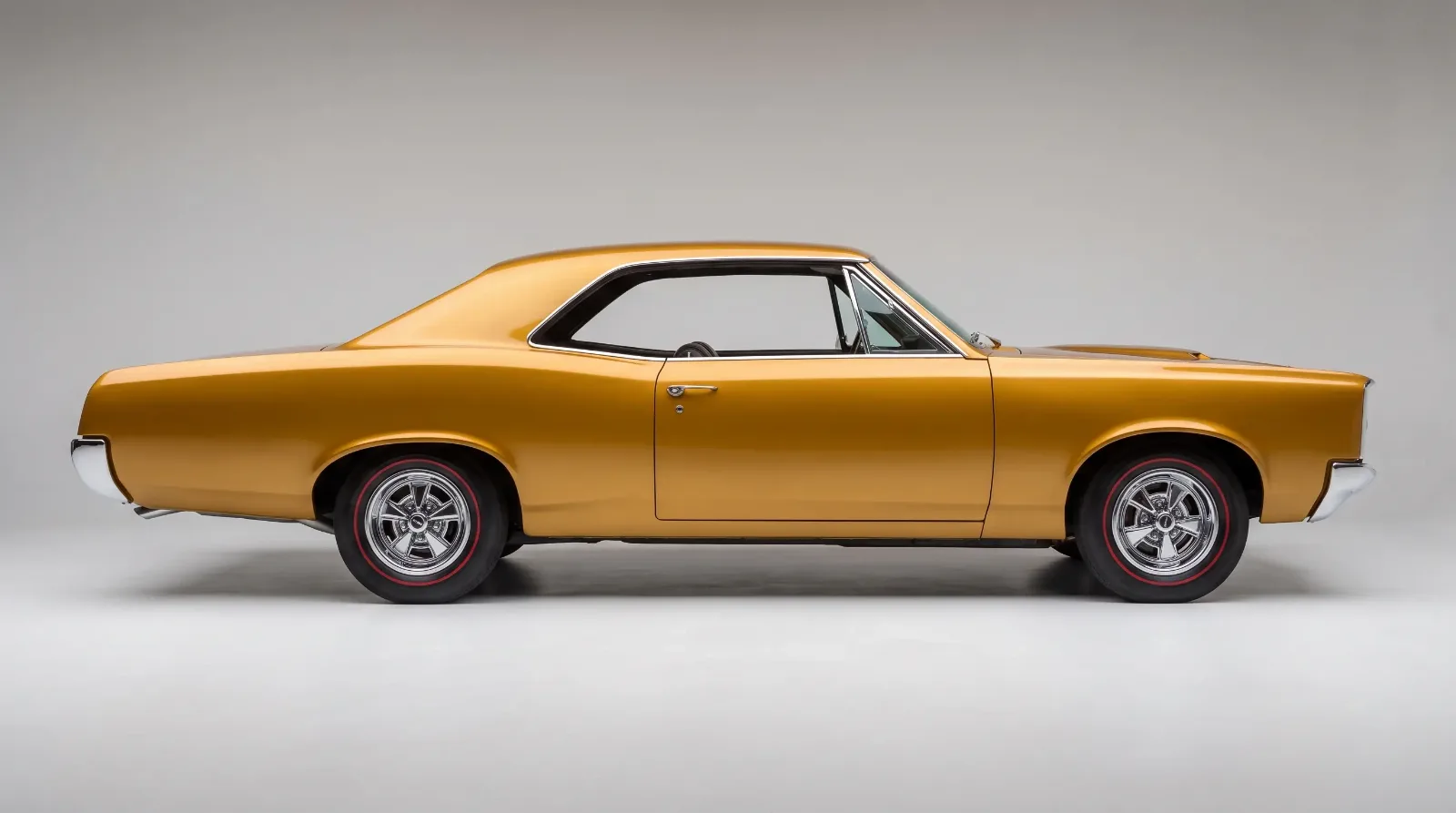
Understanding why 1966 was the peak requires understanding what changed that year. The GTO stopped being an option package bolted onto the Tempest and LeMans and became a standalone model, riding on Pontiac's new Coke-bottle-shaped body. That standalone status mattered commercially. A distinct model line gets its own dealer floor presence, its own advertising budget, its own identity in a buyer's mind, in a way an option code buried in a Tempest brochure never could. Combine that with a body redesign genuinely worth looking at, and you get a car firing on every marketing cylinder at once during the mid-60s GTO's defining stretch.
There is a broader economic backdrop worth stating plainly too. 1966 sat inside a genuine boom period for the American auto industry, with disposable income and consumer confidence both running high heading into the back half of the decade. The GTO did not create that demand environment, but it was positioned about as well as any single product could be to capture it, a genuinely new-looking car backed by two prior years of proven performance credibility, arriving right as the market for exactly that kind of car was expanding.
Reading the number like an appraiser, not a fan
A production figure near 97,000 units sounds impressive on its face, and it was, but it is worth separating enthusiasm from analysis here. That volume tells you the GTO succeeded as a business proposition for Pontiac. It does not, by itself, tell you anything about rarity or collectibility today. In fact the opposite is often true: high-production years tend to produce more surviving base and mid-option cars, which puts downward pressure on values for anything less than a well-documented, desirably optioned example. The GTOs from 1966 that actually command strong money now are the ones that stood out even within that enormous production run, cars with Tri-Power, desirable colors, factory air, or documented performance options, not the volume-model base cars that made up the bulk of that sales figure.
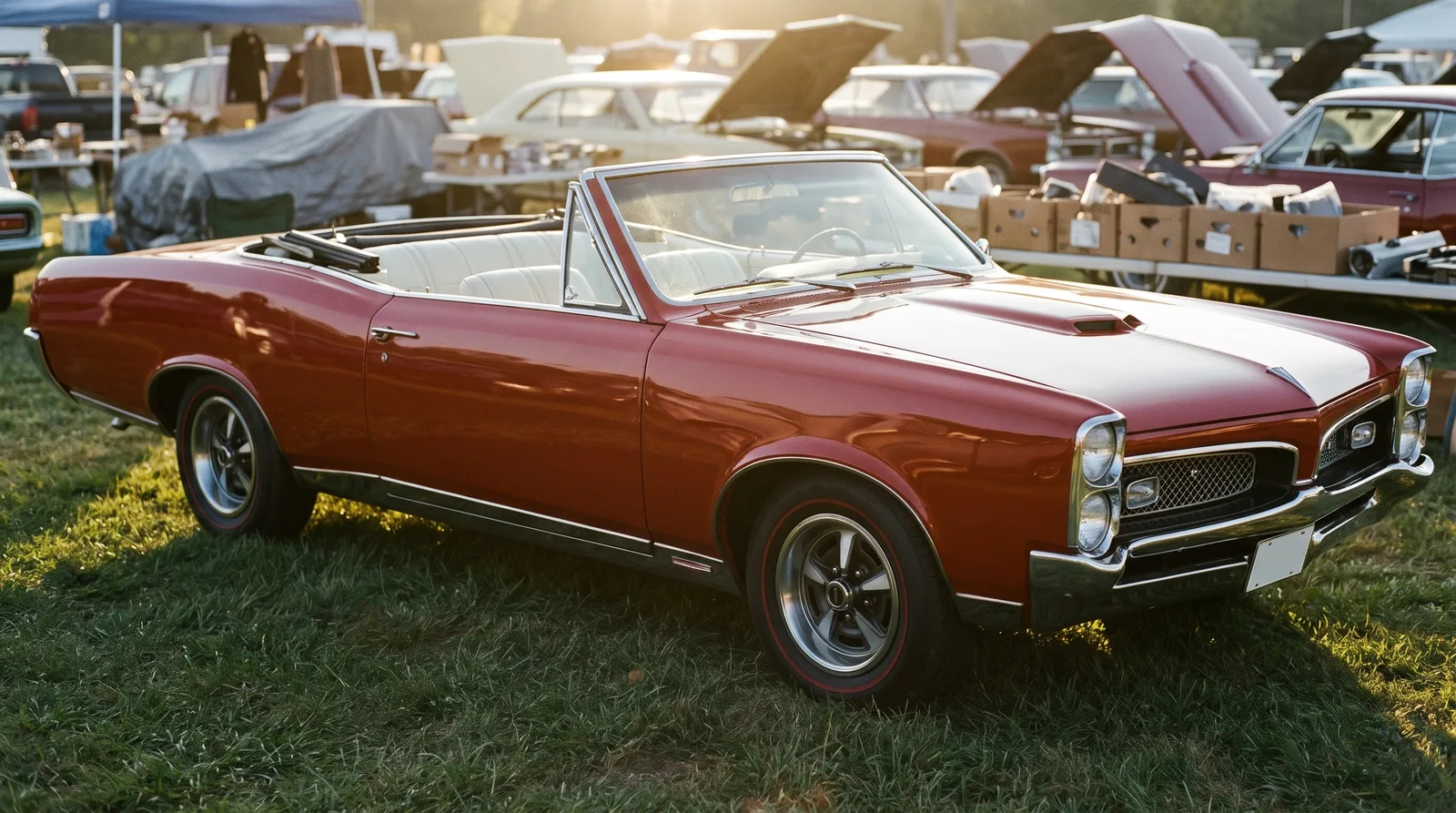
Break the production run down by body style and the picture sharpens further. The hardtop coupe accounted for the large majority of 1966 output at 73,785 units, with the convertible at 12,798 and the pillared sports coupe at 10,363, a meaningfully smaller slice of the total each. Body style alone does not determine value on its own, a well-documented hardtop can outperform a poorly documented convertible, but all else being equal, the rarer body style within an already-large production run tends to draw a stronger baseline of collector interest.
| Year | Approx. GTO production | Notable context |
|---|---|---|
| 1964 | 32,450 | Debut year, option package only |
| 1965 | 75,352 | Stacked headlight restyle |
| 1966 | 96,946 | Standalone model, Coke-bottle body, all-time peak |
| 1967 | 81,722 | New 400 V8, Tri-Power dropped |
What drove buyers into showrooms
The GTO's marketing in this period leaned hard into a young, performance-focused identity, and the 1966 restyle gave that marketing something genuinely new to sell rather than a warmed-over version of the previous year's car. Dealers had a fresh shape, a distinct model name standing on its own, and a genuine performance reputation built over the two prior model years. That combination of new sheet metal, established credibility, and standalone marketing muscle is a difficult set of variables to replicate, and Pontiac never quite managed it again at the same scale.
Competition also played a role in how hard Pontiac pushed that year. Oldsmobile's 4-4-2 and Buick's Gran Sport had both entered the intermediate performance field by 1966, and Chevrolet had just launched its own answer that same year with the Chevelle SS 396 as a distinct series. Pontiac had a head start, but a head start narrows fast once every other GM division notices the GTO's numbers and starts chasing the same buyer. Part of what made 1966 the peak rather than just another strong year is that Pontiac still had the segment mostly to itself for one more model year before the field got genuinely crowded.
"Volume is not the same thing as value. A car that sold well is a car that succeeded as a product. Whether an individual example is worth chasing today comes down entirely to what makes that specific car different from the other ninety-six thousand."
Marcus Feld
What this means if you are shopping a 1966 GTO
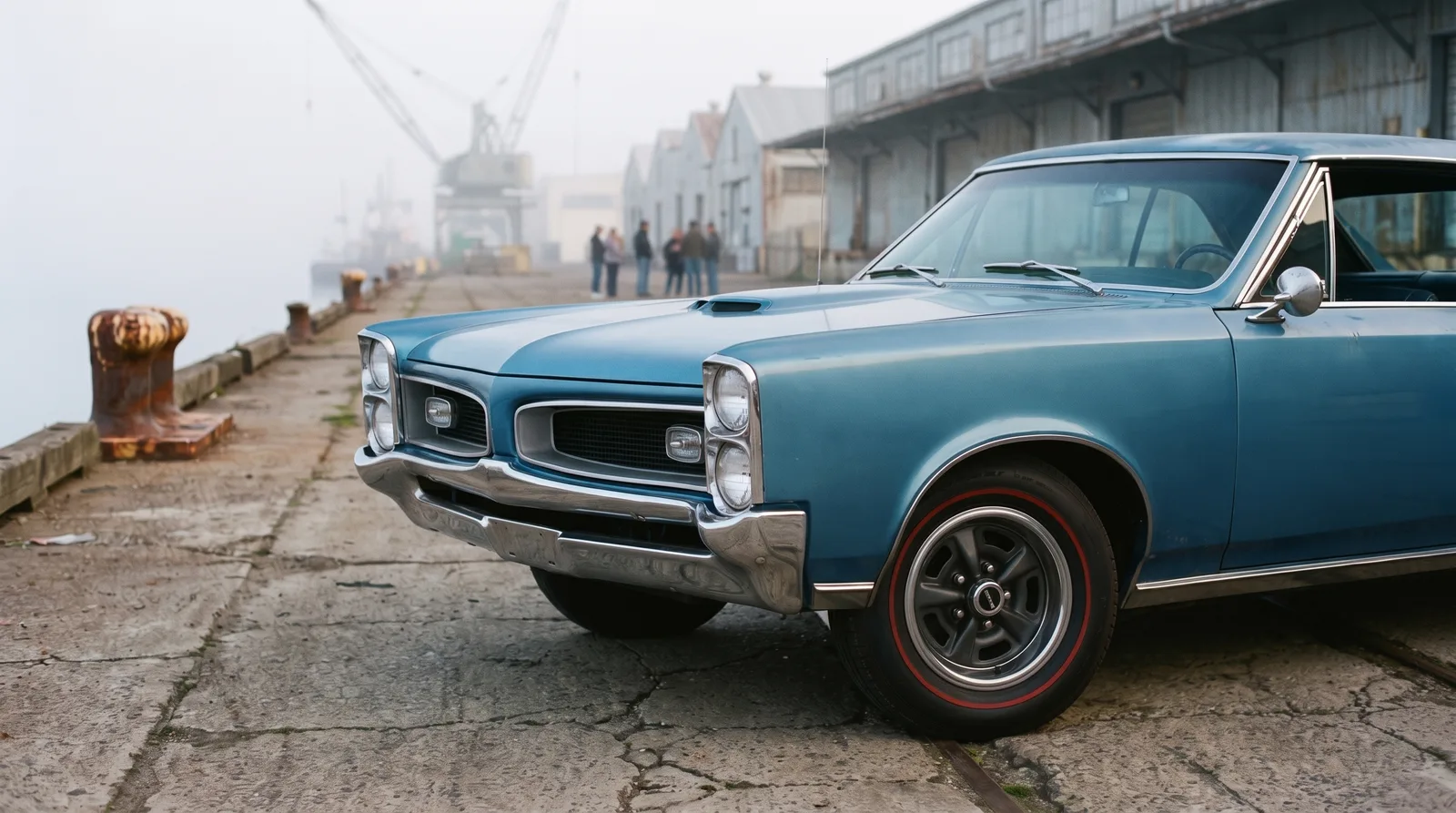
Because so many were built, buyers today have more selection in 1966 than in almost any other GTO model year, which is genuinely useful if you want options on color, transmission, and trim. But that same abundance means documentation matters more here than it does with scarcer years. Build sheets, PHS documentation, and matching numbers carry real weight in separating a genuinely desirable 1966 GTO from one of the many ordinary examples that made up the bulk of that record production run. One detail that consistently separates a well-optioned car from a base one on period photographs and at shows is the wheel and tire package, a small-looking choice that had an outsized visual impact on the car. That story, and how it defined the look of these cars, is worth its own read, so read on.
Price expectations should be set against that production reality, not against the smaller numbers that get quoted for scarcer years. A base 1966 GTO with a two-barrel engine and few options will trade at a meaningfully lower price point than a comparable 1965 or 1968 car, simply because there are more of them competing for the same buyer's attention. That is not a knock against the car, it is just supply doing what supply does. The buyers who do best in this specific market are the ones who understand which options and documentation actually move a 1966 out of the crowded middle of that production run.
What comes after a peak like this
Every model that hits a number like 1966's eventually has to answer the question of what comes next, and the GTO's answer was a slow, steady decline in volume across the following years, even as the car itself kept getting objectively better in some respects, more engine choices, sharper styling, the eventual arrival of Ram Air and The Judge. That is not a contradiction. A record sales year is often less about the car being at its best and more about a specific, unrepeatable alignment of newness, credibility, and a still-uncrowded market. Later GTOs would out-engineer the 1966 in plenty of measurable ways. None of them would out-sell it.
The record that still matters
Sixty years on, 1966 remains the year every GTO sales conversation eventually circles back to. It was the moment the car proved it could stand entirely on its own, without a Tempest or LeMans nameplate lending it legitimacy, and buyers responded in numbers Pontiac never saw again from this model.
Sources and notes
Related Reading
Have a
Pontiac GTO
for Sale?
Reach thousands of serious classic car collectors across the US.
Sell It Here →
Selling a classic? Here's how: the best sites to sell a classic car
Are You a Classic Car Dealer?
List your full inventory and connect with targeted classic car buyers.
Join as a Dealer →
#pontiac gto history
#1966 gto
#coke bottle body
#1966 gto sales
#gto production numbers
#gto values

About the author
Marcus Feld
Accredited collector-car appraiser who reads the market through hammer prices, condition tiers and risk.
Related Listings - Pontiac GTO

Comments
Be the first to comment on this article.