
Picture a Plymouth dealer lot in the spring of 1968, a salesman leaning against a fresh Road Runner with a sticker price that undercuts a comparably equipped GTO by several hundred dollars, and a young buyer doing math in his head about how much car he can actually afford versus how much car he actually wants. That tension, between the Pontiac that had defined the category and the Plymouth that showed up determined to out-value it, is the whole story of this rivalry. It wasn't about who built the better engineering package. It was about who understood what a working buyer needed from a fast car.
Car Features
7 min read
GTO vs Plymouth Road Runner: Budget-Muscle Showdown
Status versus value: how the GTO and the budget-built Road Runner chased the same buyer with opposite philosophies, and both won.
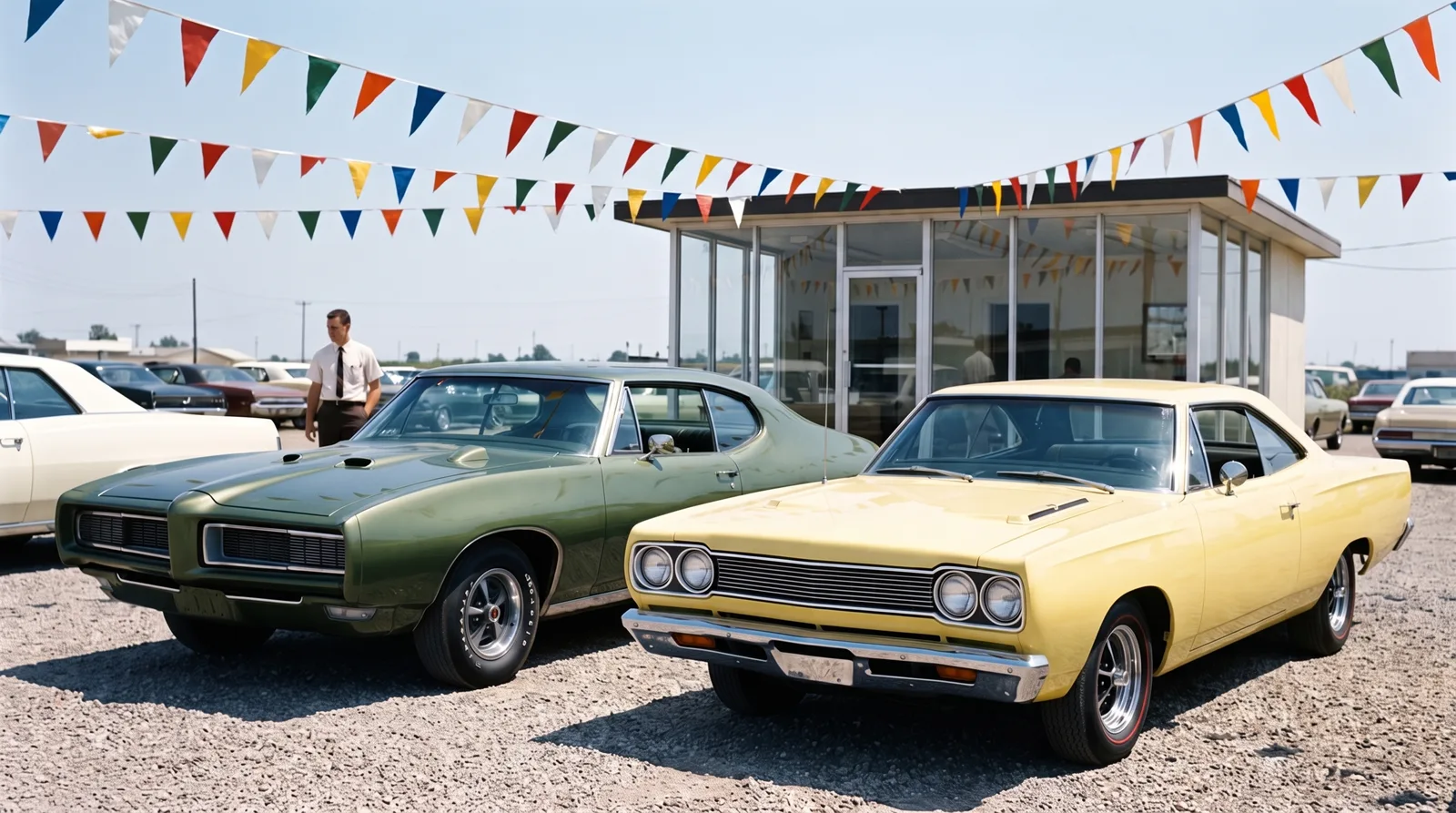
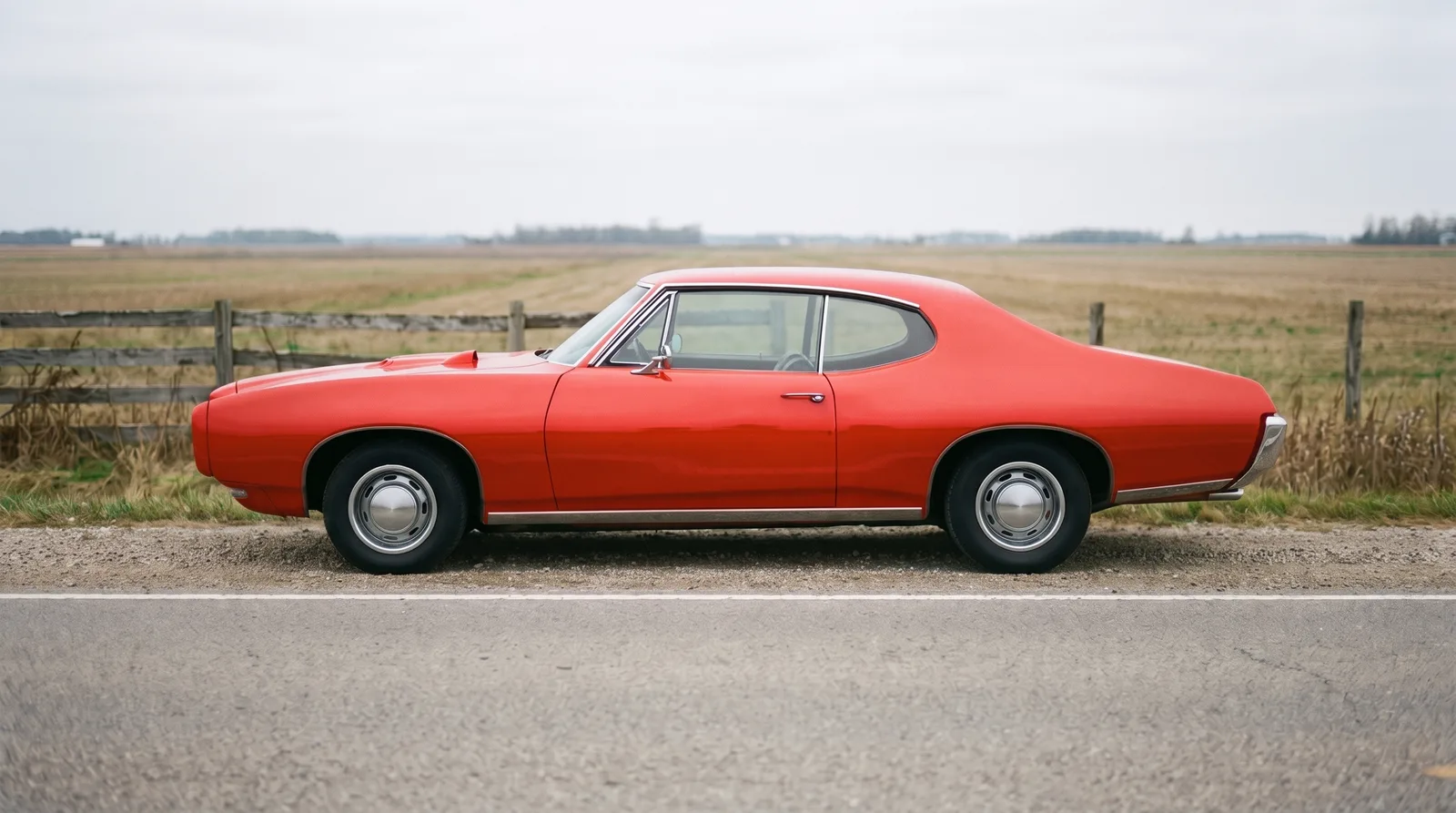
Plymouth built the Road Runner for 1968 with one target in mind: strip the muscle car down to its essentials, keep the price low, and let the performance do the talking without the chrome and interior options that had crept into the segment as it matured. Pontiac had spent four years building the GTO into something closer to an image car, complete with a reputation, a cartoon-inspired name borrowed from Warner Bros., and a price tag that reflected all of it.
Two different bets on the same buyer
Pontiac's bet was that muscle car buyers wanted status along with speed. The GTO by 1968 came with an available Endura front bumper, a range of interior trims, and an accumulated reputation that meant showing up in one said something about you before you ever left the driveway. Plymouth's bet was almost the opposite. Chrysler engineers and marketers looked at the segment and decided a meaningful chunk of buyers just wanted the performance, stripped of everything that ran the price up, and they were willing to slap a cartoon roadrunner on the fender to keep things light about it.
Both bets paid off, which is part of why this rivalry stayed close for years rather than resolving quickly in either direction. The Road Runner sold in huge numbers almost immediately, exceeding Plymouth's own projections in its first year, proof that Pontiac hadn't cornered the market on buyers who wanted to go fast on a budget.
Engine philosophy: torque versus reliability
Under the hood, the comparison gets more interesting than the marketing suggests. The GTO's 400 cubic inch V8 by 1968 delivered strong low-end torque suited to street driving, the same character Pontiac engines had carried since the original 389. The Road Runner's standard 383 was tuned specifically to mimic the feel of Chrysler's larger 440, giving buyers muscle car acceleration without the premium price of the biggest available engine. For those who wanted the ultimate version, the 426 Hemi option turned a budget car into a genuine strip weapon, though relatively few buyers checked that box given the cost premium it carried.
| Model | Standard performance engine | Approx. base price, 1968 |
|---|---|---|
| Pontiac GTO | 400 cid V8 | ~$2,996 |
| Plymouth Road Runner | 383 cid V8 | ~$2,896 |
There's a certain symmetry in that, both cars building their identity partly on borrowed names, and it's part of what makes tracing the Goat's mythology worthwhile if you want to understand how much of this era's marketing ran on cultural shorthand rather than raw spec sheets.
What owners actually remember
Talk to people who owned both cars across their lifetimes and you get a consistent picture. The GTO feels like the more finished product, a car that Pontiac had four extra years to refine by the time the Road Runner showed up. The Road Runner feels more honest about what it is, a fast car built for people who wanted speed without paying for badges and trim levels they'd never use. Neither impression is wrong. They're describing two genuinely different philosophies aimed at overlapping but distinct segments of the same buying public.
"There's a particular kind of American car story that isn't about who won, it's about how two companies looked at the same problem and arrived at completely different, completely valid answers. The GTO and the Road Runner is that story, told through sheet metal and sticker prices instead of words."
Patrick Walsh
What the dealerships saw that the magazines missed
Automotive journalists of the era tended to frame this rivalry as a straightforward performance comparison, timing quarter miles and comparing horsepower figures the way any magazine would. Dealership sales floors told a more interesting story, one about financing terms and trade-in values as much as raw speed. A Road Runner buyer was frequently a first-time performance car purchaser, someone stretching to afford a fast car for the first time in his life and choosing Plymouth's stripped approach specifically because it let him get into the segment at all. A GTO buyer, by 1968, was more often a repeat customer, someone who had maybe owned an earlier GTO or a comparable performance Pontiac and was willing to pay for the accumulated reputation and refinement Pontiac had built over four model years.
That difference in buyer profile shaped how dealers actually sold the cars on the lot. Plymouth salesmen leaned on value language, emphasizing how much performance a buyer got for the money relative to anything else on the market. Pontiac salesmen leaned on prestige, on the idea that a GTO buyer was joining something established rather than gambling on something new. Both pitches worked, which is a large part of why neither company ever needed to fully concede the argument to the other.
The rivalry's lasting shape
By the early 1970s, both nameplates had drifted somewhat from their original positioning, the GTO chasing bigger displacement with the 455 and the Road Runner adding trim options that softened its original bare-bones appeal. But the initial contrast between them, image versus value, status versus honesty, still defines how collectors and historians talk about the muscle car era's middle years. It's a rivalry that never needed a clear winner to matter, because both cars succeeded on their own terms and both still draw devoted followings today.
Collectors today have inherited that original tension almost unchanged. A clean Road Runner still tends to trade for less than a comparable GTO with similar options and condition, a pricing gap that traces directly back to the different market positions Plymouth and Pontiac staked out in 1968. Buyers chasing value in this segment often gravitate toward the Road Runner specifically because that gap hasn't closed, while buyers chasing the deepest brand recognition and the widest resale audience still lean toward the GTO, the same basic split that existed on the showroom floor more than fifty years ago.
What keeps this story alive isn't a spec sheet argument settled decades ago. It's the fact that two different companies, working from two different assumptions about what a buyer wanted, both turned out to be right. That's rarer in the car business than most rivalries ever admit, and it's why this particular showdown still gets debated at car shows more than half a century later. The community that kept both nameplates alive long after the factories moved on deserves its own telling, and read on picks up exactly there.
Sources and notes
Related Reading
#muscle car rivalry
#Pontiac GTO
#Plymouth Road Runner
#gto history
#1968 muscle cars
#budget muscle cars

About the author
Patrick Walsh
Automotive journalist covering classic car shows, events, and the enthusiast community across North America.
Related Listings - Pontiac GTO



Comments
Be the first to comment on this article.