
Pop the hood on a 1964 Pontiac GTO and you will find a car that, underneath the scoops and the badges, is not really its own car at all. It is a Tempest. Or, depending on the trim level the original buyer checked, a LeMans. The GTO in 1964 was not a model in the way we think of the term today. It was an option package, RPO 382, bolted onto Pontiac's existing A-body intermediate. Understanding that fact changes how you read every GTO built that first year, and it explains a lot of the confusion people still run into at swap meets and in classified ads.
Car Features
8 min read
The Tempest and LeMans: The Humble Bones Under the GTO
The 1964 GTO wasn't its own car. It was an option box checked on a Tempest LeMans, and knowing that changes how you should inspect one.
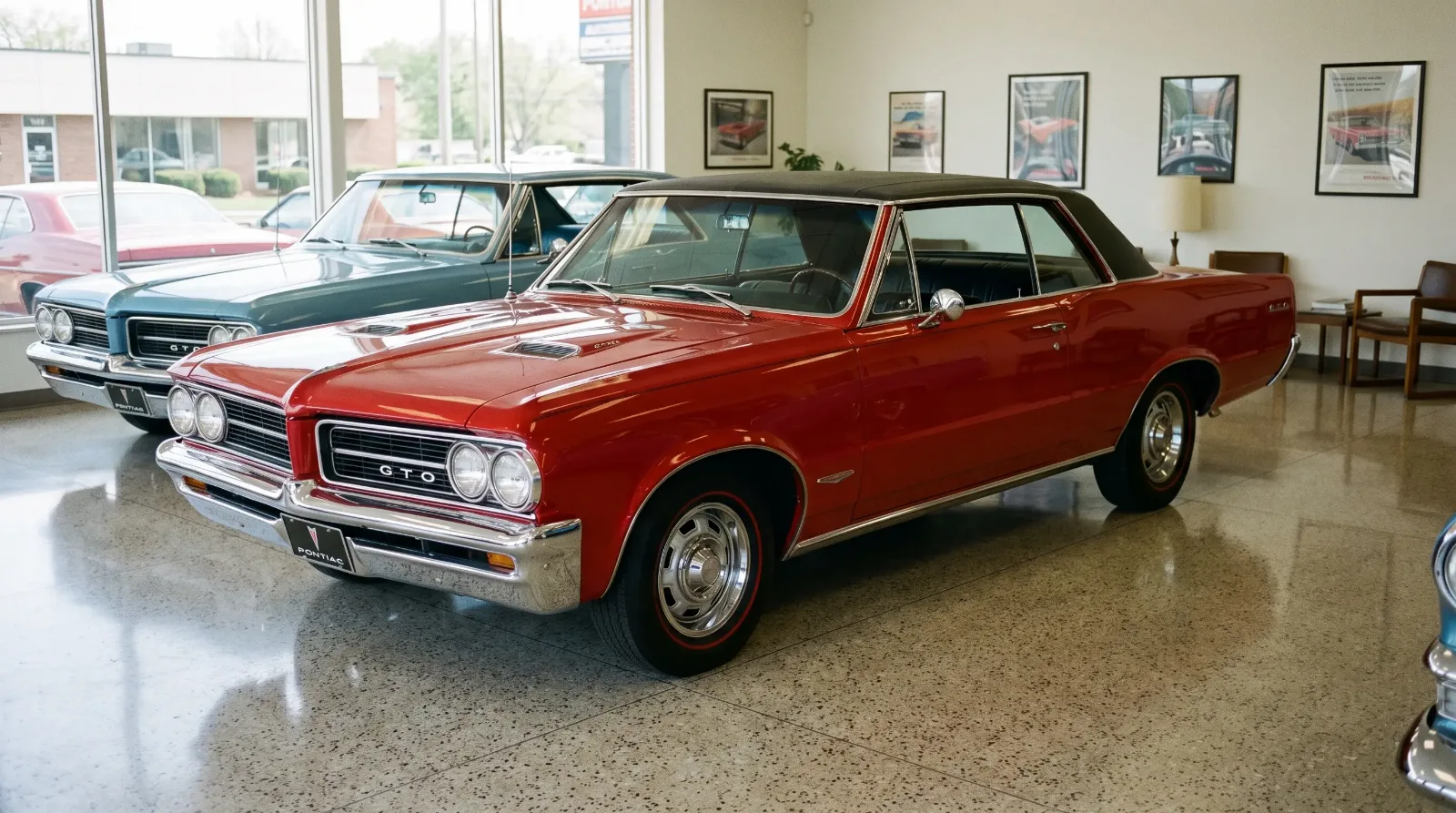
What the GTO actually was in 1964
Pontiac's general manager, John DeLorean, wanted a car that could outrun the division's own full-size performance offerings without breaking GM's internal rule capping intermediate-car engine size. His workaround was simple on paper and gutsy in practice: order the GTO package on a LeMans, drop in the division's 389 cubic inch V8, and let the dealers write the orders before anyone upstairs could say no. The package added the big engine, a heavier-duty suspension, dual exhaust, and GTO-specific trim to a car that, without the option box checked, was just another Tempest-based LeMans rolling off the Pontiac line.
That is the short version of the 1964 GTO story, and it is worth reading in full if you want the whole chain of decisions that got the car built at all.
The Tempest platform underneath
The Tempest name covered Pontiac's compact-to-intermediate line starting in 1961, and by 1964 it had grown into a conventional front-engine, rear-drive A-body car shared across GM's divisions in various forms. Underneath the sheet metal, a 1964 GTO shares its unibody structure, floor pan, and basic suspension geometry with the Tempest and LeMans it was built alongside. The frame rails, the front subframe, the basic control-arm front suspension: none of it was unique to the GTO. What Pontiac's engineers did was tune it. Stiffer springs, a larger front sway bar, and shocks matched to the extra weight of the 389 turned a competent family-car chassis into something that could handle real power without falling apart in a hard corner.
This is where I always tell people to slow down when they are inspecting a car. The body panels, glass, and trim on a Tempest, a LeMans, and a GTO from the same model year are close enough that a lazy restoration or a parts-bin clone can wear GTO badges convincingly. The differences that matter are mechanical, and they are the kind of thing you find by getting underneath the car, not by looking at the hood scoop.
Drivetrain and rear axle differences worth checking
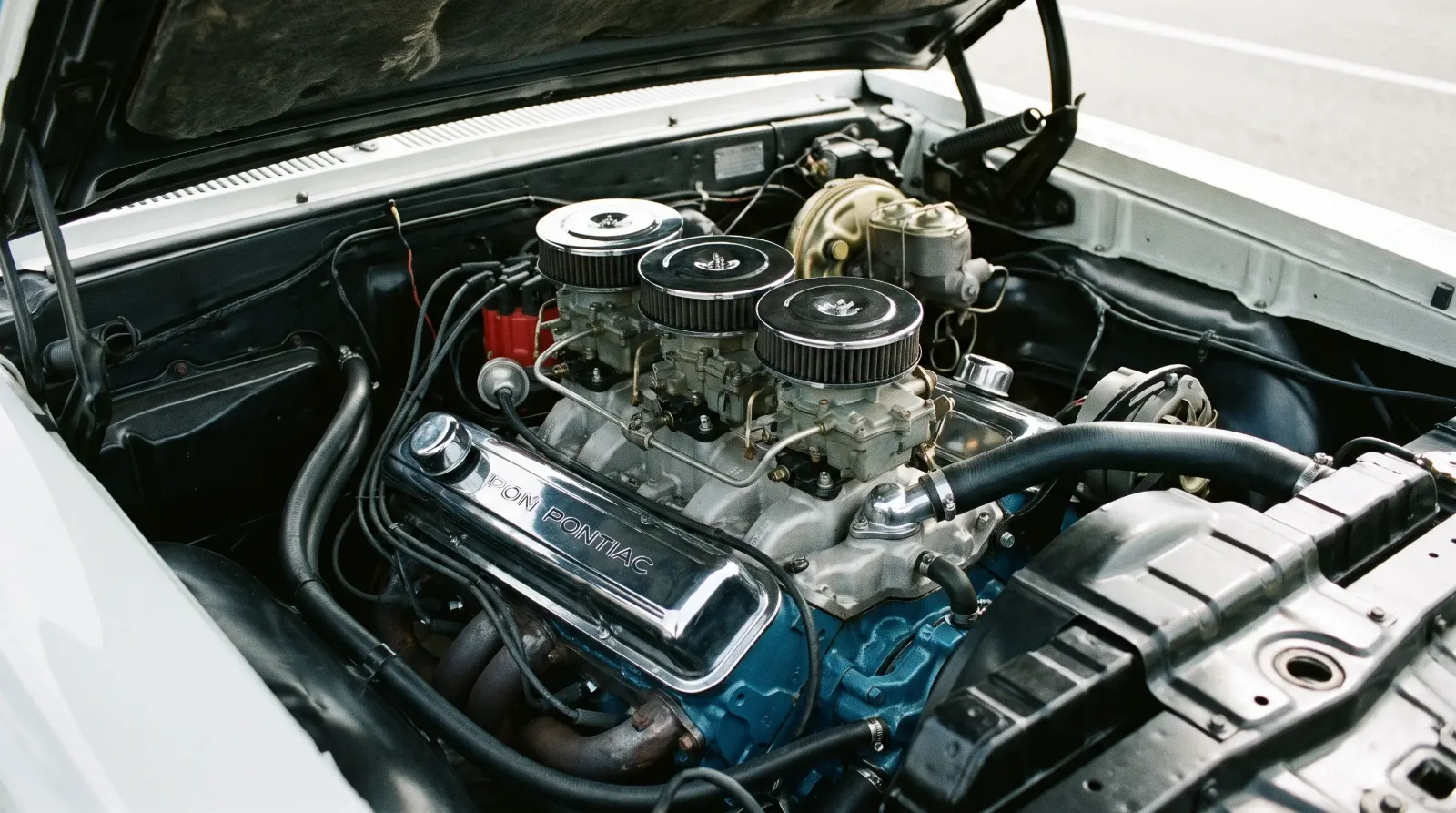
The engine bay tells part of the story, but I spend just as much time under the back half of the car. A base Tempest or six-cylinder LeMans typically carried an axle and gearing sized for the power it was actually putting down. A correctly built GTO left the factory with axle ratios and, on many orders, a limited-slip "Safe-T-Track" differential matched to the 389's torque, options that were not needed on a six-cylinder or small-V8 car. A clone built later, especially one assembled by a shop more interested in the badge than the driveline, sometimes gets this wrong, either running open-differential gearing suited to a base car under a swapped-in 389 or mixing components from different Pontiac A-body years that were never meant to go together.
Transmission choice matters too. A four-speed manual or a properly matched automatic behind the 389 should show casing and tag details consistent with 1964 GTO production, and mismatched transmission codes are one of the first things I flag on an inspection sheet. None of these components are impossible to source or swap in today, which is exactly why they cannot be trusted on their own. They have to line up with the paperwork, not just look correct to the eye.
LeMans trim versus GTO option
LeMans was the upscale trim level within the Tempest lineup for 1964, sitting above the base Tempest and Tempest Custom. It came with nicer interior trim, additional brightwork, and a broader range of engine choices, up to and including a 326 cubic inch V8 before the GTO option existed as a separate line item. When a buyer ordered the GTO package, they were ordering it on top of a LeMans hardtop, convertible, or pillared coupe body. The GTO did not replace LeMans; it rode on it.
That relationship is why so many period brochures list the GTO as a sub-line of LeMans rather than a car in its own right, and why Pontiac did not give it separate model-year production totals broken out the way a true standalone model would get. The distinction did not disappear until the GTO became its own model for 1966, at which point it got its own body designation and its own place in the lineup rather than a line on the LeMans order form.
What changed and what stayed the same
| Feature | Base Tempest / LeMans | 1964 GTO package |
|---|---|---|
| Body and unibody structure | Standard A-body | Same A-body, unchanged |
| Engine | Six-cylinder or up to 326 V8 | 389 V8, single four-barrel or Tri-Power option |
| Suspension | Standard tuning | Heavy-duty springs and front sway bar |
| Exhaust | Single | Dual exhaust |
| Rear axle | Gearing matched to base engines | Gearing matched to 389 torque, limited-slip optional |
| Badging | Tempest or LeMans script | GTO emblems, hood scoops, GTO-specific grille details |
The interior carried over almost entirely from the LeMans parts bin, with GTO-specific touches limited mostly to badges and a few trim pieces. That is not a criticism. It is how Pontiac kept the price down and got the car to market fast, and it is a big part of why the GTO worked as a business proposition in the first place.
Telling them apart today
If you are shopping for one of these cars, or trying to verify one someone else is selling, the badges are the last thing I trust. Badges bolt on and off in an afternoon. What I check first is the cowl tag and the VIN, then I get under the car to confirm the suspension components and the engine match what the paperwork claims.
I also pull the build sheet whenever the seller has one, or point them toward a PHS documentation request when they do not. A cowl tag tells you the body style and the plant, but it will not tell you every option that left the factory with the car. That is where a build sheet earns its keep, and it is worth the wait and the fee before money changes hands, not after.
"I've had guys bring me a rust-free LeMans and ask why it won't sell for GTO money. It's the same body shell, sure, but the option code is what you're actually buying, and that's not something you can bolt back on with a parts-store badge kit."
Mike Sullivan
Once you understand that the GTO started life as an option rather than a model, the rest of the early history makes a lot more sense, including read on for why this particular option package gets credit for starting an entire category of car. It also helps explain some of the myths that still circulate; the Pontiac GTO story covers how the option grew into its own legend over the following decade.
For buyers who want to see what a documented, correctly optioned first-year car looks like on the market right now, you can browse GTO listings and compare cowl tags, engine codes, and trim against what is described here.
Sources and notes
Related Reading
Have a
Pontiac GTO
for Sale?
Reach thousands of serious classic car collectors across the US.
Sell It Here →
Are You a Classic Car Dealer?
List your full inventory and connect with targeted classic car buyers.
Join as a Dealer →

About the author
Mike Sullivan
Detroit-area muscle car enthusiast and restoration specialist with three decades of hands-on experience working on American iron.
Related Listings - Pontiac GTO



Comments
Be the first to comment on this article.