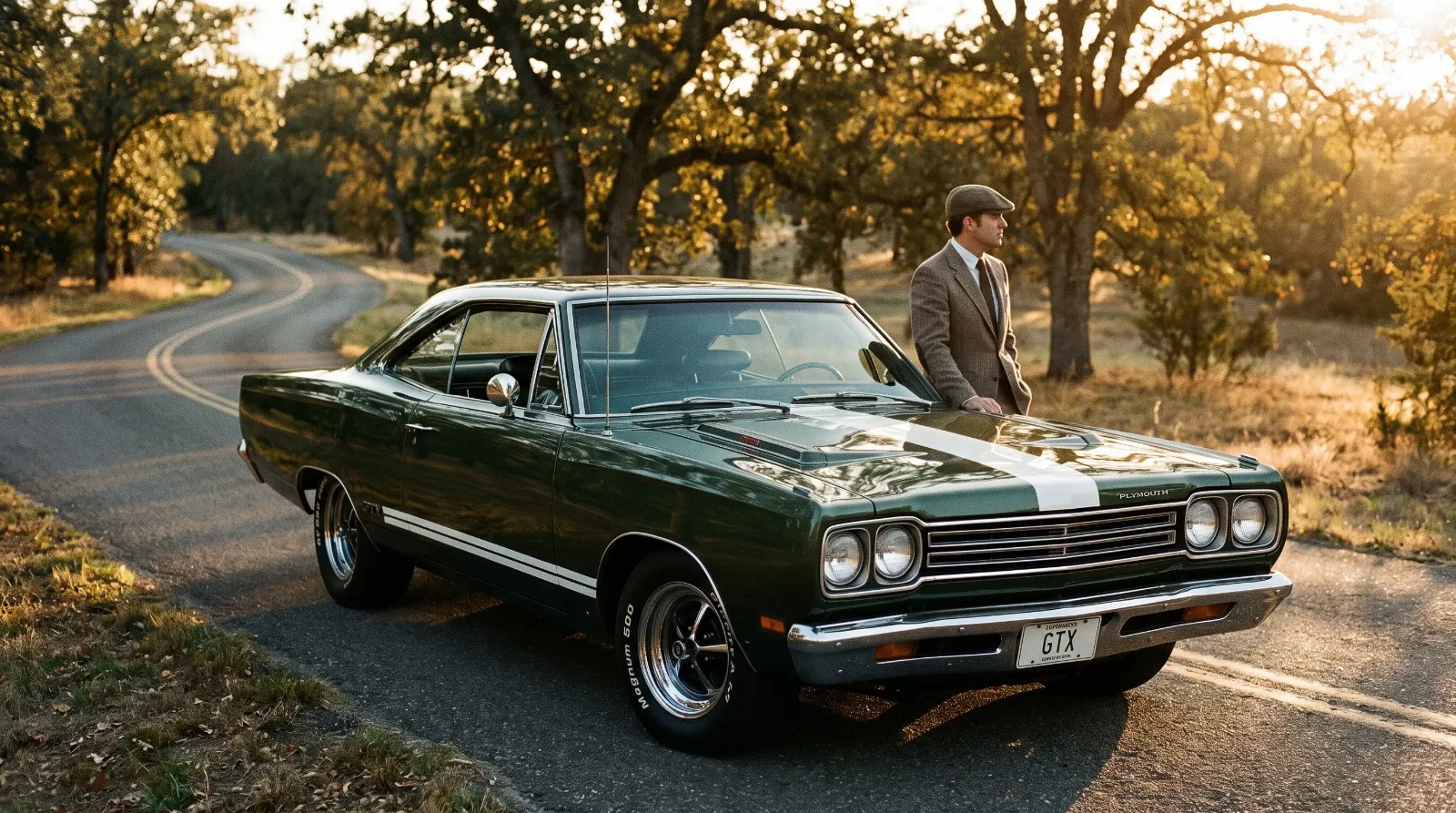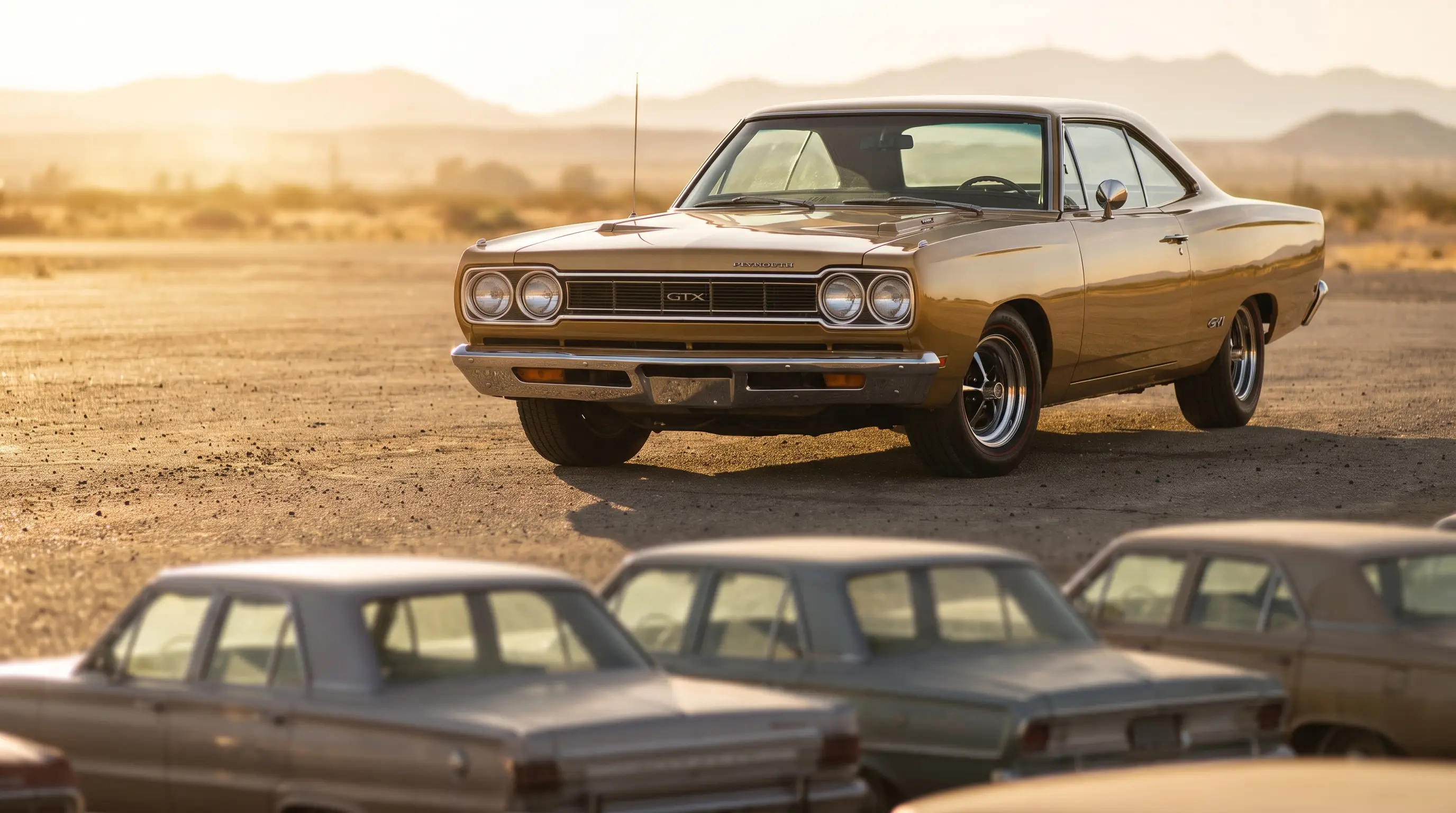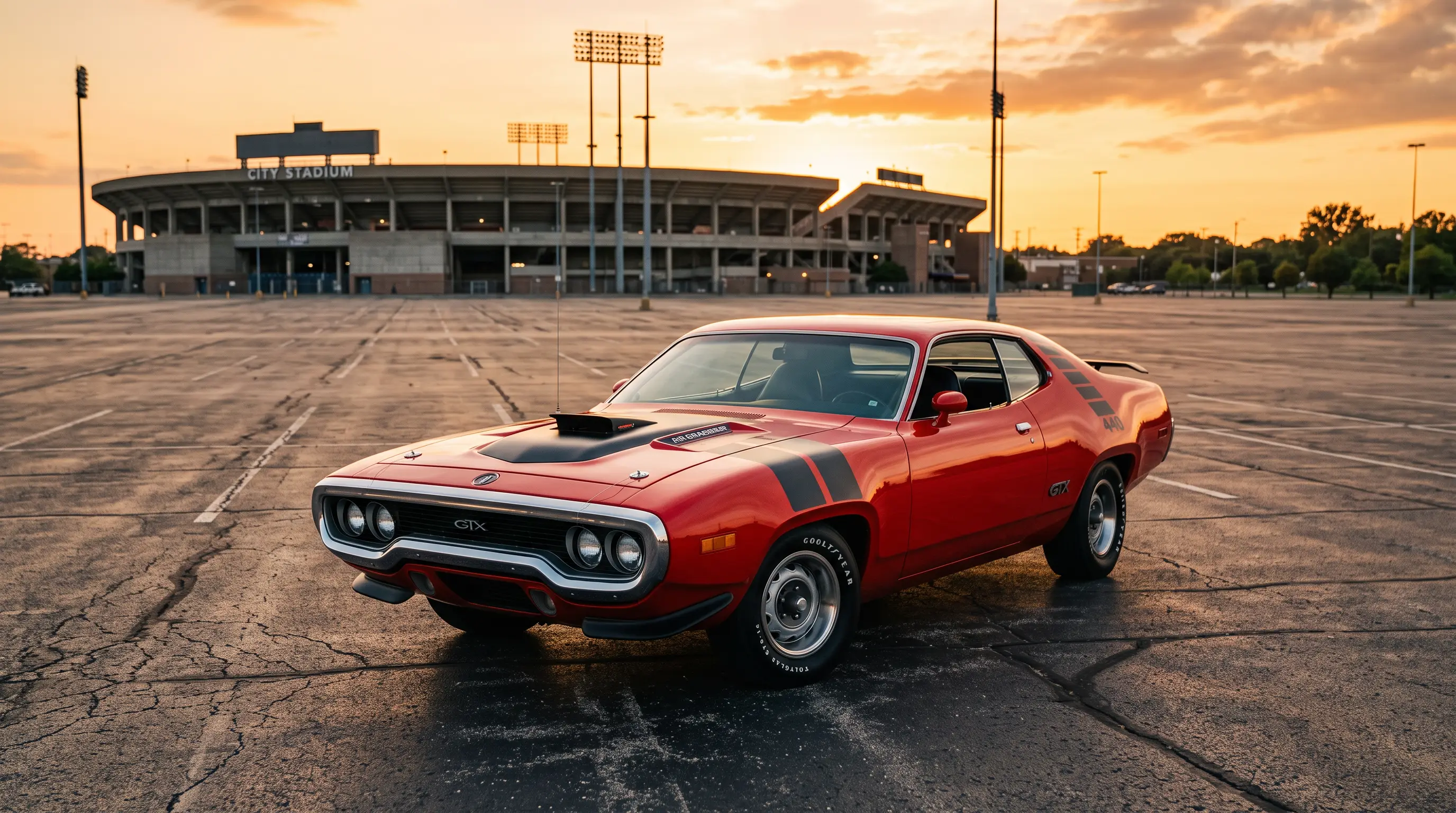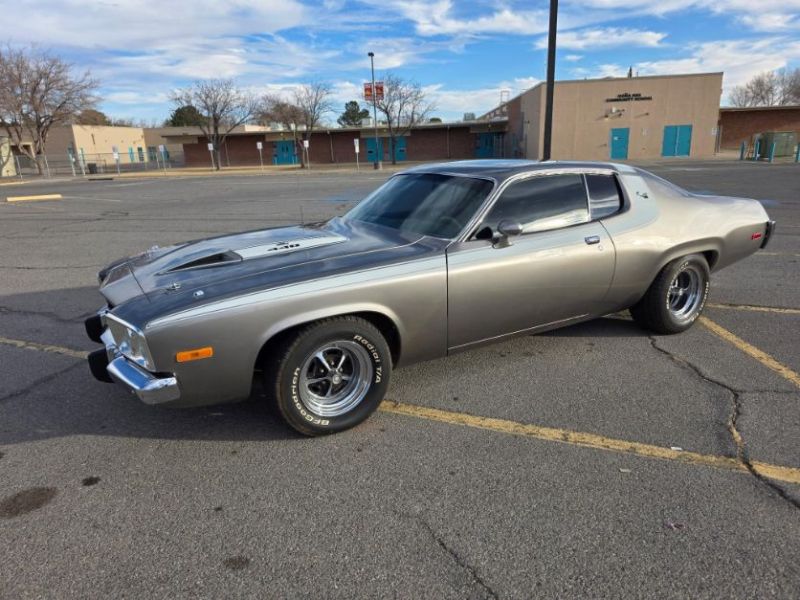
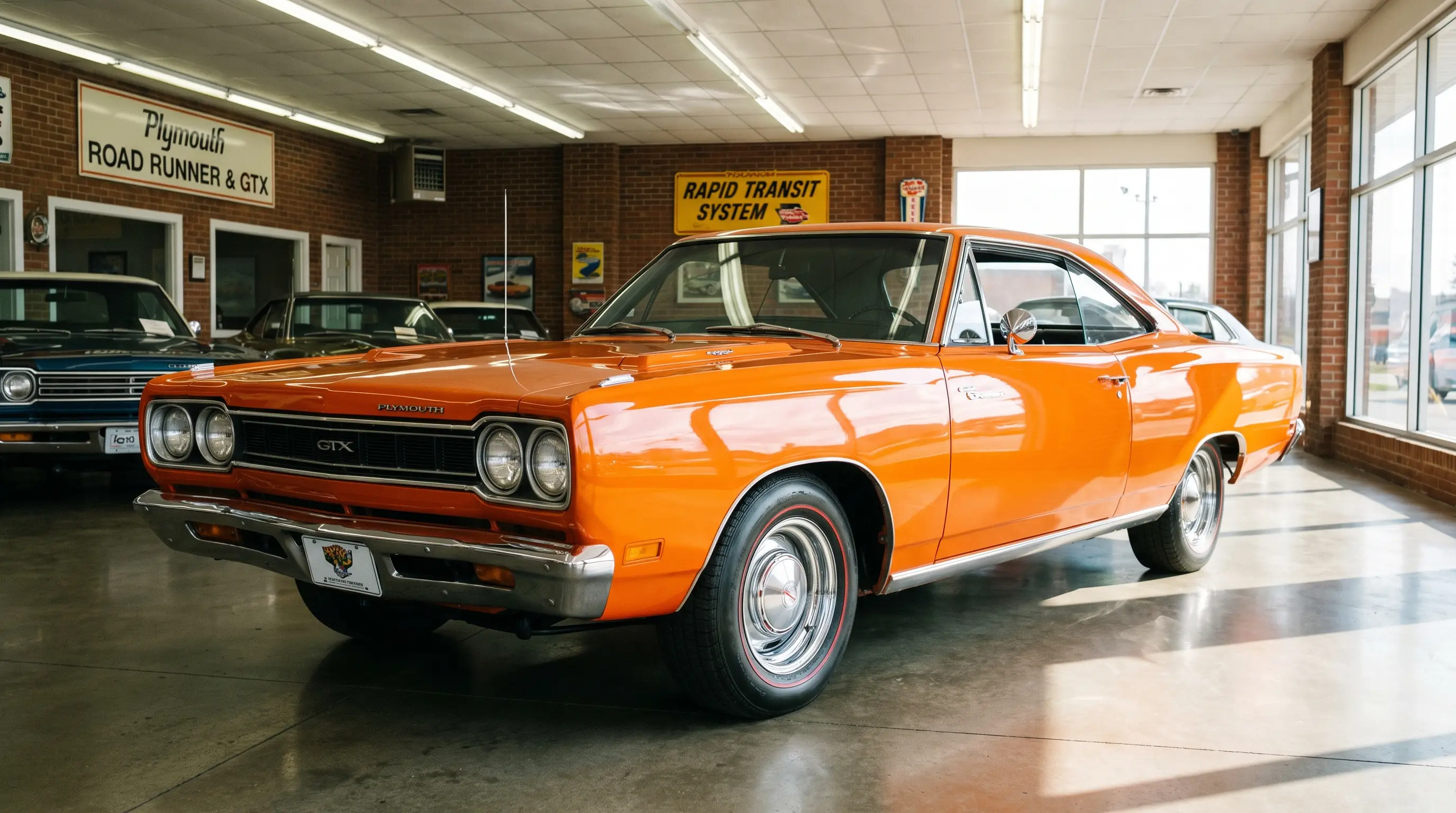
I've stripped enough paint off enough GTX quarter panels to have opinions about color, and here's the first one: Plymouth's High Impact palette from the late muscle car era gets more credit than it deserves for the whole GTX story, when plenty of buyers back then actually ordered these cars in restrained, conservative colors and never touched a High Impact shade at all. Both stories are true. Knowing which one applies to the car in front of you matters a lot more than most restoration shops let on.
The early years were more buttoned-up than people remember
When the GTX launched for 1967, Plymouth's color offerings leaned toward the same palette used across the rest of the Belvedere lineup, meaning traditional colors like blues, reds, and a handful of metallics rather than the loud, attention-grabbing shades the brand became known for a couple years later. That fits the GTX's original positioning as the upscale, more mature performance car in the lineup. A buyer choosing between a GTX and a Road Runner wasn't necessarily looking for the wildest paint on the lot; a fair number of them wanted a fast car that still looked like it belonged in a company parking lot.
Interior color and trim choices followed the same logic during these early years. Bucket seat interiors came in conservative vinyl and cloth combinations, and vinyl roof options in black or white were popular add-ons that reinforced the car's more finished, formal look next to a base Road Runner.
Then Plymouth cut loose with High Impact
By the time the High Impact color program hit its stride toward the end of the GTX's standalone run, Plymouth had fully embraced bold, attention-getting exterior shades with names built for advertising copy rather than paint chip charts. A GTX ordered in one of these colors, paired with the right stripe kit and hood treatment, looks like nothing else built during the same era, and that boldness is a huge part of why these particular cars draw crowds at shows today.
Working on these cars, I can tell you the paint itself was lacquer-based like everything else Detroit sprayed at the time, and it did not always age gracefully. High Impact colors in particular show fade and chalking differently than more traditional shades, which means a genuinely original, unrestored High Impact GTX in good condition is a real find, not something you see parked at every cruise night.
💡 Did You Know?
Plymouth's High Impact color names were deliberately loud on purpose, part of a marketing push meant to make the paint chip chart itself feel like an extension of the car's performance image rather than a technical afterthought.
Period-correct versus poseur, from someone who's done the sanding
Here's where I get opinionated. A repaint job that puts a car into a color it never wore from the factory is not automatically wrong, people can paint their own cars whatever they want, but calling that car "original" or pricing it like a documented factory color match is a different problem entirely. I've seen more than a few GTX cars show up at swap meets repainted into a punchier High Impact shade specifically because that color sells better than whatever conservative tone the car actually left the factory wearing.
The fender tag settles the argument every time. It records the original paint code, and cross-referencing that code against the actual paint on the car, or against paint found in protected areas like the trunk hinges or under the dash, tells you the truth regardless of what the seller's story is. A car wearing a fresh, correct-code repaint deserves credit for accuracy. A car wearing a random color with no documentation deserves a lower price and an honest conversation, not a premium.
Trim and stripe details that separate real cars from guesswork
Beyond exterior color, GTX-specific trim details matter just as much when you're evaluating a car's authenticity. Stripe kits, hood scoop treatments, and interior color combinations were all tied to specific model years and specific factory build codes, and mixing pieces from different years is a common shortcut in cars that have been through more than one restoration. A correctly done GTX matches its stripe style, hood treatment, and interior trim to the exact model year and exact fender tag code, not to whatever parts happened to be sitting on a shelf when the work got done.
"Anybody can spray a bright color on a fender. Matching that color to the actual fender tag code, and getting the stripe and trim details right for the correct model year, that's the part that separates a real restoration from a paint job with a story attached."
- Jim Vasquez
What to check before you buy
If you're shopping for a GTX and color authenticity matters to you, start with the fender tag decode before you fall in love with how a car looks in photos. Compare the recorded paint code against paint found in protected, unexposed areas of the body. Ask directly whether the car has been repainted and, if so, whether the repaint matches the original code or represents a later color change. None of this is complicated work, it just takes fifteen extra minutes that a lot of buyers skip because they're excited about the color they're looking at.
For the broader history of how the GTX evolved model year to model year, including how its color and trim options shifted alongside every other change to the car, the full story lays out the whole arc from 1967 through 1971. Buyers who want to see documented, correctly colored examples currently on the market can look at classic Runner for sale listings and compare paint code claims against what sellers are actually showing in their photos.
⚡ Tips & Tricks
Decode the fender tag before evaluating exterior color claims, not after you've already negotiated a price.
Check paint in protected areas like door jambs and trunk hinges to compare against the original recorded code.
Confirm stripe kit and hood scoop details match the specific model year, since parts get mixed across restorations more often than buyers expect.
Color tells a real story if you read it right
A GTX's paint isn't just decoration. It's a documented fact about how the car left the factory, and treating it that way protects buyers from paying a documented-original premium on a car that's wearing a color it never actually had. Whether a given car wears a conservative early-year shade or a full High Impact statement color, the fender tag is what turns an opinion about how it looks into a fact about what it is.
I've watched buyers get talked into paying real money for a car because the color happened to catch their eye at a show, and I've watched sellers lean hard on that reaction instead of offering up the paperwork that would settle the question honestly. A GTX in the right color, correctly documented, is worth chasing. A GTX in an appealing color with no paperwork behind it is a gamble dressed up as a sure thing, and gambles like that tend to cost more in the long run than the fifteen minutes it takes to check a fender tag before you write a check.