
I had a buddy back in the day who restored a 1920s touring car, and the first time I really looked underneath the skin of that thing, I understood something I hadn't before. Every panel had a slightly different curve than you'd expect. Nothing lined up quite the way a modern car would. And that wasn't sloppy work, that was the whole point. Somebody built that body by hand, one panel at a time, for one specific chassis.
Car Features
6 min read
Hand-Built Cars Before Mass Production
While Ford perfected the assembly line, top coachbuilders were still shaping bodies by hand, one panel at a time. Here is how that worked.
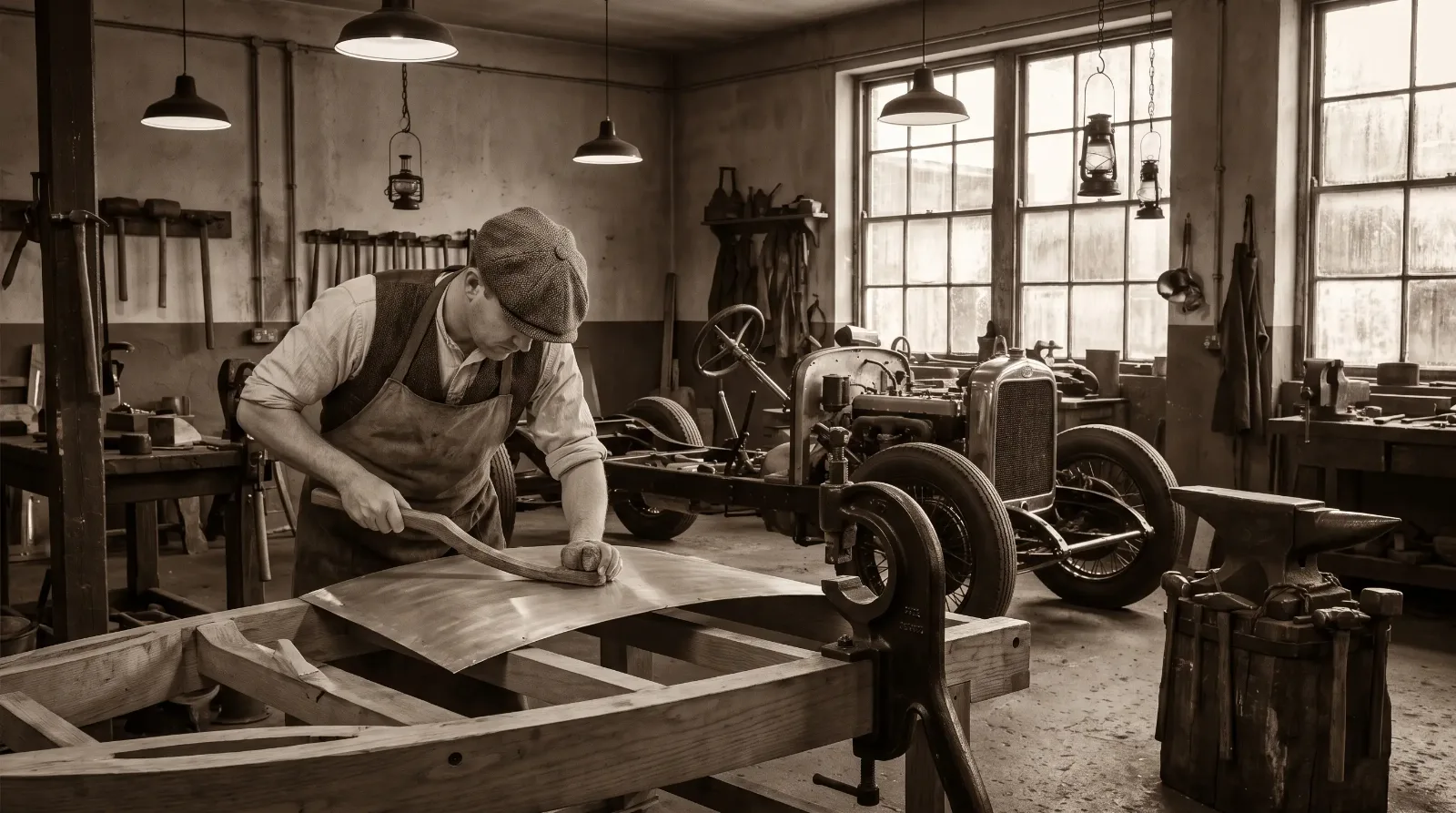
What "before mass production" actually meant
People throw around the term mass production like it happened everywhere all at once, but that's not how it went. Henry Ford figured out the moving assembly line for the Model T around 1913, and that changed the affordable end of the market fast. But up at the top, where the expensive chassis makers lived, the old way of doing things stuck around for another two decades. A coachbuilder's shop in the 1920s still looked a lot like a coachbuilder's shop from 1905: wood framing shaped by hand, metal panels hammered over forms, an army of skilled trimmers doing upholstery stitch by stitch.
So you had this strange split in the industry. Down at one end, Ford was cranking out identical cars by the thousands. Up at the other end, a handful of shops were still building cars roughly the way they'd built horse carriages, just with an engine bolted in instead of a horse hitched up front.
The wood-and-metal method
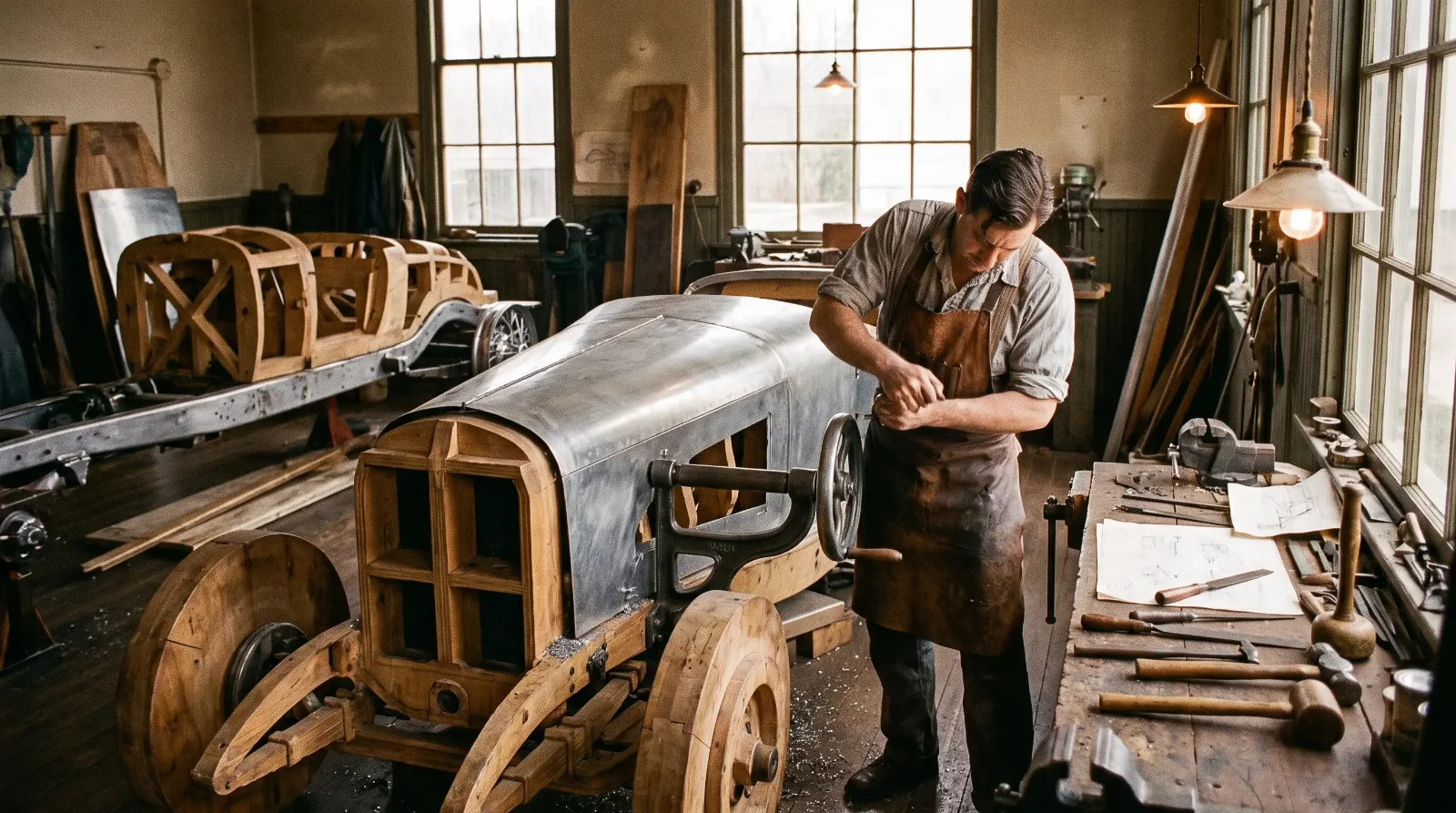
Most pre-war coachbuilt bodies started with a wooden frame, ash was a favorite because it bent well and held a fastener without splitting. Craftsmen built that frame to match the specific chassis it was going onto, since no two chassis were guaranteed to be perfectly identical back then either. Metal panels, usually aluminum for lighter sporting bodies or steel for heavier formal work, got hammered and rolled over the wood frame by hand, using techniques that honestly hadn't changed much since blacksmithing days, just applied to thinner material and a more complicated shape.
It's slow work. A single body could take weeks, sometimes months, depending on how elaborate the customer's order was. Compare that to a Ford body coming off a stamping press in seconds, and you start to understand why these cars cost what they cost when they were new.
The trim shop, not just the metal shop
Everybody talks about the wood framing and the metal panels, but half the labor in one of these bodies went into the trim shop, and that part gets overlooked. Upholsterers cut and stitched leather or fine broadcloth by hand, fitted horsehair or early foam padding to match the seat contours the designer wanted, and matched wood veneers on dashboards and door cappings so the grain lined up across panels, which is a fussier job than it sounds. A good trimmer could take as long finishing one interior as the metal shop took shaping the whole exterior.
None of this was cheap labor either. Skilled trimmers, panel beaters, and cabinetmakers were paid a trade wage, and a coachbuilder's shop floor represented a genuine concentration of craft skill that, once scattered, proved almost impossible to rebuild. That's part of why, once this workforce dispersed later in the century, nobody could simply reopen a shop and pick up where things left off.
Why the buyer signed off on everything
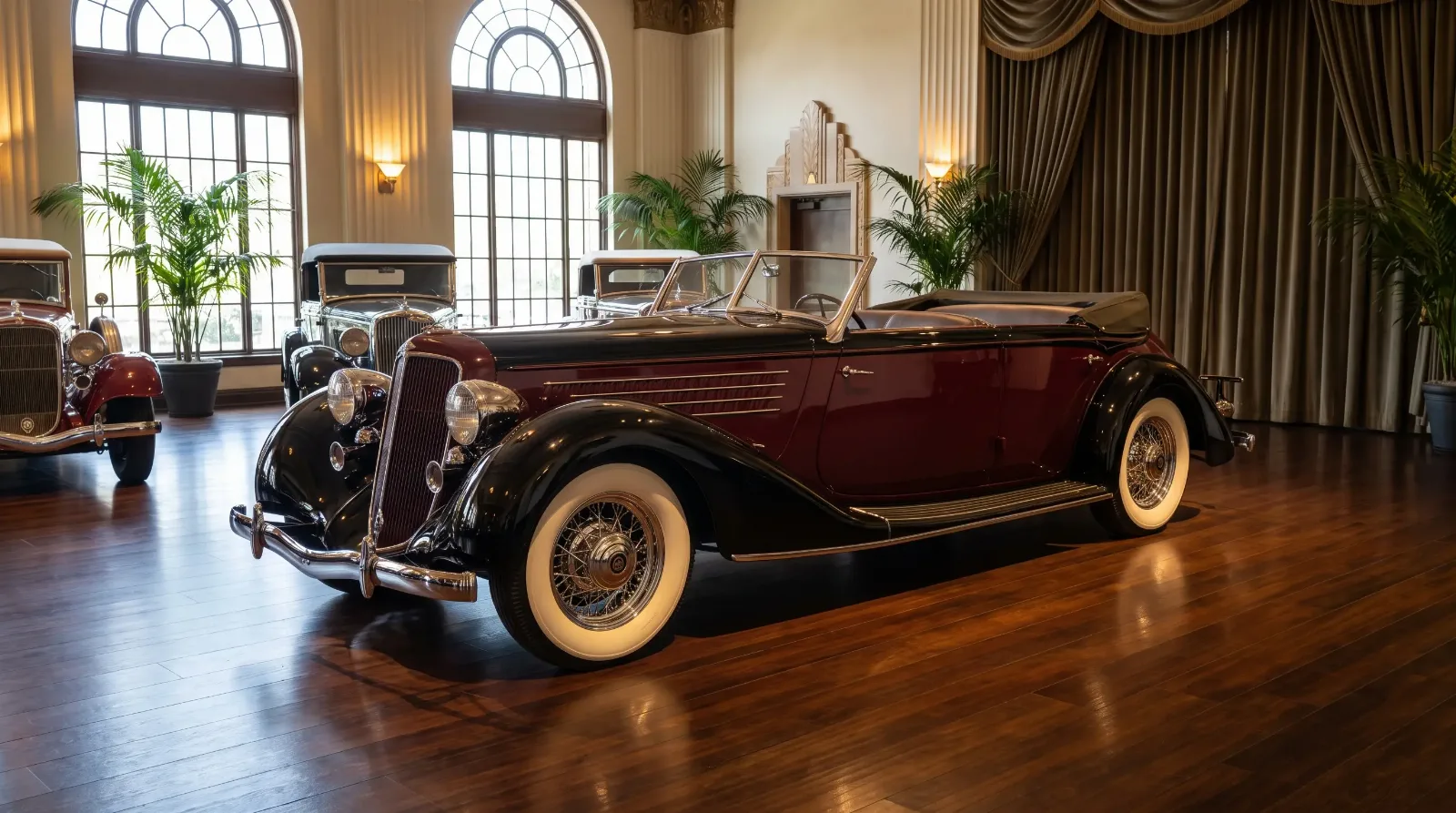
This is the part that always gets me. A customer ordering a coachbuilt car in this period wasn't picking a trim level off a brochure. They were meeting with the coachbuilder, sometimes multiple times, discussing seat height, door handle placement, how deep they wanted the cocktail cabinet in the rear compartment, whether they wanted running boards swept or straight. That's a completely different relationship to the car than what most of us have today, and it's part of why these cars still feel personal almost a hundred years later. Somebody sat down and made real decisions about that specific automobile.
If you want the wider view of who was doing this work and why the chassis and body came from two different companies in the first place, more on hand built antique cars lays it all out.
"Guys ask me sometimes why a pre-war body doesn't fit as tight as a fifties car. I tell them, that gap you're looking at isn't a flaw, that's a fingerprint. Somebody's hands made that panel, and hands aren't a stamping press."
Gary Nowak
Tools of the trade
Walk into a period coachbuilder's shop and the tools would look almost primitive next to a modern body shop, but they were exactly right for the job. The English wheel, a big rolling machine that stretches and shapes flat metal into a curve by passing it between two wheels under pressure, was the workhorse for aluminum panel forming. Wooden or sandbag "bucks" gave panel beaters a surface to hammer against without leaving dents in the wrong places. Hand shears, mallets of various hardness, and a good eye were about all a skilled panel beater needed beyond that. It's simple equipment by today's standards, and that's kind of the point, the skill lived in the hands, not the machine.
What survived and what got lost
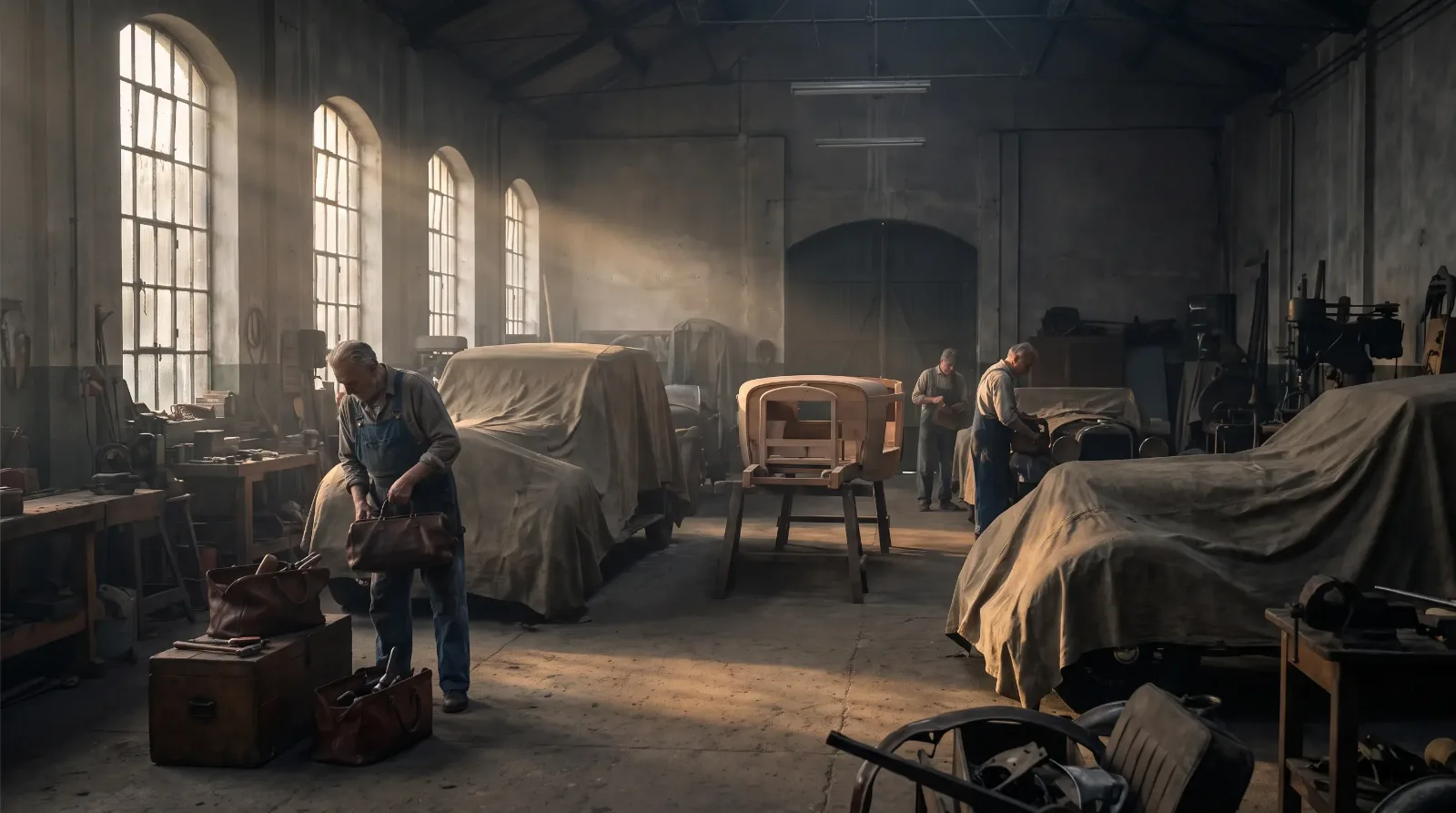
Not every hand-built car made it through the decades intact. A lot of these cars got re-bodied later, when a tired original body was cheaper to replace than a worn-out engine. Others lost their coachbuilder's plate somewhere along the way, and now nobody's entirely sure who built them, which is its own kind of shame. The ones that survived with their original documentation intact, build sheets, period photos, a plate that still matches up, those are the cars that let you actually study this whole hand-built approach up close instead of just reading about it.
What ended this whole way of building cars is its own story, one that ties directly into the Depression and the changing tastes of the customers who used to order this kind of work. The next installment gets into exactly how and why it fell apart.
Sources and notes
Related Reading
Have a
Classic Car
for Sale?
Reach thousands of serious classic car collectors across the US.
Sell It Here →
Are You a Classic Car Dealer?
List your full inventory and connect with targeted classic car buyers.
Join as a Dealer →

About the author
Gary Nowak
Lifelong Midwest rodder who has been building and driving traditional pre-war hot rods since the 1970s.




Comments
Be the first to comment on this article.