
Three names come up more than any others when American coachbuilding is discussed: Murphy, LeBaron, and Brunn. Each ran its business differently, each attracted a different kind of client, and each left a body of work that still defines what a great pre-war American body looked like.
Car Features
6 min read
Famous Coachbuilders: Murphy, LeBaron, Brunn
Murphy, LeBaron, and Brunn built some of the most recognizable pre-war American bodies. Here is what set each house apart.
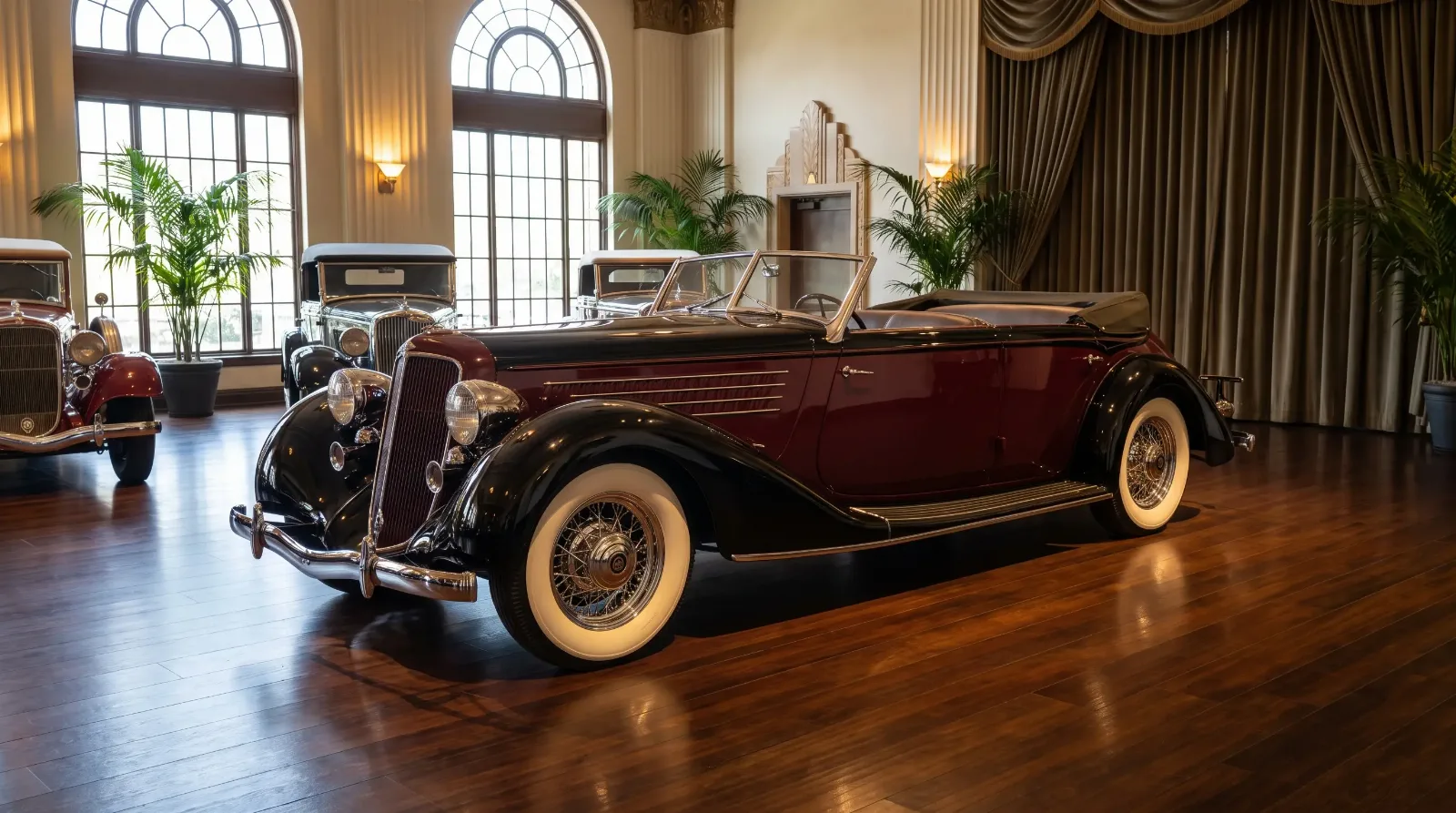
Walter M. Murphy Company, Pasadena
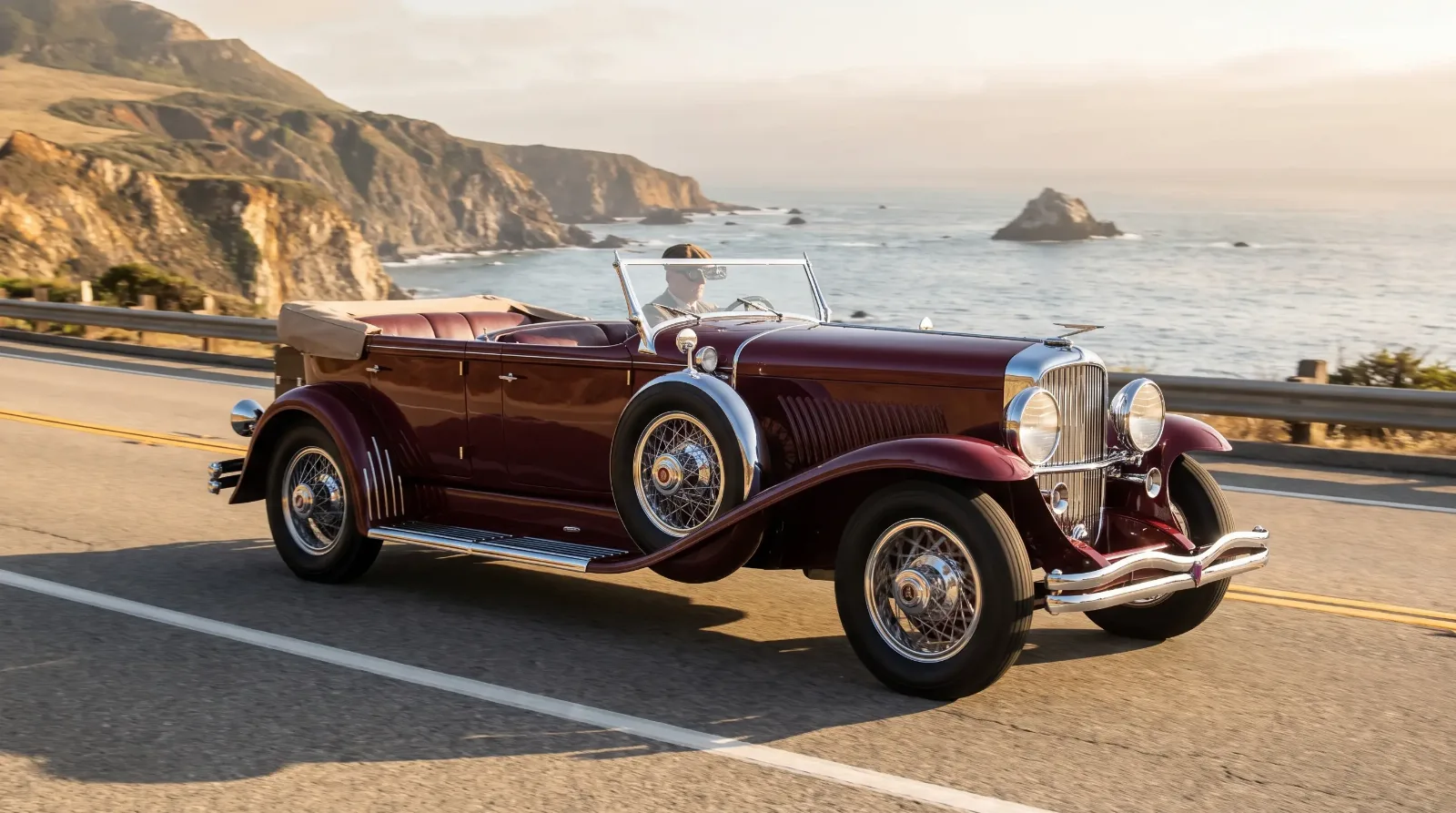
Murphy set up shop in Pasadena in the early 1920s and quickly became the coachbuilder of choice on the West Coast, particularly for Duesenberg chassis. The Murphy-bodied Duesenberg, especially the dual-cowl phaeton, is one of the most recognized silhouettes in pre-war American coachwork: low beltline, long hood, disappearing top, and a sense of proportion that made an enormous chassis look almost light on its wheels. Murphy's shop was known for consistency, its craftsmen worked from templates and jigs that let the firm produce a repeatable "catalog" body without sacrificing the hand-finished quality clients expected at this price point.
Murphy did not survive the Depression, closing in 1932, but its influence outlasted the company itself. Many of the stylists who trained there went on to shape design departments at General Motors and elsewhere, carrying Murphy's proportions into the mainstream industry for another generation.
LeBaron, New York
LeBaron started in 1920 as a design studio rather than a full manufacturing shop, founded by Ray Dietrich and Tom Hibbard, both of whom would go on to become major figures elsewhere in the industry. LeBaron's early model was unusual for the period: the firm designed bodies and then contracted their actual construction out to established coachbuilders like Bridgeport Body Company, essentially functioning as a styling house. That arrangement changed over the 1920s as LeBaron built out its own production capacity and later became closely tied to Chrysler, producing bodies for Chrysler Imperial chassis through much of the 1930s.
LeBaron's house style leaned toward crisp, architectural lines rather than the flowing curves some competitors favored, and the firm's willingness to work across multiple chassis makers, Lincoln, Packard, Chrysler, Duesenberg, meant its design language shows up on a wider range of cars than almost any other coachbuilder of the period.
Brunn & Company, Buffalo
Brunn traced its roots back to a carriage-building business in Buffalo, New York, and the firm carried that carriage-trade sensibility into its automobile bodies: understated, formal, and built for owners who wanted quality that did not announce itself loudly. Brunn became especially associated with Lincoln, building a significant share of the custom bodies fitted to Lincoln chassis through the late 1920s and into the 1930s, including town cars favored by business and political figures who wanted dignity over flash.
Where a Murphy phaeton was built to be driven fast down open California roads with the top folded, a Brunn town car was built to deliver someone to a formal event and look correct doing it. Both were coachbuilt in the technical sense, but they represent opposite ends of what that word could mean in practice.
How to research a specific commission
Each of these three firms kept, or at least generated, some form of build records at the time, though how much of that paper survives varies enormously by car. Murphy's records are the thinnest of the three since the company folded during the Depression and much of its documentation scattered. LeBaron's history is easier to trace in part because the firm's later Chrysler ties kept some records inside a surviving corporate structure. Brunn's Lincoln relationship means many of its town car commissions can sometimes be cross-referenced against Lincoln's own dealer and factory paperwork from the period, which is a real advantage for anyone trying to confirm a car's history today.
Marque clubs dedicated to Duesenberg, Lincoln, and Chrysler Imperial each maintain registries that track known coachbuilt examples, and cross-checking a car's chassis number against those registries is usually a faster path to confirmation than relying on a body plate alone, since plates can be lost, swapped, or misattributed over the decades a car has changed hands.
Comparing the three houses
| Coachbuilder | Base | Most associated chassis | House style |
|---|---|---|---|
| Walter M. Murphy Co. | Pasadena, CA | Duesenberg | Sporting, low beltline, dual-cowl phaetons |
| LeBaron | New York, NY | Chrysler Imperial, Lincoln | Crisp, architectural, cross-chassis design house |
| Brunn & Company | Buffalo, NY | Lincoln | Formal, restrained, town cars and limousines |
If you want the broader context these three firms operated within, our deep dive on famous car coachbuilders connects them to the wider industry of the period, including the European houses working the same market from a different angle.
"You can often tell which shop built a body before you ever check the plate. Murphy wanted the car to look like it was already moving. Brunn wanted it to look like it had never been in a hurry in its life. That's not an accident, that's a design philosophy."
Sarah Whitfield
Smaller houses worth knowing
Murphy, LeBaron, and Brunn get most of the attention, but they were not the only serious shops working American chassis in this period. Dietrich, founded by Ray Dietrich after he split from LeBaron, developed its own distinct following, particularly on Packard and Lincoln chassis, with a house style that favored long, low hoods and restrained ornamentation. Bohman & Schwartz, based in Pasadena and staffed partly by former Murphy craftsmen after that firm closed, picked up a share of West Coast custom work through the 1930s, including some Duesenberg commissions that carry the same sporting sensibility Murphy was known for. Rollston, working out of New York, built a reputation on Duesenberg and Packard chassis with a heavier, more formal touch than Murphy's California work.
None of these smaller houses matched the volume of the big three, but a documented example from any of them can be just as significant to a collector, sometimes more so given how few survive relative to output from the larger shops.
Why these names still matter to buyers
Provenance tied to Murphy, LeBaron, or Brunn changes a car's value and its story, and it also means there is usually documentation to chase down: build sheets, period photographs, magazine coverage from the era. That paper trail is part of what collectors are actually buying when they pay a premium for a named coachbuilder's work, on top of the physical craftsmanship itself. Knowing these three houses by their characteristic proportions and details is one of the fastest ways to start reading a pre-war car's history at a glance, rather than relying entirely on a badge that may or may not still be attached to the car.
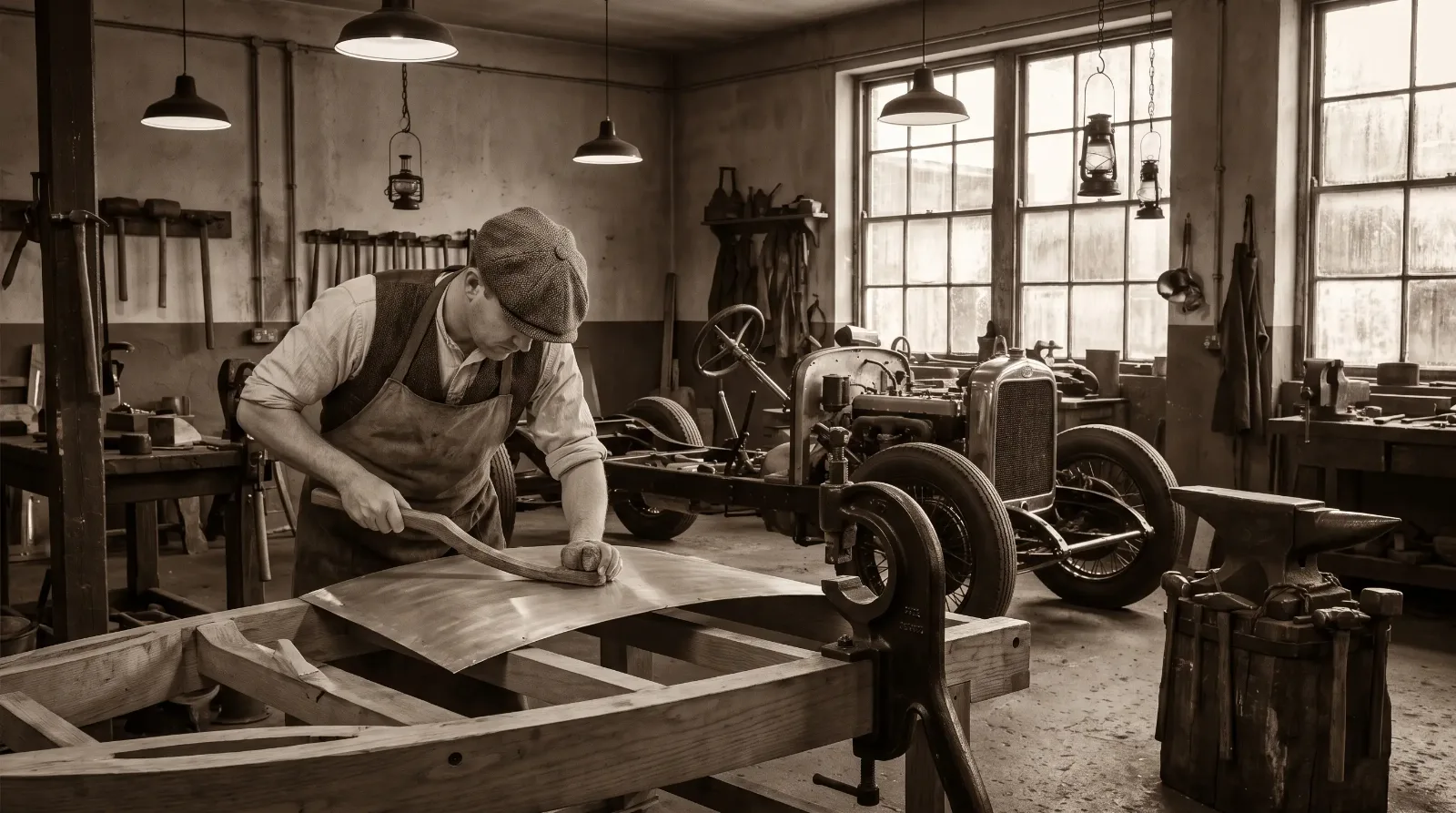
To see how this hand-built approach connected to the era before mass production really took hold, keep reading.
Sources and notes
Related Reading
Have a
Classic Car
for Sale?
Reach thousands of serious classic car collectors across the US.
Sell It Here →
Are You a Classic Car Dealer?
List your full inventory and connect with targeted classic car buyers.
Join as a Dealer →

About the author
Sarah Whitfield
Third-generation classic car collector specializing in pre-war American and European coachbuilt automobiles. Researcher and concours enthusiast.
Comments (1)
K
Kurt Ecklund
2 months ago
The market has really moved on these. What was an affordable driver not long ago is starting to get out of reach for regular buyers.