
Hemi Cuda provenance is not a nice-to-have. It is the difference between a car worth real money and a car worth a fraction of that, built on the exact same body shell. Two Hemi Cudas can look identical from ten feet away and sit a million dollars apart in value once documentation enters the conversation, and that gap exists for reasons any serious buyer needs to understand before writing a check.
Car Features
7 min read
Provenance: Why Each Hemi Cuda Has a Documented Story
Two identical looking Hemi Cudas can be worth wildly different amounts, and the gap almost always comes down to documentation.
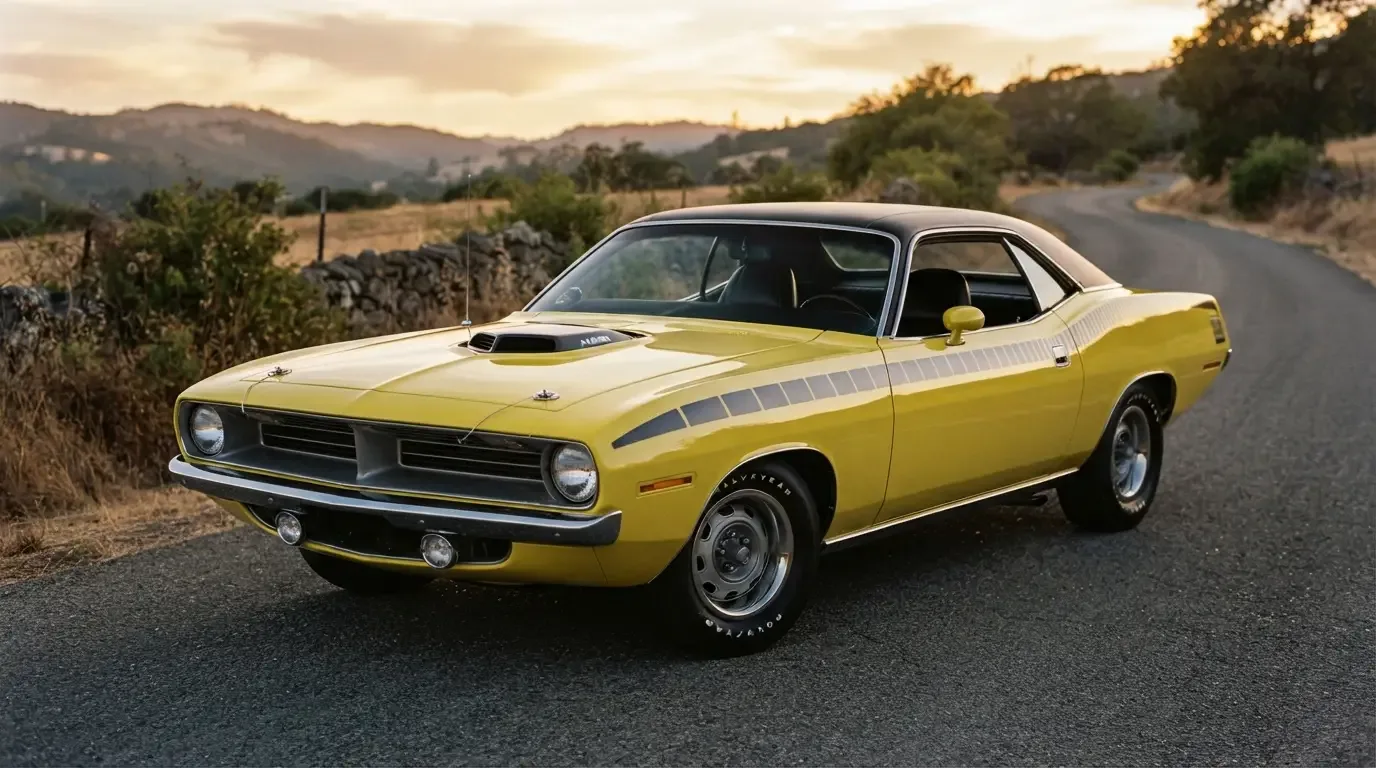
Why paper matters more than paint on this car
The Hemi Cuda was never a high production car. Plymouth built a small number of them across 1970 and 1971, and the combination of low original numbers with decades of engine swaps, clones, and outright fraud means the market has learned to distrust a car until its documentation says otherwise. A broadcast sheet, the factory build sheet often found tucked under a seat or in a trunk pan, is one of the strongest pieces of original evidence a Hemi Cuda can carry. So is a fender tag that matches the VIN, and a title history that traces back cleanly without suspicious gaps.
None of this documentation makes a car faster or better built. It exists purely to answer one question: is this the car it claims to be. Given how profitable it has become to build a convincing fake, that question is not paranoid, it is basic due diligence.
The clone problem, stated plainly
A Hemi Cuda clone is a real Cuda, often a 340 or 383 car, that has had a 426 Hemi installed later and been dressed to look like an original factory Hemi car. Clones are not inherently dishonest. Plenty of owners build them openly, love them, and never claim otherwise. The problem shows up when a clone gets sold, quietly, as a genuine numbers-matching car to a buyer who does not know enough to ask the right questions. This is exactly why appraisers lean so heavily on documentation rather than visual inspection alone. A well done clone can fool an untrained eye completely.
What a documented Hemi Cuda actually needs
A fully provenanced car typically has several layers of paper working together rather than one document doing all the work. The broadcast sheet is the strongest single piece, since it was generated at the factory and rarely leaves the car unless someone removed it deliberately. A matching fender tag backs it up. Dealer invoices, original window stickers, and early title transfers add a chain of custody that is harder to fake convincingly across multiple decades. Marti Report style documentation is more of a Ford tool, but Chrysler collectors rely on a similar mix of factory records and independent researchers who have built reputations verifying these cars one at a time.
The value gap between a documented original and an undocumented or reconstructed car is not small. It can run into six figures on the rarest combinations, and that gap only grows as the pool of remaining, well-verified original cars shrinks. For a closer look at how one specific car's paperwork settled a long running debate, more on the hemi cuda provenance lays out a real example in detail.
"I have watched two cars sell twenty minutes apart at the same auction, same color, same options, half a million dollars apart. The only difference in the room was a folder of paperwork."
- Marcus Feld
Regional records fill in the gaps
Chrysler's own factory records from this era are incomplete in places, lost to fires, corporate reorganizations, and decades of indifferent storage. Where the factory paper trail thins out, regional Mopar clubs and long-time owners often hold the missing pieces, an old registration card, a photograph from a 1972 car show with a visible license plate, a letter from a previous owner describing where the car sat for twenty years. None of these substitute for a broadcast sheet, but stacked together they can corroborate a car's story in ways that make an otherwise thin paper trail much more convincing to a skeptical buyer.
How risk should shape a buying decision
Buying a Hemi Cuda without independent verification is not a small risk, it is the single largest risk in the transaction. Condition can be assessed by a competent inspector in an afternoon. Mechanical issues can be repaired. A misrepresented identity, once money has changed hands, is a legal and financial mess that can take years to resolve, if it resolves at all. Any serious buyer should budget for an independent authentication before final commitment, not after, and should treat a seller's reluctance to allow that step as a serious warning sign rather than an inconvenience to work around.
Liquidity follows the same logic. A well-documented Hemi Cuda sells relatively quickly at the right auction because buyers trust what they are looking at. An undocumented car, even a genuine one that simply lost its paperwork over fifty years, sits longer and sells for less, because the market prices uncertainty as a cost every time.
Who actually verifies these cars
Independent authentication in this space is handled by a small circle of researchers and appraisers who have spent decades building relationships with Chrysler's surviving factory records, regional Mopar clubs, and each other. Reputation matters enormously here, since the entire system depends on buyers trusting a verifier's judgment on a car worth six or seven figures. A newer appraiser without an established track record faces a harder path earning that trust, no matter how sound their methodology actually is, simply because the stakes involved make buyers conservative about whose opinion they lean on.
This creates a somewhat closed ecosystem, but it is not an unreasonable one given what is at stake. A forged broadcast sheet or a doctored fender tag is not difficult to produce convincingly, and the people who catch these forgeries tend to be the ones who have seen the most genuine examples and developed an instinct for what looks slightly wrong. That instinct does not replace documentation, it supplements it, catching the cases where paperwork alone would not raise a flag.
The bigger pattern behind Hemi Cuda values
None of this happens in isolation. The broader climb in Hemi Cuda prices over the past two decades has made provenance matter more, not less, since bigger numbers attract more attempts at fraud and more buyers who need real certainty before committing serious capital. Anyone digging into why these cars have gotten so expensive should look at a related story on the production numbers that made them scarce in the first place.
For a buyer ready to act on a documented, verified example rather than a project with question marks attached, it is worth taking a direct look at Barracudas for sale now to see what the current market actually offers at every tier of documentation and price.
Sources and notes
- Galen's Tag Service: Galen V. Govier Mopar authentication
- MaxWedge: Documenting Chrysler/Dodge/Plymouth fender tags and body stampings
- MaxWedge: Max Wedge and Race Hemi cars - real or fake
- E-Bodies.org: Mopar fender tag and build sheet decoder
- Mopar Insiders: 1970 Hemi 'Cuda at Mecum Kissimmee
- Wikipedia: Plymouth Barracuda
Related Reading
Have a
Plymouth Barracuda
for Sale?
Reach thousands of serious classic car collectors across the US.
Sell It Here →
Are You a Classic Car Dealer?
List your full inventory and connect with targeted classic car buyers.
Join as a Dealer →

About the author
Marcus Feld
Accredited collector-car appraiser who reads the market through hammer prices, condition tiers and risk.
Related Listings - Plymouth Barracuda




Comments
Be the first to comment on this article.