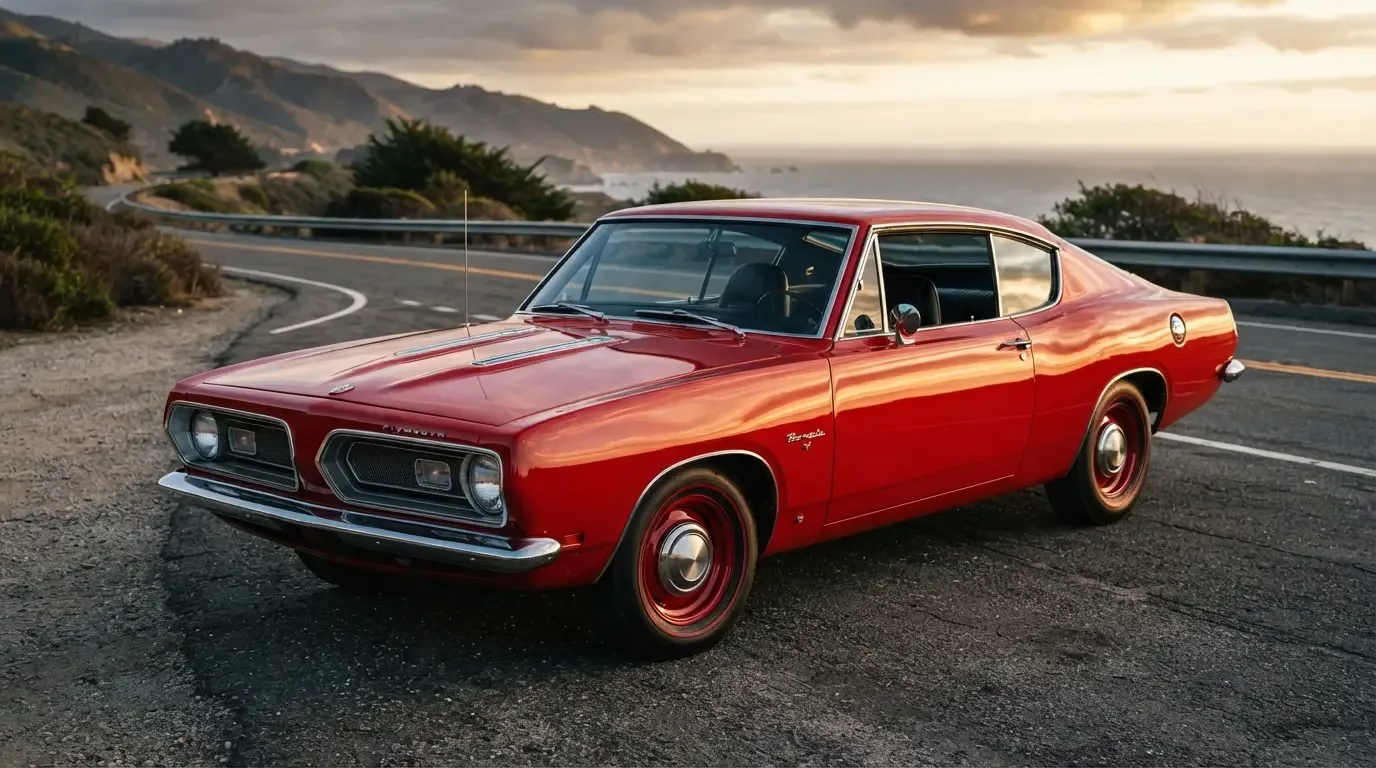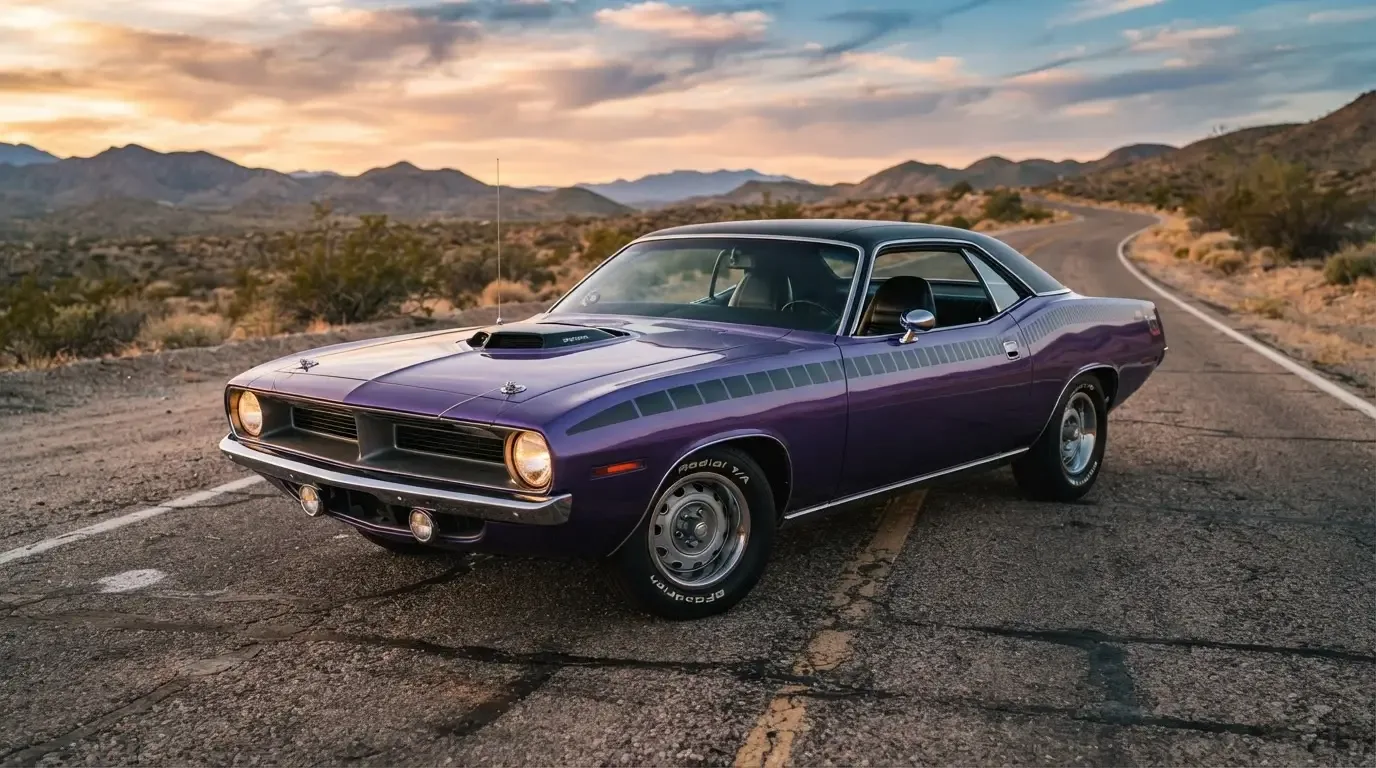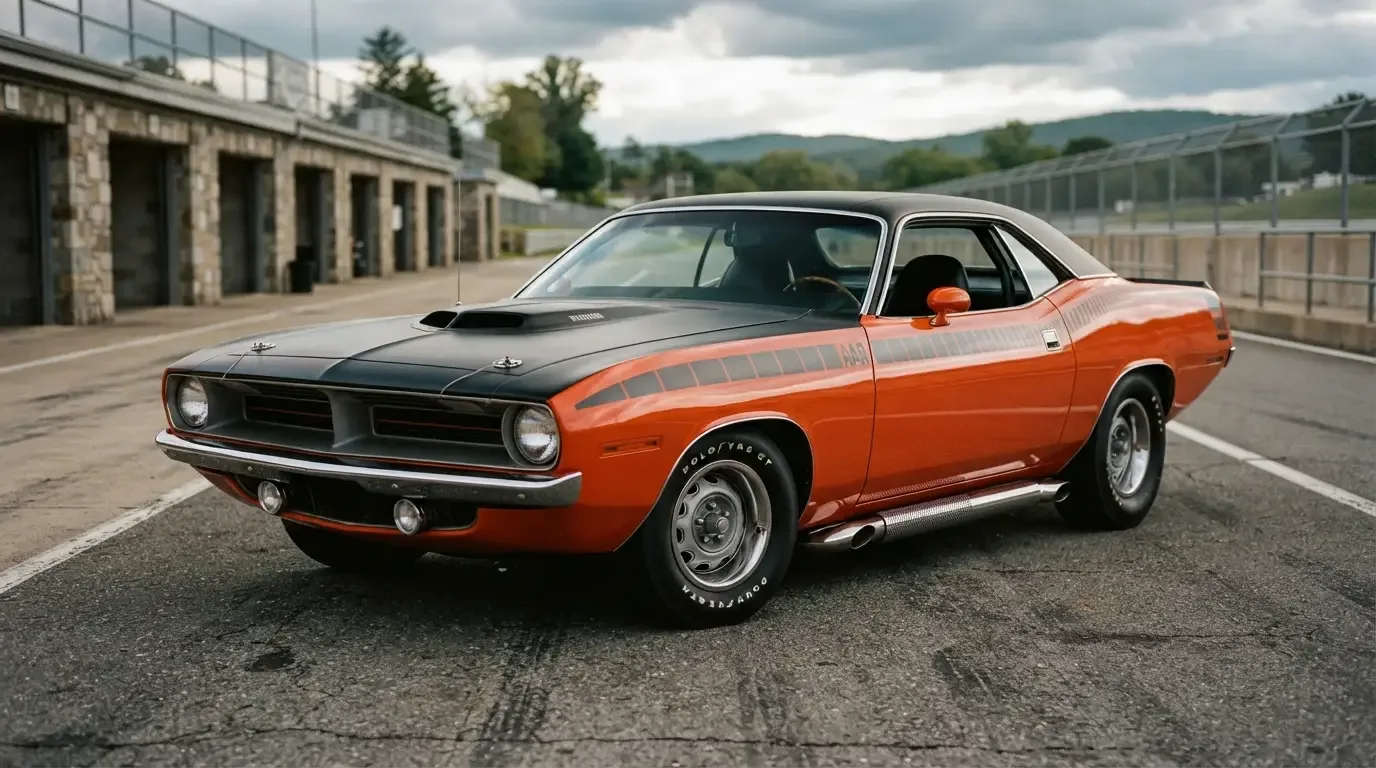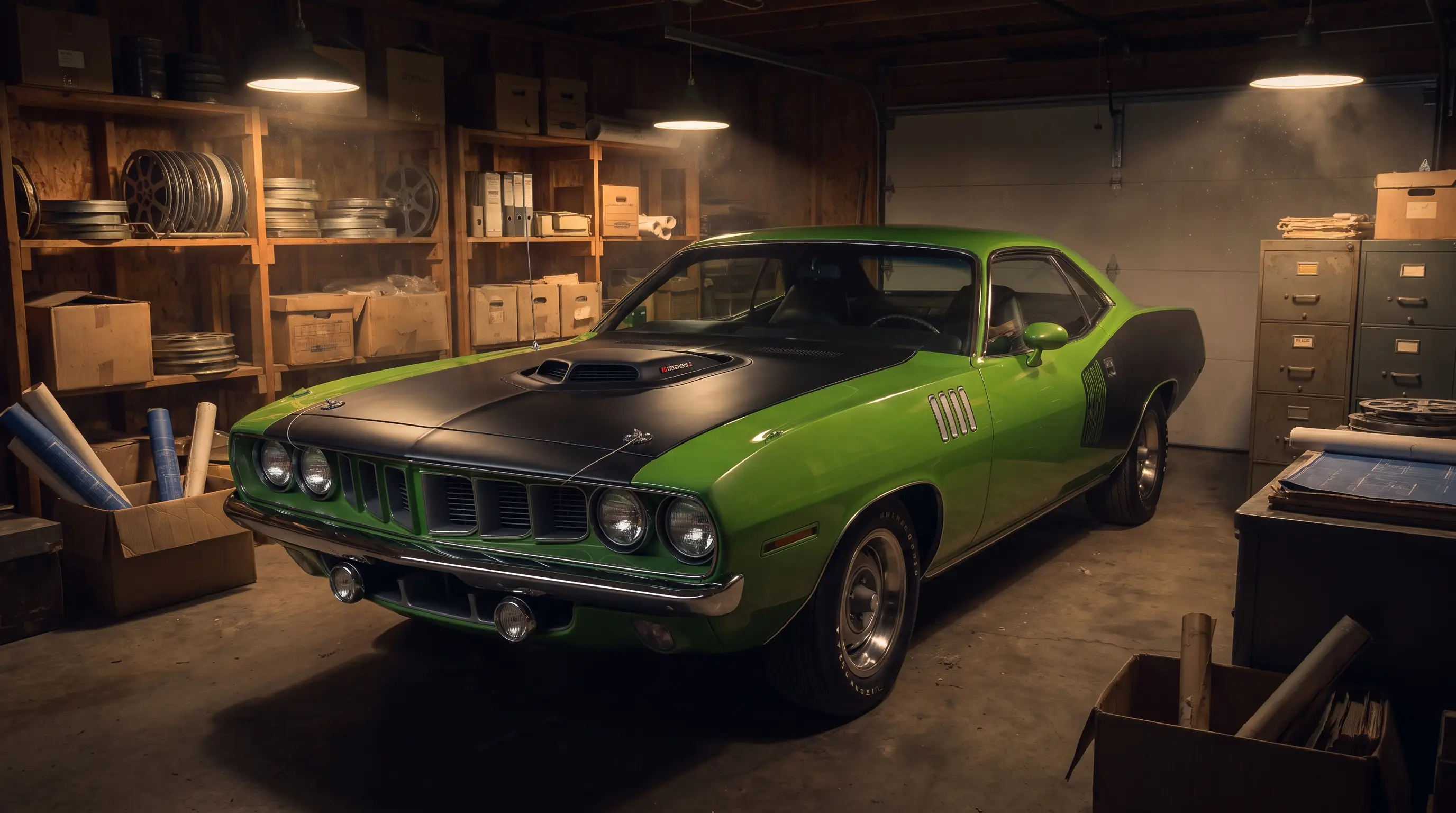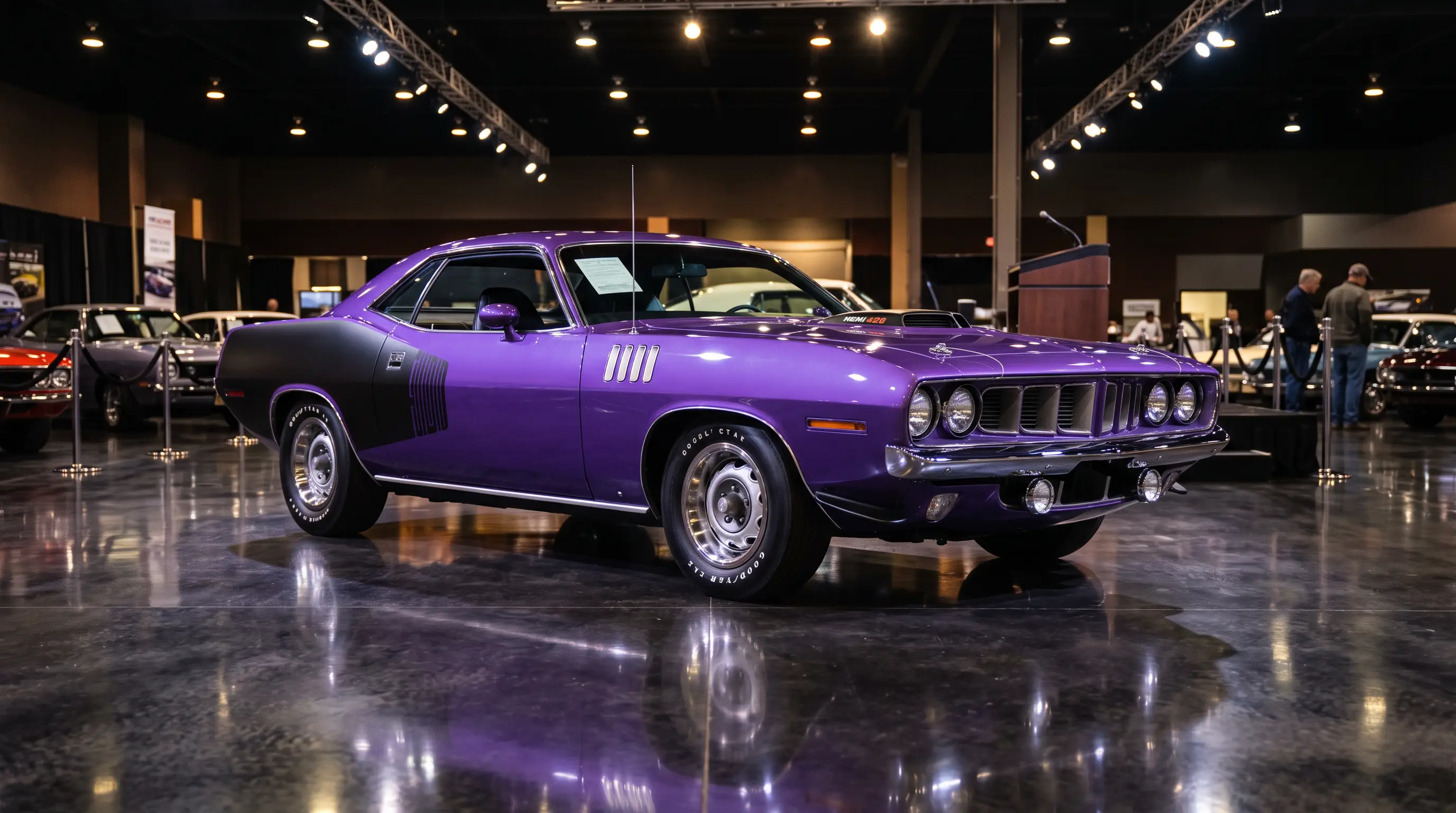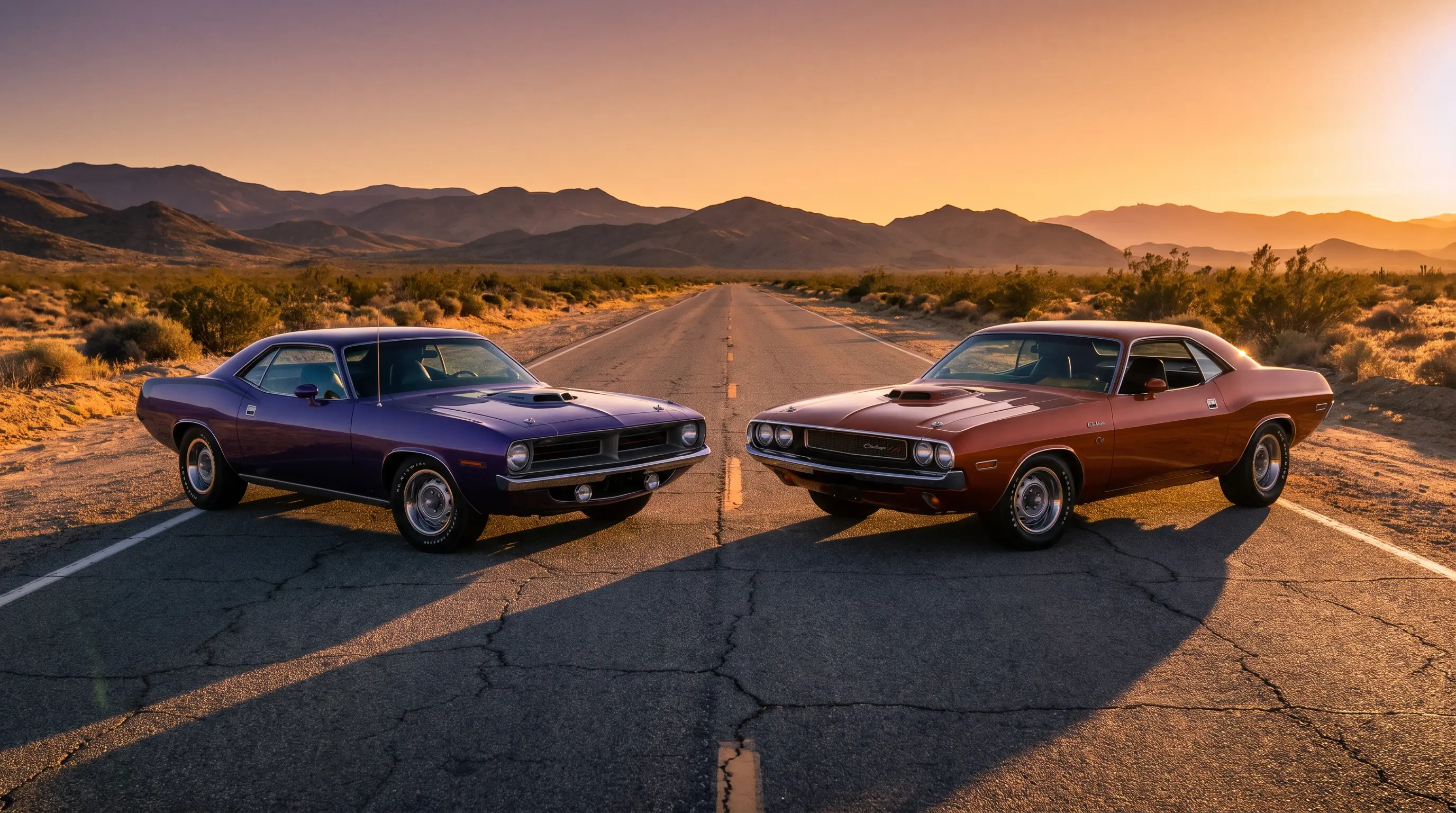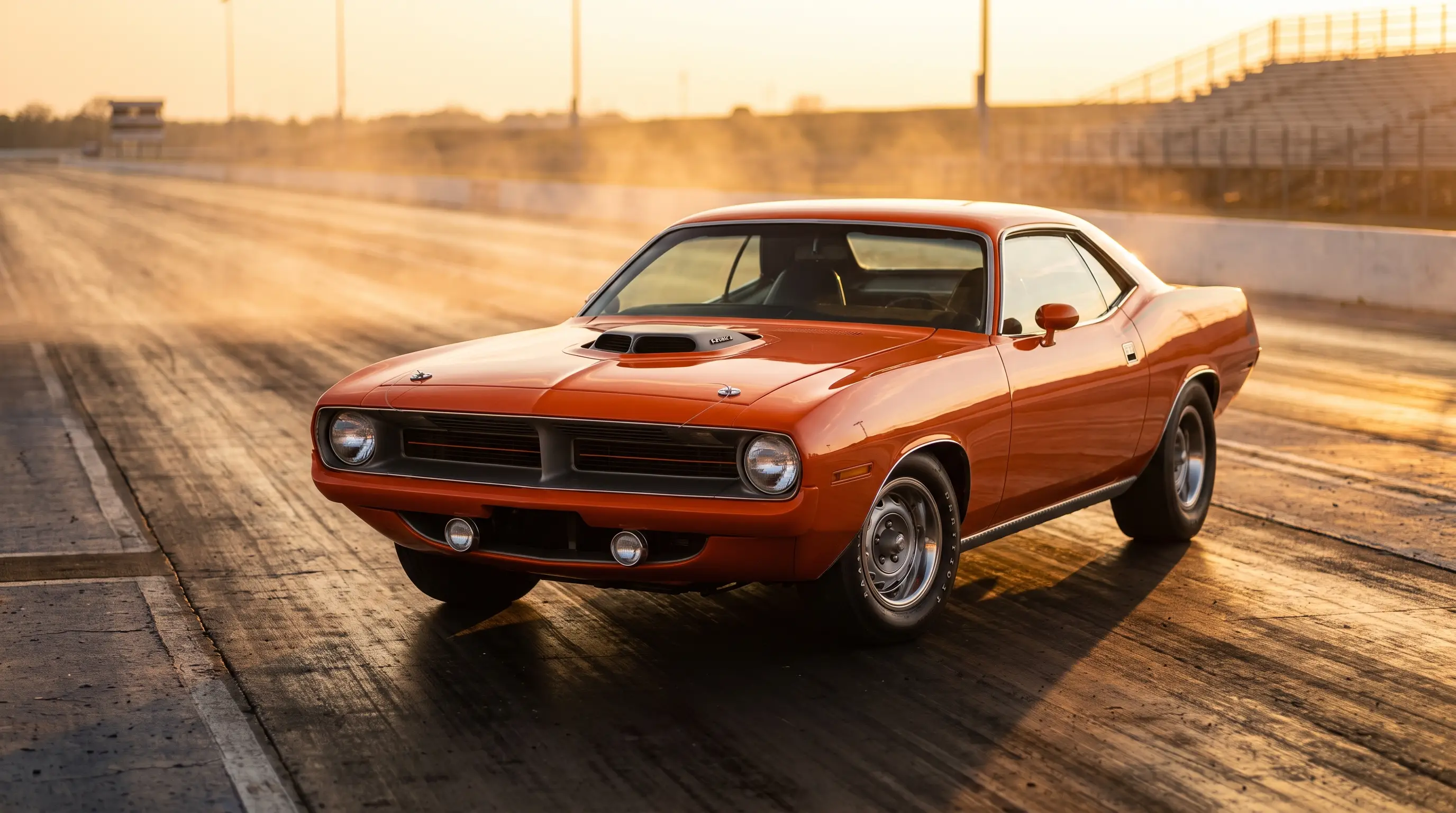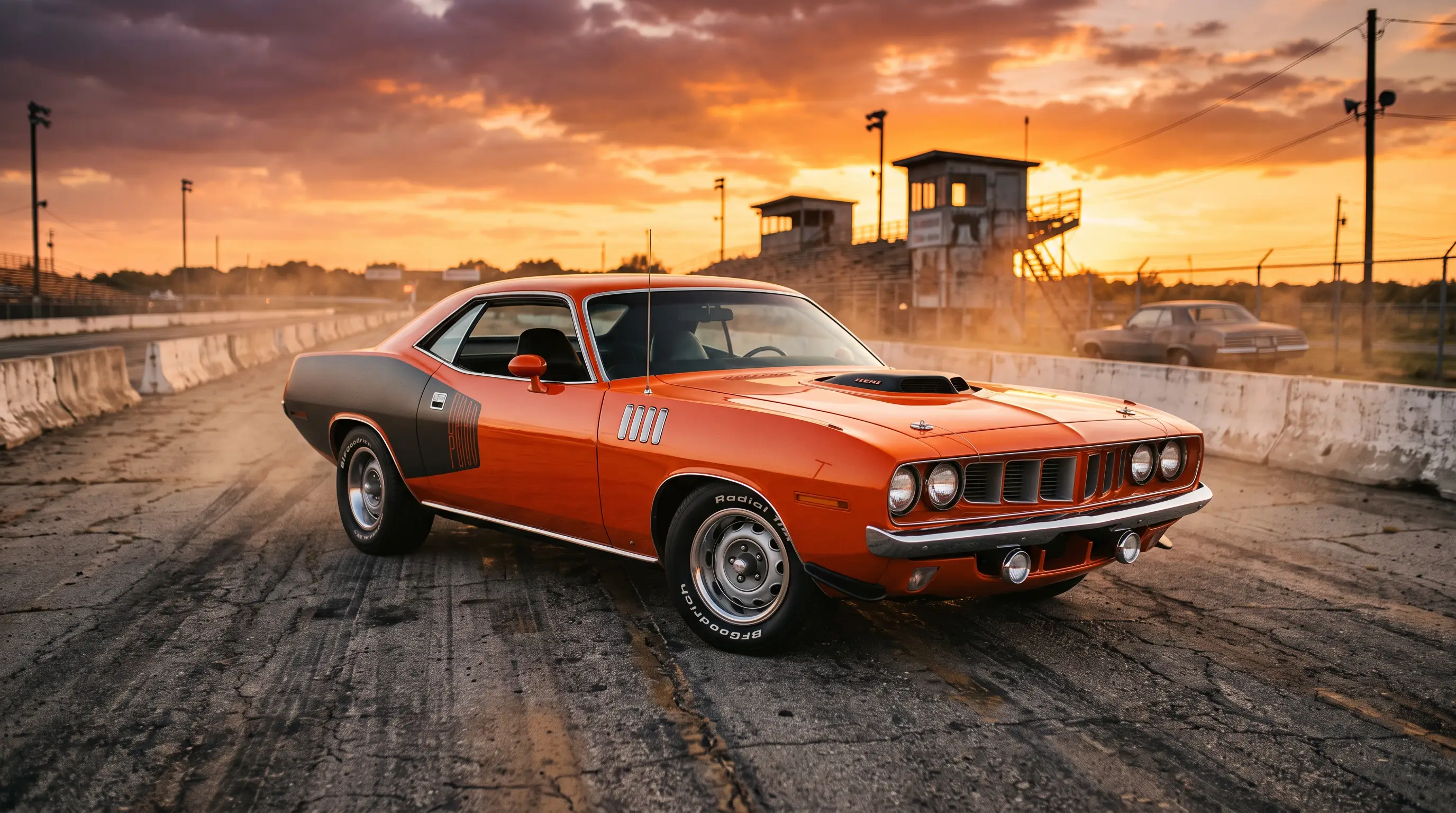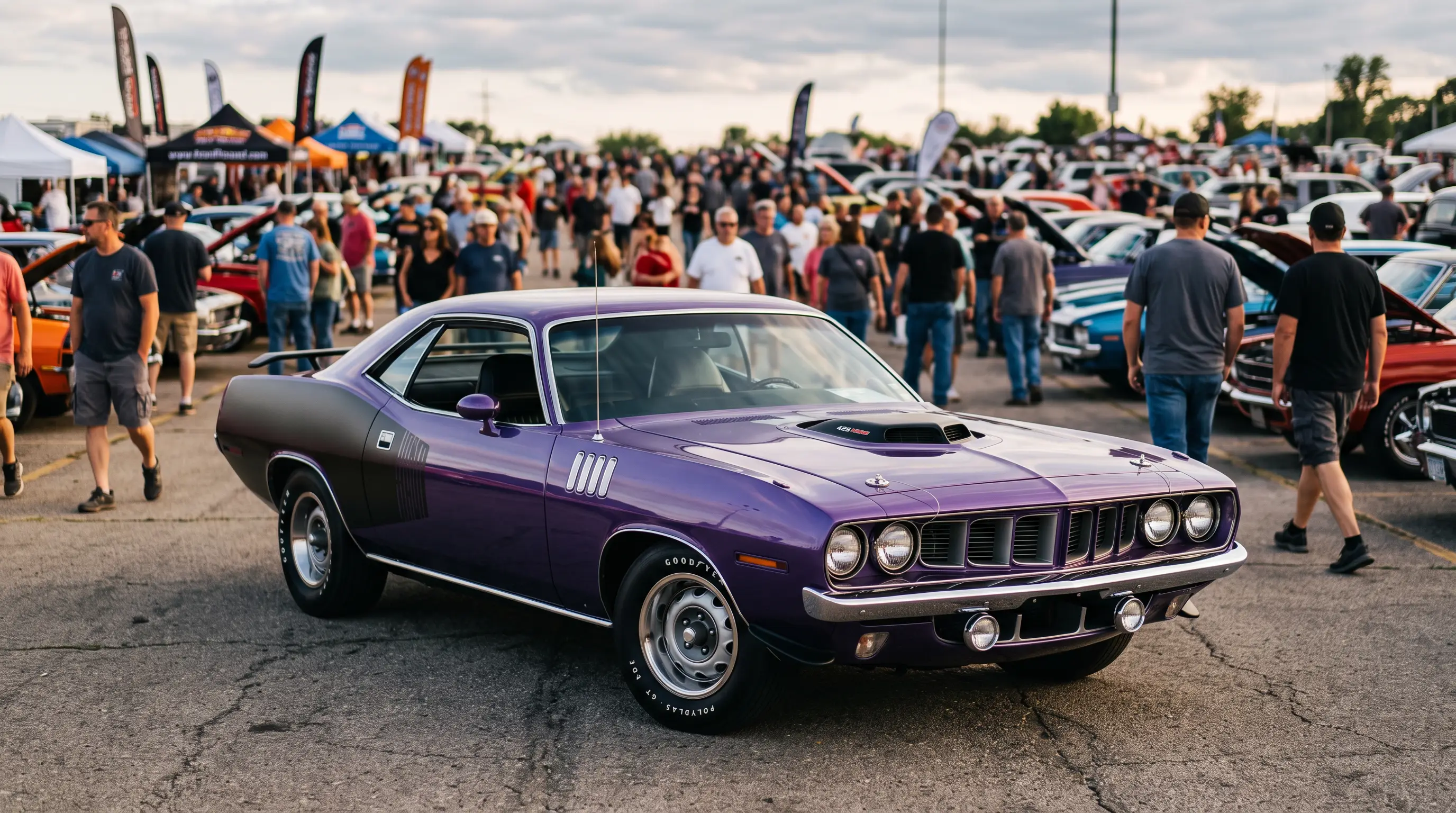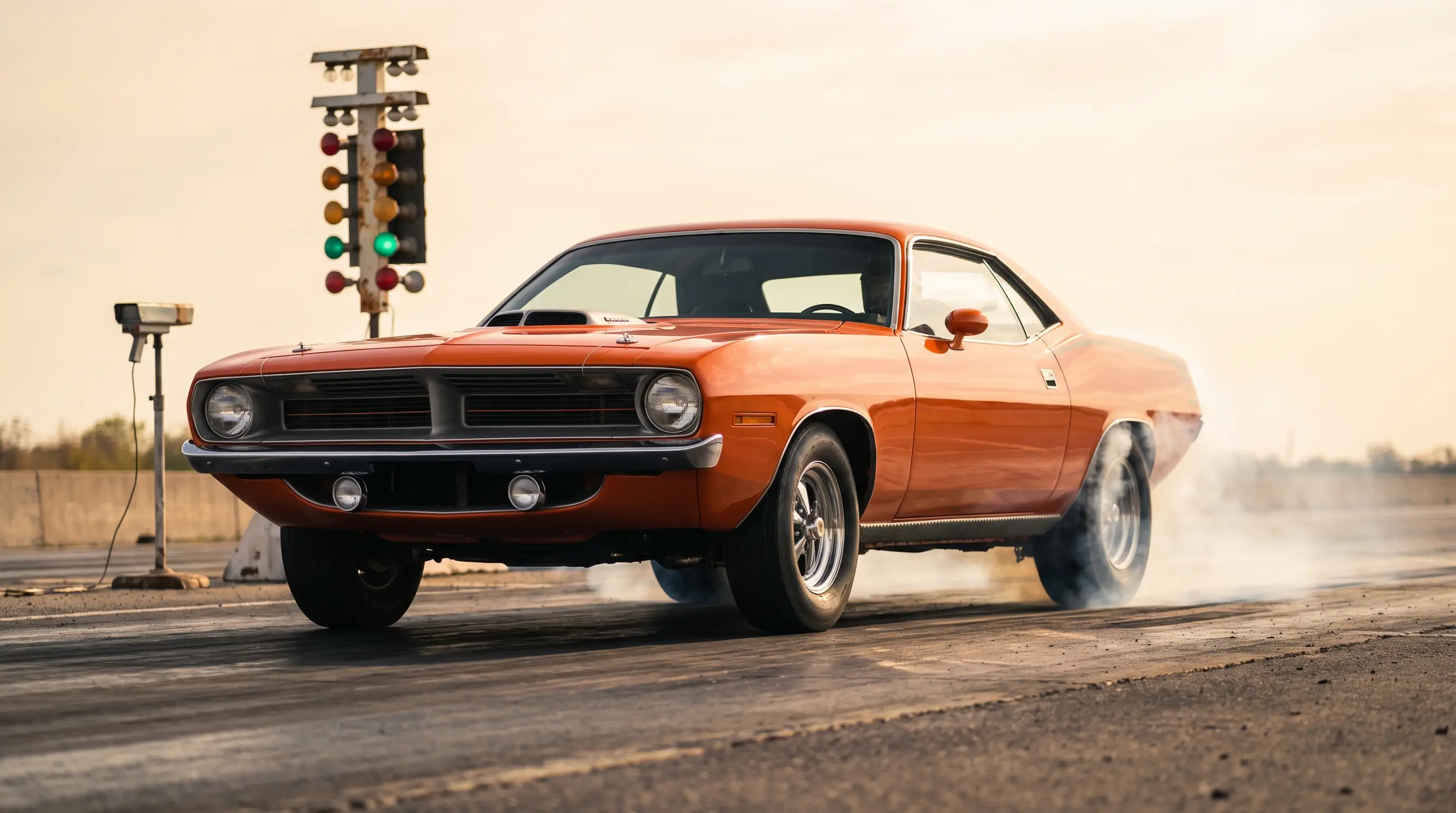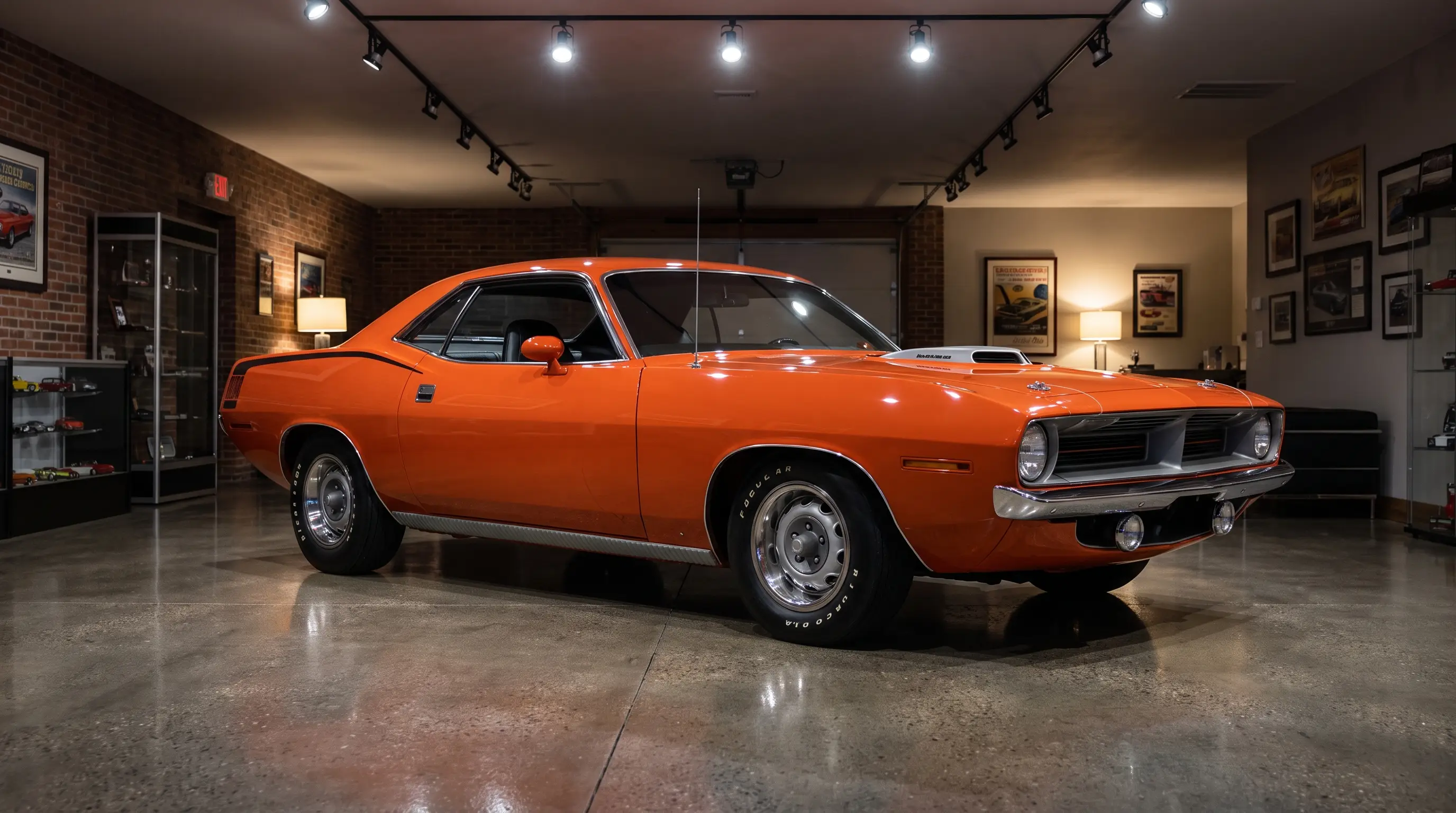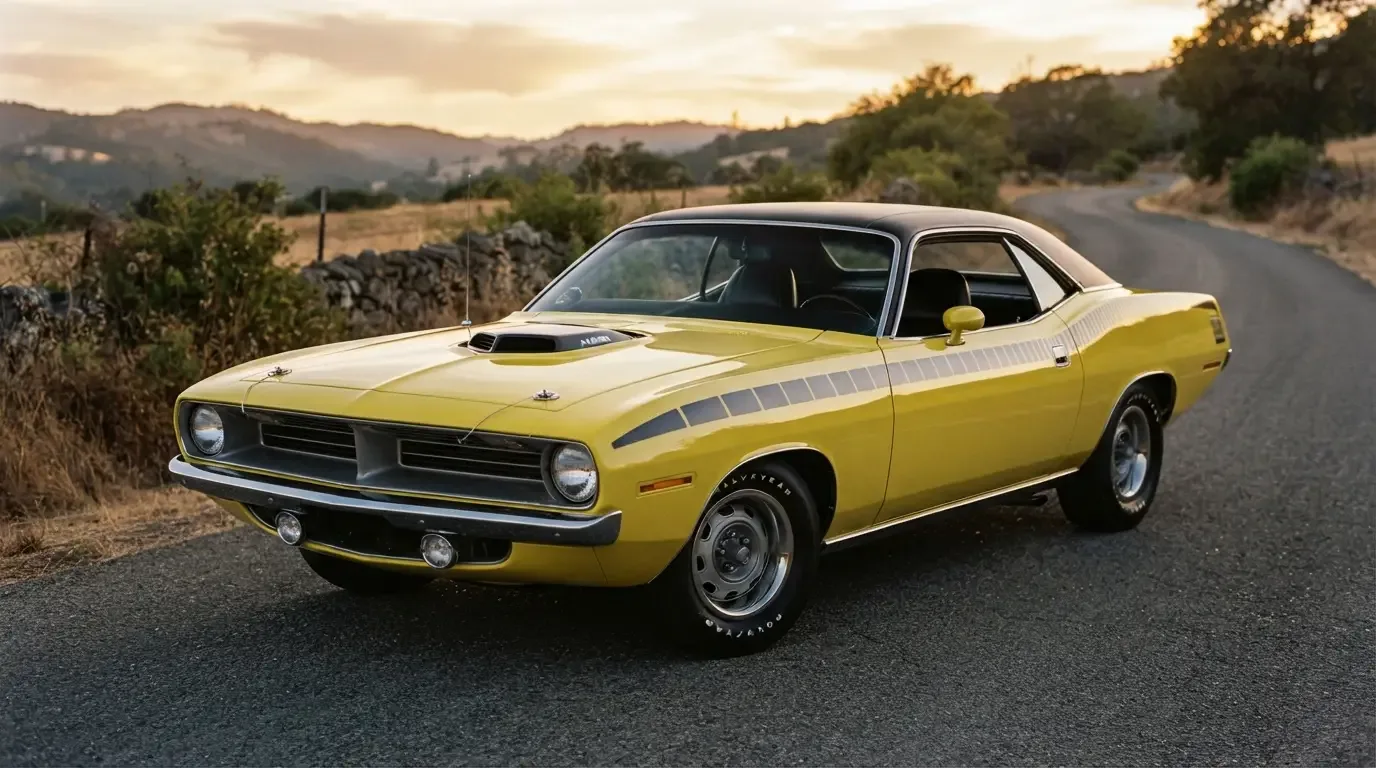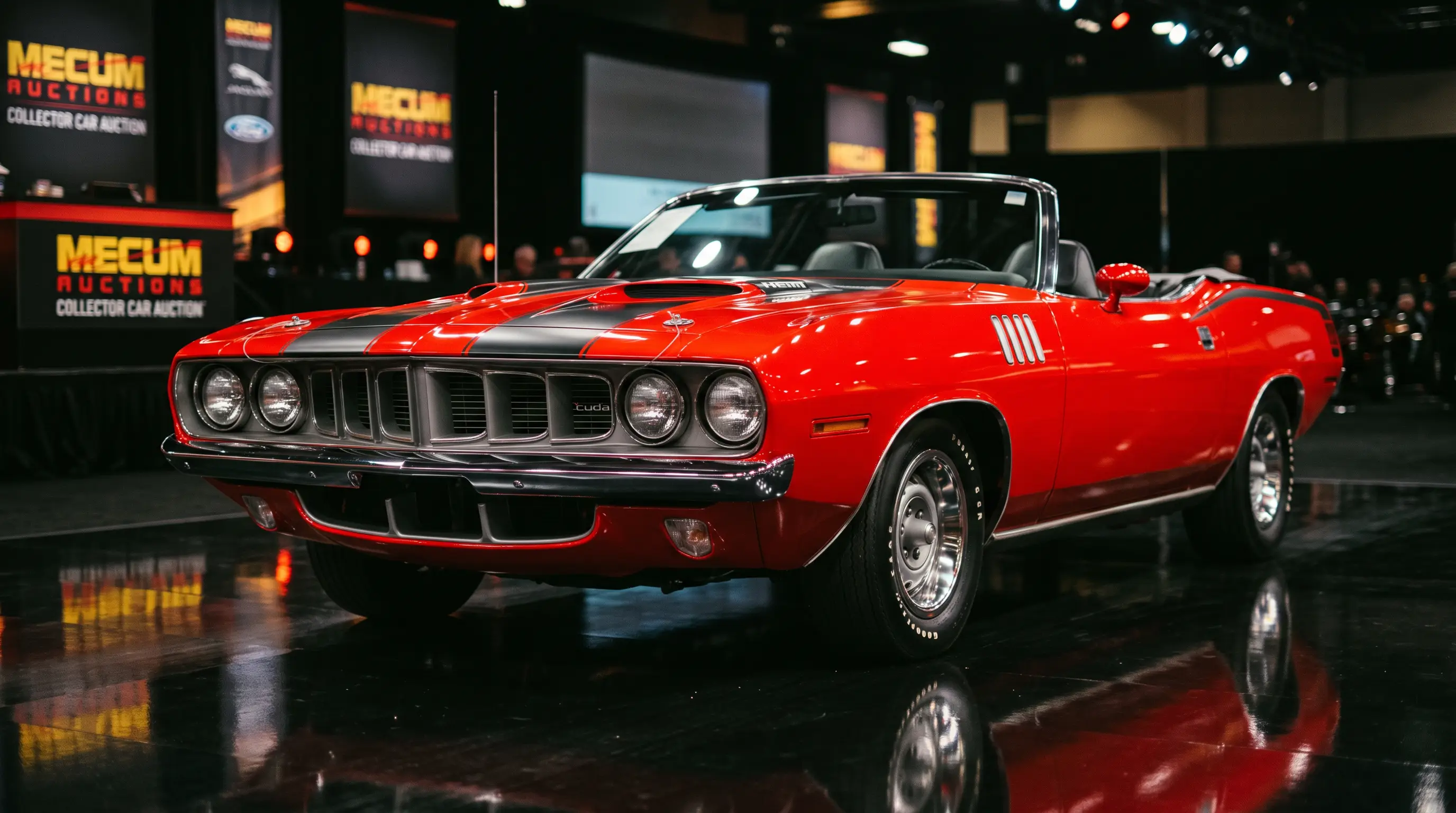
Most collector cars are valued on a spread. The Hemi Cuda is valued on a signature. When a genuine one crosses an auction block the number is set less by condition than by the paperwork that proves what it is, because the difference between a documented car and a convincing tribute is measured in millions of dollars. As an appraisal problem the Hemi Cuda is almost pure. Small production, extreme demand, and a downside so steep that provenance is not a detail on the report, it is the report. Everything else is secondary.
What actually makes a Hemi Cuda
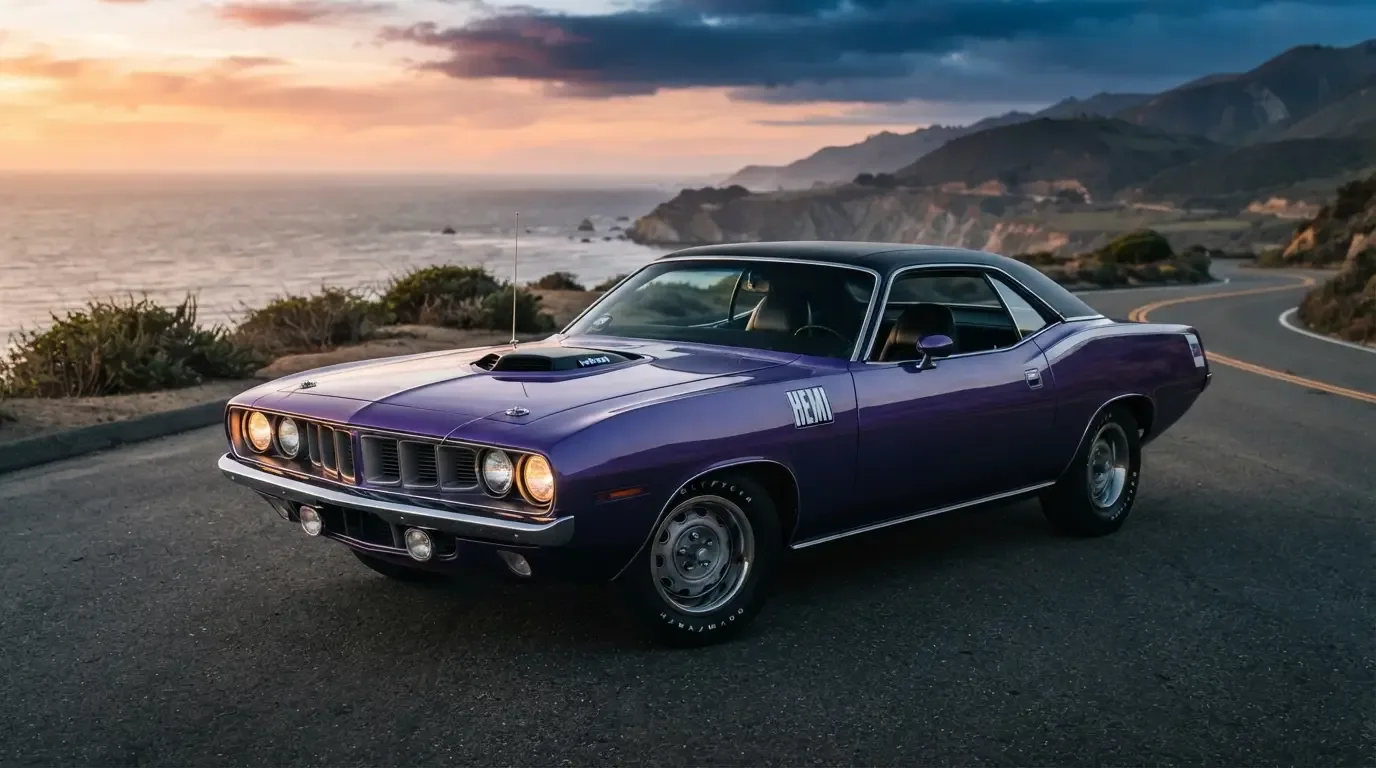
The definition is narrow and worth stating precisely. A Hemi Cuda is a 1970 or 1971 Plymouth Cuda ordered with the 426 cubic inch Hemi V8, factory rated at 425 hp. The engine is the whole thing. The same E-body shell was sold with a slant six and every V8 in the Chrysler catalog, so the body alone tells you nothing about value. The Hemi is what separates a car worth a comfortable six figures from a car worth several million, and that single option code is the axis the entire appraisal turns on.
The Hemi was expensive when new and it was hard to live with. It cost a large premium over the 440, it demanded maintenance most owners were not equipped to give, and its insurance was punishing. Buyers knew this in 1970, which is why so few were ordered. That reluctance at the dealer is the reason the survivors are scarce today. For the broader context of how this option landed on the model, there is more on the plymouth barracuda in our more on the plymouth barracuda retrospective.
The production numbers that set the floor
Value in this corner of the market is a function of how few were built, so the production figures are the foundation of any appraisal. For 1970, Plymouth built 652 Hemi Cuda hardtops split between automatic and four-speed cars, plus a very small number of convertibles, commonly cited at 14 including export cars. For 1971 the numbers collapsed. The 1971 Hemi Cuda hardtop run is usually given as around 108 cars, and the 1971 Hemi convertible is the rarest of all, with sources citing 11 or 12 built including the export examples.
Those convertible figures are the reason certain Hemi Cudas occupy a tier of their own. When you can count the cars of a given year and body on your fingers, ordinary market logic stops applying and the price becomes a function of who wants it and how badly. The hardtops are rare. The convertibles are effectively unique objects that happen to share a design. An appraiser treats those two populations as separate markets, not two points on one curve.
| Specification | Hemi Cuda (1970 to 1971) |
|---|---|
| Engine | 426 cu in Hemi V8 |
| Factory rating | 425 hp |
| Body styles | Hardtop coupe, convertible |
| 1970 hardtop production | 652 units |
| 1970 convertible production | 14 units incl. export |
| 1971 hardtop production | 108 units |
| 1971 convertible production | 11 to 12 units incl. export |
Documentation is the asset, not the car
This is the part buyers underestimate. On a Hemi Cuda the paperwork carries more value than the sheet metal. The fender tag, the VIN, and above all the original broadcast sheet, the build document Chrysler placed in the car during assembly, are what convert a claim into a verified fact. A car with a matching-numbers Hemi engine and a documented paper trail is a different financial instrument from an identical-looking car whose engine was fitted later.
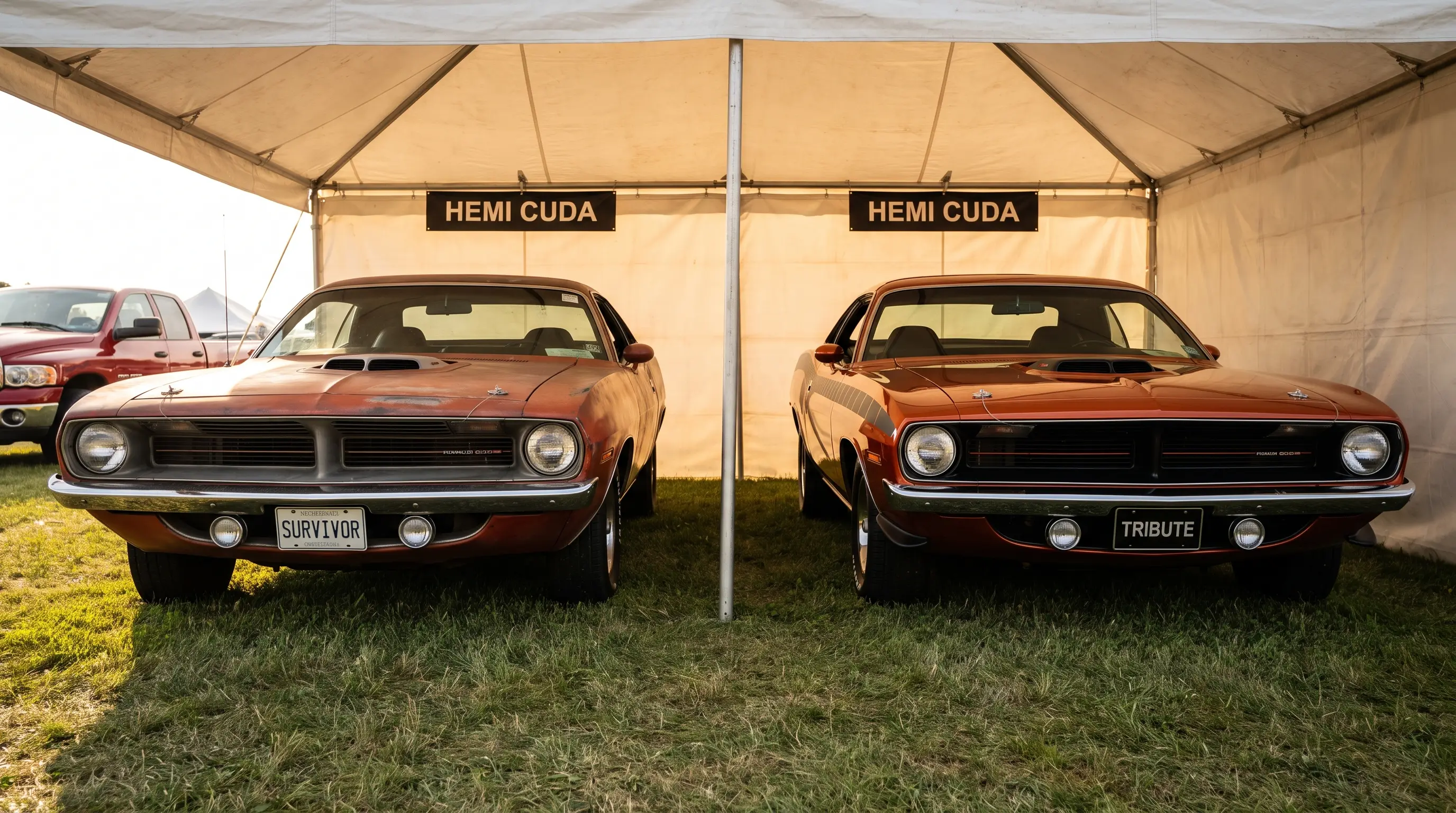
The reason is the tribute problem. Because the E-body Cuda was sold with lesser engines in large numbers, and because the bodies are visually identical, a plain 383 or 440 car can be converted into a Hemi look-alike with real skill. Some of these tributes are honest cars sold as what they are. Others are not. The gap between a genuine Hemi Cuda and a tribute is the single largest risk in the transaction, and it is why serious buyers commission marque experts to authenticate before money moves. The engine stampings, the date codes, and the broadcast sheet either agree or they do not.
"I appraise the file before I appraise the car. On a Hemi Cuda the broadcast sheet and the matching engine stampings are the value. Take those away and you have a beautiful E-body worth a fraction of the number on the estimate. The downside here is not depreciation, it is discovering the car is not what the seller believed."
- Marcus Feld
Why the engine became a legend
The value would not exist without the reputation, and the reputation was earned before these cars were built. The 426 Hemi arrived in 1964 as a racing engine, dominant in NASCAR to the point that sanctioning bodies moved to restrict it, and the street version that followed carried that competition aura into the showroom. By the time it reached the Cuda in 1970 the Hemi was already the most feared engine Chrysler made, and putting it in a compact-bodied pony car produced a machine whose performance outran the chassis beneath it.
That hemi cuda combination of a race-bred engine in a small, loud body is the cultural core of the car's appeal, and culture drives value as surely as scarcity does. The Hemi Cuda became shorthand for the peak of the muscle car era, the moment when American manufacturers put their most extreme engineering into cars a private buyer could order. When the era ended a year later, the Hemi Cuda became the symbol of what was lost. Collectors are not only buying a rare car. They are buying the last and loudest statement of a period that closed almost as soon as it opened, and that symbolic weight is priced into every genuine example.
The engine itself explains part of the mystique. The hemispherical combustion chambers that gave the Hemi its name produced enormous airflow and power, but they also made the engine tall, heavy, expensive and demanding. It was engineering pushed to a point that made little commercial sense in a street car, and that excess is exactly what collectors now prize. The Hemi was never the sensible choice. It was the maximum one, and the market for these cars is a market for the maximum.
Where the money has gone
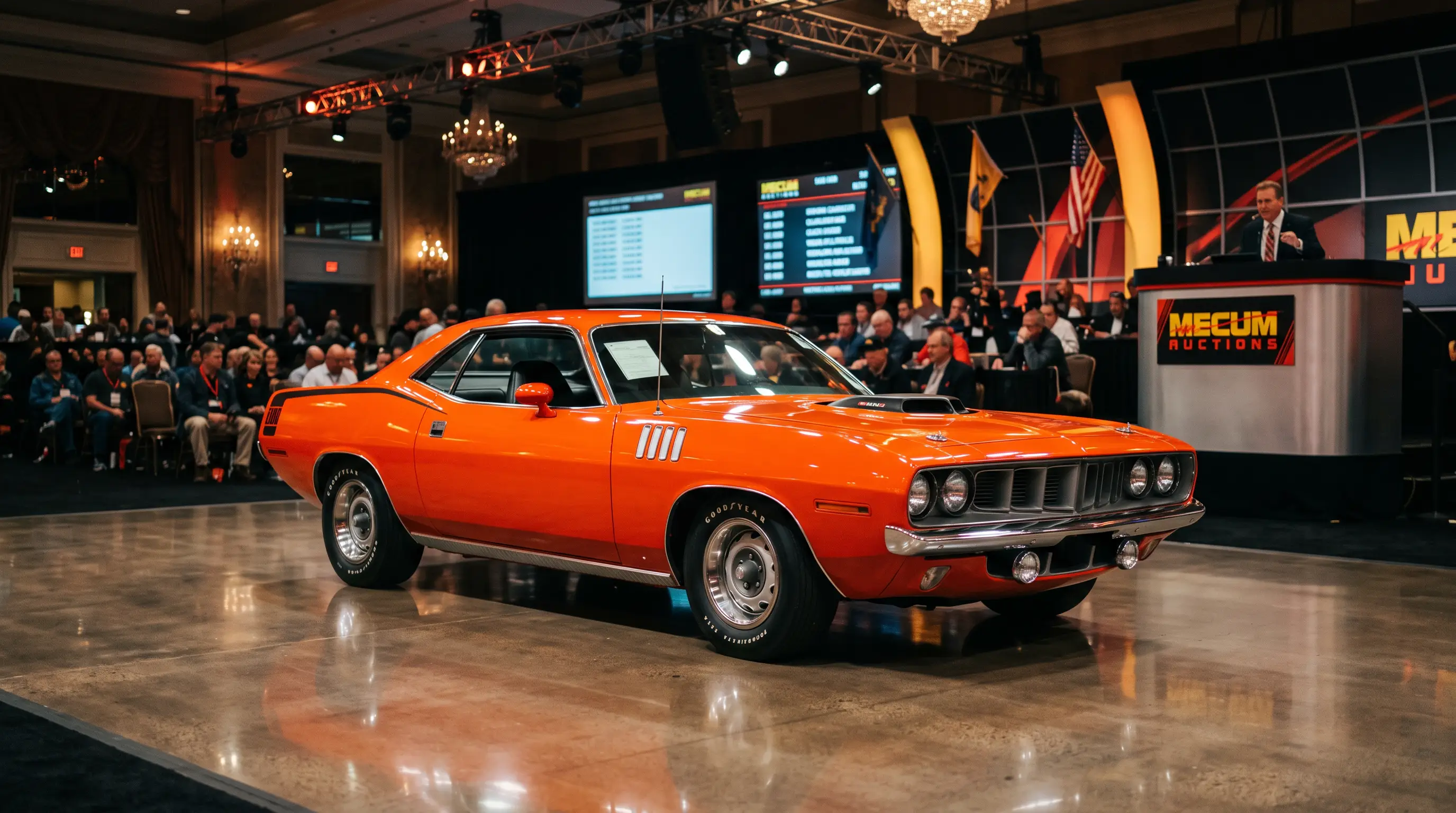
The auction record tells the story in figures. Documented 1971 Hemi Cuda convertibles have traded in the multiple millions, with the best example on record, a four-speed car that was one of just two originally delivered to the United States, selling for 3.5 million dollars at a 2014 Mecum auction. The 1970 hardtops, more numerous, occupy a lower but still substantial tier, typically deep into six figures and past a million for the strongest matching-numbers four-speed cars. The spread within the Hemi Cuda category is itself enormous, and it maps almost exactly onto year, body style and documentation.
Liquidity is the other half of the appraisal. These cars sell, and they sell publicly at the major auctions, which means price discovery is good and the market is real rather than theoretical. That is a genuine advantage over rarer but more obscure collectibles. The counterweight is volatility. A market driven by a small number of wealthy buyers can move sharply, and the Hemi Cuda has seen both surges and corrections. Anyone buying at these levels should look at the trend across several selling seasons, and the current find a classic Barracuda listings give a sense of where asking prices sit today.
The four-speed premium is a detail that surprises newcomers and matters to the appraisal. Among the 1970 hardtops, cars built with the manual transmission generally command more than their automatic counterparts, because the four-speed Hemi is regarded as the more engaging and the more desirable configuration. That is a preference the market has priced in over decades, and it means two otherwise identical Hemi Cudas can carry a meaningful spread based on the transmission alone. The lesson repeats across every axis of these cars. Value here is not a single number attached to the model. It is a set of specific choices, engine, body, year, transmission, color and documentation, each of which moves the figure, and the appraiser's task is to read all of them before offering an opinion.
Reading the downside before the upside
An appraiser's job is to name the risk first, and on a Hemi Cuda the risks are specific. The largest is authenticity, already covered, and it dwarfs everything else. The second is restoration quality. At these values a car is expected to be correct in detail, and a restoration that used incorrect components, wrong date-coded parts or non-original finishes will be penalized by knowledgeable buyers even when the car presents beautifully. The third is the engine itself. A Hemi that has been rebuilt with non-original internals, or worse a replacement block, changes the matching-numbers status and therefore the value.
The fourth risk is market concentration. Because so few buyers can transact at this level, resale depends on a thin pool of demand. That is manageable for a patient owner and dangerous for a forced seller. None of these risks argue against owning a Hemi Cuda. They argue for buying the best-documented car you can verify and treating the purchase as the acquisition of a paper trail that happens to come with a car attached.
There is a fifth consideration that sits outside the usual risk columns, which is provenance beyond the build sheet. A car with a known ownership history, period photographs, restoration records and, in the best cases, a documented competition or celebrity past carries value above an otherwise identical example with a thin file. At this level the story is part of the asset. Two matching-numbers cars can diverge in price because one arrives with a continuous, verifiable history and the other appears from an unknown collection with gaps in its record. The appraiser weighs that continuity the same way an art specialist weighs provenance, because at these figures the market treats the car as much as a historical document as a machine.
The clearest object lesson in the hobby
The Hemi Cuda is the car that taught a generation of collectors that documentation is worth more than paint. It is a small-production engine option on an otherwise ordinary body, and that fact alone created one of the widest value gaps in the entire American collector market. Everything an appraiser cares about is present in an unusually concentrated form: scarcity you can count, demand you can measure at public auction, and a downside that lives entirely in the question of authenticity.
For a buyer with the means and the discipline, it remains one of the blue-chip names in the hobby, provided the file is clean. The engine option is what made it, and the paperwork is what protects it. There is more from this era worth studying in the more from this era chapter, but if the question is which single Plymouth carries the most value in the fewest cars, the Hemi Cuda is the answer, and the reason is written on the broadcast sheet.
Sources and notes
- Plymouth Barracuda - Wikipedia
- 1970 Plymouth Hemi Cuda - Supercars.net
- 1971 Plymouth Hemi Cuda - Supercars.net
- The Unicorns of Auburn Hills: 1970-1971 Hemi Cuda Convertibles - Classic Industries
- Record $3.5 Million for 1971 Hemi Cuda Convertible - Supercars.net
- 1971 Plymouth Hemi Cuda Convertible Sold for Record $3.5 Million - Fox News