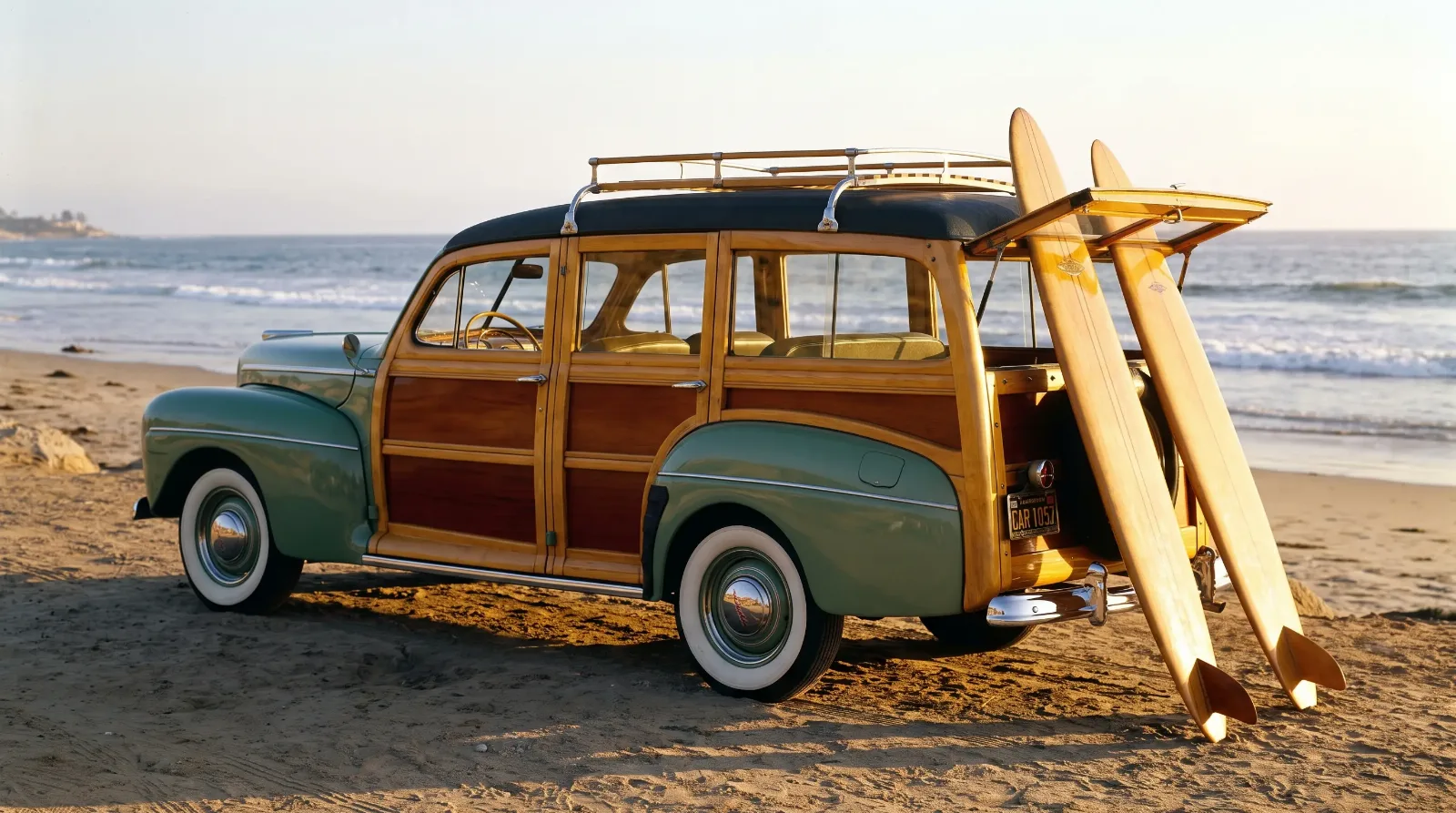
There is a photograph, the kind every beach town seems to have a dozen versions of, of a station wagon parked at the edge of the sand, its wood panels catching the late afternoon light, surfboards leaning against the tailgate. The image has become so familiar it risks feeling like a cliché, but the car in it was never manufactured to be a symbol. It was built, quite literally, by hand, panel by panel, in an era when a wagon's wooden body was still a genuine structural and aesthetic choice rather than a styling reference to one.
The postwar woodie wagon's golden era lasted only a handful of years, roughly the back half of the 1940s into the early 1950s, before steel construction made the wood-bodied wagon commercially obsolete. That brief window is exactly why these cars carry the weight they do now. They are not a long-running tradition. They are a narrow, specific moment, built at real cost by real craftsmen, that ended almost as soon as it reached its fullest expression.
Wood as structure, not decoration
Understanding a genuine woodie means understanding that the wood was not applied to a steel body the way later "woodgrain" wagons used vinyl decals. On these cars, maple, ash, mahogany, and other hardwoods formed real structural panels, framed and fitted by craftsmen who had often trained in furniture making or boatbuilding before the auto industry hired them. Body shops attached to manufacturers like Ford maintained sawmills and specialized wood shops, an arrangement that looked almost anachronistic even at the time, a handcraft operation embedded inside a mass-production industry.
That construction method came with real costs. Wood requires maintenance that steel does not, varnish reapplied, joints checked and tightened, panels protected from moisture that steel bodies never had to worry about. Owners who bought a woodie new were signing up for a car that demanded more of them than an ordinary sedan, and that demand is part of why so many woodies were eventually neglected once cheaper steel wagons arrived and the wood began to feel like a burden rather than a feature.
The species of wood mattered too. Maple and ash were both favored for structural framing because of their combination of strength and flexibility, while mahogany or birch veneer panels filled in the flat surfaces, chosen as much for grain pattern as for durability. A dealer selling a new woodie in 1947 was, in effect, also selling a piece of cabinetry, and period sales literature leaned into that comparison openly, describing the wagons in language borrowed from fine furniture rather than the usual automotive copy about power and comfort.
Why the era ended so quickly
All-steel wagon construction arrived by the early 1950s, offering lower cost, less maintenance, and better durability with none of the wood's structural fussiness. From a manufacturing standpoint, the decision was not close. Wood bodies required skilled labor that steel stamping did not, and as postwar demand pushed automakers toward higher volume production, the labor-intensive wood shop became a bottleneck rather than a selling point.
What survived from the woodie era was mostly aesthetic, wood-look trim applied to steel bodies in later decades, a nostalgic reference to a construction method the industry had already abandoned. That later imitation is worth knowing about mainly so you can tell it apart from the real thing. A genuine structural woodie from the true postwar window is a fundamentally different object than a wood-trimmed steel wagon from a later decade, even when the two look similar from across a parking lot.
What to look for in a genuine example
Authenticity on a woodie comes down largely to construction. Structural wood panels form actual load-bearing parts of the body, with visible joinery, real wood grain rather than a printed pattern, and a build quality that reflects craftsmanship rather than assembly-line stamping. Manufacturers varied in how much of the body was genuine wood versus steel with wood accents, so knowing the specific model's factory configuration matters before evaluating an individual car.
Condition assessment on these cars is its own specialty. Wood rot, hidden behind trim or beneath old varnish, can be extensive without being visible at a glance, and a full structural restoration of a wood body is a serious undertaking that few generalist restoration shops handle well. Buyers should seek out a car with documented, ongoing wood maintenance rather than one that looks merely presentable in photographs.
A careful inspection means checking joints for movement, probing suspect areas with gentle pressure rather than a sharp tool, and looking closely at any spot where two panels meet, since water tends to find its way into seams before anything else. A car that has spent decades in a dry climate is, all else being equal, a much better restoration prospect than one that lived near the coast, where humidity and salt air accelerate wood deterioration in ways that are not always obvious from the outside.
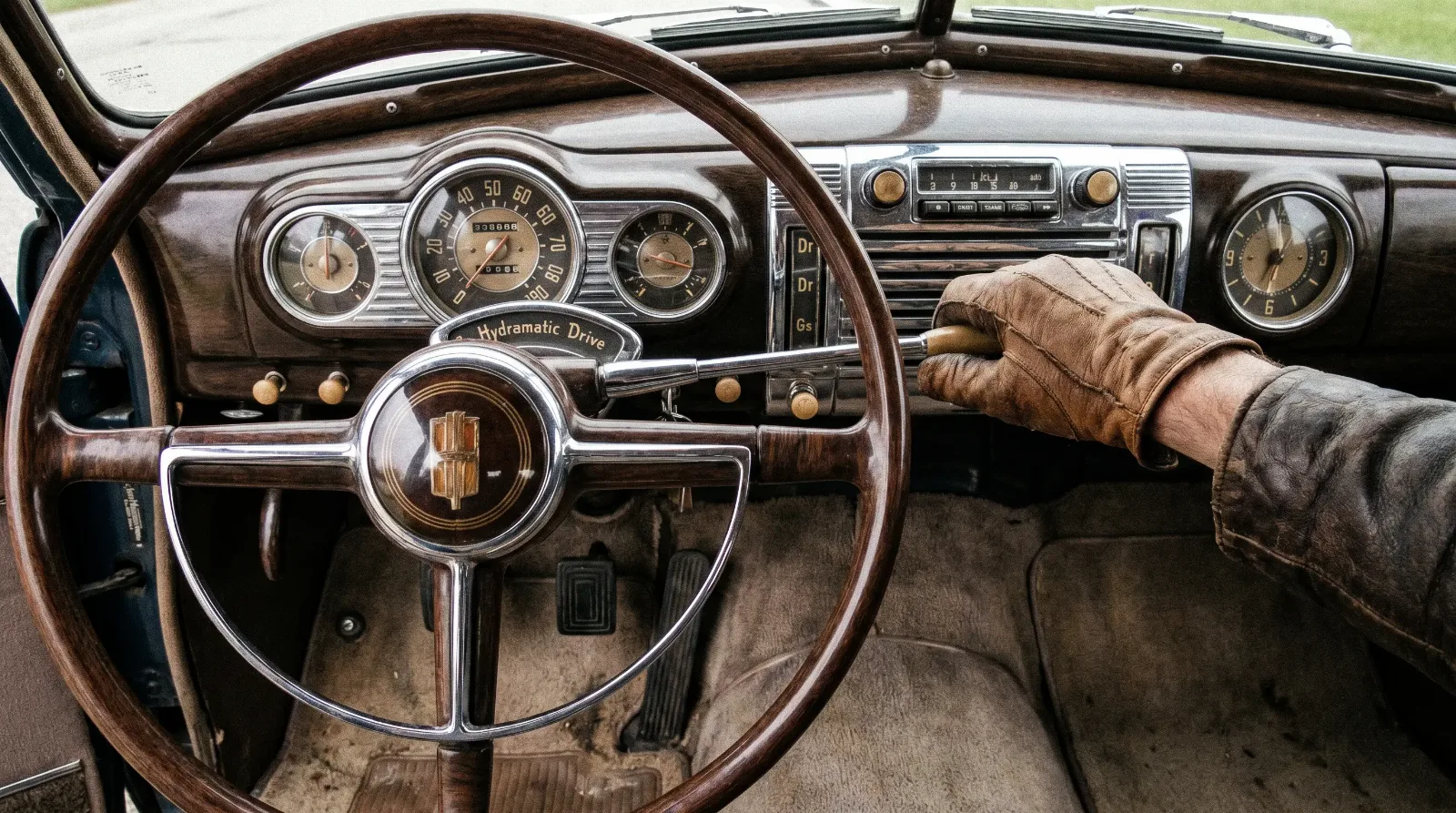
The same postwar years that produced these wagons also brought other significant mechanical changes to American cars, including the automatic transmissions that were just beginning to reach broader adoption. That story continues in keep reading, which picks up the mechanical side of the decade this wagon era belongs to.
"A woodie is not a car with wood on it. It is a piece of furniture that happens to have an engine, built by people who understood wood the way a cabinetmaker does, and that changes everything about how you should think about caring for one."
— Nora Beckett
A brief, handmade chapter
The postwar woodie wagon's window was short enough that it can feel almost accidental, a few years when craft-built wood bodies and postwar prosperity happened to overlap before steel construction closed the door. That brevity is precisely what makes surviving examples worth the trouble they demand. They represent a construction philosophy the industry never returned to at scale, a handmade interlude inside a story otherwise defined by mass production, a theme explored further alongside other coachbuilt traditions in the next story, and covered in fuller context in the 1940s woodie wagons guide.