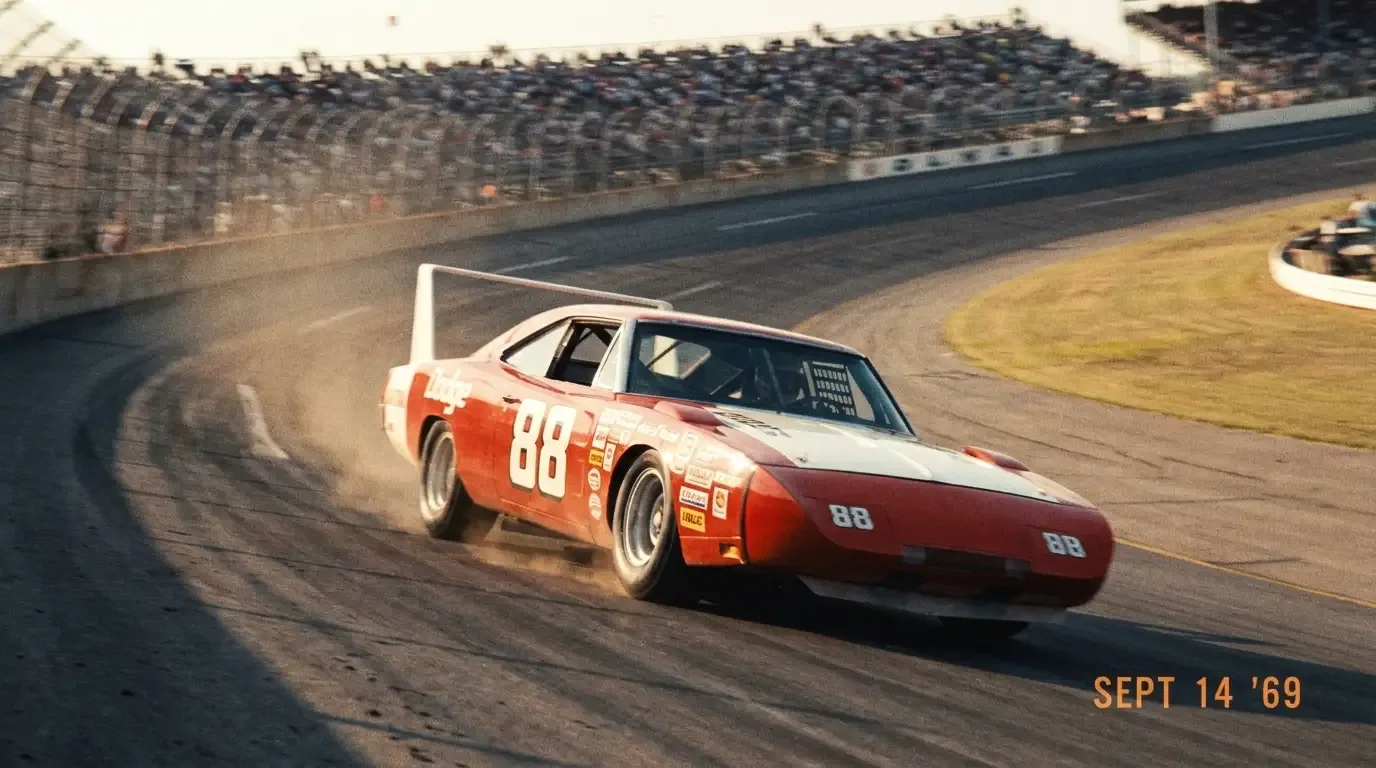
The blower looks great on the invoice. On the dyno it made twelve more horsepower than the combo that cost a third as much. That's the number that matters, and it's the same lesson that applies to the two engines Dodge actually put in the dodge charger daytona in 1969. One got all the attention. The other one is the car most buyers actually ended up with.
The 426 Hemi was the headline, not the volume seller
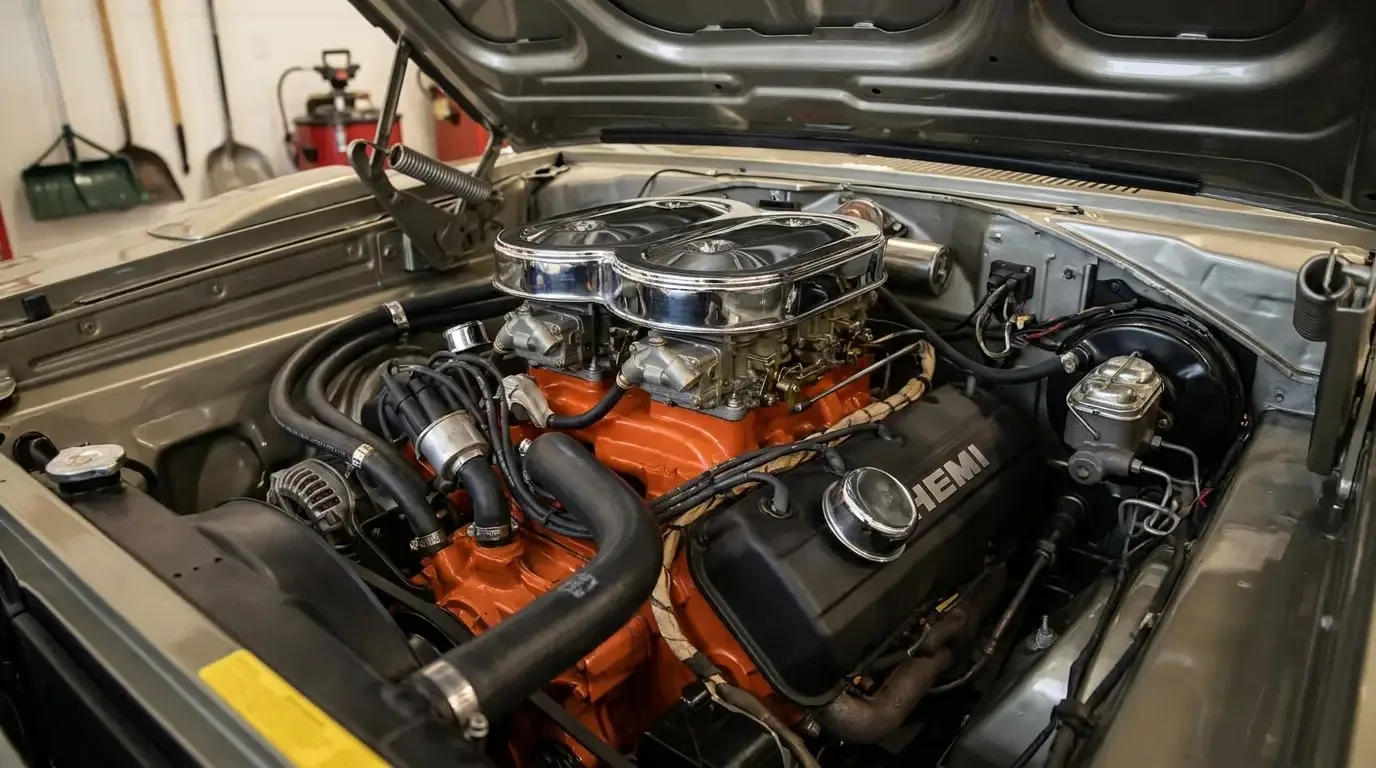
Dodge rated the 426 Hemi at 425 hp and 490 lb-ft of torque, numbers that were already understated by factory convention in that era, aimed more at insurance and racing classification than physical reality on a dyno. Two aluminum-topped hemispherical combustion chambers, dual four-barrel carburetors, and a forged bottom end built for sustained high-rpm racing use made this the engine NASCAR cared about and the one every magazine cover wanted.
The reality on the street was blunter. The Hemi was heavy, thirsty, and demanding to keep in tune, and it added a real premium to the sticker price. Most Daytona buyers in 1969 were not shopping for a NASCAR-spec engine they'd rarely use to its potential on public roads. That's why Hemi cars ended up as the minority build within an already tiny production run: exactly 70 units out of the 503 built.
The 440 Magnum was the engine that actually sold
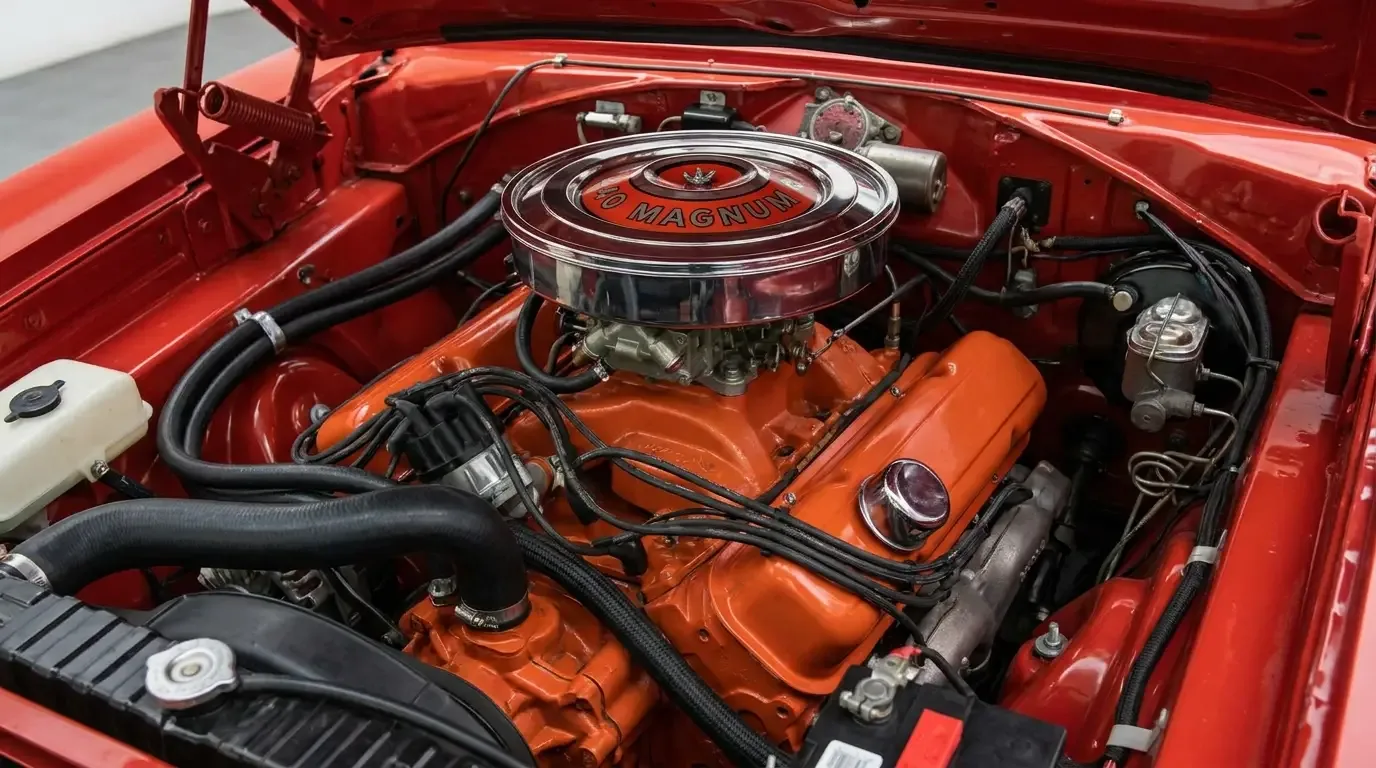
Rated at 375 hp and 480 lb-ft of torque, the 440 Magnum used a single four-barrel carburetor and a simpler valvetrain than the Hemi, which made it cheaper to build, cheaper to option, and far easier to keep running for an owner who wanted a fast street car rather than a race car with plates. The torque curve on the 440 came in lower and broader, which in practice made it the more usable engine for everyday driving, something the peaky, high-rpm-focused Hemi never prioritized.
Most surviving Daytonas on the market today carry the 440, not because it was the better engine on paper, but because it was the engine Dodge actually sold in volume. A 440 car is not a consolation prize. It's the Daytona that most period buyers chose with their own money, when the Hemi premium was sitting right there as an option and most people still passed on it.
The 440 Six Pack myth: it was never a factory Daytona option
Here is where a lot of bench-racing goes wrong. The 440 Six Pack, three two-barrel carburetors and a 390 hp rating, was one of Mopar's headline performance packages in 1969 and 1970, showing up on cars like the A12 Super Bee and Road Runner and later on the 1970 Superbird. But it was never a factory-order option on the 1969 Charger Daytona. Every factory Daytona left the line with either the 440 Magnum four-barrel or the 426 Hemi, full stop.
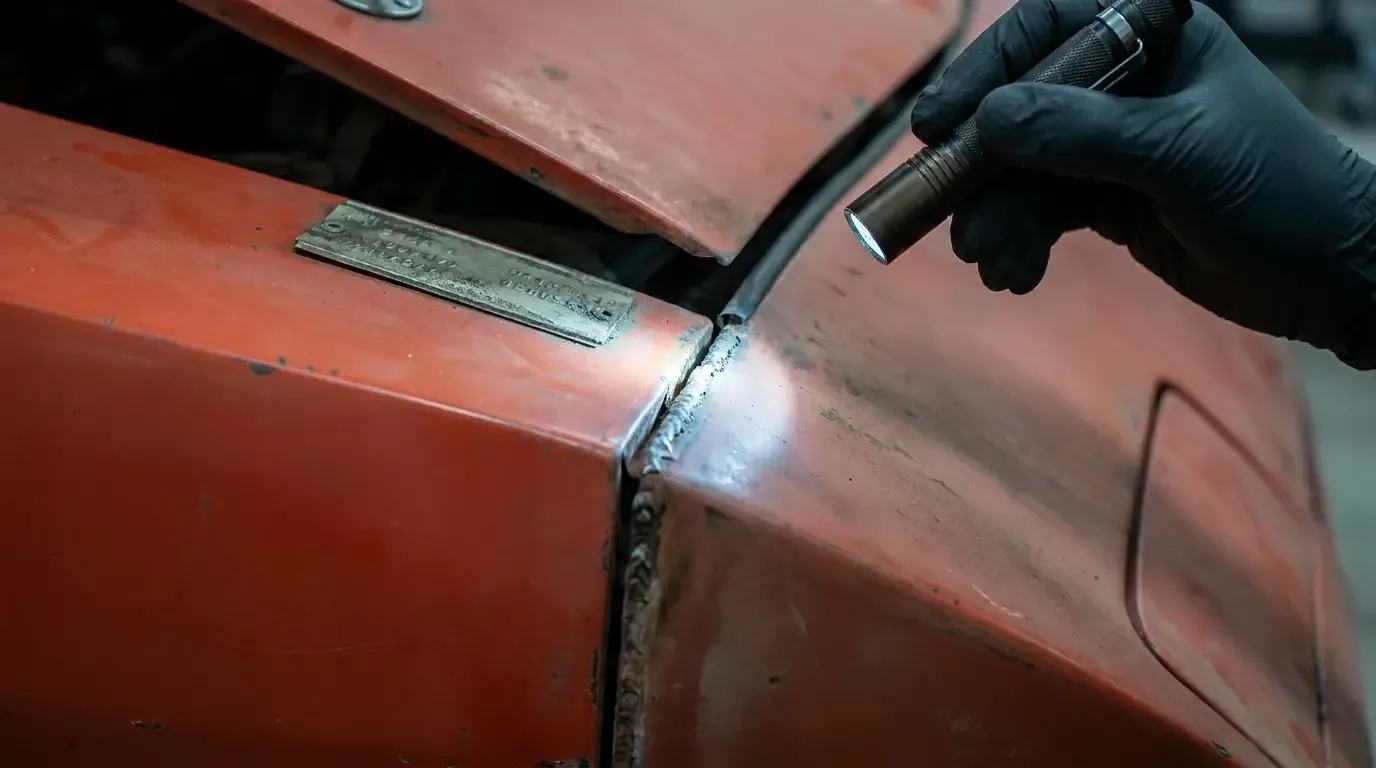
That distinction matters for authentication. A Daytona wearing a Six Pack setup today had it added by a dealer or a later owner, not by Chrysler's build sheet. One period example is documented as a dealer-installed Six Pack car, which is a genuine curiosity but the exception that proves the rule. If a seller presents a "factory 440 Six Pack Daytona," the broadcast sheet will not back it up, because that box did not exist to check in 1969.
| Engine | Factory hp rating | Torque | Carburetion | Approx. share of production |
|---|---|---|---|---|
| 426 Hemi | 425 hp | 490 lb-ft | Dual 4-barrel | 70 cars (~14%) |
| 440 Magnum | 375 hp | 480 lb-ft | Single 4-barrel | 433 cars (~86%) |
| 440 Six Pack | 390 hp | - | Triple 2-barrel | Not a factory Daytona option |
Why the numbers on the sheet never told the whole story
Chrysler's factory horsepower ratings across this entire era were shaped as much by insurance actuaries and marketing departments as by an engine dyno. The Hemi's 425 hp figure gets treated skeptically by most serious researchers today, and period-correct dyno pulls, where they exist, tend to back that skepticism up. None of that changes the practical hierarchy though. The Hemi still made more real power than the 440 in every configuration, it just made it further up the rev range, in a band most street drivers used rarely.
That's the part that gets lost in bench-racing arguments about which engine was "better." Better for a quarter-mile pass at a strip on a Saturday is a different answer than better for a Daytona owner driving the car to work through a Michigan winter in 1971. The Hemi wins the first argument decisively. The 440 Magnum, boring as that sounds next to a Hemi badge, won the second one by a landslide, which is exactly why it's the engine parked in most Daytona garages today.
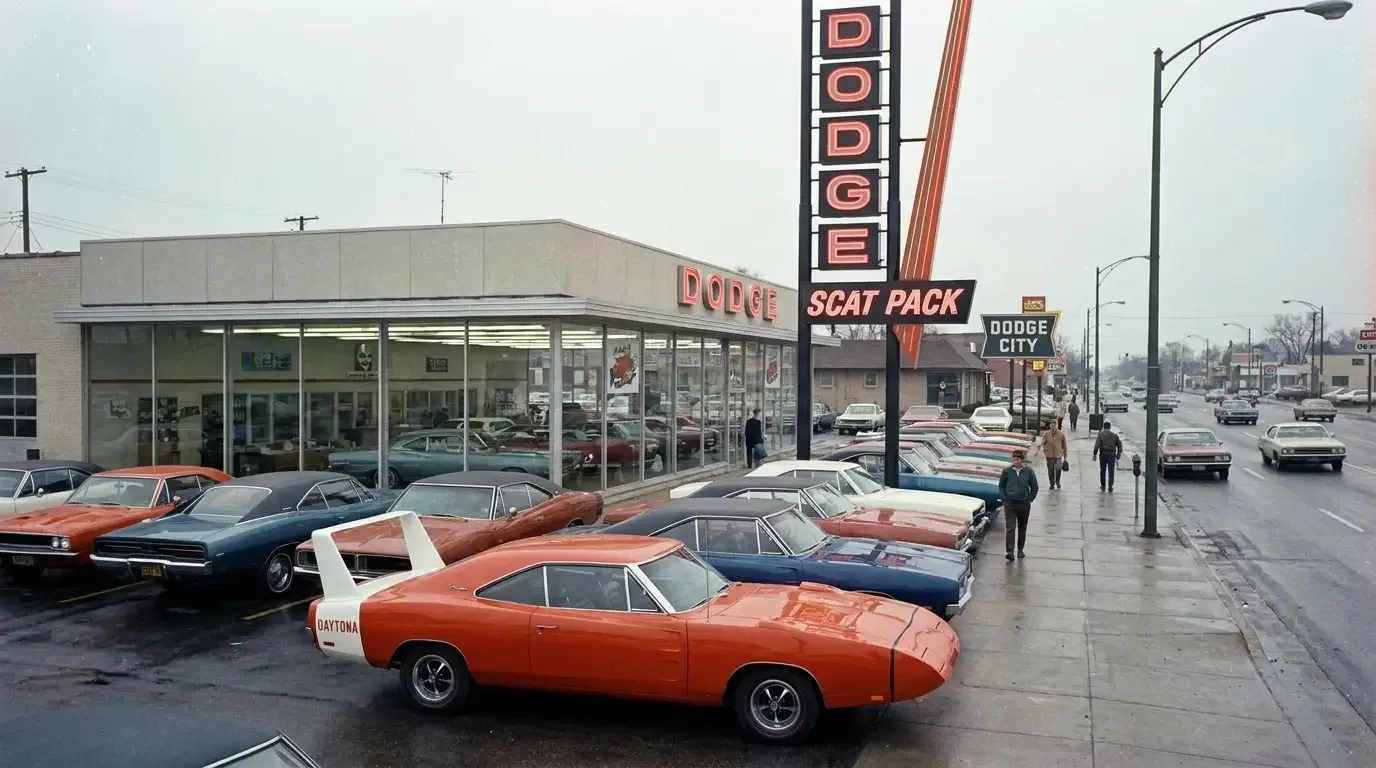
For anyone trying to figure out where the Daytona sits inside the broader R/T lineage and how these engine choices connect to Dodge's wider performance strategy of the era, the full write-up lays out how the same engines carried across Dodge's other performance models. And for the part of this story most people skip entirely, the street cars that got stuck sitting on dealer lots because buyers weren't ready for a race car with a license plate, that's covered directly in the Charger Daytona Street Car story.
"The 425 hp number on the Hemi sheet was never the real number, everybody in the business knew that. What mattered was which engine you'd actually want to drive to work on Monday, and for most buyers that wasn't the Hemi."
— Dan Reeves
What this means for buyers today
A documented, numbers-matching Hemi Daytona commands a steep premium over a 440 car, sometimes multiples of the price, purely on rarity and reputation. That premium is real and defensible given how few Hemi cars exist. But a 440 Magnum Daytona is not a lesser car in any meaningful sense beyond the badge and the price tag. It's the more common engine because it was the more sensible one, and for a driver-focused buyer rather than a pure investment play, it often makes the better ownership experience.
Sources and notes
- Dodge Charger Daytona - Wikipedia - confirmed 440 Magnum standard, 426 Hemi optional (70 of 503), Hemi rated 425 hp / 490 lb-ft.
- Ultimate Muscle Car - 1969 Daytona engine options - confirmed the 1969 Daytona could only be ordered with the 440 four-barrel or the 426 Hemi; the 440 Six Pack was not offered.
- Over-Drive Magazine - 1969 Dodge mid-size fact sheet - corroborated the 440 Magnum's 375 hp / 480 lb-ft rating and factory engine lineup.
- Hagerty - Dodge Daytona vs. Plymouth Superbird - confirmed the Six Pack belonged to the 1970 Superbird era, not the 1969 Daytona.
- autoevolution - Numbers-matching 1-of-503 Daytona - confirmed the 70 Hemi / 433 440 production split.