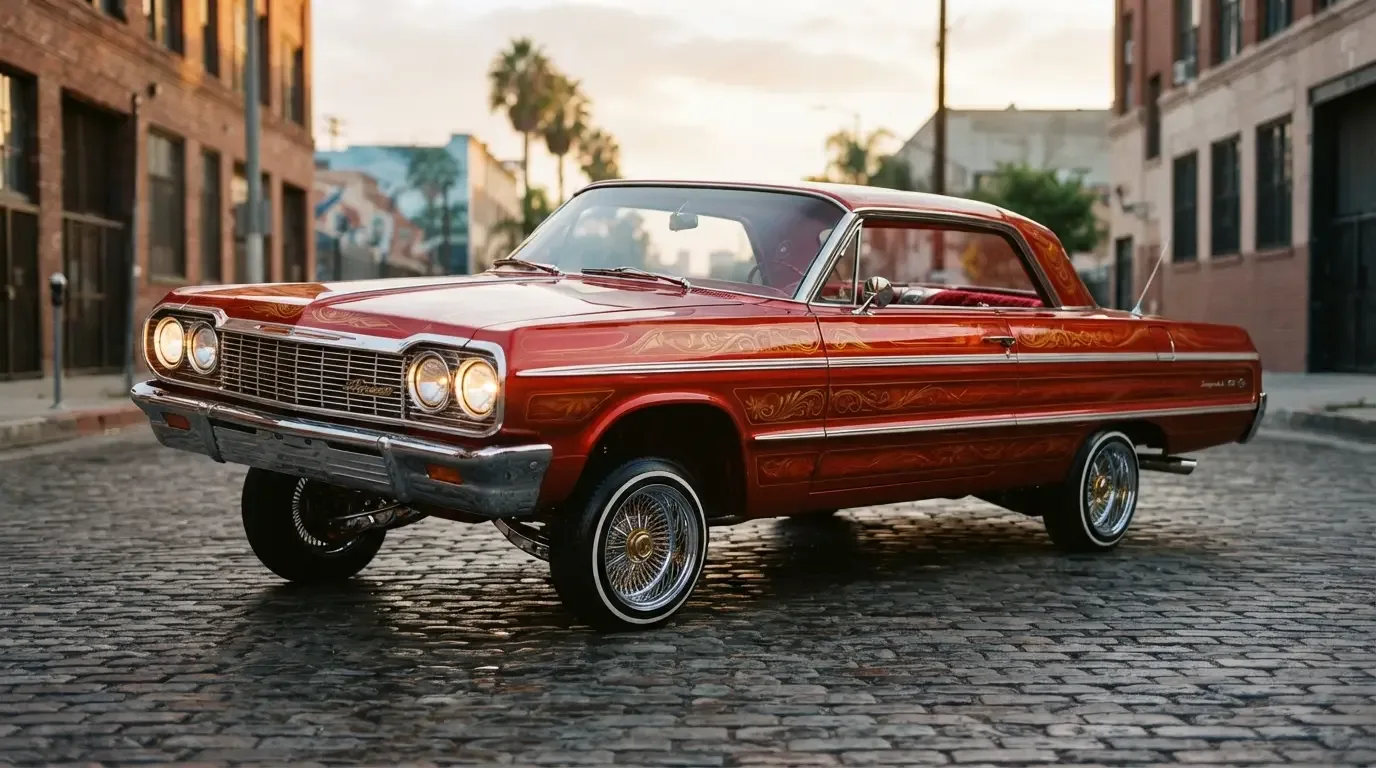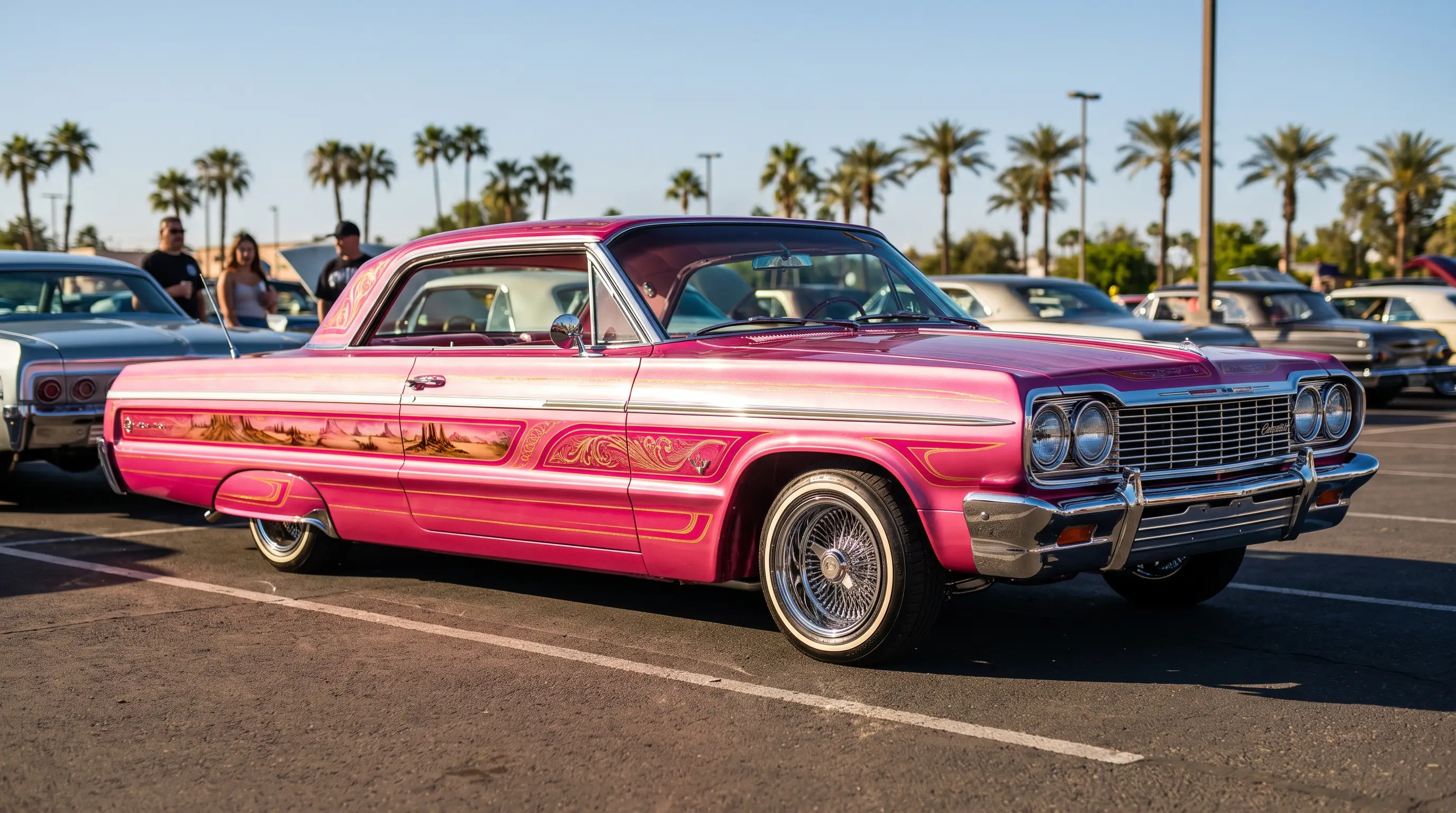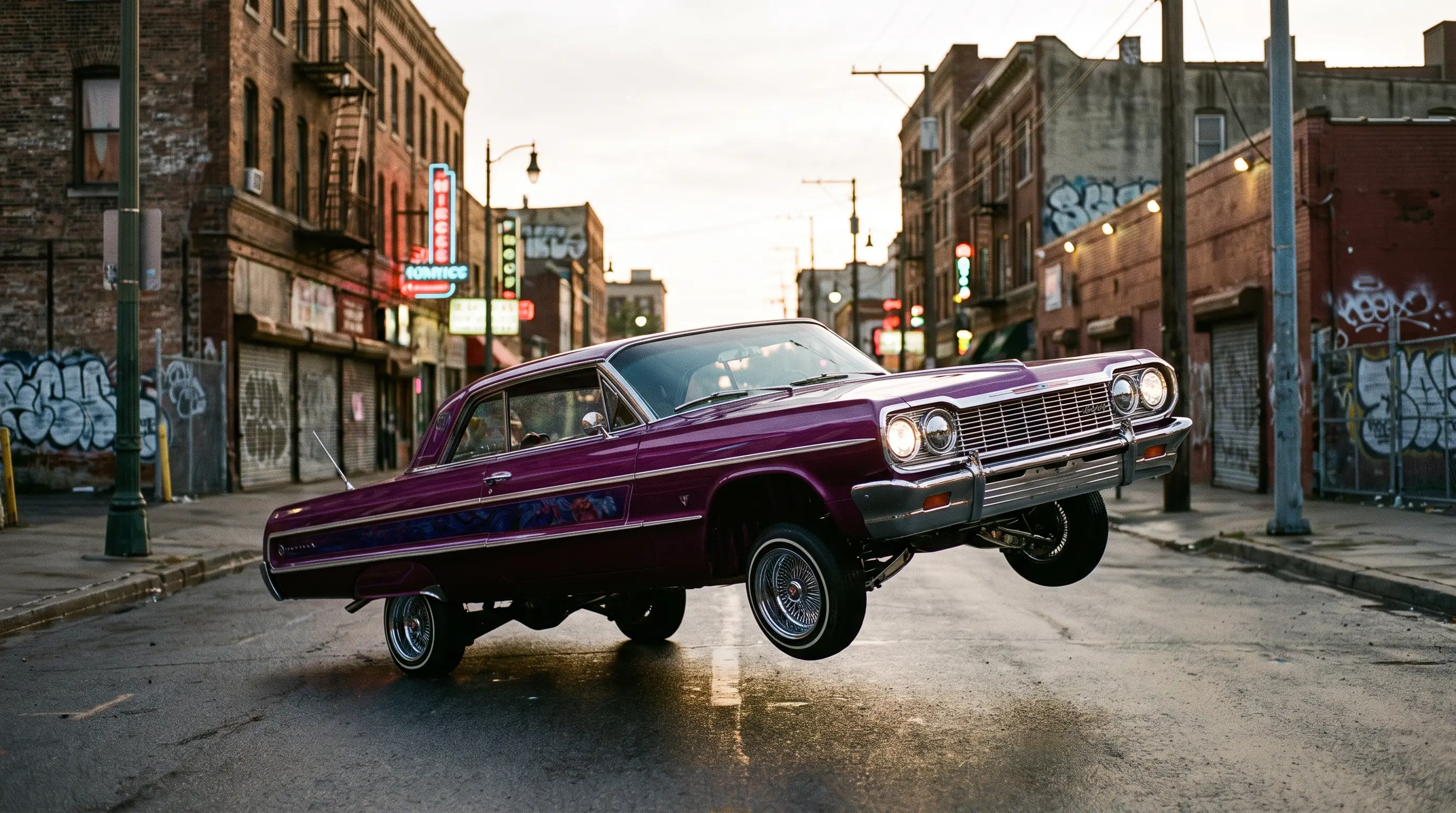
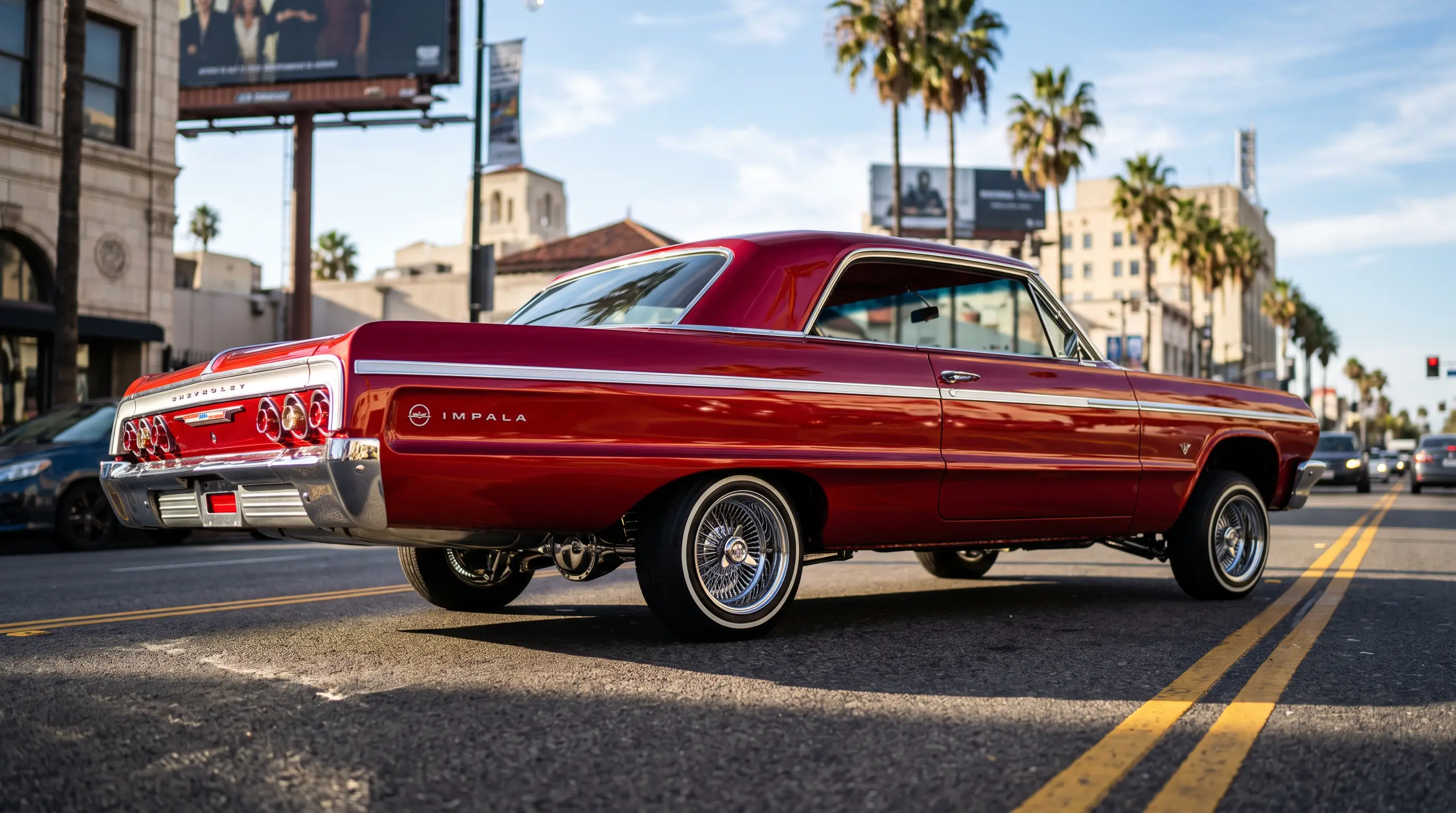
Ask ten people in the lowrider world which car sits at the top of the family tree and nine of them say the 1964 Impala without pausing to think. The 1964 Impala lowrider is not just a favorite body style, it is the car the whole culture measures itself against, the one that shows up on murals, on album covers, on t-shirts sold outside car shows from East LA to San Antonio. We did not choose this car by accident. It earned the crown, and understanding why means going back to what Chevrolet actually built that year.
The body that gave builders everything they needed
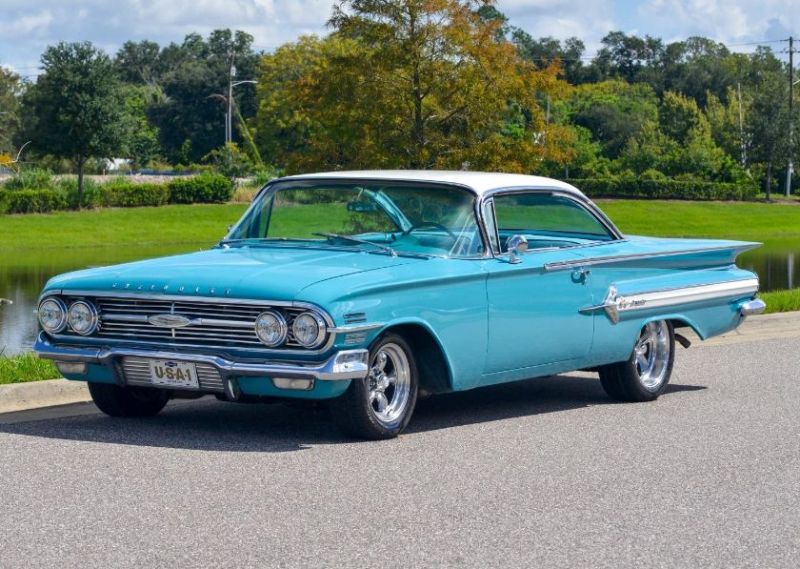
The 1964 full size Chevrolet has proportions that just work for what lowrider builders wanted to do with hydraulics and paint. The roofline is low, the trunk is long and flat, the fenders have just enough curve to carry a mural without looking cramped, and the frame underneath is the X-frame Chevrolet used across the full size line from 1958 through 1964, a design builders learned to box and brace so hydraulics setups could cycle without the body flexing. Compare it to the perimeter-framed 1965 and 1966 cars that followed, or the softer bodies from 1961 to 1963, and you see why builders kept coming back to 1964 specifically. It sits in the sweet spot, the last year of that particular chassis and body before Chevrolet switched to a perimeter frame for 1965.
We also cannot separate the car from timing. The 1964 Impala hit dealer lots right as customizing culture in Southern California was moving from mild custom work into the hydraulic era, and this Chevrolet became the canvas of choice for a whole generation of builders who were figuring out what the culture would look like for decades after. Every major club from that era had at least one 1964 Impala in the lineup, and most had several.
Why hydraulics and this body became inseparable
Hydraulic suspension systems need a solid platform to lift and drop without the body flexing or the frame cracking, and the 1964 Impala's full body-on-frame construction gave installers a foundation that held up to repeated cycling in a way lighter unibody cars never could, once builders reinforced the X-frame's open sides. Builders who tried other Chevrolets from the same era found that the 1964 rode the hop well, sat lower without scraping, and kept its shape under the stress of daily bouncing at car shows and cruises. That reputation spread by word of mouth long before anyone was writing it down for a magazine.
The clubs that made the reputation permanent
No car becomes an icon by sitting in a showroom. The 1964 Impala's status got built, literally, one car at a time by clubs across California, Texas, and the Southwest who chose it again and again for their showpieces. When a club's flagship car was a 1964 Impala with a deep candy paint job and a chrome undercarriage, every younger builder in that circle grew up wanting the same body style. That kind of generational handoff, older builders showing younger ones what the standard looks like, is exactly how the 1964 Impala went from a good choice to the only choice in a lot of circles.
We talk about this car like it invented lowriding, and that is not quite right. Customizing full size cars goes back further than 1964. What the Impala did was become the default answer once the culture matured past mild customs into deep hydraulics, murals, and the full show car treatment. It gave the culture a common language, a shared reference point that meant when someone said they were building an Impala, everyone knew roughly what era and what kind of build was coming.
"You can build a beautiful lowrider out of almost anything Chevrolet made in the sixties, but the 1964 is the one where the frame, the roofline, and the trunk all agree with what you are trying to do. That is not luck, that is why builders kept picking it."
- Hector Morales
What separates a real 1964 Impala lowrider from an imitation
As values climbed, more builders started chasing the look without understanding what made the original cars work. A genuine 1964 Impala lowrider build respects the proportions the factory gave it rather than fighting them, keeps the hydraulics tuned to the frame's actual limits instead of overloading it for social media clips, and treats the paint and interior as part of a whole statement rather than separate projects bolted together. We see plenty of cars wearing the body but missing the point, chasing a viral moment instead of the craft that built this reputation over sixty years.
The community has always policed this informally. Show up to a real car club meeting with a 1964 Impala that looks the part but cannot hold a stance or cycle its hydraulics cleanly, and you will hear about it, politely but directly. That standard is part of why the culture around this specific car stayed strong instead of fading into a costume version of itself.
If you want the fuller picture of how this all connects, our lowrider impala history lays out the decades in order, from the earliest customs through the hydraulics era into today's collector market. And if the 1964 is not quite your angle, a related story covers one of the most famous individual builds to come out of this exact era, a car that took everything this generation stood for and turned it into a rolling piece of history.
The color choices that became part of the identity
Paint on a 1964 Impala lowrider is never just a color decision, it is a statement about the builder and often about the family or club behind the car. Deep candy tones, layered over metallic bases and finished with a wet, mirror-deep clear coat, became the standard look because they photographed with a depth that flat colors could never match. Murals depicting religious imagery, family portraits, or neighborhood scenes turned the trunk lid and hood into something closer to a canvas than a body panel, and the 1964's flat, generous surfaces gave painters more room to work than almost anything else Chevrolet built that decade.
Interior work followed the same philosophy. Builders reupholstered these cars in tufted velour and pleated leather, added crushed velvet headliners, and wired custom lighting long before that kind of interior customization became common in any other part of the car hobby. A finished 1964 Impala lowrider interior often took as many hours as the paint and hydraulics combined, and that level of commitment is part of why these builds command respect from people who understand what actually went into them.
What the market looks like today
Clean, well documented 1964 Impalas built specifically for lowrider duty now command real money, often more than a comparable stock example in similar condition, because the market recognizes that a correctly executed hydraulic build is its own kind of craftsmanship, not a modification that hurts value. Builders and collectors alike are chasing the same handful of surviving cars with real club history attached to them, and that scarcity is only going to tighten as more of the original era's cars age out of active circulation.
For anyone looking to get into this specific corner of the hobby, patience matters more than speed. The right 1964 Impala, whether stock or already built, does not show up every week, and when a genuinely clean one does surface, it moves fast. If you want to see what is actually available right now rather than just reading about the past, take a look at Impalas for sale now and compare what is on the market against everything this piece has covered about what made this specific year the standard the whole culture still measures itself against.