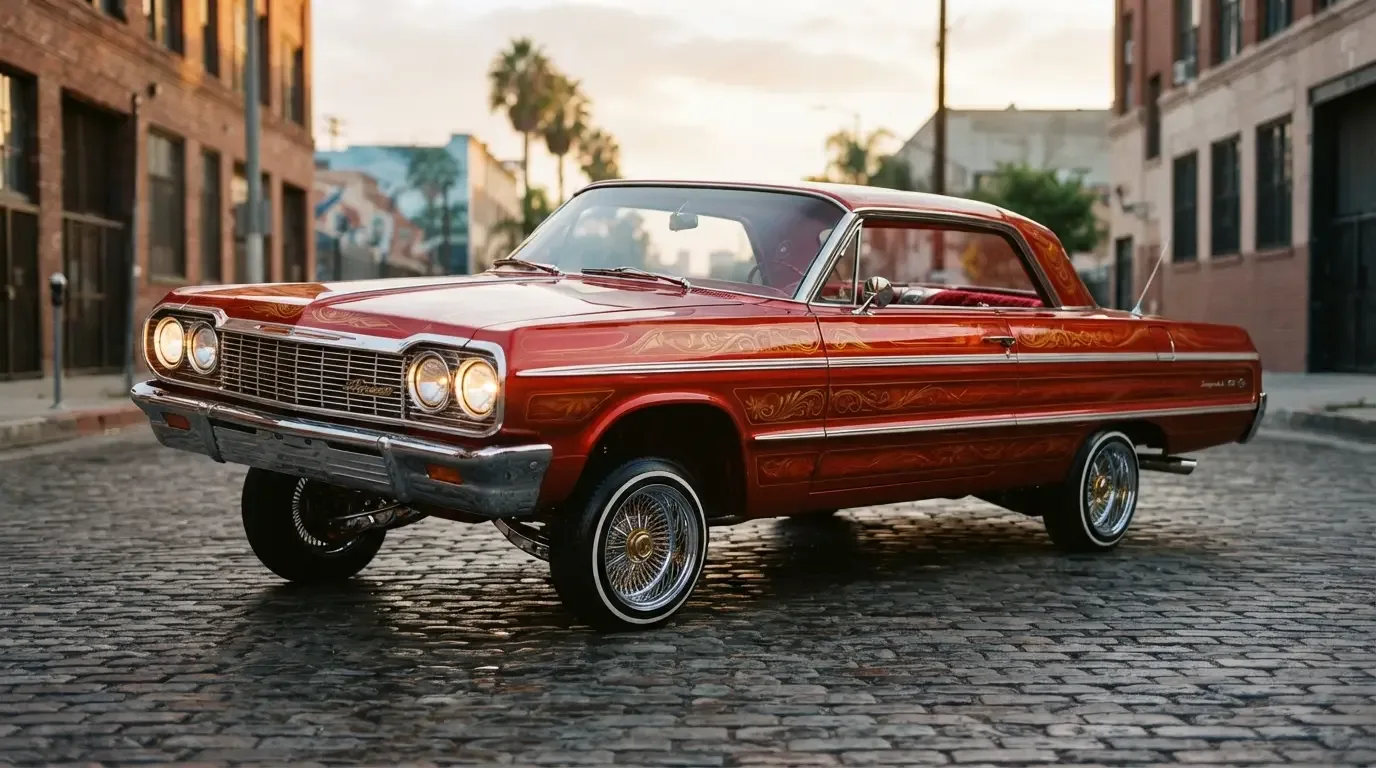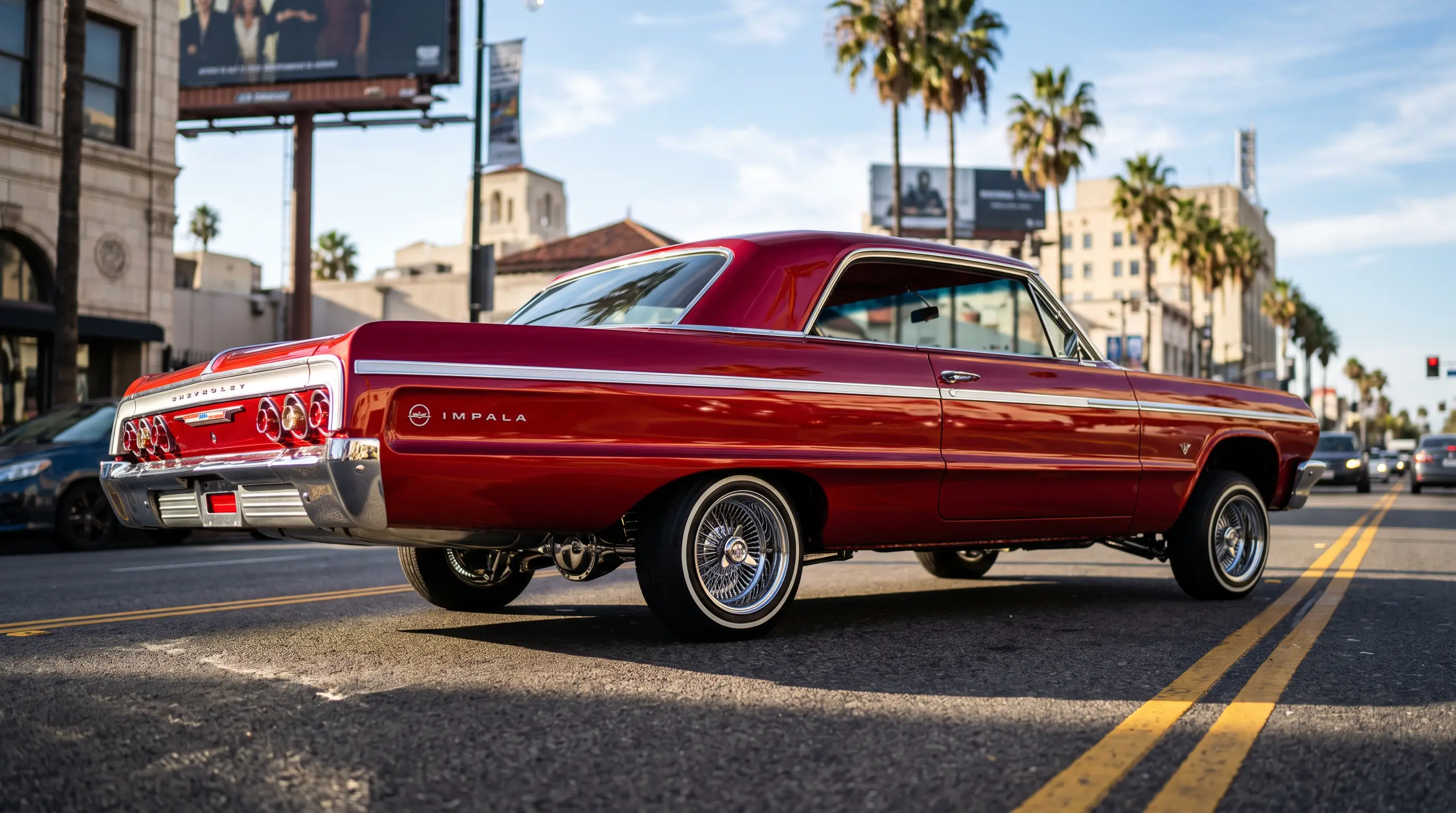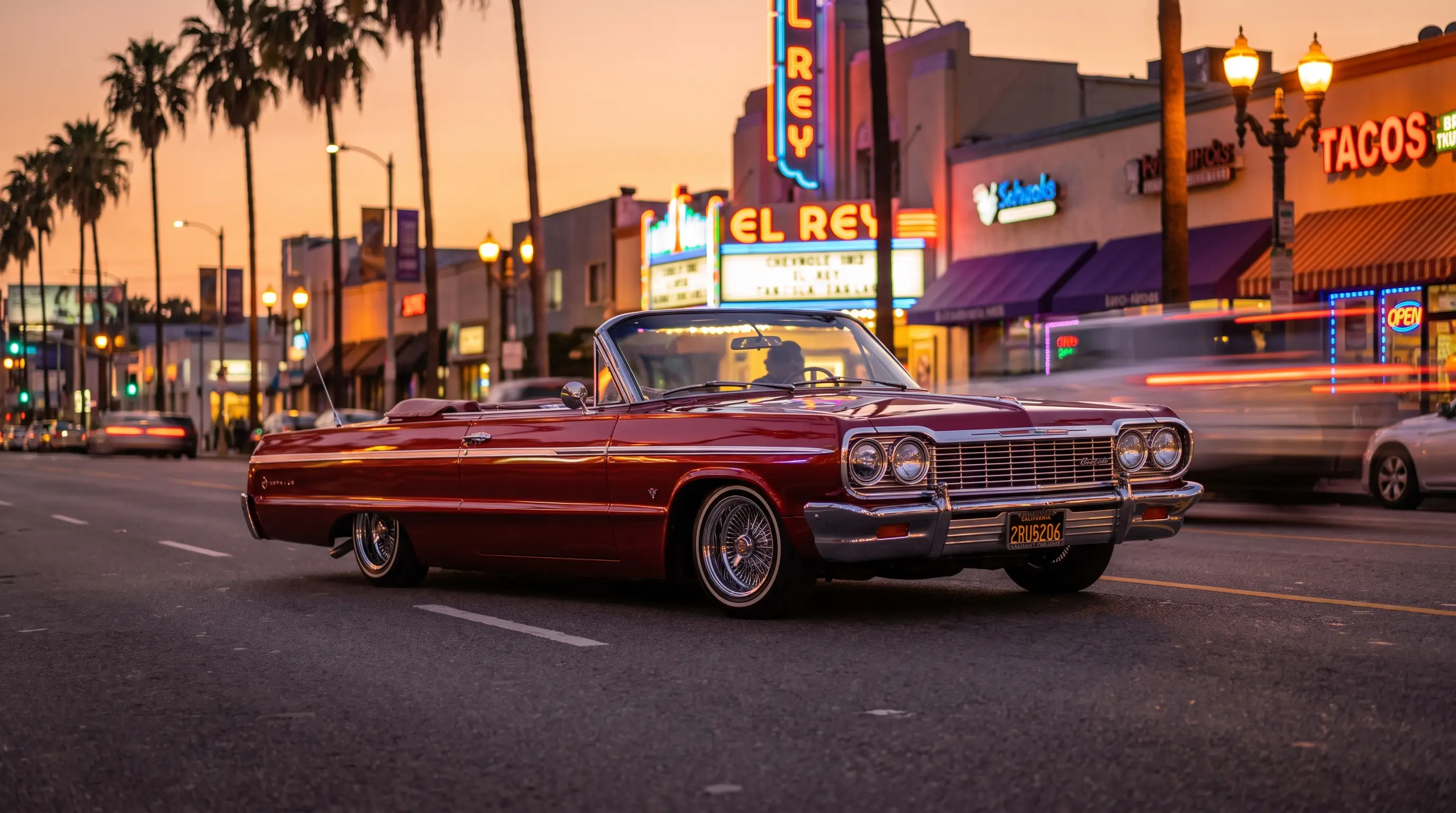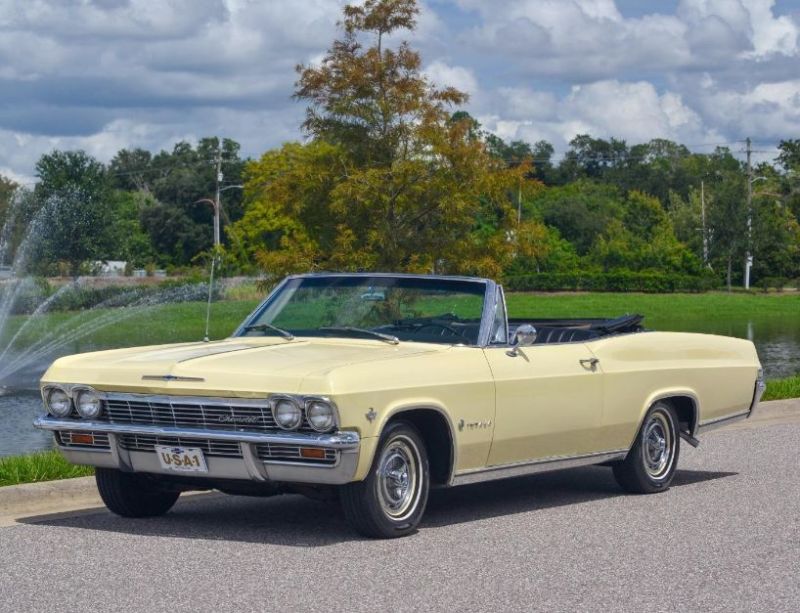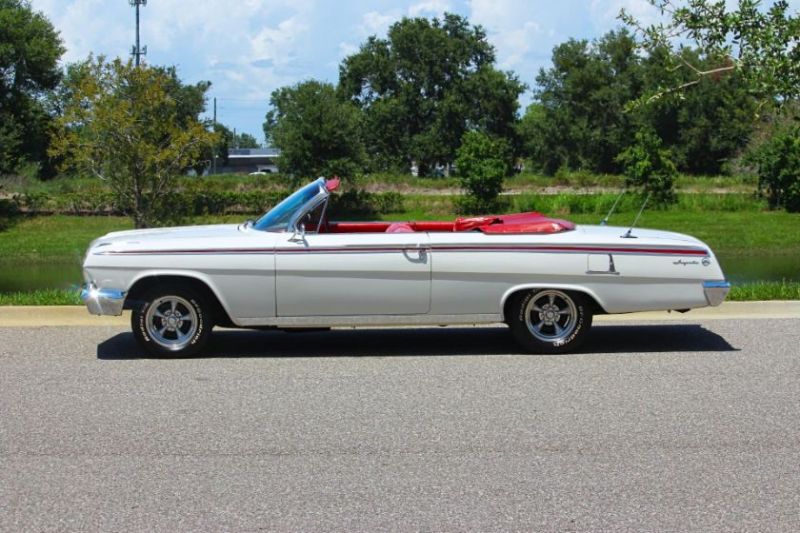
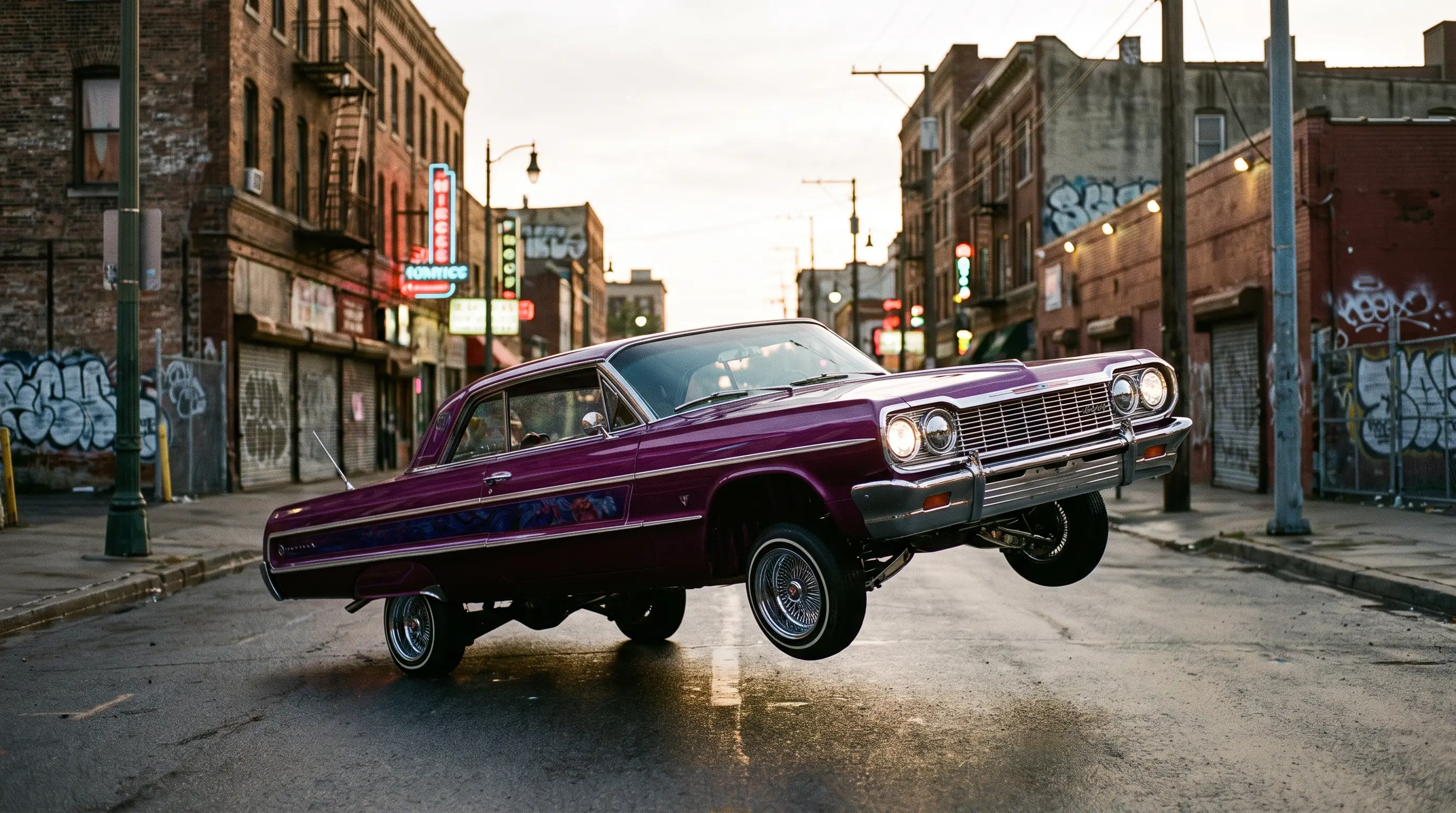
The first time most Americans outside California saw a lowrider hop on camera, it was almost certainly a Chevrolet Impala doing the hopping. A lowrider impala movies moment, hydraulics slamming a full-size body up and down while a crowd cheered off screen, became one of those images that transferred straight from local car culture into national pop culture with almost no translation needed. Directors did not have to explain what they were showing. The car did the explaining itself.
Early appearances that set the template
Boulevard Nights, released in 1979, is usually cited as the first major film to put lowrider culture, and the Impala specifically, in front of a wide audience rather than a local one. The film treated the cars not as background props but as characters in their own right, objects worth lingering on with the camera in a way most car movies of the era reserved for muscle cars or hot rods. That choice mattered. It told audiences the lowrider Impala deserved the same visual respect as anything coming out of Detroit's performance lineup, and it planted the template that later films would follow almost without exception.
How the 1990s cemented the image
By the time films like Mi Vida Loca and later American Me reached theaters, the lowrider Impala was no longer a novelty on screen, it was shorthand. A director could put one in a single establishing shot and the audience instantly understood setting, community, and tone without a line of dialogue. That kind of visual shorthand takes years to build, and the Impala earned it through repeated, consistent appearances across a decade of films that took the culture seriously rather than treating it as a punchline.
Why filmmakers kept reaching for the Impala specifically
Practical reasons drove a lot of these casting choices. The Impala's long, flat panels photographed cleanly under studio lighting, and its wide, low stance made hydraulic hops look dramatic on camera in a way a smaller or boxier car simply could not match. There was also a supply advantage. Impalas from the classic era were common enough that production teams could source multiple examples for a shoot, allowing stunt cars, hero cars, and backups without draining a budget on rare parts. A director wanting authenticity and reliability at the same time landed on the Impala almost by default.
The cultural roots that made these cars worth filming in the first place get more attention in the piece where you can read the background on how the scene developed long before Hollywood noticed it.
"A director does not choose a hero car by accident. They chose the Impala because it looked like it belonged in the story before a single line of script explained why."
- Patrick Walsh
What film got right, and what it flattened
Film treatment of the lowrider Impala was not always generous or accurate. Some productions leaned on the car purely as a visual cue for danger or gang affiliation, a shorthand that flattened a complex community into a single note. The more thoughtful films, by contrast, showed the craftsmanship, the family involvement, and the pride of ownership that actually drove the culture, using the same car to communicate something closer to the truth. The Impala ended up carrying both versions of that story simultaneously across different productions, which is part of why its screen legacy is more complicated than a simple highlight reel would suggest.
For readers wanting the slower, street-level version of that same story away from the camera, worth a look too covers how the actual cruising scene operated outside of any film production.
The lasting effect on how people picture the car
Decades after these films first hit theaters, the image they built has proven remarkably durable. Ask someone with no connection to the culture to picture a lowrider and there is a strong chance the mental image is a Chevrolet Impala, low to the ground, chrome wheels catching light, frame bouncing on hydraulics. That is not an accident of memory. It is the direct result of film treating the Impala as the defining vehicle of an entire movement, repeating that choice often enough across enough productions that it became the default image in the public imagination. Few cars get that kind of cultural staying power handed to them by an entire decade of cinema, and the Impala earned it through consistency rather than a single iconic moment.
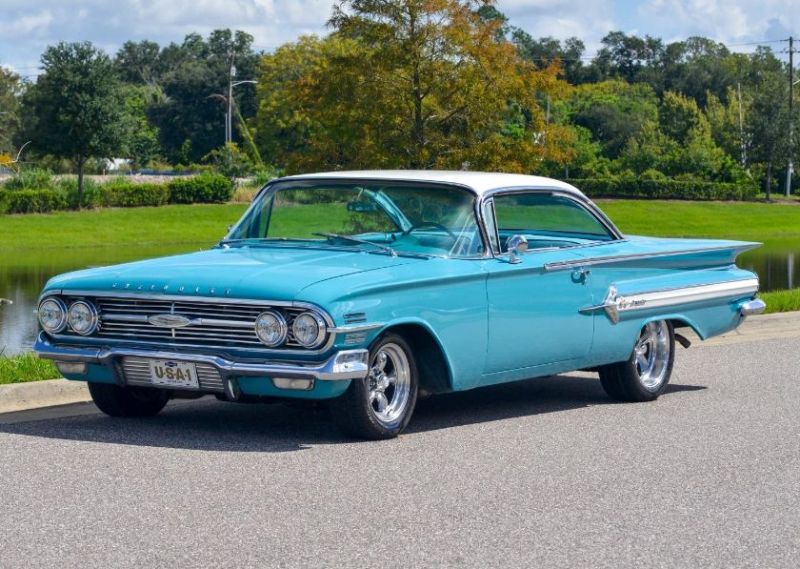
For anyone who watched those films and wanted the real thing rather than the screen version, classic Impalas on the market is a reasonable place to start looking, since the same body style that made directors reach for the car repeatedly is still out there for buyers today.
Music videos extended the reach even further
Film was not the only screen medium doing this work. Music videos through the late 1980s and into the 1990s picked up the same visual language, often borrowing the hopping Impala shot almost wholesale from earlier movies because it communicated so much in so little screen time. A director shooting a video with a modest budget could rent or borrow a single well-built Impala and get a shot that instantly signaled authenticity and street credibility, without needing elaborate sets or effects. That efficiency made the car a recurring fixture well beyond narrative film, spreading the same image through an entirely different audience that might never have watched Boulevard Nights or American Me in a theater.
The combined effect of film and music video appearances over roughly two decades did something that advertising alone could never have managed. It made the lowrider Impala instantly legible to people who had no direct connection to the culture that built it, turning a regional custom car tradition into a globally recognized image without the community itself needing to explain a thing.
What gets lost when a car becomes a symbol
There is a cost to that kind of recognition. Once an image becomes shorthand, it tends to flatten. A hopping Impala on screen says everything a director needs in a few seconds, but it says almost nothing about the hundreds of hours of bodywork, the specific club history behind a particular build, or the family that saved for years to fund a paint job done right. Film gave the culture visibility it never would have reached through car shows and magazine covers alone, but it also let audiences feel like they understood something they had only glimpsed for a few seconds of screen time. The real story, the one built from patience and craft rather than a single dramatic shot, still lives mostly with the people who actually built these cars, not with the directors who filmed them.