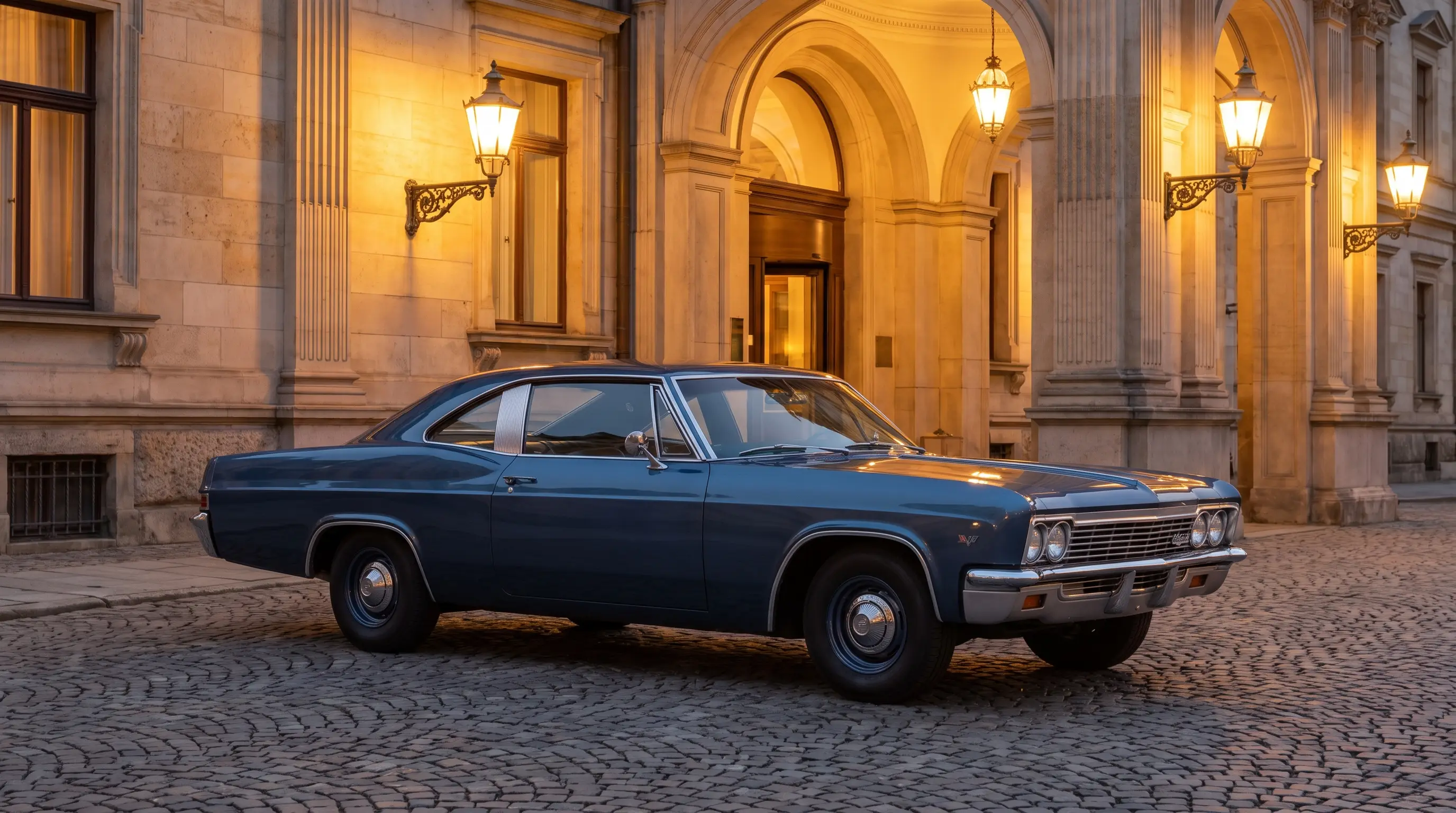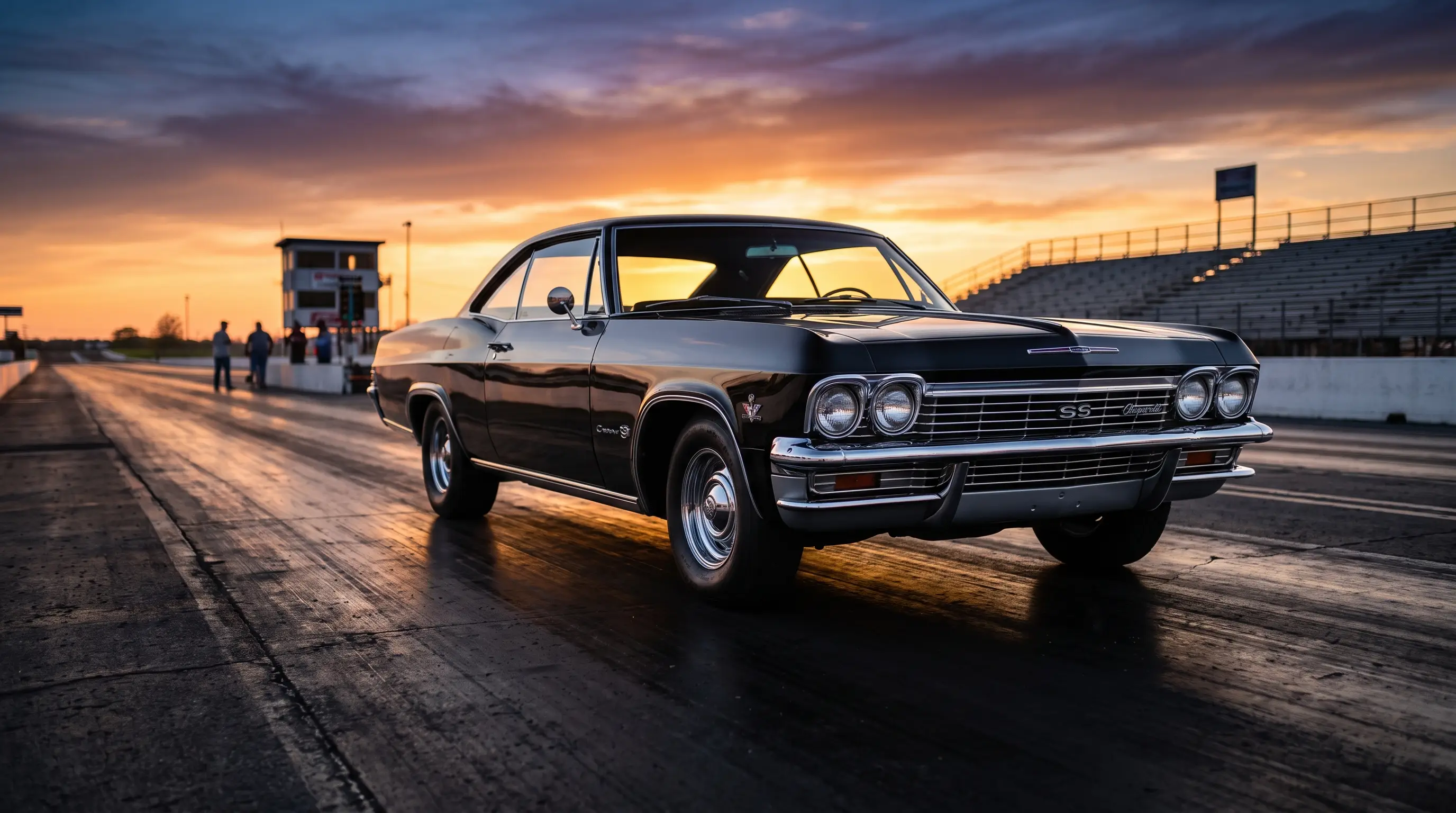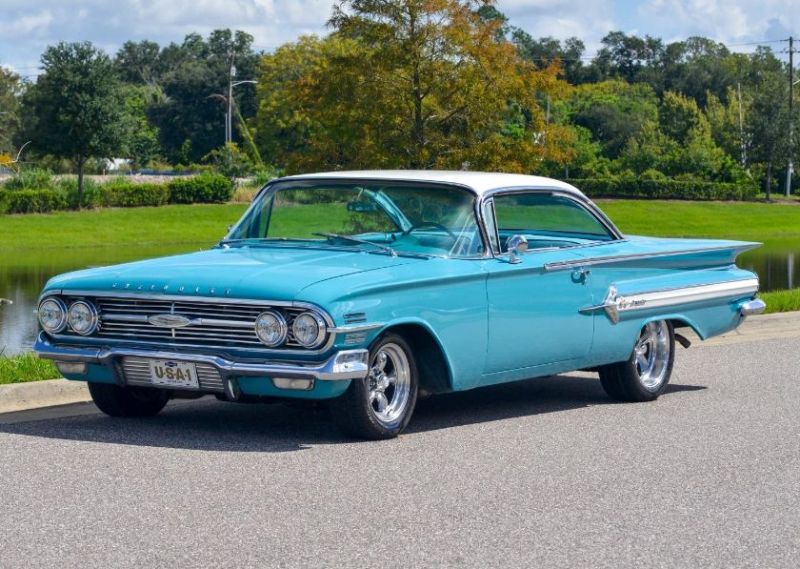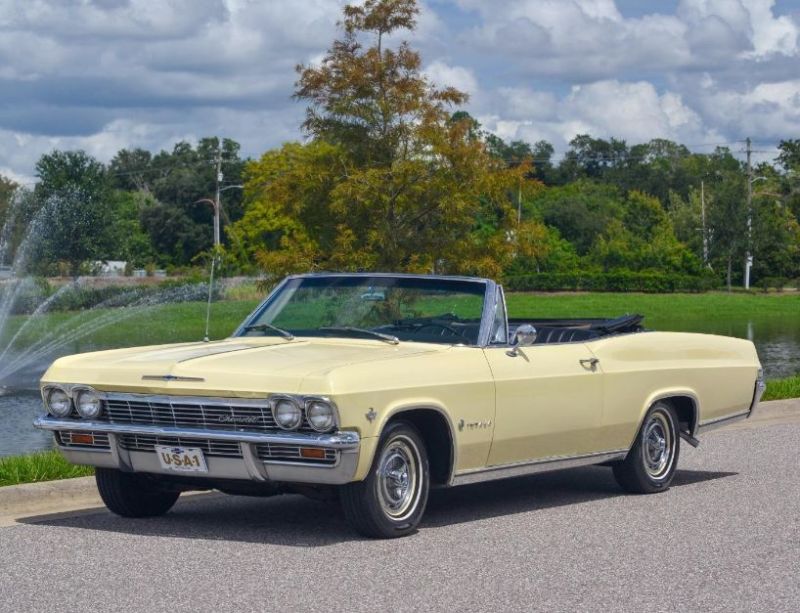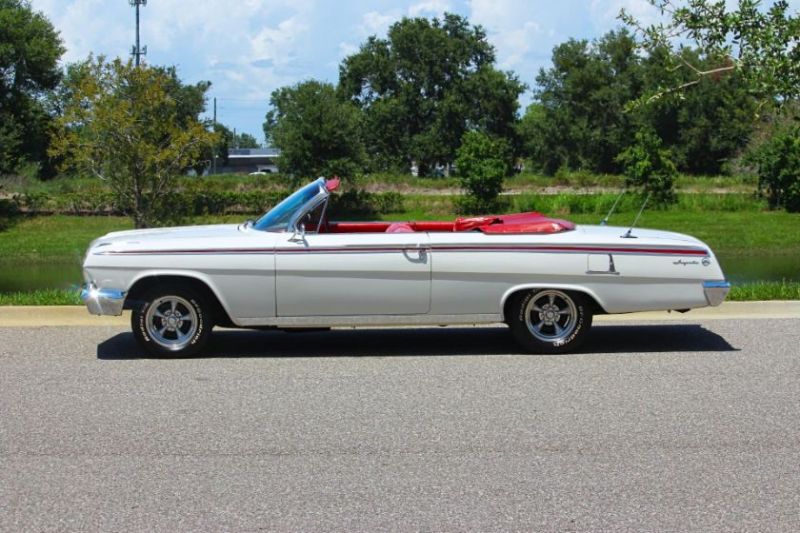
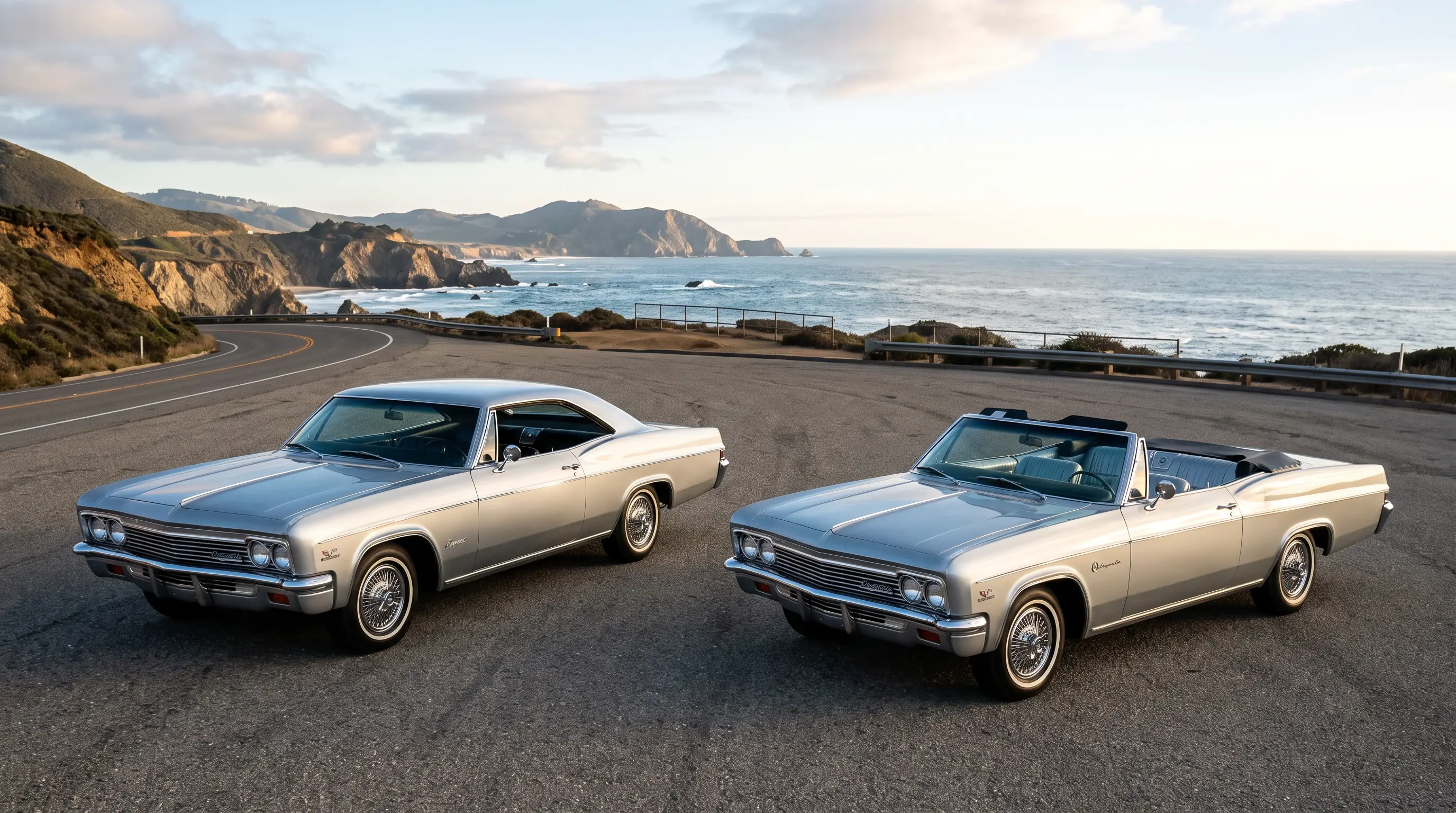
The 1965 Impala body styles arrived on an all new perimeter frame, and the shift showed in every panel. Chevrolet had spent the early 1960s refining a formula. For 1965, it started over, and the result was the widest, lowest full size Chevrolet the division had built. Four body styles carried the Impala name that year and again in 1966: the sport coupe, the four door sedan, the convertible, and the four door sport sedan with its distinctive squared off roofline. Each one told a slightly different story about who Chevrolet thought was buying this car.
A new shape for a new decade
The 1965 redesign replaced the previous X frame chassis with a full perimeter frame, which lowered the car's center of gravity and let stylists draw a longer, cleaner profile. Curved side glass appeared for the first time on a full size Chevrolet, giving the body a rounder, more sculpted look than the boxier 1964 model. The coupe's roofline swept back in a fastback like arc that Chevrolet called the "Sport Coupe" line, distinct from the sport sedan's crisper, more formal roof.
Buyers cross shopping a 1965 Impala convertible against the hardtop coupe were choosing between two very different personalities wearing the same grille and taillights. The convertible kept the formal proportions of the sedan but added a power folding top as standard equipment, a detail that mattered to a buyer moving up from a Bel Air or Biscayne.
Four doors, two personalities
The Impala Sport Sedan used a pillarless four door hardtop body, a style that was already fading elsewhere in the industry but remained a strong seller for Chevrolet through the mid 1960s. Its thin C pillar and frameless door glass gave it a lighter look than the standard sedan, which kept a conventional B pillar and a more upright rear window. Fleet buyers, taxi operators, and families who wanted the practicality of four doors without the formality of a post gravitated toward the standard sedan, while private buyers who wanted the Impala image without the coupe's back seat compromise chose the sport sedan.
Trim differences between the two were subtle from a distance. Both wore the same full width taillight treatment and the same interior door panels, but the sport sedan's frameless glass required tighter weatherstripping and a different regulator mechanism, a detail restorers still watch for when sourcing parts today.
What changed between 1965 and 1966
Externally, the 1966 Impala kept the same four body styles but wore a revised grille, a new stacked taillight arrangement on some trims, and a slightly reworked rear quarter panel. The dashboard also picked up a cleaner, more horizontal instrument layout. Chevrolet's engineers used the 1966 model year to quietly fix small assembly issues from the all new 1965 platform rather than chase another styling revolution, which is part of why the two years are so often discussed together. The full story of that two year run covers the mechanical side in more depth, but the body styles themselves are where most buyers still form their first impression of the car.
Production numbers reflected the sport sedan and standard sedan doing the heavy lifting, with the coupe close behind and the convertible trailing as the lowest volume of the four, a pattern typical for the era but one that has inverted in the collector market, where the convertible now commands the strongest prices.
"Stand a 1965 sport sedan next to a standard sedan and most people assume they are looking at two different cars. They are the same platform wearing two different attitudes, and that is exactly what Chevrolet's stylists intended."
- Sarah Whitfield
Trim levels layered on top of body style
Body style was only half of the equation. Chevrolet also stacked trim levels across the Impala range, and a buyer in 1965 or 1966 could order any of the four body styles in standard Impala trim or step up to the SS package, which added bucket seats, a console, and unique badging regardless of whether the underlying car was a coupe, sedan, sport sedan, or convertible. That layering meant a dealer's lot could hold a dozen visually distinct Impalas built from the same four basic shells, differing only in trim, wheel covers, and interior appointments.
Interior color choices also varied by body style in subtle ways. The convertible and sport coupe leaned toward brighter, more youthful color combinations in period sales literature, while the standard sedan tended to be ordered in more conservative tones by fleet and family buyers. None of this was mandated by Chevrolet, but the buying patterns that emerged say almost as much about mid 1960s American taste as the cars themselves do.
Reading a car's body style today
Identifying which body style you are looking at is straightforward once you know the cues. The sport coupe has no B pillar and a sloped rear roofline. The sport sedan has no B pillar either but keeps a more upright rear window and a wider back seat area. The standard sedan has a full B pillar and framed door glass throughout. The convertible is unmistakable with its top, but a shaved and rebuilt hardtop occasionally gets passed off as something it is not, so documentation matters more than looks alone.
| Body Style | Roof Configuration | Typical Buyer |
|---|---|---|
| Sport Coupe | Pillarless, fastback-style roofline | Younger, image conscious buyer |
| Sport Sedan | Pillarless, upright four door hardtop | Private buyer wanting style and space |
| Standard Sedan | Full B pillar, framed glass | Family and fleet use |
| Convertible | Power folding soft top | Upscale, image conscious buyer |
Anyone shopping today should treat the body style as the first filter, not the last. A well documented sport sedan in original colors can be a smarter buy than a rougher convertible with a replaced top and unknown history. If you want to see what is currently available, you can browse classic Impala listings and compare body styles side by side before deciding which one fits your plans, whether that is a driver, a show car, or something in between.
The 1965 to 1966 body styles also set the template Chevrolet would refine again for 1967, but that generation moved further from the curved glass and softer roofline that make these two years feel distinct from what came just before and just after. For a buyer focused specifically on 1965 impala body styles, the two model years remain a self contained chapter, one where the sheet metal changed only in details but the underlying shape said everything about where Chevrolet's full size car was headed.
Parts interchange between body styles
One practical benefit of the shared platform is that many mechanical and trim parts interchange freely across all four body styles. Front clips, suspension components, and most drivetrain parts are common regardless of whether the car started life as a sedan or a convertible, which keeps restoration costs more predictable than on cars where body specific engineering limits parts sharing. The exceptions are the pieces tied directly to each roof configuration, glass, weatherstripping, and the convertible's top mechanism and frame, none of which cross over to another body style.
That interchange also explains why a damaged sport coupe sometimes gets parted out to keep a rarer convertible or documented SS car on the road, a practical reality of ownership that has quietly shaped which body styles remain most common in good original condition decades later. A buyer who understands this history is better positioned to judge whether a given car's parts and trim are genuinely correct for its specific body style, rather than assuming everything under an Impala badge is interchangeable without consequence.