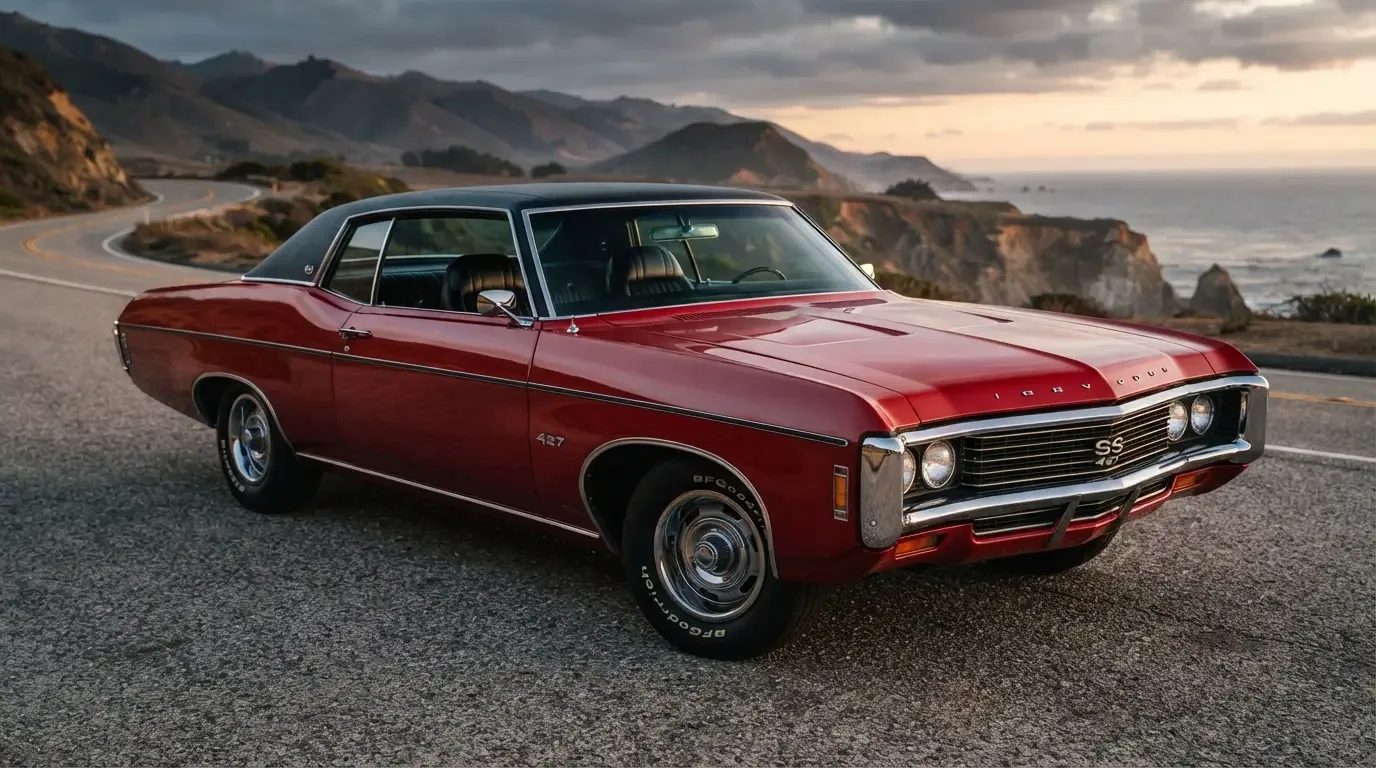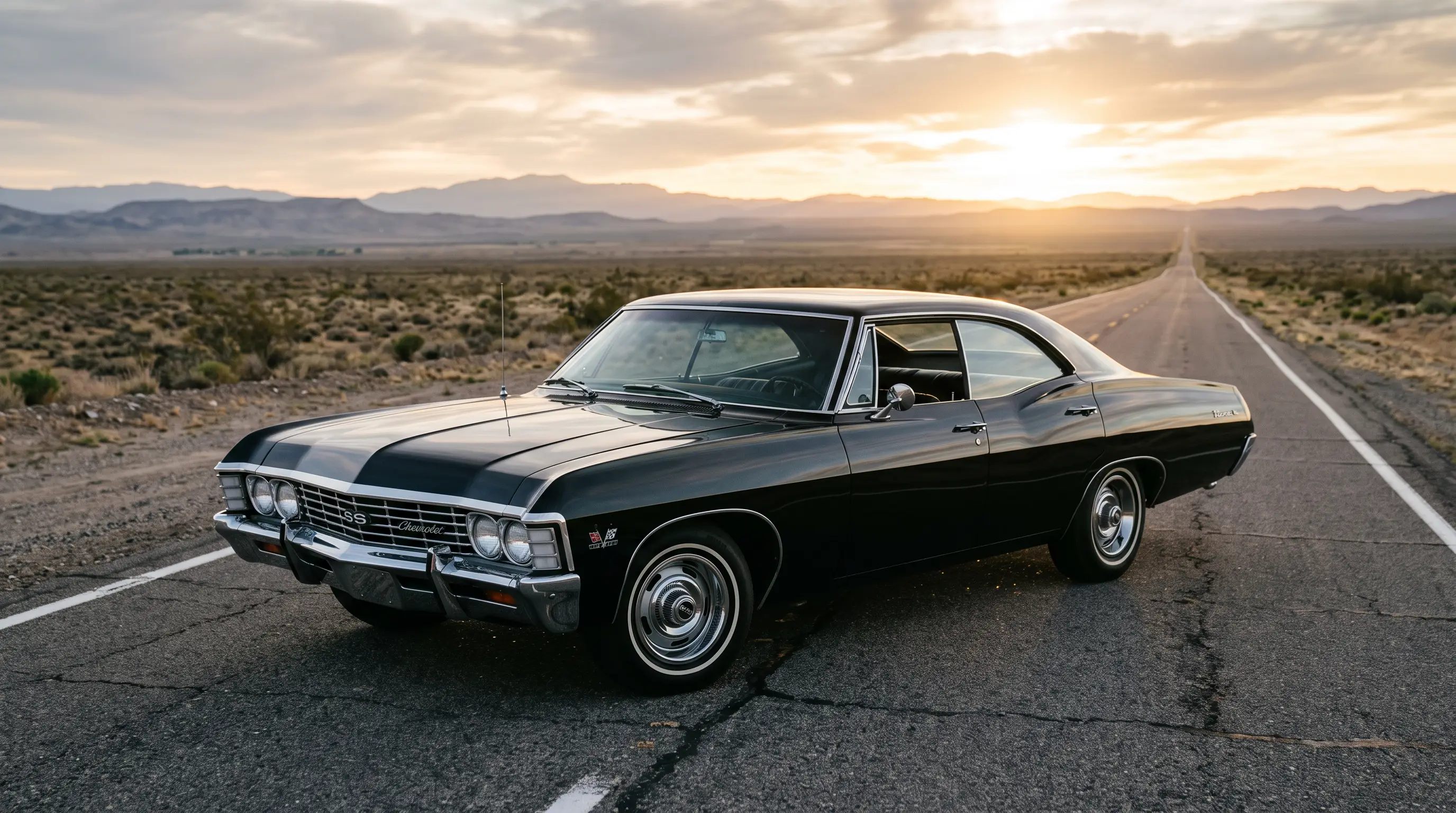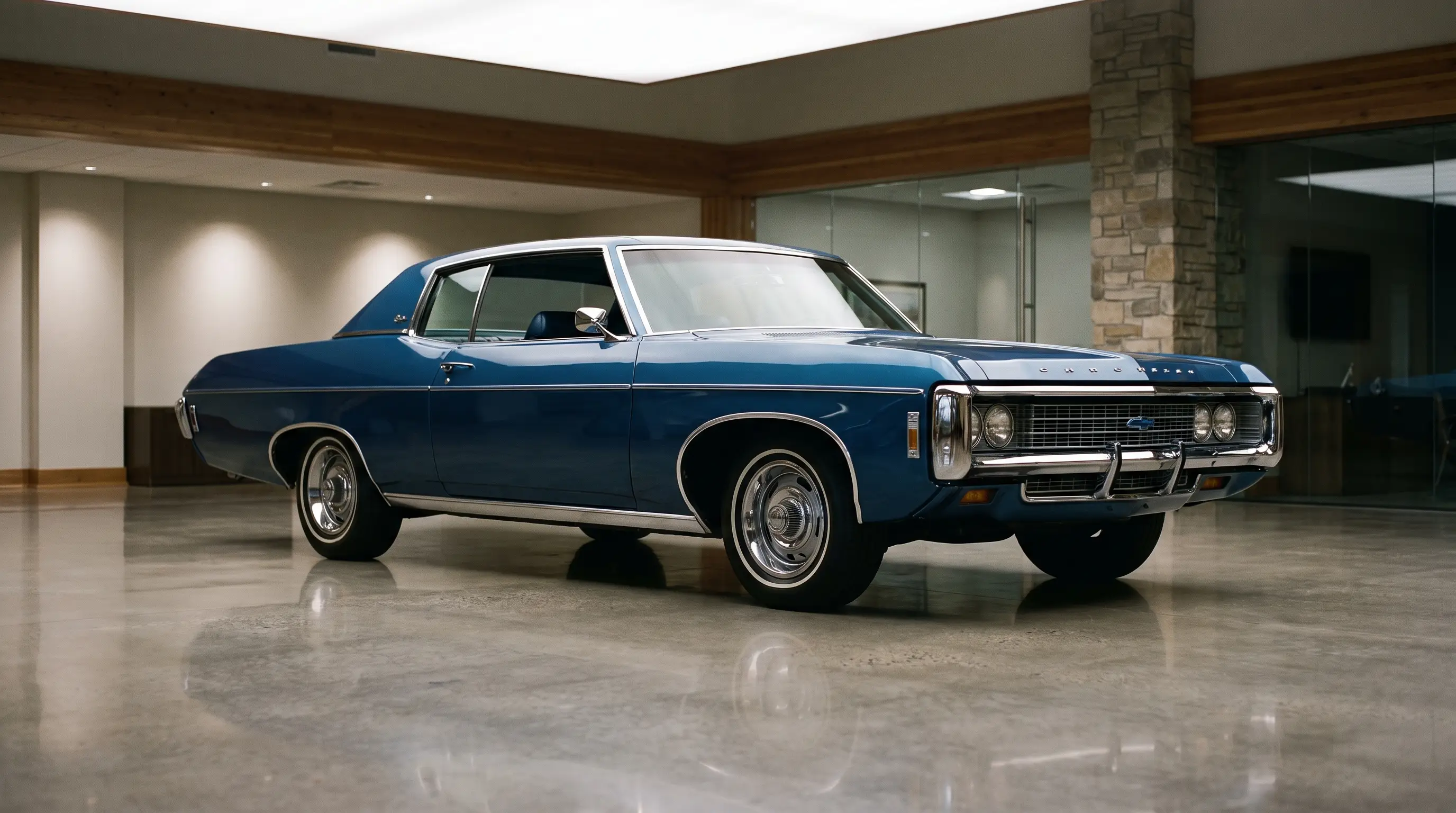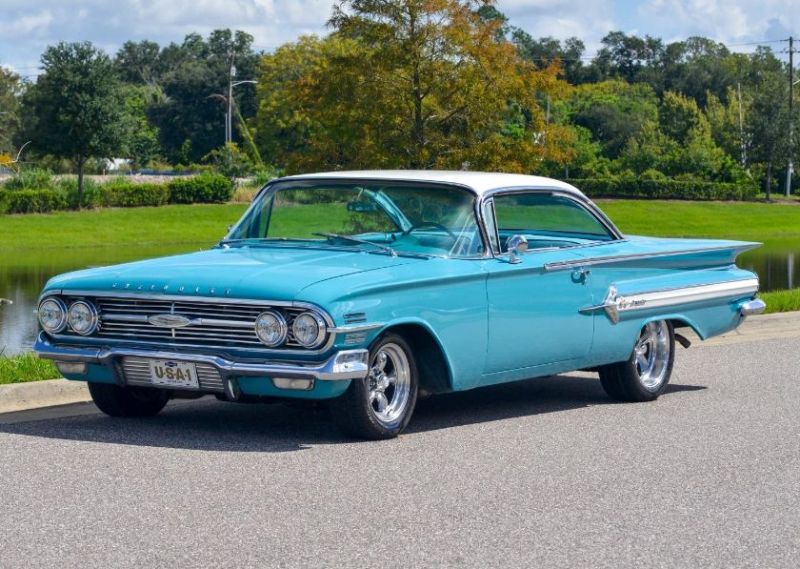
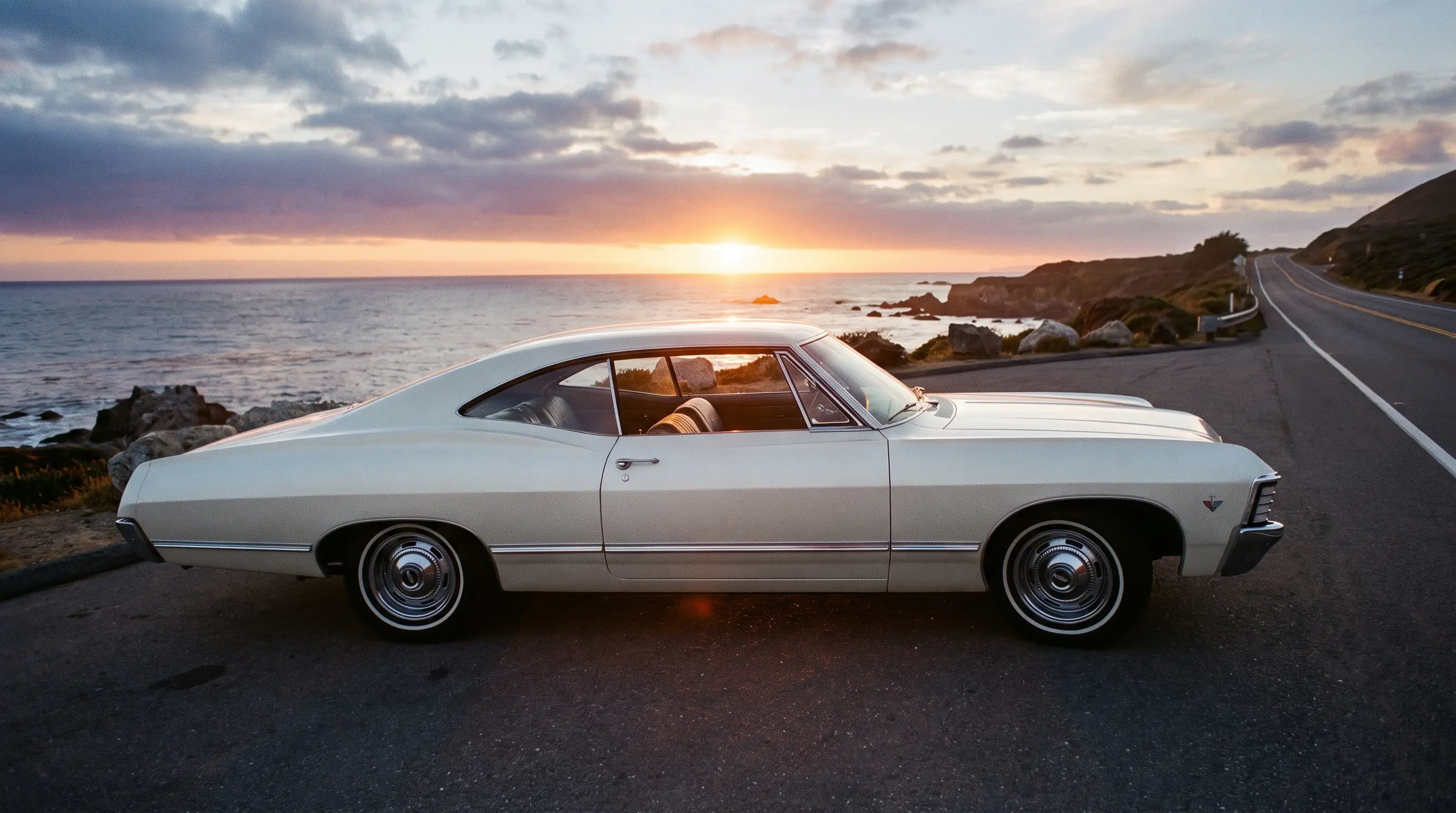
The 1967 Impala arrived with a body that Chevrolet engineers and stylists internally understood as a full reworking of the full size line, and the styling language that resulted has since earned the shorthand "Coke-bottle" from generations of enthusiasts describing the pinch at the beltline and the flare through the rear fenders. Chevrolet's own factory records treat 1967 as a distinct design cycle, not a facelift of 1966, and the sheet metal bears that out. Almost nothing carries over panel for panel from the previous year.
What the factory actually changed for 1967
Production and engineering documentation from the period shows a full size body with a lower beltline, a more pronounced tuck through the doors, and fenders that swell outward toward the rear wheel opening before tapering back in near the taillamps. This is the visual trick that gives the car its nickname, a silhouette that narrows in the middle and widens at both ends the way a contoured glass bottle does. It was a deliberate styling decision made under GM's design leadership, part of a broader push across the corporation's full size cars to soften the slab sided look that had dominated much of the early 1960s.
Underneath the new skin, Chevrolet's factory paperwork confirms the basic drivetrain architecture from 1966 continued largely intact. The 427 big block remained available, the SS package continued as a distinct order code, and the frame and suspension engineering carried over with only detail revisions. The story of 1967 is a body story first and a mechanical story second.
Correcting a common misconception
A misconception that circulates in enthusiast circles holds that the 1967 restyle was primarily a response to Ford's full size offerings that year. Chevrolet's own design timeline tells a different story. Body programs of this scale were locked in years ahead of a given model year's launch, which means the 1967 Impala's shape was set in motion well before anyone at GM could have been reacting to a specific competitor's showroom lineup for that same season. It is more accurate to describe 1967 as the natural next step in a styling direction Chevrolet had already committed to, rather than a defensive reaction to Dearborn.
Another point worth correcting: the "Coke-bottle" label is a retrospective enthusiast term, not a phrase Chevrolet used in period sales literature. Factory brochures from 1967 describe the car in more conventional language, longer, lower, wider, without ever invoking the bottle comparison that has since become the accepted shorthand among collectors and historians.
"The paperwork is clear on this one. The 1967 body was years in the making, not a scramble to answer Ford. Enthusiast folklore sometimes gets the timeline backwards."
- Tom Ramirez
Why the styling still matters to collectors
The 1967 body sits at the center of its own three year design cycle before Chevrolet moved to another full size restyle. That makes it a distinct chapter rather than a footnote between more famous years. Collectors researching this specific styling generation should look at 1967 impala history for the full arc of how this body evolved through the end of the decade, since the basic shape introduced in 1967 continued, with running changes, for several more model years.
For readers specifically interested in how the SS 427 package fit into this restyled body, the mechanical side of the story is covered in a related story that focuses on the drivetrain rather than the sheet metal.
How 1967 fits between two more famous years
Factory sales and production records show 1967 sitting in an interesting position, arriving after the sales record set by the 1965 body and before the further changes that would reshape the line again by decade's end. That middle position sometimes causes 1967 to get overlooked in enthusiast conversation, treated as a transition year rather than a destination in its own right. The production numbers do not support that framing. Chevrolet's full size lineup, Impala included, remained the best selling car line in the country during 1967, and the styling changes made that year were substantial enough that Chevrolet's own engineering documentation lists it as a distinct body program with its own tooling and its own development budget, not a running change to the 1966 shell.
Interior appointments also moved forward for 1967. Factory trim records show revised door panel designs, a new instrument cluster face, and upholstery pattern changes across the trim levels, all consistent with a car positioned as genuinely new rather than a mid cycle refresh. The SS package retained its own interior trim distinctions, including unique door panel inserts and console options, that separated it visually from a standard Impala even before a buyer looked at what was under the hood.
Regional and dealer variation worth noting
Factory build documentation shows regional assembly plants handled trim and color allocation somewhat differently depending on demand in a given sales region, which is part of why certain color and trim combinations turn up more frequently in some parts of the country than others even decades later. A historian working from build sheets and plant codes can often trace a surviving car back to its assembly plant, which adds useful context for anyone researching a specific example's originality. This regional variation is a detail that gets lost in general enthusiast summaries of the model year but shows up clearly once you are working from primary production paperwork rather than secondhand recollection.
Finding a 1967 today
Survivors with the original two tone paint schemes Chevrolet offered that year, and cars that retain their factory trim without later modification, are the ones that best represent what this styling generation actually looked like leaving the factory. Buyers chasing an accurate example should prioritize originality in trim and paint scheme over aftermarket styling additions that were common in later decades but were never part of the factory presentation. Anyone ready to look at real inventory from this generation can browse Impalas for sale now to compare surviving examples against the factory specifications documented here.
Documentation should always be the deciding factor over cosmetic condition alone. A repainted car with its original build sheet and factory trim tag intact tells a more reliable story than a car that looks correct in photographs but cannot be traced back to its original order. Historians and serious buyers alike treat those primary records as the actual source of truth, with visual inspection serving to confirm what the paperwork already claims rather than the other way around.
Sources and notes
- Ate Up With Motor: Mr. Average, the 1967 Chevrolet Impala model history
- Best Selling Cars Blog: Chevrolet Impala breaks records, 1960-1970
- Hagerty Valuation Tools: 1967 Chevrolet Impala
- TopSpeed: How the Chevy Impala became Chevrolet's best selling car
- Autoevolution: 1967 Chevrolet Impala Super Sport