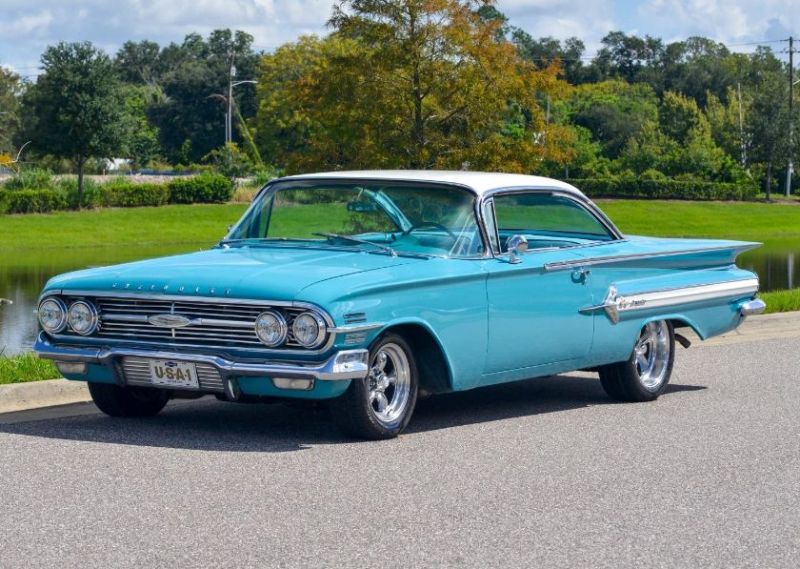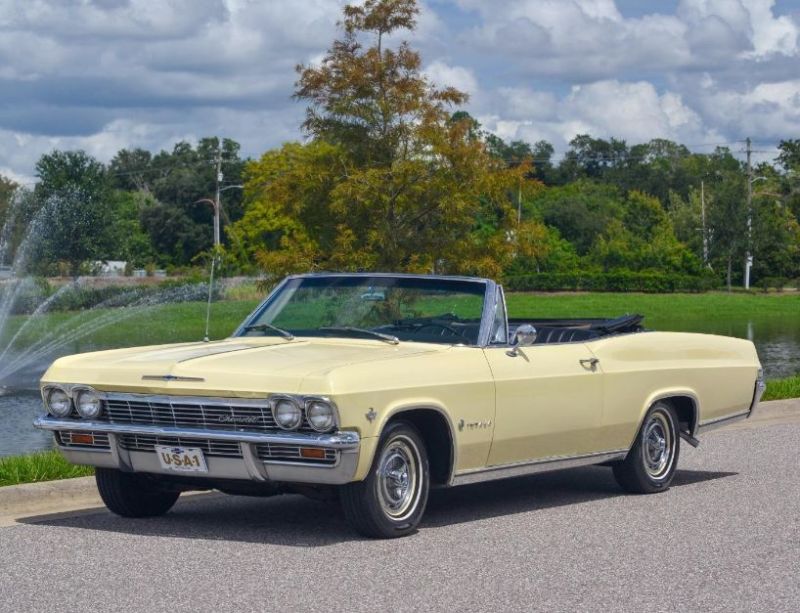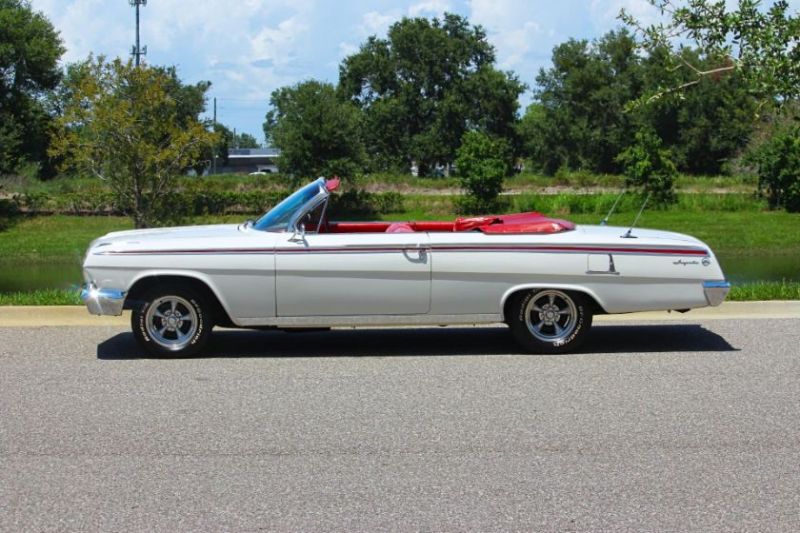
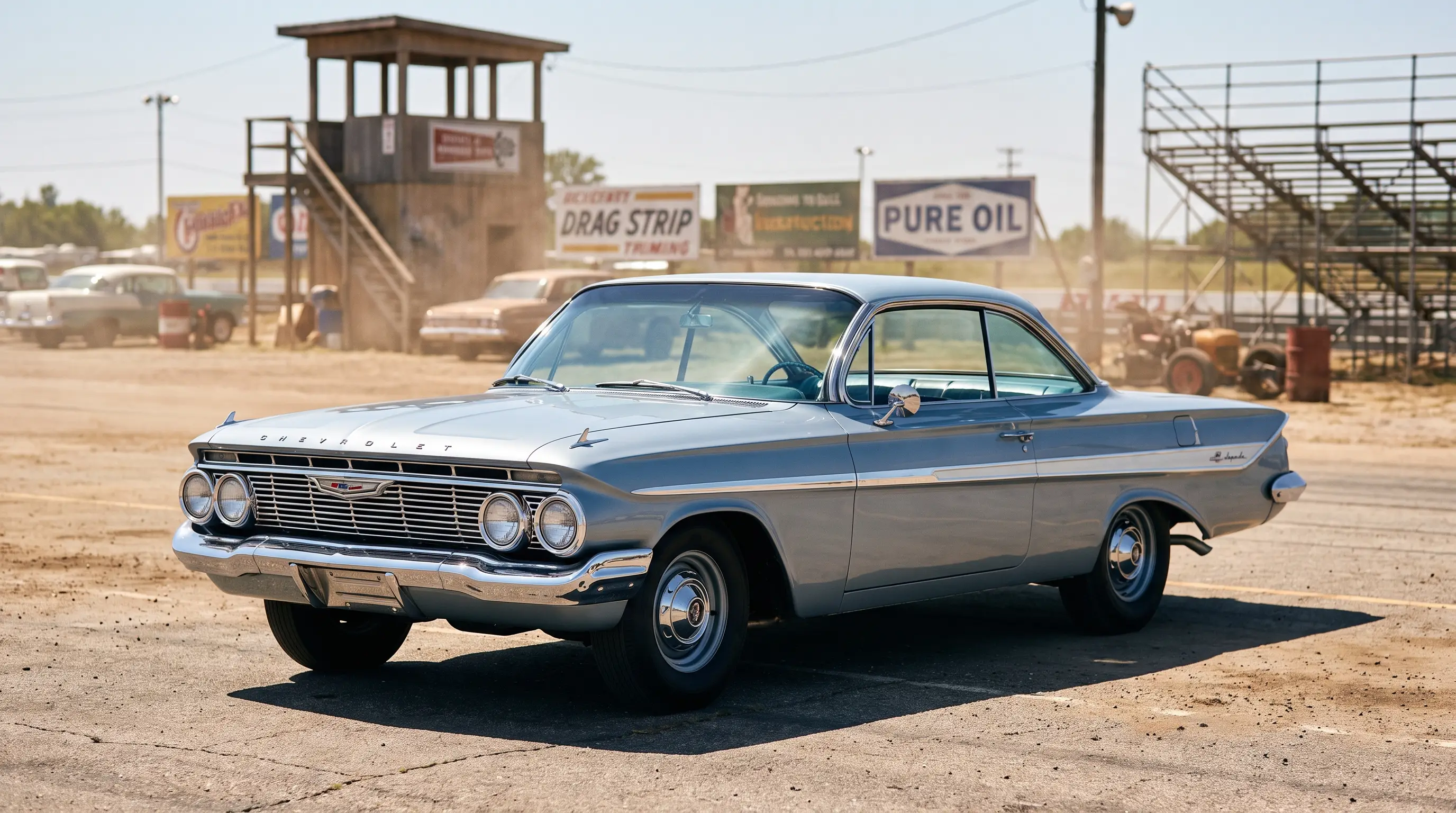
The 1961 debut of the 409 in the Impala is where the legend actually starts, before the song, before the reputation, before the badge became shorthand for a whole attitude. A new big block engine arrived in a full-size Chevrolet and quietly changed what buyers expected a family sized car to be capable of.
Setting the scene at the dealership
Picture a Chevrolet showroom in early 1961. Most buyers walking in wanted a comfortable family car, and the salesman's job was to move them toward whatever combination of trim and options fit their budget and their expectations. The 409 option sat off to the side of that conversation for most of the model year, mentioned mainly to buyers who specifically asked about performance or who had already heard something through a friend at the local strip. That is a very different sales environment than the one the engine would enjoy just a year later, once its reputation had grown enough that buyers started asking for it by name.
Where the engine came from
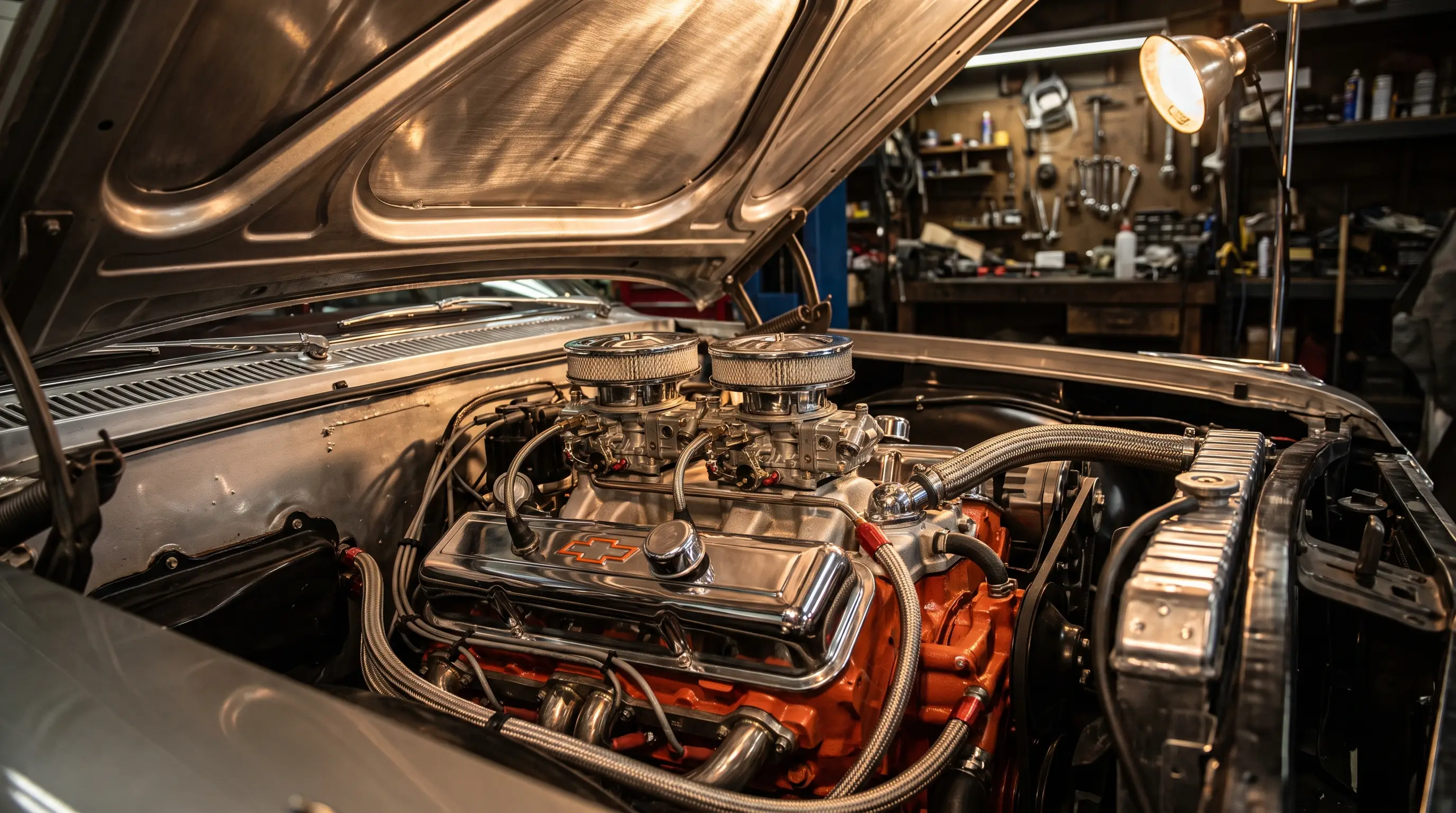
The 409 traced its architecture back to the 348 that Chevrolet had already been building, sharing the same basic block design with revisions aimed at pushing displacement and output higher. This was not a clean sheet engineering exercise. It was an evolution of an existing platform, refined specifically to give Chevrolet a stronger answer to the performance engines other manufacturers were fielding in the same period. Chevrolet announced the SS equipment package internally in February 1961, and the 409 arrived within it as a mid-year option. Only about 142 of that year's Super Sports left the factory with the 409 installed, out of roughly 453 Impala SS cars built for the entire model year, which is a big part of why genuine 1961 examples are so scarce today. That lineage matters because it explains why the 409 arrived as a mature, sorted design rather than a first year engine still working out its problems.
Chevrolet offered the 409 as an option within the Impala lineup rather than launching it as a standalone model, which meant the earliest buyers had to know to ask for it. Dealers who understood the performance market pushed the option to the right customers. Dealers who did not treat performance seriously simply never mentioned it, and plenty of 1961 buyers left the lot never knowing the option existed. That inconsistency in how the option was sold is a big reason genuine 1961 examples are scarce today.
| Factor | 1961 debut situation |
|---|---|
| Option visibility | Mid-cycle option, inconsistently promoted by dealers |
| Documentation | Thinner than later years, harder to verify today |
| Engine lineage | Evolved from the existing 348 architecture |
| Collector status | Scarcer and harder to authenticate than 1962 examples |
What made the debut significant
Putting a serious performance engine into a full-size family car was not a novel idea in 1961, but the 409 executed the concept with enough authority that it drew attention beyond the usual performance crowd. Word moved through drag strips and dealer lots before it moved through advertising, which gave the engine an authenticity that purely marketed performance options often lack. By the time Chevrolet's own promotional material caught up to what enthusiasts were already saying, the 409 had built its reputation the hard way, on the strip and on the street, rather than through a press release.
"The 1961 cars are where you have to do the most homework, because that is exactly where the fewest records exist."
- Emily Chen
The wider context of 1961
To understand why the 409's arrival mattered, it helps to remember what the rest of the industry was doing in 1961. Performance options across Detroit were becoming a genuine competitive battleground, with manufacturers racing to offer bigger displacement and stronger factory backed performance packages to a growing audience of younger buyers with real spending power. Chevrolet's answer, folded quietly into the Impala lineup rather than launched with fanfare, ended up outlasting the marketing campaigns of some louder competitors precisely because it did not need to overstate itself. The engine simply performed, word spread through the people who actually used it, and the reputation built from there without needing to be manufactured by an advertising department.
That grassroots pattern is unusual enough in automotive history to be worth noting on its own. Most legendary performance options from this era were pushed hard by factory marketing from day one. The 409's debut year leaned more heavily on word of mouth from racers and dealers who understood what they were selling, and that slower, more organic start is part of why the engine's eventual reputation felt earned rather than manufactured when it finally broke into wider public awareness a year or two later.
Why the debut year matters for buyers
A genuine 1961 409 Impala carries a different weight in the market than the more common 1962 examples that followed, precisely because production and documentation were thinner in that first year. Buyers chasing a 1961 example should expect the verification process to be harder and the paper trail to be thinner, simply because the option was not tracked as consistently in its debut season as it would be once Chevrolet leaned into the engine's growing reputation.
- 1961 examples are scarcer than 1962 due to inconsistent dealer promotion of the new option
- Documentation from the debut year is thinner, making verification more difficult
- The engine's architecture traced back to the existing 348 rather than a clean sheet design
For the full technical and production history of the 409 across its entire run, more on the 409 impala covers the engine in depth beyond this debut year. To understand how the Impala itself reached the point where an engine like this made sense, where this started traces the model's own origins. And for anyone ready to look at what is actually available today, classic Impalas on the market is a good place to compare current listings against documented 1961 examples.
The 1961 409 debut does not get the attention the 1962 cars and the pop culture moment that followed eventually earned, but it is the year where the actual engineering story begins. Anyone serious about the 409's history should start there rather than with the song that made it famous.
What I find most interesting studying this debut year specifically is how little fanfare accompanied what turned out to be a genuinely important engine in Chevrolet's performance history. There was no major advertising push built around the 409 badge in its first year, no coordinated dealer training program pushing the option, just an engine that quietly went into a handful of Impalas and started earning its reputation one strip pass at a time. That understated beginning stands in real contrast to how heavily the engine would eventually be marketed just a year or two later, once Chevrolet realized what it actually had on its hands.
For collectors today, that gap between the quiet 1961 rollout and the much louder promotion that followed is exactly why documentation from this specific year carries so much weight. A verified 1961 409 Impala represents the engine before anyone was trying to sell its reputation, back when the only people who knew about it were the ones who had actually seen it run.