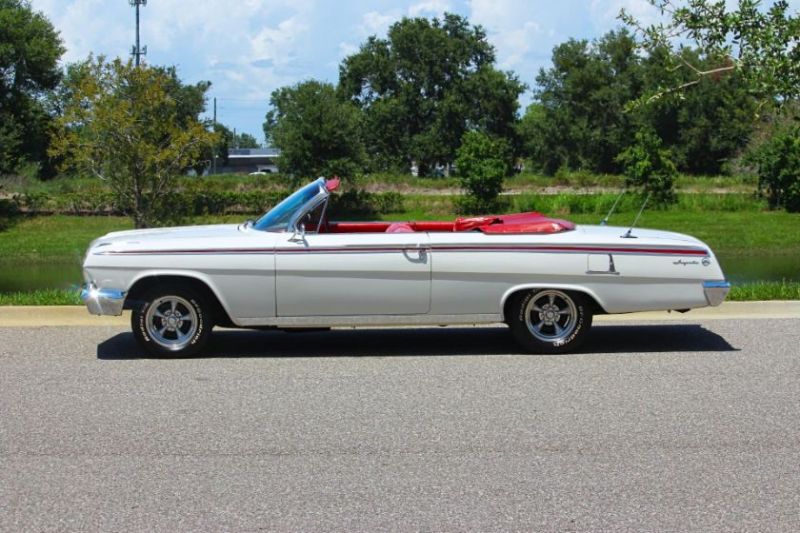
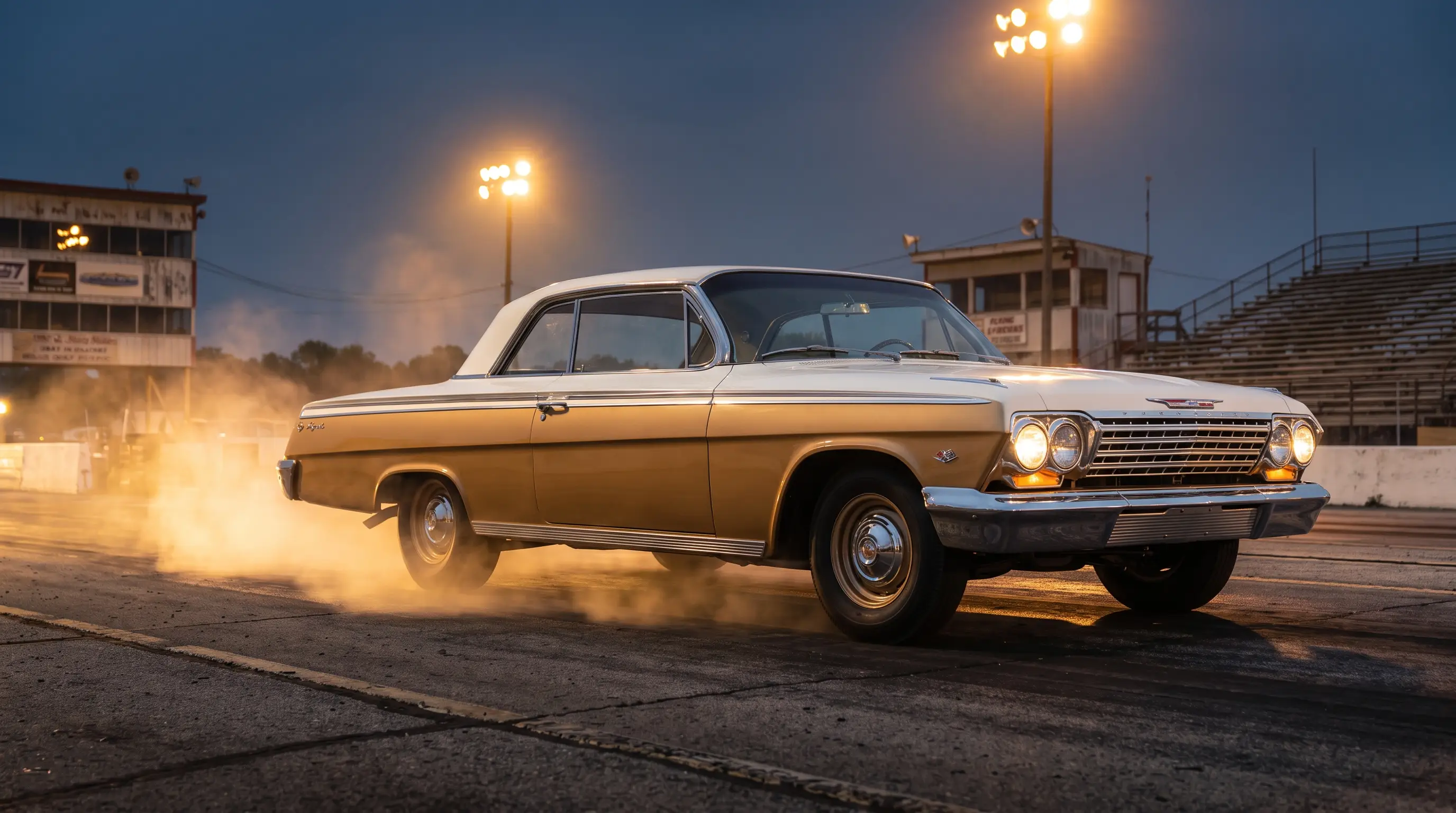
The 409 is not the biggest engine Chevrolet ever built, not the most powerful, and not even the longest lived in production. It is the one people remember anyway, and the reason comes down to timing, marketing, and a number that happened to sound good said out loud. A hit single built around that exact displacement figure did more for this engine's legend than any dyno sheet ever could.
The number that sold itself
Four zero nine. Say it a few times and you understand why it stuck. Chevrolet did not invent the idea of naming an engine after its displacement, but the 409 landed at exactly the right moment, when drag strip culture and Top 40 radio were feeding each other and a number could become shorthand for an entire attitude. The 348 that came before it was a fine engine. Nobody wrote a hit song about the 348.
Displacement alone does not make a legend. What made the 409 stick was the combination of a genuinely strong performance package, a body it fit into that looked good doing it, and a cultural moment that turned a parts bin number into a phrase teenagers shouted across a parking lot. The 409 debuted for 1961 rated at 360 horsepower, then climbed to 380 and a genuine 409 horsepower in dual quad form for 1962, and topped out at 425 horsepower by 1963 and 1964. The engine earned real credibility at the strip and on the street, and then popular music amplified that credibility to people who had never seen one running.
What the engine actually delivered
Strip away the mythology and the 409 was a big block V8 built around a design that traced back to the 348, sharing the same basic architecture with revised internals aimed at higher output. Chevrolet offered it in performance tune for the full-size Impala lineup, and buyers who wanted the reputation could order it without needing to hunt down a specialty dealer. That accessibility mattered. A legend that only a handful of people could actually buy stays a rumor. A legend you could option onto a car at your local Chevrolet dealer becomes part of the culture.
| Factor | Role in building the legend |
|---|---|
| Displacement number | Distinctive, memorable, easy to repeat as shorthand |
| Drag strip results | Earned credibility before any wider fame arrived |
| Availability | Ordered through a regular Chevrolet dealer, not a specialty shop |
| Cultural amplification | Popular music carried the name beyond the racing crowd |
Numbers versus reputation
Here is where I get blunt, because that is the job. Plenty of engines built in the same era matched or beat the 409 on raw output. The reputation the 409 carries today is bigger than its specification sheet justifies on paper alone. That is not an insult to the engine. It ran hard, it held up, and it deserved respect at the strip. But the gap between how people talk about the 409 and what a spec comparison actually shows is real, and buyers chasing a 409 car purely because of the name should know they are paying partly for a legend and partly for hardware.
"A number becomes a legend when the car backs it up and the culture repeats it. The 409 got both, and that combination is rarer than people think."
- Dan Reeves
How the legend compares across generations
Talk to enough owners of later big block Chevrolets and you notice something interesting. Plenty of them are quietly aware that their engine, on paper, outperforms the 409 in some measurable way, and most of them have made peace with the fact that it does not matter to the wider market. The 409 got there first, culturally speaking, and cultural primacy in this hobby is worth more than a few extra horsepower on a dyno sheet nobody outside the hobby ever sees. That is not fair in a strict engineering sense. It is also just how collector markets actually behave, and pretending otherwise does not change anyone's asking price.
I bring this up because buyers sometimes get frustrated comparing spec sheets and concluding the market does not make sense. It makes plenty of sense once you accept that a car market is not purely an engineering ranking. Reputation, timing, and cultural memory carry real economic weight, and the 409 is maybe the cleanest example of that principle in the entire Chevrolet performance catalog.
Where the 409 sits among its rivals
Ford and Mopar both fielded strong big block options in the same window, and taken purely on paper, several of those engines matched or slightly exceeded what the 409 delivered in stock trim. None of them got a national hit song built around their displacement figure. That is not a coincidence born of luck alone, it reflects a specific set of conditions, a distinctive number, a receptive cultural moment, and a group of songwriters embedded in the exact scene where the engine was already earning respect. Rivals with equally capable hardware simply did not have that combination line up in their favor, and decades later the market still reflects that gap.
What it means for the market today
Documented 409 Impalas sell at a real premium over comparable cars with lesser engines, and that premium exists specifically because of the reputation this article is describing. A buyer who wants the fastest possible sixties Chevrolet for the money might do better with a different engine option entirely. A buyer who wants the specific cultural weight the 409 carries, the song, the strip history, the name that still gets recognized at a gas station today, is paying for something that a spec sheet cannot capture and that a dyno cannot measure.
- Verify engine codes against the block and the trim tag before paying 409 premium pricing
- Understand that reputation, not just output, drives the price gap over comparable engines
- Factor in documentation the same way you would for any other high value option
For the full mechanical and historical account of the engine in the Impala specifically, read 409 impala history, which covers the technical side this piece leaves out. If the pop culture angle interests you more than the hardware, a related story covers exactly how a car engine ended up as a song lyric. And if you want to see what a documented 409 car actually costs right now, Impalas for sale now will give you a current sense of the market.
The 409 became a legend because the timing was right and the number sounded right said out loud. Respect the engine for what it actually did, and respect the legend for what it did to the price. They are not quite the same thing, and a smart buyer keeps both facts straight.
I have spent a career looking at numbers on paper and numbers on a dyno sheet, and the 409 remains one of the more satisfying case studies in the whole muscle car story precisely because it does not require any spin to defend. The engine did real work at the strip long before anyone wrote a song about it, and that order of operations is what separates an earned legend from a manufactured one. Buyers today are not being sold a myth. They are paying for a genuine piece of performance history that happened to also become a cultural touchstone, and that combination is rare enough to be worth the premium it commands.