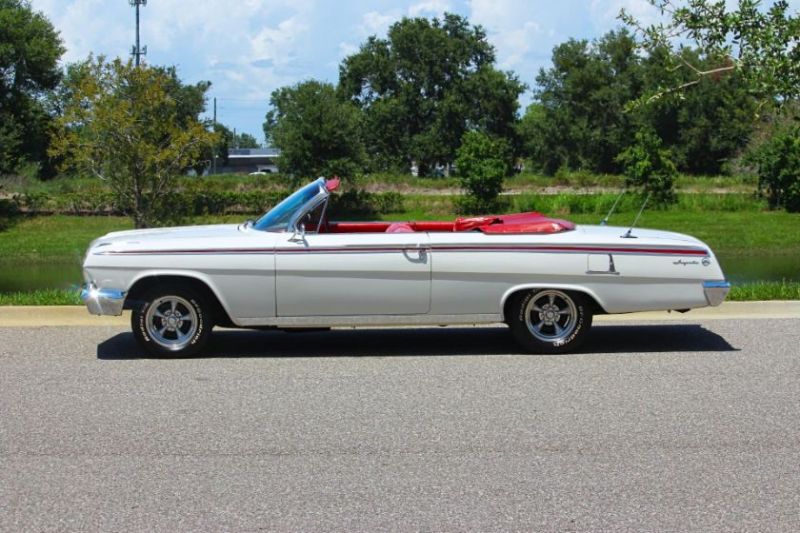
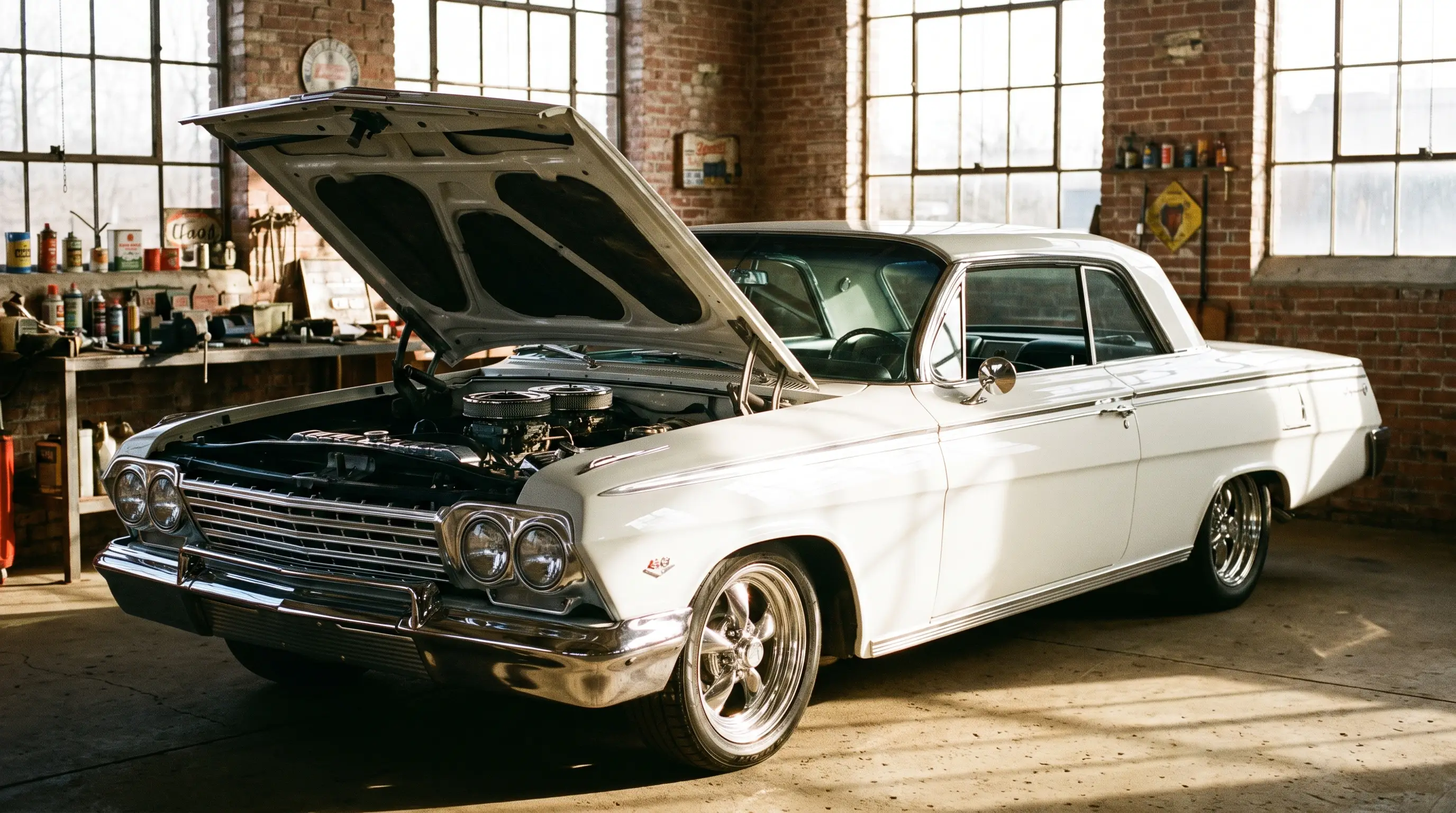
Ask which was the most powerful 409 Chevrolet ever built, and the honest answer takes more than one sentence. The 409 family covered several years and multiple states of tune, and the highest-output version was not necessarily the most famous one. That distinction gets lost in conversations that treat "409" as a single fixed number instead of an engine family that kept evolving.
The 1962 dual-quad set the benchmark
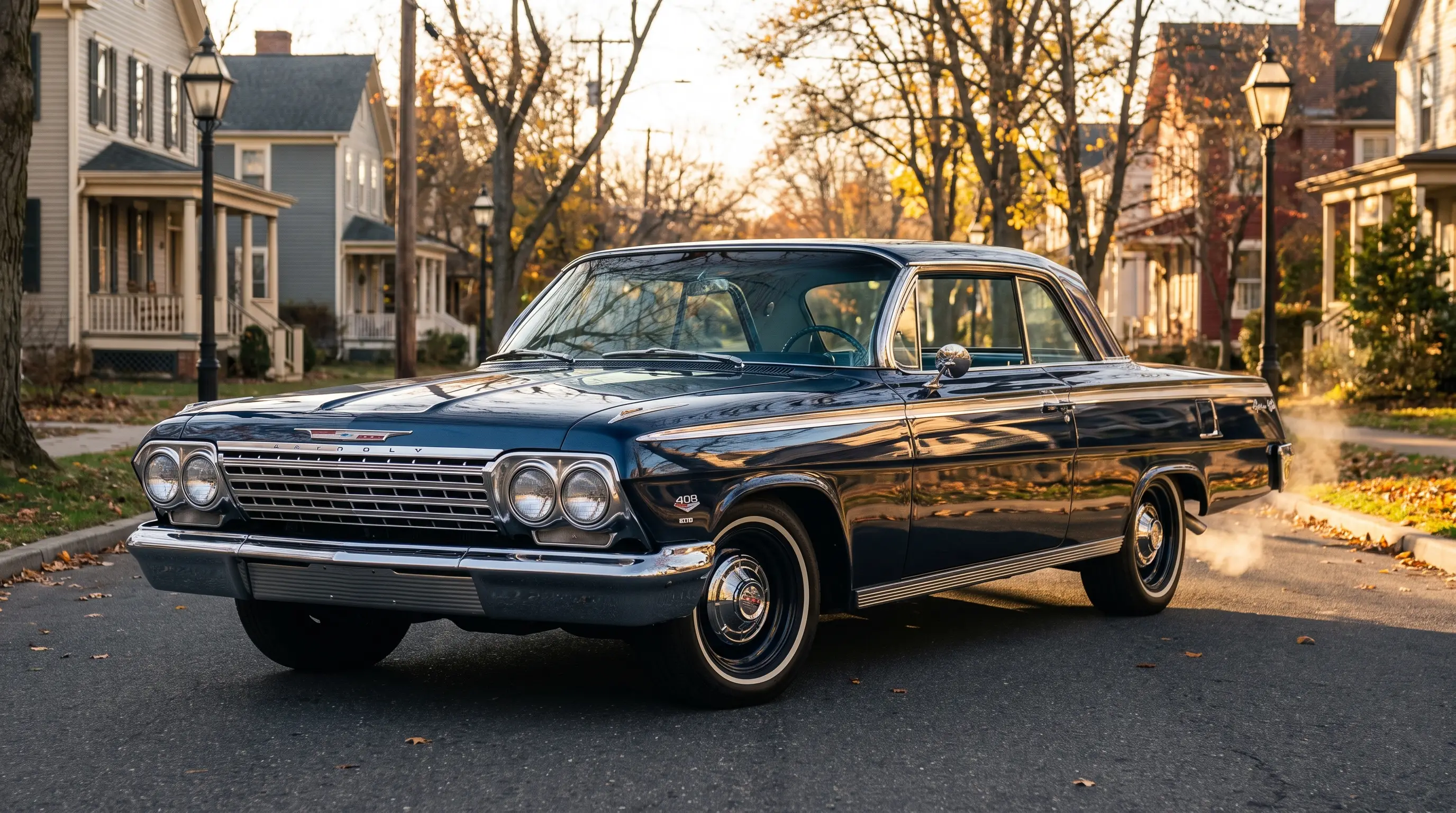
The 409 horsepower dual four-barrel option for 1962 is the version most people mean when they talk about "the" 409, partly because the number lined up so neatly with the displacement, and partly because the Beach Boys turned that exact car into a cultural touchstone. It was a genuinely strong output for the era, rated 409 horsepower at 6,500 rpm and 420 lb-ft of torque at 4,000 rpm on Chevrolet's period gross rating scale, built around a solid-lifter cam and dual carburetion tuned for top-end breathing rather than idle manners.
What "409 horsepower" actually meant on the road
A dual-quad 409 rated at 409 horsepower did not automatically make a light, tossable car. Full-size Chevrolets of this era were heavy, and the 409's real-world quickness depended just as much on rear axle gearing, transmission choice, and total curb weight as it did on the number stamped on a spec sheet. A four-speed car with a steep rear gear could feel dramatically quicker off the line than an otherwise identical car with a lazier axle ratio and an automatic, even though both wore the same engine rating. Buyers today chasing "the fastest 409" without accounting for gearing and drivetrain are chasing an incomplete picture.
Later years pushed further
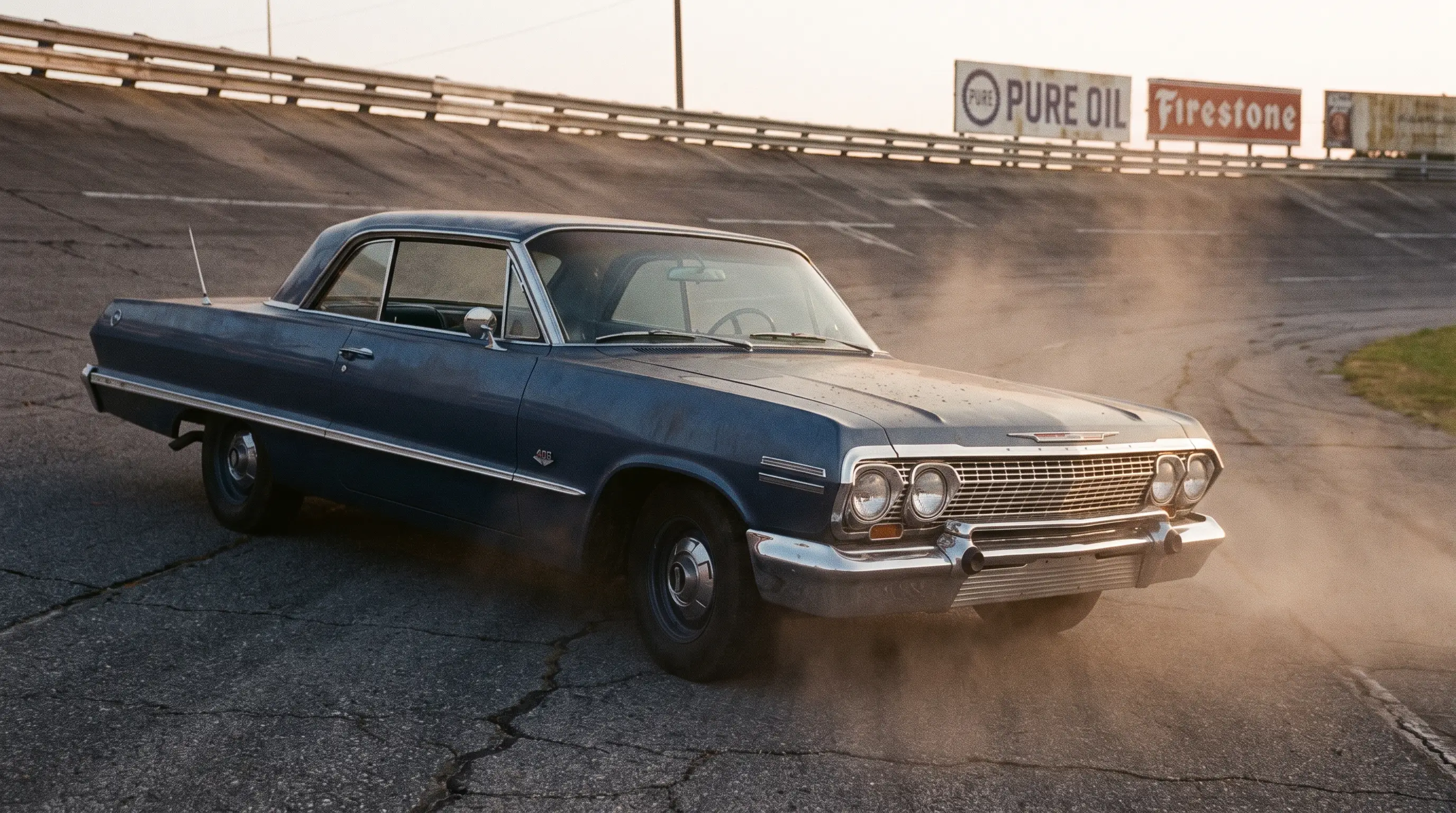
Chevrolet did not stop developing the 409 after 1962. For 1963 and 1964, the lineup expanded to three factory tunes: a 340 hp hydraulic-cam version, a 400 hp mechanical-cam single four-barrel, and a 425 hp mechanical-cam dual-quad, the genuine horsepower peak of the whole W-block 409 family. That 425 hp dual-quad was dropped for 1965, when the 409 carried on at 340 and 400 hp only before the Mark IV big-block took over. Whether these later, higher-rated 409s felt meaningfully quicker in a full-size Impala than the 1962 dual-quad car is a separate question, since chassis, gearing, and weight all played a role in how a given rating translated to real performance.
Comparing the 409's output across its run
| Era | Configuration | Approximate output |
|---|---|---|
| 1961 | Single 4-barrel, early production | 360 hp |
| 1962 | Dual 4-barrel | 409 hp |
| 1963 to 1964 | Three tunes offered | 340, 400, or 425 hp (dual-quad peak) |
| 1965 | Dual-quad dropped | 340 or 400 hp only |
The gap between "most famous" and "most powerful" is a distinction worth keeping straight. The 1962 dual-quad earned the cultural crown. A later, more developed version of the same basic engine may well have made more power on a dyno sheet, without ever getting a song written about it.
The gross versus net measurement problem, explained
Manufacturers in this era rated engines using gross horsepower, measured on a test stand with the engine stripped of accessories like the alternator, exhaust system, and sometimes even the air cleaner, all of which rob real power once installed in a car. Modern engines are rated net, with all accessories attached and running, which produces a lower and more honest number for how the engine actually performs on the road. This is not a 409-specific issue, every manufacturer of the era used the same gross rating convention, but it means comparing a period 409 rating directly against any modern engine's horsepower figure is comparing two different measurement systems, not two comparable numbers.
Why the most powerful version is not always the most valuable
Collector value does not track raw horsepower in a straight line. The 1962 dual-quad car benefits from being the version tied directly to the engine's cultural peak, and that story carries weight with buyers that a slightly higher horsepower rating from a later, less celebrated year does not automatically match. A later, more powerful 409 is a genuinely strong performance car and, in some cases, a rarer one, but it is competing for buyer attention against a nameplate moment the earlier car already owns outright.
For the fuller account of how the 409 built that reputation across its whole run, the full story covers the engine from its 1961 debut onward.
"The song made 1962 famous. It did not make 1962 the fastest year. Those are two different arguments and people mix them up constantly."
- Dan Reeves
Where enthusiasts still argue
Ask a room full of longtime 409 owners which year made the most real power, and you will get several confident, contradictory answers. Some swear by the original 1962 dual-quad as the purest expression of the engine, unburdened by whatever compromises later emissions-conscious tuning might have introduced as the decade wore on. Others point to specific later-year combinations, armed with dyno sheets from restoration shops that have actually tested more than one 409 configuration side by side. Neither camp is simply wrong, and both sides usually have a real car to point to as evidence, which is exactly why the debate never actually settles. They are drawing on different specific engines, built and maintained to different standards, and generalizing from a handful of individual examples to the whole model year, which is exactly the kind of shortcut that keeps this argument alive at every car show where more than one 409 shows up.
The straight answer
If the question is which 409 configuration made the most horsepower on paper, later refined versions likely edge out the original 1962 dual-quad. If the question is which 409 matters most to the car's legend, 1962 wins without much argument. Both answers are correct, they are just answering different questions, and any honest conversation about the most powerful 409 needs to separate the two before it goes any further.
If you want to see how these different 409 configurations show up in today's market, there is a classic Impala for sale selection worth comparing before you settle on which version you actually want to own.
What this means when you are actually shopping
If raw output is the priority, a documented later-year 409 with confirmed higher compression and a factory high-output cam is worth seeking out on its own mechanical merits, and it may well be the quicker car in a straight line. If the goal is owning the specific engine that made "409" a household word, the 1962 dual-quad remains the answer, regardless of what a later year's dyno sheet says. Neither choice is a compromise. They are simply two different reasons to want the same basic engine family, and a buyer who is honest about which reason matters more to them will end up happier with whichever car they choose, no matter what the horsepower argument at the next car show eventually decides.