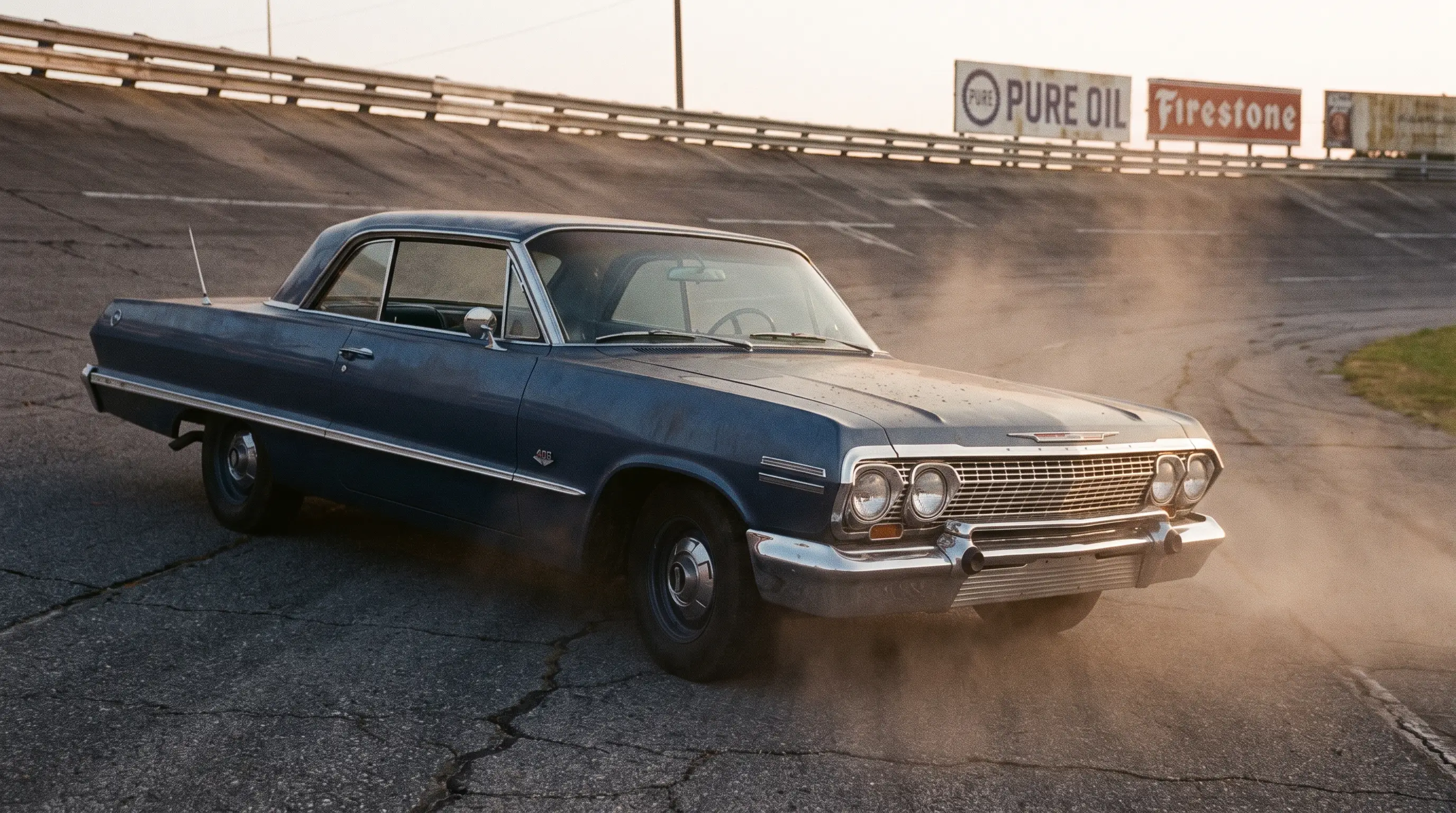
409 nascar history does not get nearly as much attention as the engine's drag strip and pop culture reputation, but Chevrolet's big-inch W-block spent real time on stock car ovals in the early 1960s before the manufacturer pulled back from factory-backed racing support.
Chevrolet's early-1960s racing posture
In the early part of the 1960s, Chevrolet, like other manufacturers, supported stock car racing through a mix of direct and indirect assistance to teams, even as official corporate policy on racing involvement shifted more than once during the decade following the 1957 AMA racing ban. The 409, as the division's biggest and most powerful production engine at the time, was a natural candidate for teams running full-size Chevrolets on NASCAR's superspeedways, though the engine's window at the front of the field was short. By 1962, Pontiac's lighter, more powerful Super Duty 421 had taken over at the top of NASCAR's Grand National ranks, and the 409 never regained the same competitive edge there that it held on the drag strip.
Full-size Impalas and Bel Airs running 409 power appeared at NASCAR events in this era, competing against Ford and Mopar's own big-inch offerings, and against Pontiac's Super Duty cars in particular, in a horsepower race that was as much about corporate pride as it was about Sunday afternoon results. Specific race-by-race 409 finishing positions are not consistently documented in surviving records the way drag strip results are, so broad claims about individual wins should be treated with caution absent a named event and source.
Full-size Chevrolets on the superspeedway
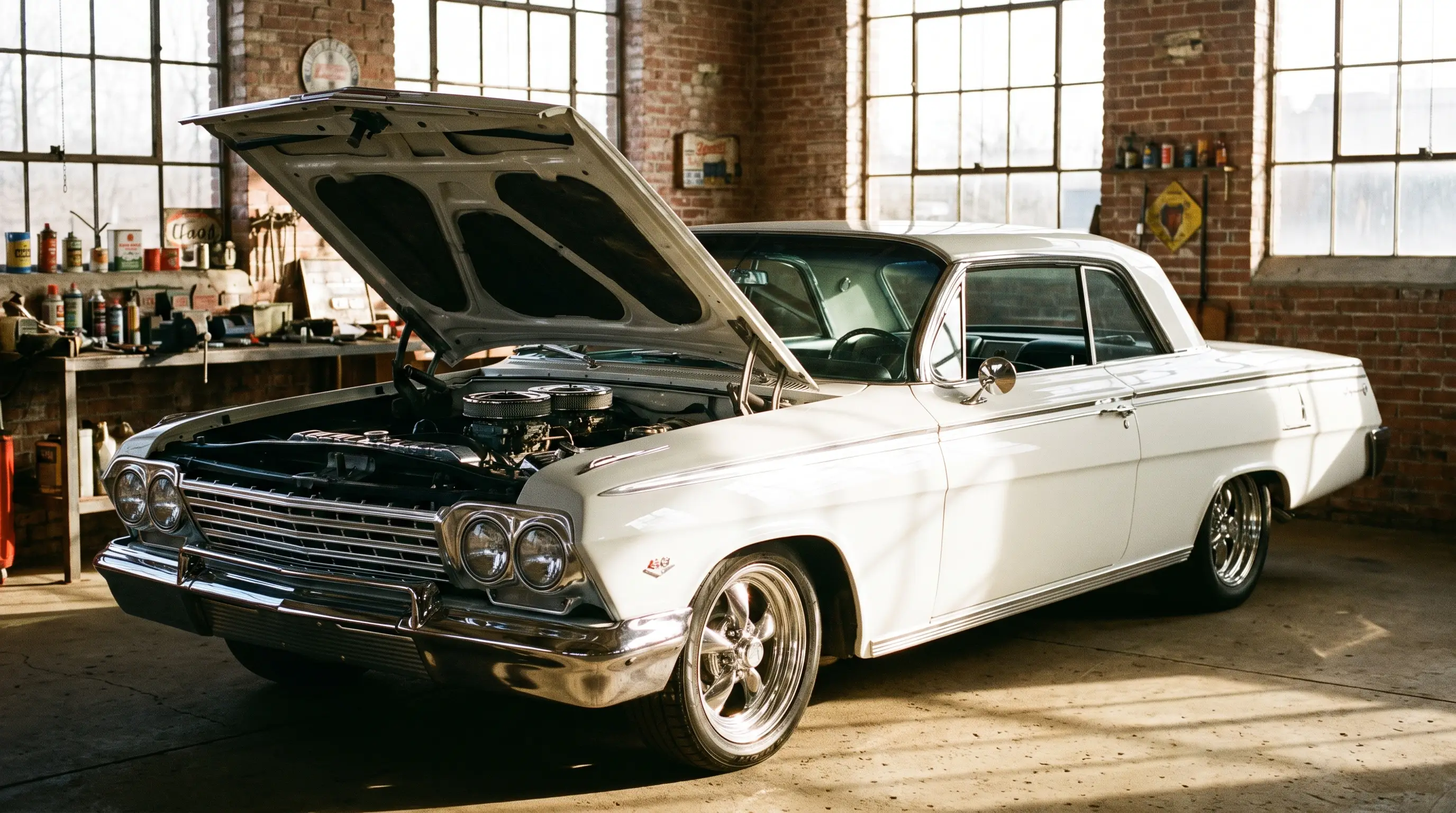
NASCAR in the early 1960s still ran cars far closer to their showroom form than the purpose-built machines the sport would field decades later, which meant a full-size Impala with a 409 under the hood was recognizably the same basic car a buyer could order from a dealer. That connection between the showroom and the racetrack mattered to Chevrolet, since a win on Sunday translated into showroom traffic on Monday in a way that felt much more direct than it does with modern stock car racing, where the connection between race car and street car is largely cosmetic.
What made the 409 a plausible NASCAR contender
- Strong low-and-mid-range torque suited to long, high-speed oval racing.
- A displacement advantage over smaller rival engines in an era before universal displacement caps.
- A durable enough bottom end to survive extended high-speed running, assuming proper preparation.
None of this made the 409 an automatic winner. NASCAR competition in this period was intensely competitive, with manufacturers pouring resources into engine development specifically for oval racing, and the 409 was fighting for relevance against engines built with racing as their primary purpose rather than a secondary application of a street engine.
Why the 409's NASCAR chapter gets overshadowed
| Arena | 409's cultural footprint |
|---|---|
| Popular music | Beach Boys hit song, instantly recognizable name |
| Drag racing | Strong Super Stock and factory experimental presence |
| NASCAR | Present but overshadowed by drag racing and pop culture fame |
The 409's NASCAR involvement simply never generated the same lasting cultural footprint as its drag strip results or its appearance in a chart-topping single. Stock car racing in this era rewarded manufacturers and drivers with wins and championships, not necessarily lasting nameplate mythology the way a hit record does. The 409's NASCAR chapter is real, but it is a quieter part of the engine's story compared to everything else it is remembered for.
The competitive landscape it faced
Ford and Chrysler were both investing heavily in NASCAR during this period, with engine programs specifically tuned for the demands of long, high-speed superspeedway racing rather than the shorter bursts of drag competition. That created a genuinely difficult environment for any manufacturer's engine to dominate consistently, since the rules and the competition shifted from season to season as each manufacturer answered the others' latest developments. The 409 entered that environment as a strong, proven production engine rather than a purpose-built race motor, which is part of why its NASCAR results were respectable without becoming legendary the way its drag strip and cultural reputation did, especially once Pontiac's lighter, more powerful Super Duty cars took over the front of the field in 1962.
Putting the 409's racing record in context
Judging the 409 purely by NASCAR results undersells what the engine actually accomplished across different forms of motorsport in a short window of relevance. It was a big-inch, big-torque production engine asked to compete in disciplines ranging from quarter-mile sprints to five-hundred-mile ovals, and it held its own in more than one of them without being purpose-built for any single application. That versatility, more than any specific NASCAR finish, is what makes the 409 worth remembering as a serious performance engine rather than just a novelty tied to a hit song.
For the engine's full history, including the drag strip and cultural side of the story, our complete history covers the rest of the 409's reputation.
"The 409 did not need NASCAR to become famous. It got there anyway, and most people never even hear about that part of it."
- Emily Chen
Why collectors still chase these cars today
A genuine 409-powered Impala with any documented connection to period stock car racing occupies a small, specialized corner of the broader 409 market. These cars are rarer than the drag-oriented survivors that get most of the attention at swap meets and cruise nights, partly because fewer of them were built for this specific purpose and partly because NASCAR-oriented preparation in this era often meant more extensive modification than a typical street or drag car received. A buyer who finds one with real, verifiable history is finding something genuinely uncommon, not just a car dressed up to look the part after the fact. That rarity rarely gets reflected in asking prices the way it should, since most sellers and buyers alike are focused on the more famous drag racing and pop culture side of the 409 story.
The bottom line
409 nascar history is a real, if underappreciated, part of the engine's overall legacy. It never became the defining chapter of the 409 story the way the drag strip and the Beach Boys song did, but it shows an engine that Chevrolet trusted across multiple forms of competition during its short and eventful production run.
To see the current market for cars carrying this engine's full history forward, you can browse classic Impala listings today.
A closing thought on overlooked history
Every engine with a strong pop culture reputation ends up with an overlooked side to its story, and the 409 is no exception. The song and the drag strip results made the engine famous, but the full-size Chevrolets that carried it to superspeedways deserve a place in that story too, even if they never got their own hit single. Collectors who take the time to look past the most repeated version of an engine's history usually find these quieter chapters worth the effort, and the 409's stock car years are a good example of exactly that, a chapter worth knowing even if it never gets the same radio airplay as the rest of the engine's legend.