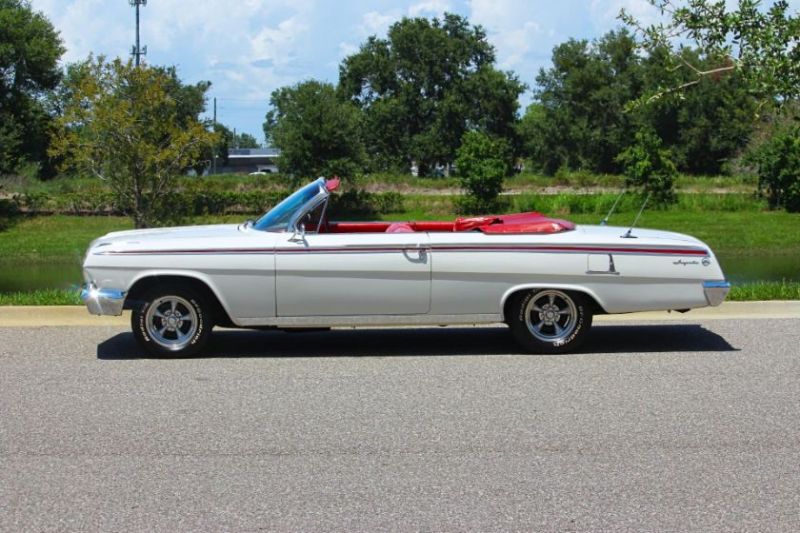
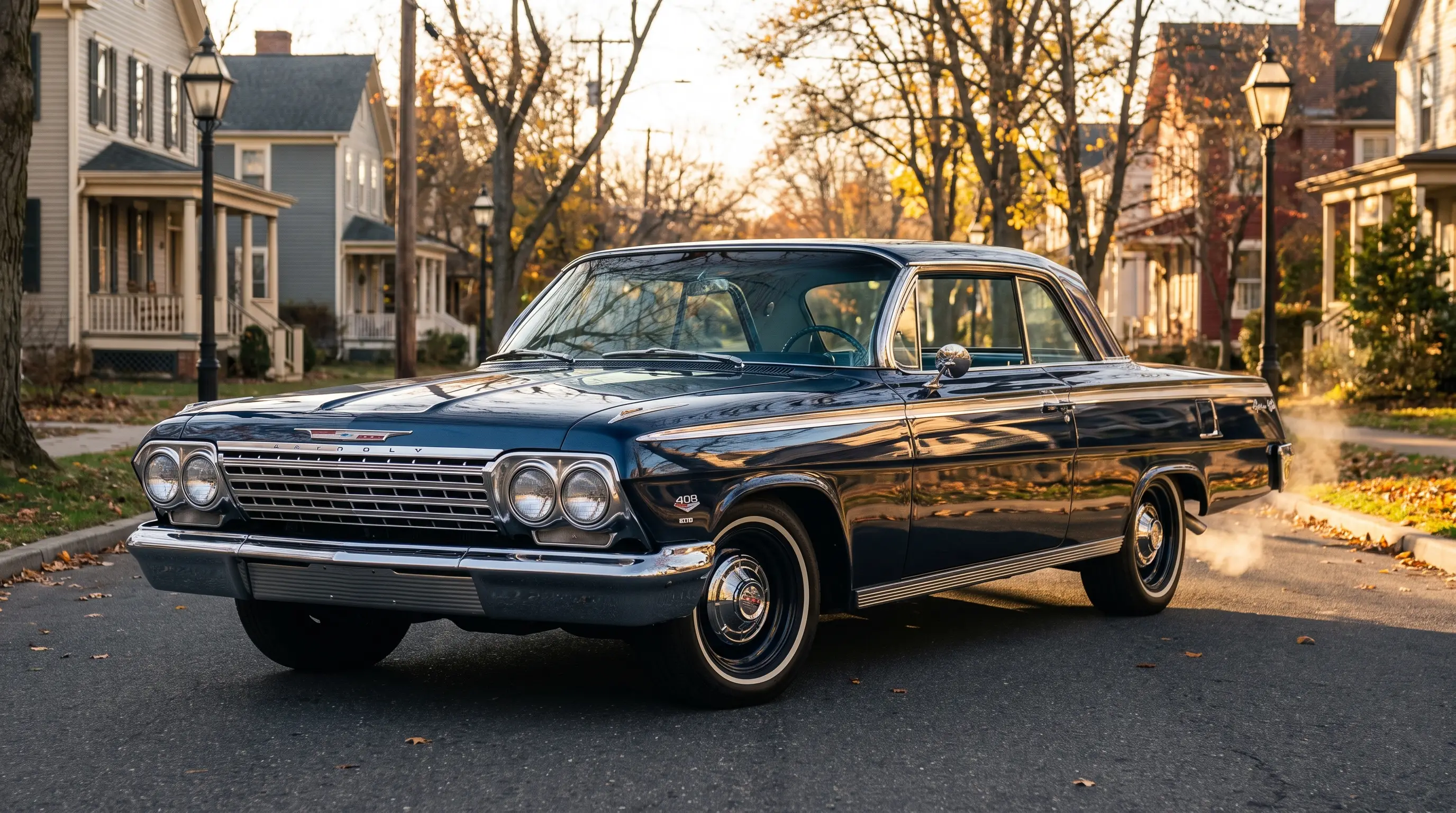
409 impala value is a topic where enthusiasm and cash do not always agree. A real 409, properly documented, sits in a different market bracket than a driver with a story attached to it, and understanding that gap is the difference between a good purchase and an expensive regret.
What actually drives 409 impala value
Condition matters, as it does for any collector car, but with the 409 the bigger swing factor is authenticity. A numbers-matching dual-quad 1962 Impala 409 with a four-speed and factory documentation commands a serious premium over a car with a period-correct engine that was not the one it left the factory wearing. Buyers are not just paying for horsepower. They are paying for a verified connection to a specific, celebrated moment in Chevrolet history, and that connection is worth real money precisely because it is hard to fake convincingly to a knowledgeable buyer.
How body style and options change the number
A convertible 409, all else equal, will typically outsell a hardtop, and a hardtop will typically outsell a sedan or wagon carrying the same engine, simply because collector demand skews heavily toward the sportier body styles. That does not mean a 409 sedan or wagon is worthless. It means the buyer pool is smaller and more specialized, made up of people who specifically want the novelty of a big-block engine in an unexpected body style rather than the more obvious two-door hardtop or convertible. Options stack on top of body style. A four-speed manual, factory tachometer, and console typically add more to a 409's value than the same options would add to a car with a small-block engine, since they reinforce the performance intent buyers are paying for in the first place.
The documentation hierarchy
| Documentation tier | What it includes | Market position |
|---|---|---|
| Top tier | Protect-O-Plate, original build sheet, matching casting numbers | Highest achievable price, museum and top-collector interest |
| Mid tier | Consistent casting numbers, no full paper trail | Strong price, more negotiation room |
| Lower tier | Claimed 409 with no verification, engine swapped in later | Priced as a good driver, not a numbers-matching collector car |
Sellers know this hierarchy exists, and some price their cars as though they sit a tier higher than the documentation actually supports. That gap is where buyers overpay if they do not push for proof before negotiating.
Risk factors buyers should weigh
- Engine swaps presented as original, especially on cars sold without a clear ownership history.
- Bodies pieced together from multiple donor cars after decades of parts scarcity.
- Restoration work that prioritizes appearance over documented period-correct detail.
None of these issues make a car worthless. They make it a different category of purchase, priced and represented honestly rather than passed off as something it is not.
Liquidity and where the real demand sits
Top-tier documented 409s move at major auctions with real bidder competition, because the buyer pool for a verified example includes serious collectors who are not price sensitive in the way a typical used car buyer would be. Mid-tier and driver-quality 409s move more slowly and depend heavily on regional markets and how well the seller can tell the car's story. A private sale without an auction house's authentication behind it puts more burden on the buyer to verify everything independently before money changes hands.
Timing also matters more than most buyers expect. Marque-specific auctions and events built around 1960s Chevrolet performance tend to draw a more informed, more competitive bidder pool than a general classic car sale where a 409 might be one of only a few big-blocks on offer. Sellers who understand this will often hold a top-tier documented car for the right specialized sale rather than moving it at the first offer, and buyers should expect to compete harder for a genuinely correct car in that kind of setting.
For background on why the 409 built the reputation that drives this whole market, the 409 impala story is worth reading before you shop seriously, and for the broader Impala nameplate context behind it, the full story fills in the rest.
"Paper beats paint every time. I would rather buy a rough survivor with a build sheet than a perfect car with none."
- David Mercer
What insuring and financing a 409 actually looks like
A top-tier documented 409 is not a car most standard insurance policies are built to cover properly. Buyers who own one seriously typically move to an agreed-value collector policy, which sets an insured value in advance rather than leaving replacement cost to a claims adjuster's judgment after a loss. That agreed value should be backed by a recent independent appraisal, not just a purchase price from years ago, since 409 values have moved enough over time that an outdated number leaves an owner underinsured. Financing a car at this level is less common than outright purchase, but specialty classic car lenders do exist for buyers who want it, and they typically require the same kind of documentation an insurer or an auction house would ask for. None of that paperwork is optional if a buyer wants the car properly protected once it is sitting in the garage.
The practical takeaway
409 impala value is not a single number you can look up and trust. It is a range that depends almost entirely on how much of the car's history can actually be proven. Buyers who insist on documentation before negotiating price protect themselves from the two most common ways to overpay in this market, buying an undocumented engine swap at numbers-matching prices, or buying an over-restored car that looks better than it is worth.
To see how current sellers are pricing documentation against condition, take a look at classic Impalas on the market before making an offer on any single car.
A word on emotional decisions
The 409's cultural weight makes it easy for a buyer to fall in love with a car before the paperwork has been checked. That is understandable given the engine's history, but it is also exactly how experienced sellers move driver-quality cars at collector prices. Walking away from a car that cannot produce documentation, no matter how good the story sounds in the moment, is the single most effective thing a buyer can do to protect their own money in this market. There will be another 409 for sale. There is rarely a second chance to undo an overpriced purchase made on enthusiasm alone, and no amount of nostalgia for a hit song changes what a car is actually worth on paper. Documentation, not enthusiasm, should be the last thing a buyer checks before signing a deal for real money.