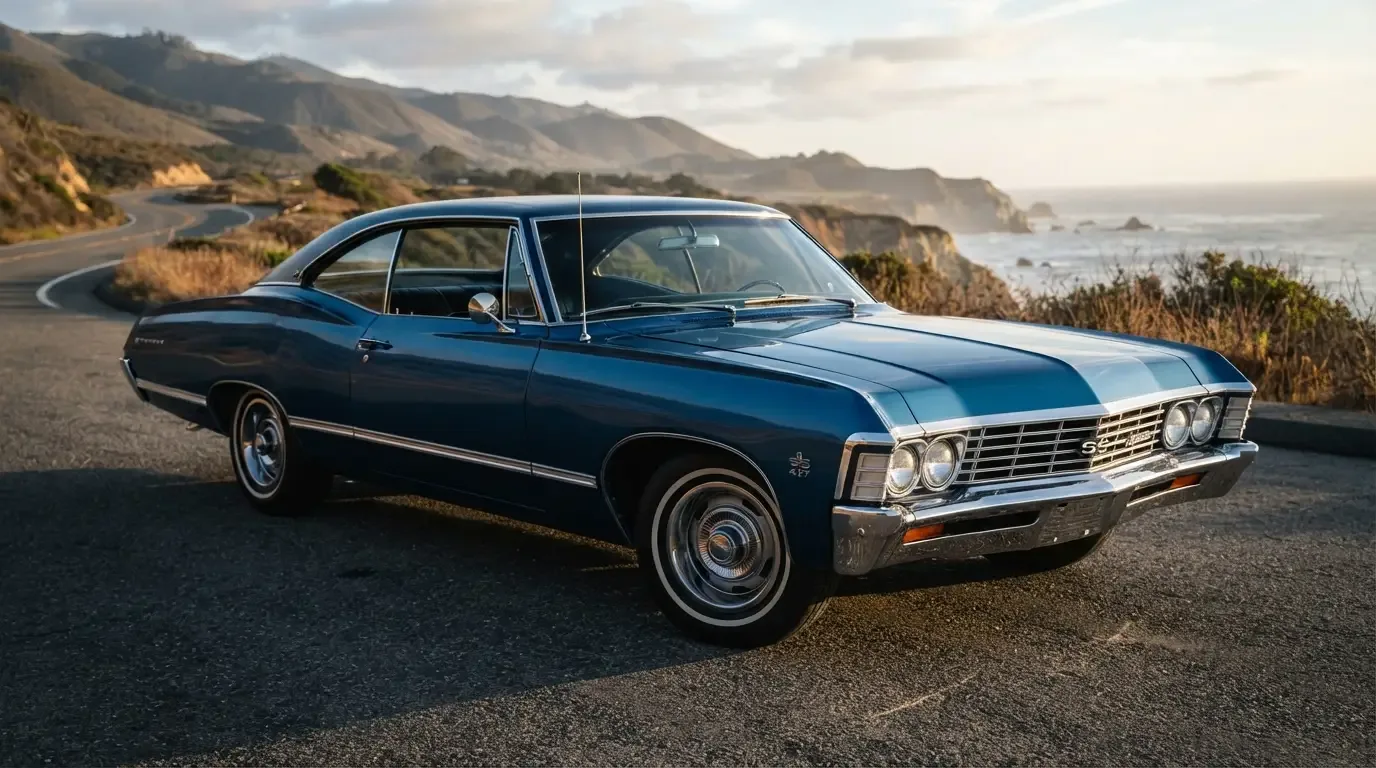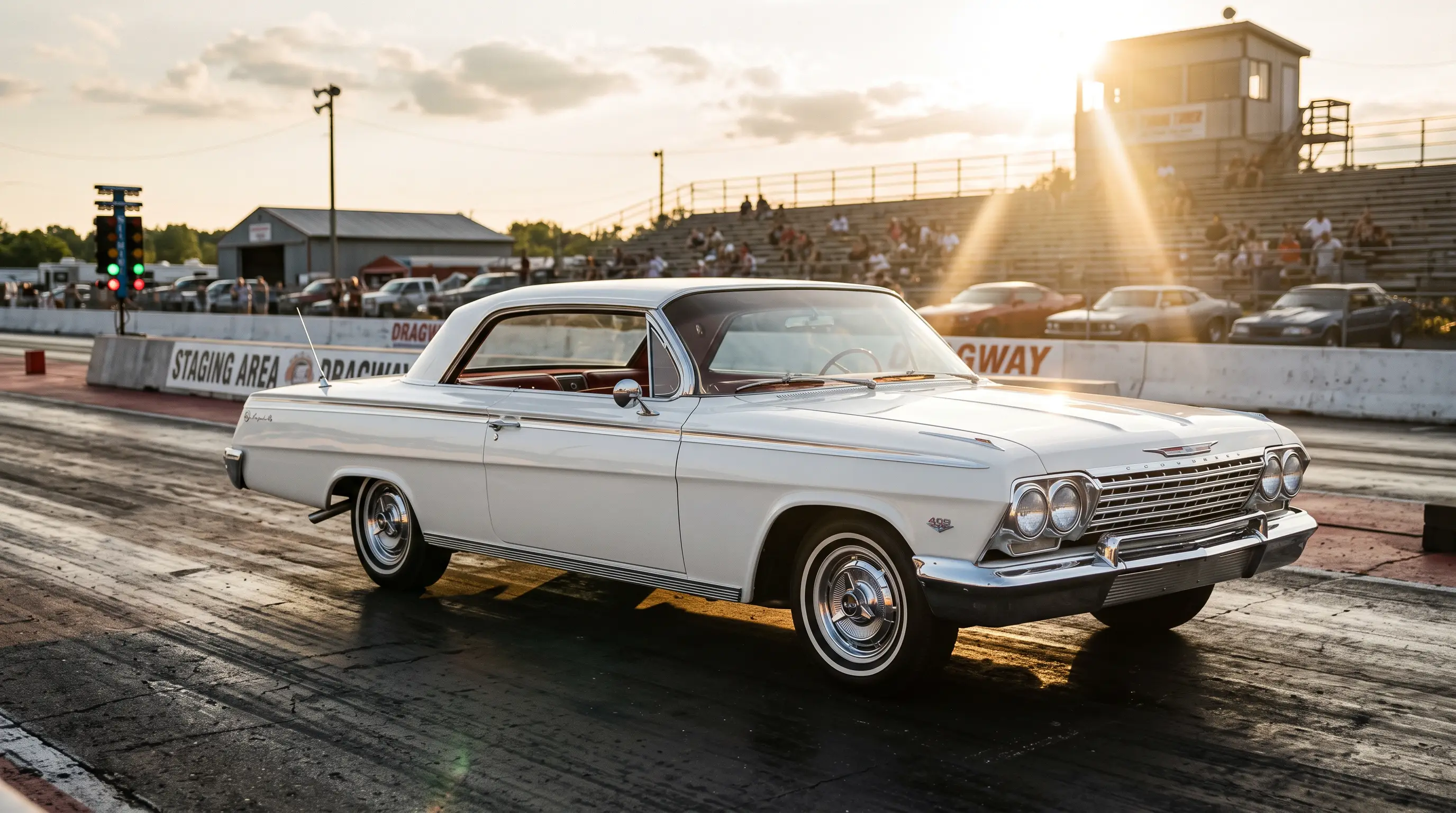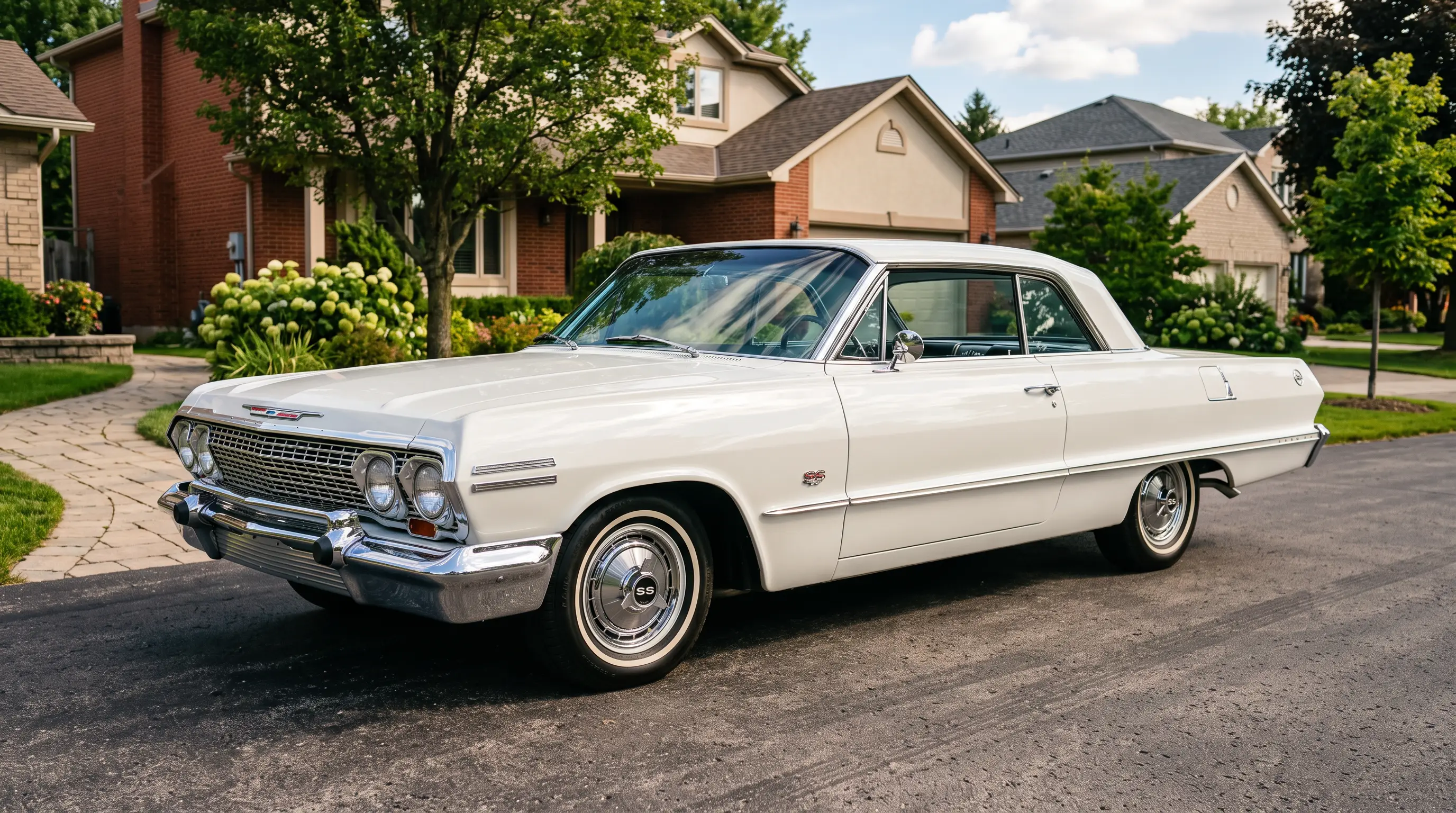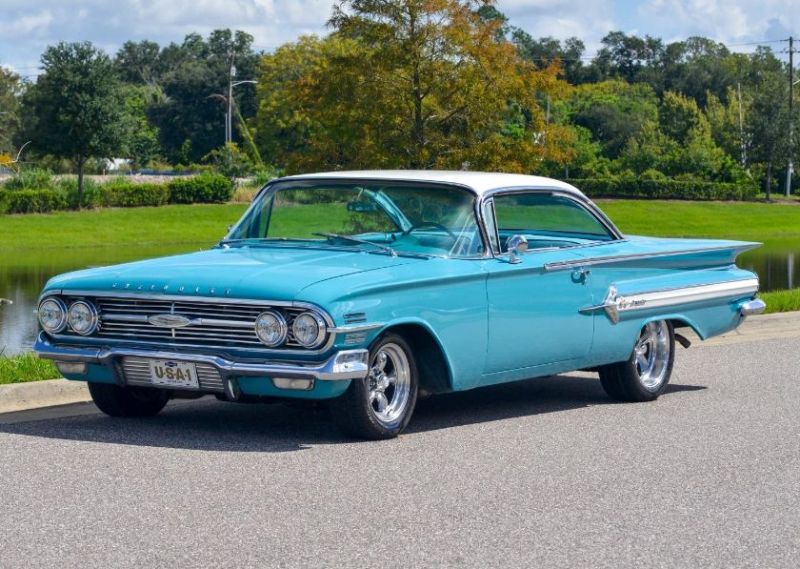
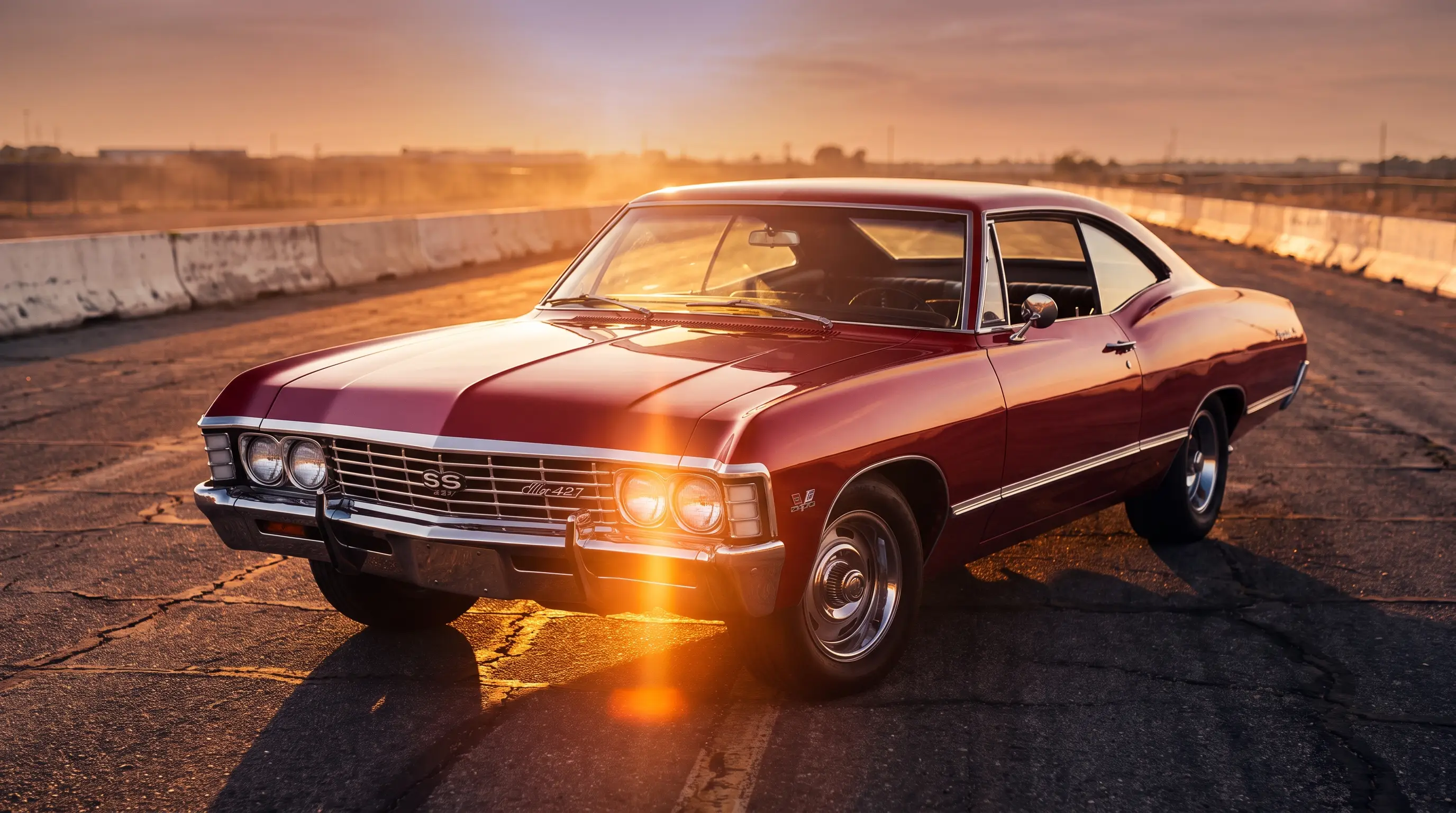
The Impala SS 427 is where Chevrolet stopped pretending the Super Sport was still a trim level and let it become something closer to a separate model. By the late 1960s the impala ss 427 designation meant one thing on the order sheet: the biggest engine Chevrolet offered in a full-size car, wrapped in the SS's blacked-out grille and bucket-seat interior. It is a short, specific chapter in a longer story, and the numbers behind it are more interesting than the folklore.
How the SS painted itself into a corner
By 1966 the Impala SS was in an odd position. It had started in 1961 as an option package meant to give Impala buyers a sportier alternative, then grown into a full sub-model with its own console, bucket seats, and badging. But the mid-size Chevelle SS 396 was eating into the same buyer who wanted a quick Chevrolet without paying full-size prices, and the Impala SS's volume was sliding. Chevrolet's answer for 1967 was to narrow the SS down to a single, harder-edged offering: the Impala SS 427, built only with Chevrolet's 427 cubic inch big-block under the hood. There was no small-block SS anymore. If you wanted the badge, you bought the engine that came with it.
That decision looks bold in hindsight, but it was really a contraction. Chevrolet was pulling the SS package inward, trading broad appeal for a tighter, more credible performance image at a moment when peak horsepower numbers were becoming a marketing tool in their own right.
What the 427 actually delivered
The 427 came in more than one state of tune. The base four-barrel version, the L36, was rated at 385 horsepower, backed by a Turbo Hydra-Matic or a heavy-duty three-speed manual. A more aggressive L72 427 rated at 425 horsepower was technically available on the order sheet, but it was an exceedingly rare pick in a full-size car that year, with only a small handful of factory-built L72 Impalas confirmed and some claimed examples still disputed among collectors today. In a car weighing close to two tons, that was enough to make the Impala SS 427 one of the quickest full-size Chevrolets of the decade in a straight line, even if its cornering manners never pretended to compete with anything smaller and lighter.
What is easy to miss is that most SS 427 buyers were not drag racers. They were people who wanted the fastest reasonable Impala Chevrolet sold, in a body that could still carry a family to church on Sunday. The 427 was less a race engine dropped into a passenger car and more a passenger car engineered around one very large, very torquey option.
Why production stayed low
The SS 427's numbers tell a story of a package running out of momentum even as the engine got bigger. Impala SS 427 production for 1967 came in at 2,124 units, a steep drop from the tens of thousands the SS badge had moved just a few years earlier. Part of that was price. The 427 option itself was not cheap, and by 1967 a buyer chasing straight-line performance had the Chevelle SS 396, the Camaro SS, and eventually the Corvette all pulling at the same wallet. The full-size SS was competing against Chevrolet's own smaller, lighter, cheaper performance cars, and it was losing.
By 1968 and 1969 the SS 427 numbers thinned further still, and 1969 marked the end of the line for the Impala SS as a regular production option. Chevrolet would revisit the SS name on full-size cars decades later, but the 427 era, brief as it was, is the version collectors treat as the last serious performance Impala before the badge went dormant.
"People assume the SS 427 was a factory drag car in a family suit. It wasn't. It was Chevrolet admitting that if you were going to keep the SS badge alive on a full-size car, you had better put the biggest engine you had behind it, because nothing smaller was going to justify the name anymore."
- Emily Chen
Spotting a genuine SS 427 today
Verification matters more here than with almost any other Impala variant, because the combination of a desirable engine and a low production run has made the SS 427 a frequent target for re-creation. A legitimate car should have engine and cowl tag codes that align with a factory-installed 427, along with the correct SS interior and exterior trim for its model year. None of that documentation work is glamorous, but it is the difference between owning a real SS 427 and owning a very good story about one.
For the full arc of how the Super Sport name got here, including the years before the 427 took over the badge, more on the impala ss lays out the whole progression. And if you want to trace it back even further, to the car the SS package was originally bolted onto, where this started covers the Impala's own origins before performance had anything to do with it.
What the SS 427 means for buyers now
Values on genuine, documented SS 427 cars have climbed steadily as buyers have realized how few were built relative to earlier Impala SS years. A correct L72-equipped car in solid condition is a different financial conversation than a small-block SS from 1964 or 1965, and that gap has only widened. For anyone shopping this specific slice of Impala history, patience and paperwork beat impulse every time; browsing classic Impalas on the market is a reasonable way to get a feel for how wide that price spread actually runs before committing to one.
Condition matters as much as documentation once you get past the paperwork question. A numbers-matching SS 427 that has been repainted and reupholstered without care loses a meaningful chunk of its premium, because buyers in this segment are paying for authenticity as much as performance. The cars that command the strongest prices tend to be the ones where the drivetrain, trim, and even the factory build sheet all point the same direction, with no gaps a buyer has to take on faith.
Living with a 427 today
Owning one is a different experience than the spec sheet suggests. The big-block is torquey rather than revvy, happiest loafing along at highway speed and only showing its temper when you put your foot down. Fuel economy is what you would expect from a two-ton car with a 427 under the hood, and parts for the drivetrain are generally available even if the correct-date-code pieces command a premium of their own. None of that discourages the people who want one. If anything, the SS 427's reputation as a car that demands commitment, mechanically and financially, is part of what keeps it desirable among Impala collectors rather than casual buyers.
The SS 427 was never the highest-volume Impala SS, and it was never meant to be. It was Chevrolet's last full-size argument that the Impala could still be a performance car, made at exactly the moment smaller cars were proving that argument increasingly beside the point. That contradiction, a big car built to prove a small-car point, is most of why it still gets talked about today.
Sources and notes
- Chevrolet Impala - Wikipedia
- 1967 Impala SS production numbers - Impalas.net
- 1967 Chevrolet Impala SS-427 Sport Coupe specs - Automobile Catalog
- 1967 L72 427 rarity discussion - autoevolution
- 1967 Chevrolet Impala SS 427 - Hagerty Valuation Tool
- Impala and Passenger Car Production Figures 1958-90 - Paddock Parts