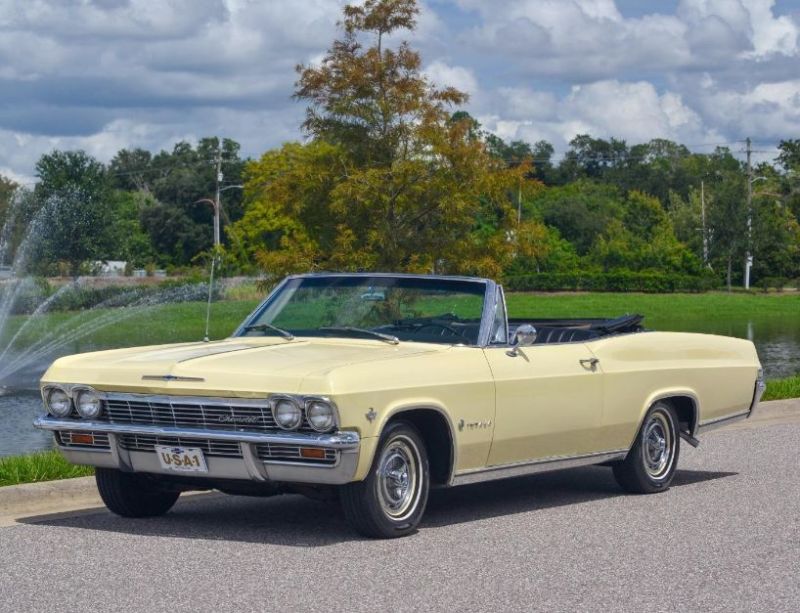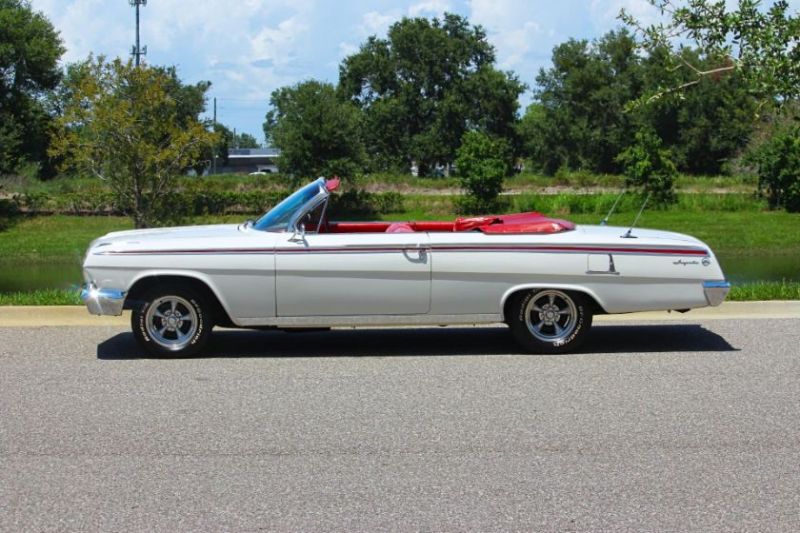
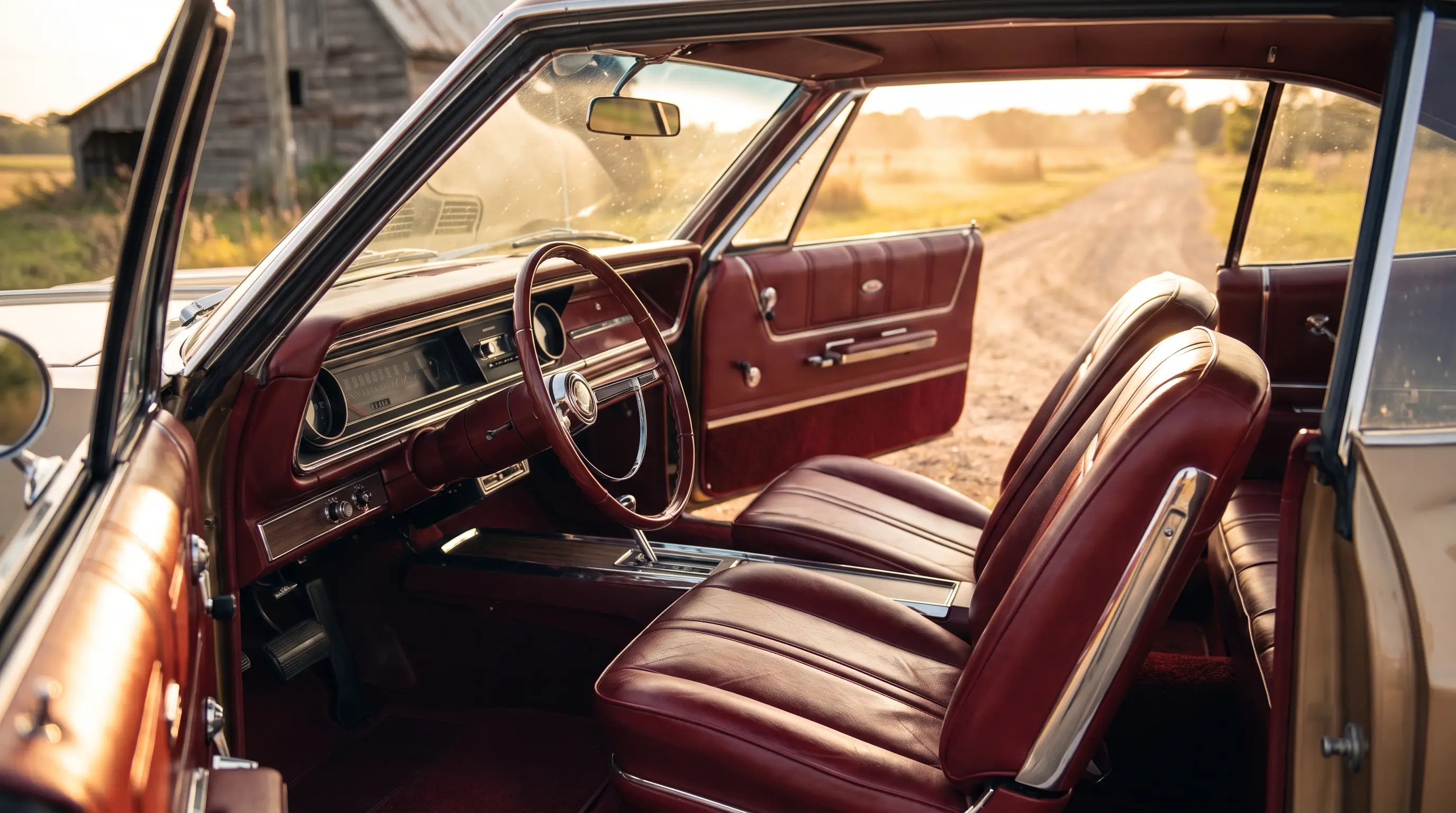
A retired schoolteacher in Ohio once told me the reason she bought her 1965 Impala SS was not the engine, not the badge, not even the color. It was the console. She remembered riding in a friend's SS as a teenager and being struck by how much it felt like sitting in something built specifically for the two front seat occupants, rather than a bench meant for whoever happened to climb in. Forty years later, buying her own, the impala ss interior was still the thing that closed the deal.
Bucket seats as a statement, not just a feature
It is easy to undersell how much the SS interior changed the character of the car compared to a standard Impala. A base model of the era typically rode on a wide front bench, comfortable enough but built around the idea that a car was a shared space for however many people needed to fit across it. The SS threw that assumption out. Individual bucket seats, separated by a floor-mounted console, turned the front of the car into something closer to a cockpit, a space designed around a driver and one passenger rather than a row of undifferentiated seating.
That shift mattered more culturally than mechanically. A bucket seat does not make a car faster. It does make a car feel like it belongs to the person driving it, and Chevrolet's stylists understood that psychology well enough to lean into it hard, upholstery patterns, stitching details, and trim finishes all built to reinforce the idea that this was a driver's seat rather than just a seat.
The console as the interior's centerpiece
Sitting between those buckets was a console that did more than hide the shifter. It housed gauges in some model years, provided storage in others, and served as a visual anchor that tied the whole front cabin together in a way a standard Impala's flat floor never attempted. Depending on the year and the transmission ordered, that console changed shape and function, but its presence at all was the real statement. It told a buyer, before the engine ever turned over, that this particular Impala had been built with a different intention than the one parked next to it on the dealer lot.
Instrument clusters got the same special treatment across SS years, often featuring a more complete set of gauges than a base Impala offered, giving the driver actual information rather than idiot lights and an optimistic fuel gauge. For a certain kind of buyer, that alone justified the SS premium over a standard car.
Materials that aged into character
Vinyl was the material of the era, chosen as much for durability as for looks, and SS interiors used it in patterns and textures meant to look sportier than a standard bench seat's simpler upholstery. Decades later, that same vinyl has become part of the car's charm rather than a cost-cutting compromise. Original, well-preserved SS interiors have a texture and smell that no reproduction fully captures, which is exactly why originality commands such a premium among buyers who care about more than just how a car drives.
Door panels followed the same logic, carrying SS-specific trim and often brighter accent details than a base car's plainer door cards. None of it was purely functional. It was Chevrolet's stylists making sure that every surface a driver's hand or eye touched reinforced the same message the badge on the outside was already sending.
"People remember the engine numbers because they are easy to quote at a car show. What they actually remember from riding in these cars, the thing that stays with them for decades, is almost always the seats and that console between them."
- Patrick Walsh
Why the interior still sways buyers today
Talk to enough SS owners and a pattern emerges. Plenty bought the car for the engine or the badge, but a surprising number bought it because of a memory tied specifically to the interior, a ride as a kid, a friend's car in high school, a photograph of a parent standing next to one with the door open. The bucket seats and console were designed to create exactly that kind of impression, and five decades on, they are still doing it.
For anyone chasing that feeling today, originality and condition inside the cabin matter enormously to both the driving experience and the eventual resale value. A correct, well-kept SS interior is not simple to restore once it has deteriorated, and reproduction parts, while available, rarely match the original materials perfectly. That is worth factoring into any purchase decision alongside the more commonly discussed engine and badge questions.
For the complete story of how the SS package came together around that interior, engines, badges, and everything else that made it its own model, the impala ss story covers the full arc. And for the history of the Impala nameplate the SS was built on top of in the first place, the full story goes back to where the whole lineage started.
If that schoolteacher's story sounds familiar, and you find yourself wanting to sit in one of these interiors for yourself rather than just read about it, classic Impalas on the market is a reasonable place to start looking at what survives today, buckets, console, and all.
Small details that separated one year from the next
Anyone who has spent time around several SS model years back to back notices how much the interior details shifted, even when the broad formula, buckets plus console, stayed constant. Steering wheel designs changed, dash trim finishes moved between brushed metal and simulated wood grain depending on the year, and even the stitching pattern on the seats varied enough that a knowledgeable eye can often place a photograph within a year or two just from the cabin alone. None of these changes were accidental. Chevrolet's design teams treated the interior with the same seasonal attention they gave the exterior sheet metal, refreshing details annually to keep the car feeling current even when the underlying mechanical package barely changed.
That constant small evolution is part of why interior originality matters so much to serious buyers today. A seat pattern from the wrong year, installed during a well-meaning restoration, is an easy mistake to make and an equally easy one for a knowledgeable buyer to spot. It does not ruin a car, but it does change how a purist evaluates it, and it is exactly the kind of detail that separates a driver-quality SS from one that could hold its own at a judged concours event.
I have sat in enough of these cars now, across enough different years, that I no longer think of the interior as an afterthought to the engine bay conversation. It is its own story, told in vinyl and brushed trim rather than horsepower figures, and it is the part of the SS experience most likely to convince someone who was not already a car person that this particular Chevrolet deserved a second look.