
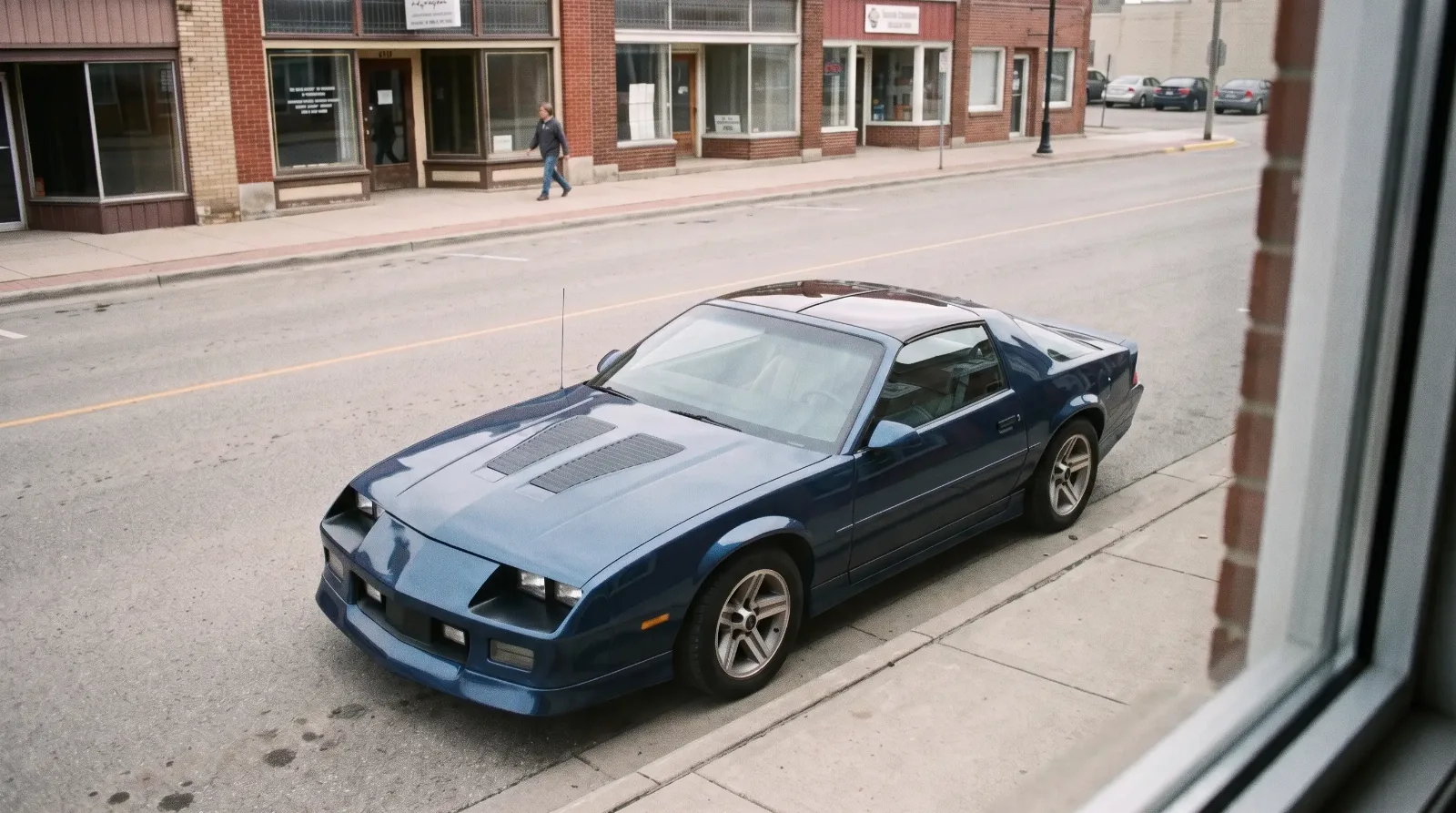
In November 1986, Motor Trend tested an IROC-Z convertible and came back with a prediction: this would be one of the most desirable cars of the decade. It was a bold call. Chevrolet had not sold an open Camaro since 1969. A whole generation of owners had grown up with a fixed roof or, at best, a pair of glass T-tops to lift out on a warm Saturday. The IROC-Z convertible gave them the sky back, and it did it with the car the eighties already loved.
Car Features
6 min read
The IROC-Z Convertible, 1987 to 1990
The IROC-Z convertible brought back the open Camaro in 1987: ASC conversions of T-top coupes, no 350 at first, 3,761 built for 1988, and how to spot one.
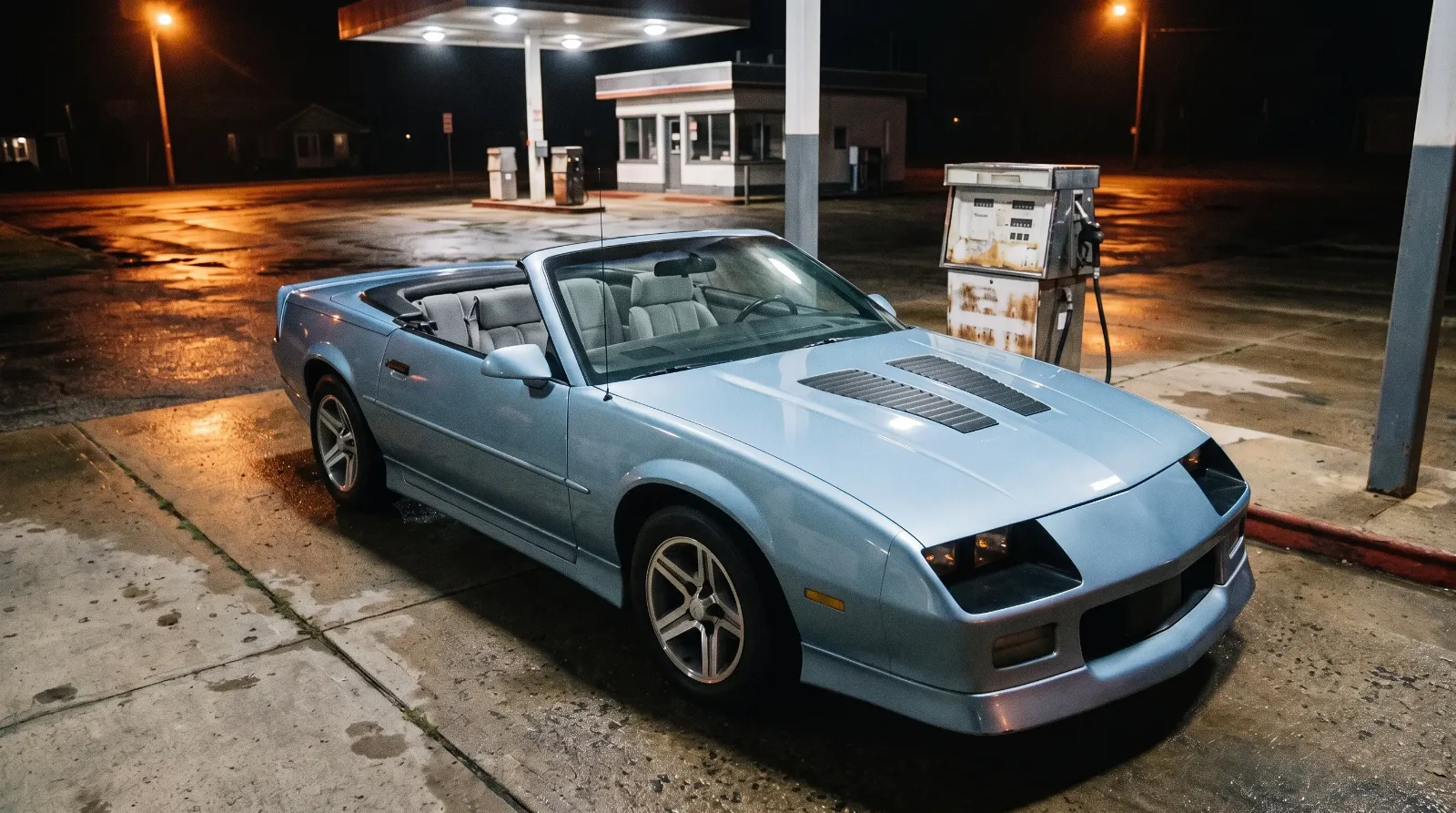
The story of the IROC-Z is mostly told from behind the wheel of the coupe: the stance, the wheels, the tuned-port engine. This is the quieter chapter, about the open cars, who built them, how many there were, and why the most powerful engine was missing from the first ones.
A convertible cut from a T-top coupe
The convertible did not begin on Chevrolet's own drawing board. It began with the American Sunroof Company, ASC, a specialist that took finished T-top coupes and turned them into open cars. The T-top body was the right starting point. Those cars already carried extra structural bracing to make up for the missing center of the roof, and that bracing suited a conversion that took the rest of the roof away.
Before the official program, there was a small, almost private run. Late in the 1986 model year, ASC built 82 IROC-Z convertibles for a consortium of dealers. They were an aftermarket-style program, not cars from the factory line, and they sit in the history like a rehearsal: a handful of open IROC-Zs on a few showroom floors, waiting for the real thing.
For 1987 the program became official. Chevrolet sold the convertible through its dealers, ASC did the conversions, and the open top cost about $4,000 to $4,400 more than the coupe, depending on which source you read. Some sellers today call 1988 the first year. It was not. Motor Trend had the car in hand in late 1986, and Chevrolet built 1,007 convertibles for 1987.
1987: the IROC-Z convertible without the 350
Here is the part that still surprises people. The 1987 IROC-Z coupe could be ordered with the new 5.7 liter L98, rated at 225 hp and 330 lb-ft, the engine that made the car feel finally finished. The convertible could not. The 5.7 was an IROC-Z coupe engine that year, automatic only, and ASC did not build convertibles with the 350 for the factory.
So the first open IROC-Zs ran on a 305. That was not a punishment. For 1987 the tuned-port 305 could be paired with a five-speed manual, and with that gearbox it was rated at 215 hp (190 hp with the automatic). A manual gearbox with the top down is its own kind of happiness. But it does mean the most-wanted combination of all, an open car with the 350, was simply not on the 1987 order form.
Chevrolet's own split of those 1,007 cars is worth a close look. There were 263 Sport Coupe convertibles and 744 Z28 convertibles, and that 744 includes the IROC-Zs. In 1987 the IROC-Z was still a package on the Z28, not a model of its own, which is the heart of the IROC-Z versus Z28 question. How many of the 744 carried the IROC-Z package is a number nobody has published from an opened source. It is one of the small mysteries of the car.
1988 to 1990: the open IROC-Z stands alone
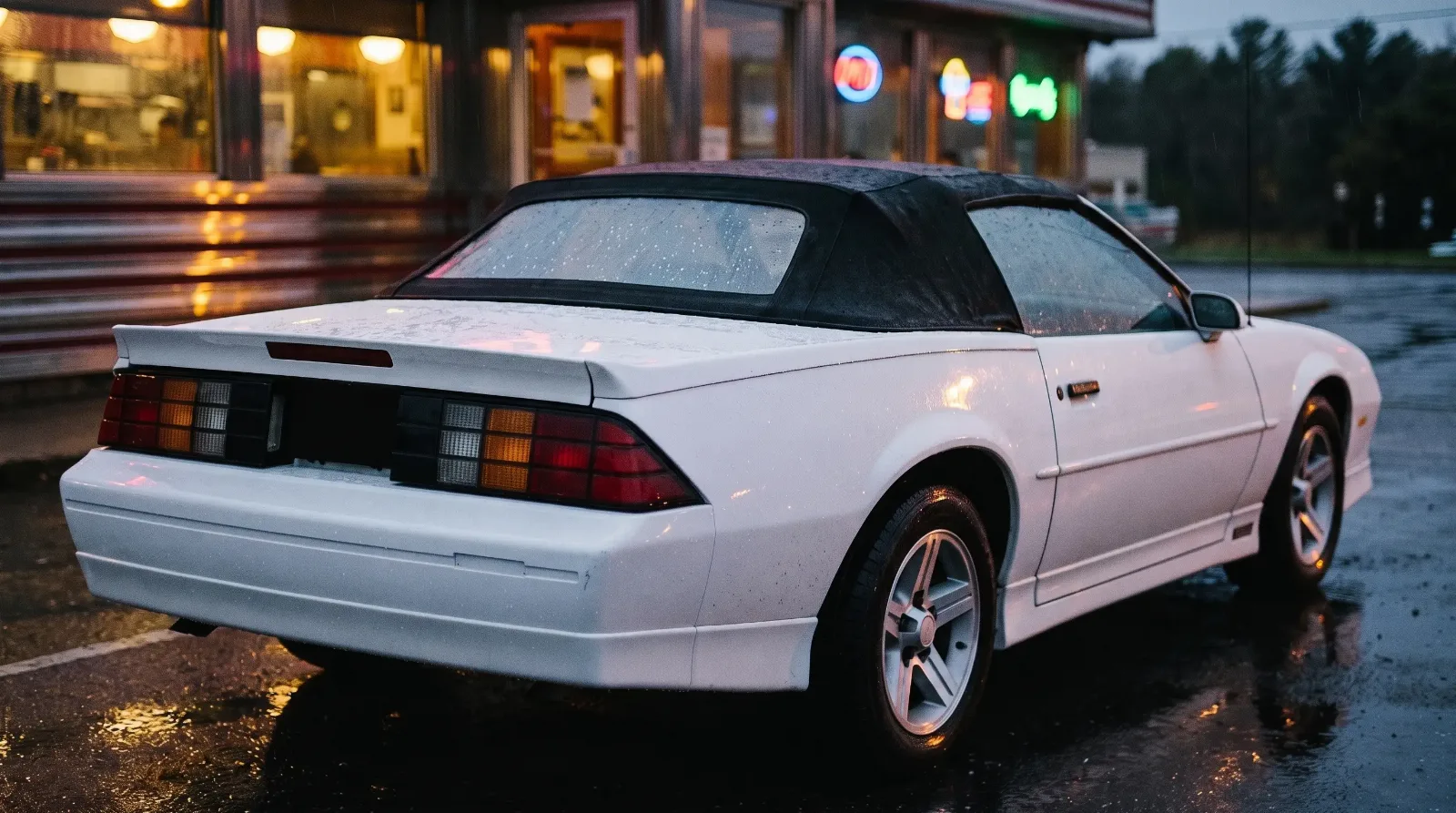
For 1988 the Z28 name went away, and the IROC-Z became its own line. The catalog was simple: a Sport Coupe, an IROC-Z coupe, an IROC-Z convertible and a base convertible. That year gives the clearest count of the whole run. Chevrolet built 3,761 IROC-Z convertibles and 1,859 base convertibles, alongside 24,050 IROC-Z coupes. Roughly one IROC-Z in seven left with a folding top.
After that, the numbers get softer. Sources agree that 7,185 Camaro convertibles were built for 1989. An enthusiast production table splits them into 3,940 IROC-Z and 3,245 RS cars, and valuation guides repeat the same split, so it looks sound even without a factory sheet to hand. The 1990 count is shakier. It was a short last year for the IROC-Z, with only 4,213 coupes built, and the same table credits it with 1,294 convertibles, a figure no factory document we opened confirms.
| Model year | IROC-Z convertibles | Other Camaro convertibles | Note |
|---|---|---|---|
| 1986 | 82 (ASC, dealer consortium) | None | Not the factory program |
| 1987 | Part of 744 Z28 convertibles | 263 Sport Coupe | No 350 in convertibles |
| 1988 | 3,761 | 1,859 base | Z28 dropped; IROC-Z stands alone |
| 1989 | 3,940 | 3,245 RS | 7,185 convertibles in total |
| 1990 | 1,294 (one table, unconfirmed) | 729 RS | Last IROC-Z year |
By 1989 the base convertible wore the revived RS name, and it used the throttle-body 305 rather than the tuned-port engines of the IROC-Z. Side by side at a curb, the two open cars could look close. Underneath, they were not the same car, and the paperwork is the only honest way to tell them apart.
Then, after 1990, the name was gone. The Z28 came back for 1991, and the convertible carried on without the four letters that had made it famous.
"The coupe was the poster on the bedroom wall. The convertible was the car you imagined driving once you were old enough to leave the bedroom, top folded, radio up, going nowhere in particular."
Nora Beckett
Finding a real IROC-Z convertible today
An open IROC-Z is a car people love to build out of something else, so start with the VIN. On 1987 to 1992 Camaros the VIN begins 1G1FP, and the next digit is the body code: 2 for a coupe, 3 for a convertible. A car sold as a factory convertible should carry the 3. A coupe with its roof cut off later will not.
Then come the engine questions. A 1987 IROC-Z convertible should not have left the factory with the 350, so a 1987 open car with an L98 deserves a long conversation and a stack of documents. For 1988 to 1990 the record is less clear. Sources either disagree or say nothing about whether the 350 was offered in the IROC-Z convertible in those years, so treat any seller's claim either way as a claim, and ask for the window sticker or the build documentation.
The 1986 dealer cars are a different case again. With only 82 built outside the factory line, provenance is everything, and a car offered as one of them should come with paper that ties it to the ASC program.
Motor Trend's prediction has aged better than most. The coupes were everywhere; the convertibles never were. Find one with its body code, engine and documents in agreement, and you have the rarest way to own the eighties' favorite Camaro, with the sky still attached.
Sources and notes
- CamaroTech: third-generation Camaro descriptions and production by year
- GM EFI: guide to the third-generation Chevrolet Camaro
- CamaroTech: 1987 Camaro VIN codes
- Wikipedia: Chevrolet Camaro (third generation)
- Old Cars Weekly: 1986 Chevrolet Camaro IROC-Z convertible
- Muscle Car Facts: 1987 Chevrolet Camaro
Related Reading
Have a
Chevrolet Camaro
for Sale?
Reach thousands of serious classic car collectors across the US.
Sell It Here →
Selling a classic? Here's how: where to sell your classic car online
Are You a Classic Car Dealer?
List your full inventory and connect with targeted classic car buyers.
Join as a Dealer →
#chevrolet camaro
#camaro convertible
#1980s cars
#third generation Camaro
#IROC-Z
#ASC
#IROC-Z convertible

About the author
Nora Beckett
Automotive features writer and photographer who tells the human stories behind the cars, from show fields to cross-country road trips.
Related Listings - Chevrolet Camaro
Comments
Be the first to comment on this article.