
Somebody at a table in Detroit, sometime around 1975, had to be the one who said it out loud first: what if we just build the camper into the truck at the factory. Nobody wrote that meeting down for posterity, at least not in any record I have ever seen at a swap meet or a museum archive, but the K5 Blazer Chalet had to start somewhere, and the idea behind it was simpler than most people assume. It came from watching what Blazer owners were already doing themselves.
Car Features
6 min read
How the Blazer Chalet Came to Be
The story behind Chevrolet's decision to turn the K5 Blazer into a factory camper, from the 1970s camping boom to the coachbuilder partnership that made it real.
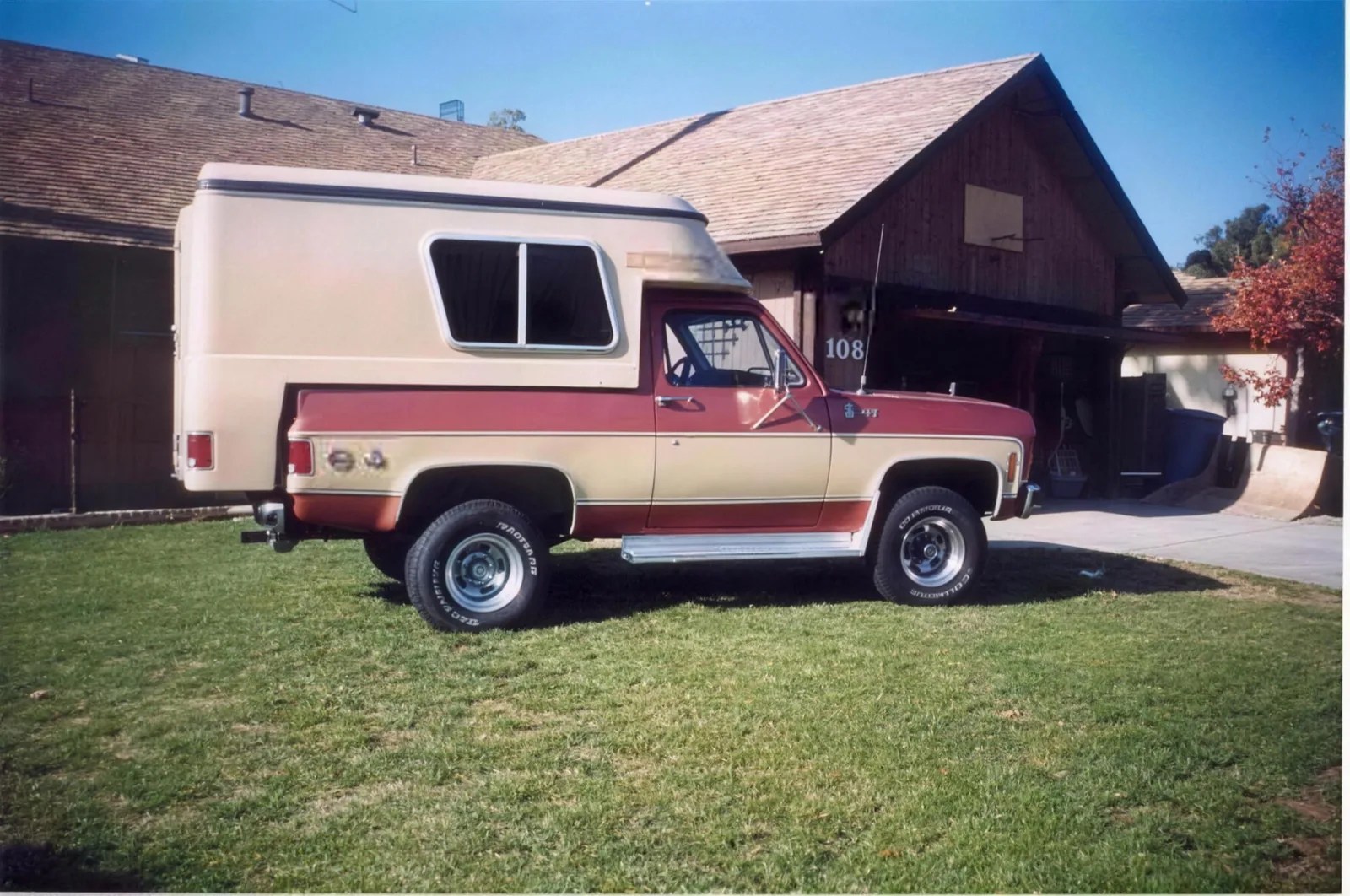
Photo courtesy of blazerchalet.com
The camping boom nobody at GM could ignore
By the mid-1970s, recreational camping had turned into a genuine industry. Truck campers, pop-up trailers, and early Class C motorhomes were selling in numbers that made every truck manufacturer take notice, and plenty of K5 Blazer owners were already hauling slide-in campers or towing trailers behind their trucks. Chevrolet's product planners looked at that trend and saw an opportunity that did not require inventing a new vehicle. It required modifying one they already built and sold successfully.
The K5 Blazer was a natural candidate. It already had the frame strength, the drivetrain options, and the reputation for handling rough terrain that camping buyers wanted. What it lacked was interior space and standing headroom, the two things a serious camper conversion needs and a standard truck cab simply cannot provide. Solving that problem meant reworking the roof, and that decision is where the Chalet's origin really begins.
Borrowing a trick from the removable-top trucks
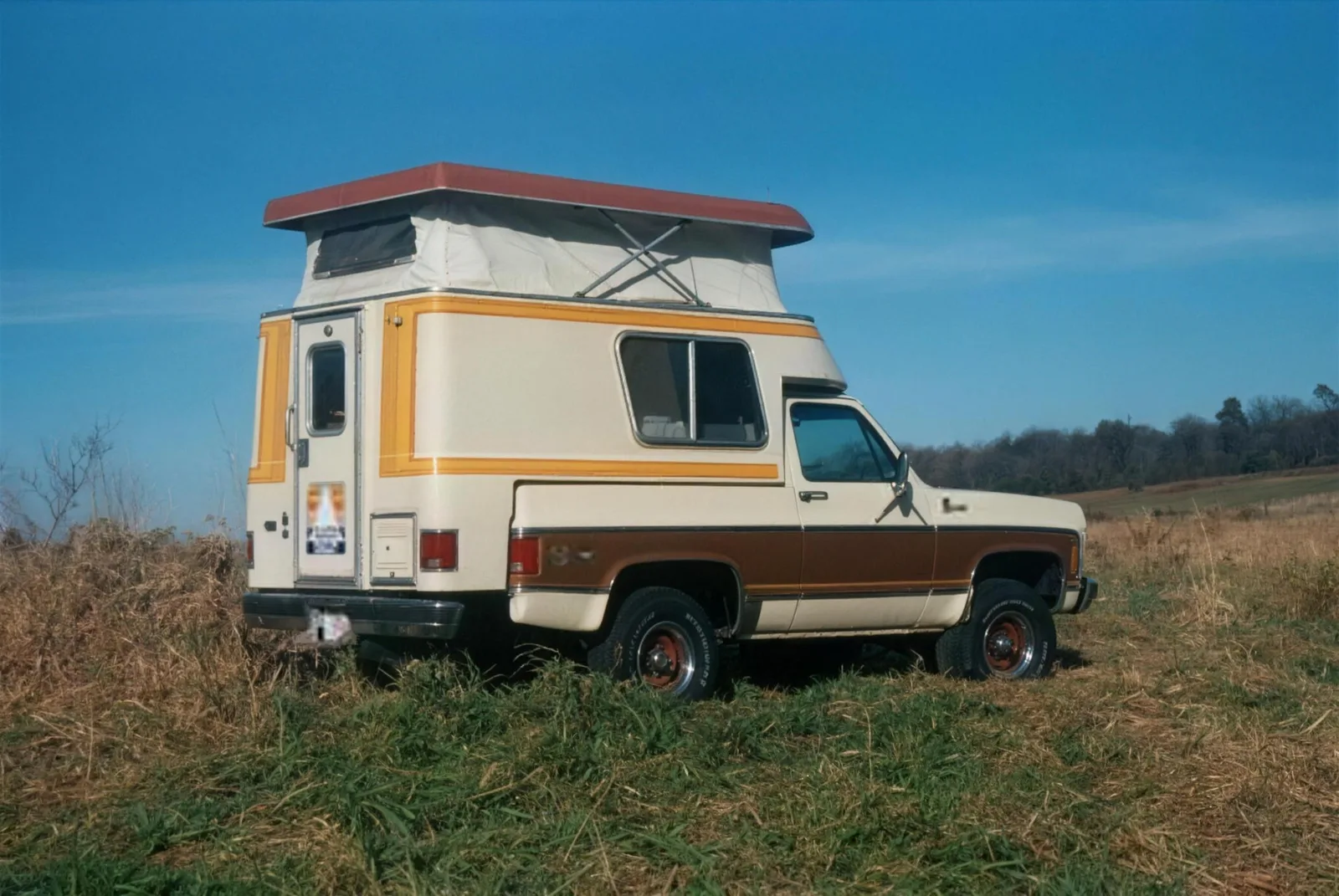
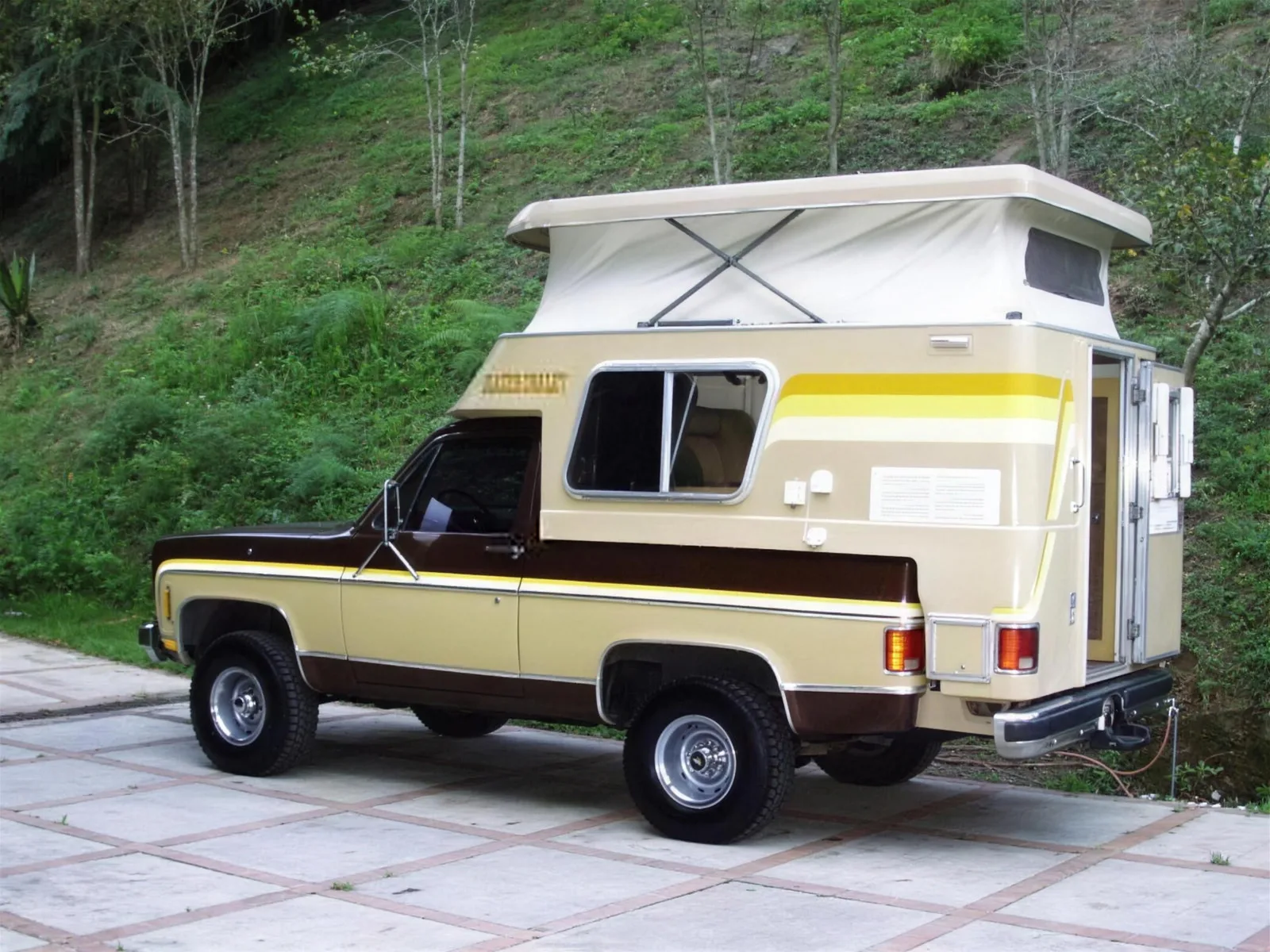
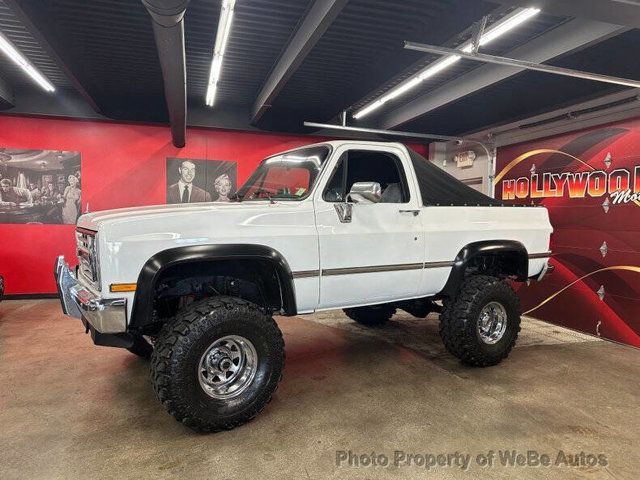
Earlier K5 Blazers had offered a removable hardtop as one of their signature features, a nod to the original 1969 design that let owners run the truck open-air. That engineering history mattered when GM started developing the Chalet, because the roof section was already understood as something that could be modified or replaced without compromising the truck's structure. Rather than starting from a totally blank sheet, the team building the Chalet adapted a raised, camper-style roof to fit over the existing K5 body, working with Chinook Mobilodge, an outside recreational vehicle builder, to handle the fiberglass work and interior fit-out.
That partnership model, GM handling the base truck and an outside specialist handling the conversion, was common practice for low-volume factory options in that era. It let Chevrolet offer something genuinely different without retooling an entire assembly line for a product that would never sell in pickup-truck numbers.
Selling the idea to a dealer network
Getting a product built is only half the challenge. Chevrolet also had to convince dealers to stock and sell something that looked nothing like a standard truck. Dealers were used to moving Blazers off the lot as work vehicles and family haulers, not as self-contained campers with dinettes and iceboxes. The Chalet asked salespeople to pitch an entirely different use case, one aimed at families planning weekend trips rather than contractors hauling gear.
That mismatch between the Chalet and the rest of the K5 lineup is part of why so few dealers pushed it hard, and part of why production numbers stayed low from the start. It was never going to be a volume seller sitting next to standard Blazers on a dealership lot. It was a niche product aimed at a specific kind of buyer, one who wanted the K5's capability without giving up the comfort of a real camper interior.
"Somebody had to convince a dealership full of guys used to selling work trucks that a camper with a fold-out bed belonged on the same lot. That took some nerve, and honestly, I respect it."
- Wayne Coburn
What the origin story explains about today's rarity
Understanding how the Chalet came to exist helps explain why it is so hard to find one today. It was never mass-produced, never marketed as aggressively as the standard Blazer, and it depended on a partnership between GM and an outside builder that could not scale the way a normal assembly line could. Every one of those factors, born out of how the truck was conceived in the first place, adds up to a low survival count decades later. Our complete history of the Chalet walks through what happened after the concept made it to production, including how long it lasted and why it eventually disappeared.
None of that origin story is why most people fall in love with the Chalet today, though. Most people fall for it because it looks like nothing else on a show field, a K5 Blazer wearing a raised camper roof that turns heads at every stop. If that appeal has you hunting for a base truck to start your own project, or just a clean example to enjoy as-is, it is worth taking time to find a classic K5 Blazer before deciding whether the full Chalet conversion is a chase worth taking on.
Internal champions and internal skeptics
Every low-volume factory product needs someone inside the company willing to push it through committees that would rather spend budget on higher-volume programs. The Chalet almost certainly had internal champions of that sort, planners or engineers who believed a factory camper conversion could carve out real loyalty among K5 buyers even if the sales numbers never matched a standard truck's. It just as certainly had skeptics, the kind of finance-minded voices who show up in every large company asking whether a project with thin margins and a narrow buyer pool was worth the engineering hours.
That tension between champions and skeptics is common to almost every niche product that ever made it out of a big manufacturer, and the Chalet's eventual cancellation suggests the skeptics won the argument once the initial novelty wore off. That does not diminish what the champions accomplished getting it built in the first place. It just explains, in ordinary corporate terms, why something this interesting never lasted longer than it did.
A niche idea that outlived its own production run
The Blazer Chalet's origin was practical, a response to a camping boom and an attempt to keep loyal K5 buyers from shopping elsewhere for a recreational rig. Its legacy turned out to be something the original planners probably never anticipated: a genuinely rare, genuinely strange factory product that collectors now chase specifically because it was never common in the first place. Sometimes the ideas born out of the most ordinary business reasoning end up being the ones people remember longest.
There is a lesson in that for anyone who studies how manufacturers approach niche products even now. A big company rarely sets out to build a legend. It sets out to solve a specific business problem, in this case keeping camping-minded K5 Blazer owners loyal to the brand, and lets the market decide what happens next. The Blazer Chalet's origin was mundane by design. Its afterlife, four decades on, is anything but.
Sources and notes
Related Reading

Have a
Chevrolet Blazer
for Sale?
Reach thousands of serious classic car collectors across the US.
Sell It Here →
Selling a classic? Here's how: sell my classic car
Are You a Classic Car Dealer?
List your full inventory and connect with targeted classic car buyers.
Join as a Dealer →
#factory options
#K5 Blazer
#chevrolet blazer
#Blazer Chalet
#Chevrolet camper history
#1970s RV boom

About the author
Wayne Coburn
Longtime Corvette owner, judge and club figure who knows the cars, the records and the people behind them.
Related Listings - Chevrolet Blazer
More in Car Features
Comments
Be the first to comment on this article.