
Production records at AMC's Toledo plant show the last jeep cj cj5 final year 1983 units rolling off the line quietly, without the fanfare you might expect for a model that had run for nearly three decades. No special commemorative badge, no farewell trim package, just the end of a run that had started back in 1954. The paperwork trail on this transition is worth walking through carefully, because a lot of casual accounts get the ending of the CJ-5 story wrong.
Car Features
7 min read
The Last CJ-5: Closing the Book in 1983
The CJ-5 quietly ended production in 1983 after nearly three decades, giving way to the newer CJ-7 without any farewell fanfare.
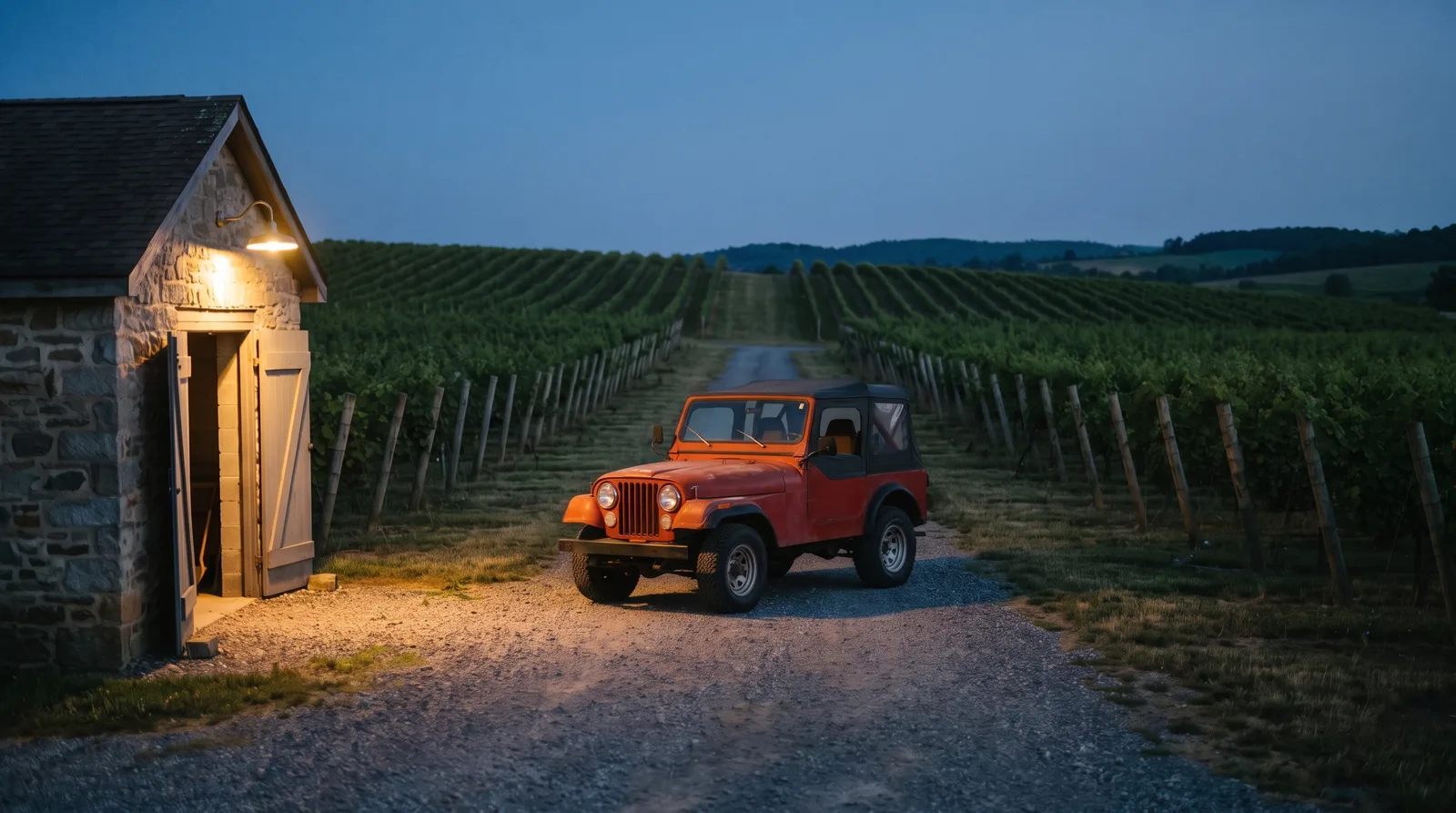
Why 1983 and not later
The CJ-5 didn't end because Jeep stopped making CJ trucks. The CJ-7, introduced in 1976 on a longer wheelbase, continued in production through 1986, and the Scrambler pickup variant ran alongside it for part of that stretch too. What ended in 1983 was specifically the CJ-5 body style and its 84-inch chassis lineage. By that point the CJ-5's design language was old, dating back through the 1972 wheelbase stretch to a basic architecture that traced to the 1950s, and AMC's own sales data showed the CJ-7 pulling ahead in buyer preference. Rather than keep two overlapping short-wheelbase models in production, AMC let the CJ-5 go and consolidated its short-utility Jeep lineup around the newer CJ-7 platform.
The pressures stacking up against it
Several things converged on the CJ-5 in its final years, and none of them alone would have ended the model but together they made the case for retirement. The rollover controversy of 1980, driven by national media coverage questioning the short-wheelbase design's stability, had already dented consumer confidence and pushed insurance premiums higher on CJ-5s specifically. At the same time, Japanese manufacturers were already building the small trucks and utility vehicles, like early Toyota and Suzuki off-roaders sold overseas, that would soon target the exact buyer the CJ-5 had owned for decades. The Suzuki Samurai itself would not reach American showrooms until 1985, two years after the CJ-5 left production, but the broader shift toward smaller, cheaper import 4x4s was already visible to AMC's planners by the early 1980s. AMC's own product planning was also shifting toward what would eventually become the Wrangler YJ, introduced for the 1987 model year as the CJ line's direct successor, though that vehicle is its own separate chapter and sits outside the CJ-5's own story.
What a 1983 CJ-5 actually got you
Buyers who picked up a CJ-5 in its final model year weren't getting a stripped-down farewell truck. The AMC inline six was still on the order sheet alongside a four-cylinder, though the V8 option had been dropped after 1981, and the chassis benefited from over a decade of refinement since the 1972 stretch. In a lot of ways, a late CJ-5 represents the most developed version of the design AMC ever built, even though it was on its way out the door. That's a detail collectors have come to appreciate more in hindsight than buyers necessarily did at the time, when a 1983 CJ-5 was simply the last of a fading model competing against newer-looking rivals on the lot.
The record-keeping problem
Nailing down exact production totals for the final CJ-5 model year has always been a little messier than people expect from a major American manufacturer. AMC's records from this period exist, but they weren't digitized or centralized the way modern automotive archives are, and enthusiast club research over the decades has had to piece together VIN ranges and dealer invoices to build a clearer picture. Anyone quoting a precise final-year production number should be treated with a healthy amount of skepticism unless they can point to where that figure came from. The broad strokes of the story are well documented. The last-digit precision is harder to pin down than most casual retellings suggest.
"The paper trail on 1983 gets thin fast once you're past the broad model-year totals. I've corrected more than one 'exact' production figure floating around enthusiast forums that traces back to nothing but a guess repeated enough times to sound official."
- Tom Ramirez
The Scrambler sitting alongside it
It's worth remembering that the CJ-5 wasn't the only short-wheelbase Jeep AMC was juggling in these final years. The CJ-8 Scrambler, a pickup-bed variant built on the longer CJ-7 chassis, entered production in 1981 and ran alongside both the CJ-5 and standard CJ-7 for a couple of years before the CJ-5 exited. Having three overlapping short-utility models on the books at once, the CJ-5, the CJ-7, and the Scrambler, put real pressure on AMC's product planning, and the CJ-5's retirement in 1983 reads as much like portfolio simplification as it does a verdict on the model itself. AMC wasn't cutting a failing product. It was trimming a lineup that had grown a little crowded for a company managing tight margins through the early 1980s.
That context matters for anyone trying to understand why the CJ-5 specifically was the one to go rather than the newer, differently configured CJ-7 or Scrambler. The CJ-5's basic body architecture, even with the 1972 wheelbase stretch factored in, was the oldest design still on the production line by 1983. Retiring it while keeping the newer CJ-7 platform running let AMC consolidate engineering and parts sourcing around the more modern chassis, a straightforward business decision even if it meant closing the book on the model that had defined the CJ line for nearly three decades.
How the CJ-5 and CJ-7 split the fanbase
The end of the CJ-5 didn't end the debate over which short-wheelbase Jeep was better, it just shifted the conversation permanently toward comparing the two models against each other. For a related story covering exactly how those two trucks stack up, that comparison picks up right where this one leaves off, looking at the wheelbase, engine, and market differences that made AMC's decision to retire the CJ-5 in favor of the CJ-7 make sense from a business standpoint even as it disappointed short-wheelbase loyalists.
Closing the book properly
For the fuller arc of how the CJ-5 got from its 1954 debut to its 1983 send-off, jeep cj5 history covers every major turn along the way, and understanding that full run makes the quiet ending of 1983 land differently than it would in isolation. This wasn't a model that failed. It was a model that had simply run its full course, handing off to a newer sibling that carried the short-wheelbase CJ tradition forward for a few more years before the Wrangler took over entirely. If you're chasing a final-year example or any other CJ-5 model year, CJs for sale now is the place to see what condition and pricing look like across nearly three decades of production.
Twenty-nine years, no farewell tour
There's something almost fitting about how unceremoniously the CJ-5 exited production. It never needed a marketing push to justify itself in the first place, and it didn't get one on the way out either. The 1983 models simply were the last ones, built to the same basic standard as the trucks before them, and the CJ-5 name quietly stepped aside for a lineup that had already moved on without much fuss. That's a very different kind of ending than the loud arrivals of the Golden Eagle or the wheelbase stretch, but it's the ending the model actually got.
Sources and notes
- Jeep CJ (Wikipedia)
- Unlike The Jimny, The Suzuki Samurai Was Actually Sold In America (TopSpeed)
- Suzuki Samurai: Revisiting The Popular Baby Wrangler (CarBuzz)
- How To Identify Jeep CJ-5, CJ-6, CJ-7 and CJ-8 Models and Years (ExtremeTerrain)
- February 5, 1970: AMC Acquires Kaiser Jeep (This Day In Automotive History)
- 1955-1971 CJ-5 General Specs (Kaiser Willys)
Related Reading

About the author
Tom Ramirez
Corvette researcher and historian based in Bowling Green, Kentucky. Two decades documenting Corvette production history from original factory records.
Related Listings - Jeep CJ





Comments
Be the first to comment on this article.