
Every club barbecue eventually lands on the same argument, and I've refereed it more times than I can count. Put a CJ-5 and a CJ-7 side by side in a parking lot and somebody's cousin will insist one is "the real Jeep" and the other is a compromise. That's the jeep cj cj5 vs cj7 debate in a nutshell, and honestly, both sides have a point, which is exactly why it's never gotten settled.
Car Features
6 min read
CJ-5 Versus CJ-7: The Family Feud That Split the Fanbase
For seven years the short CJ-5 and the longer CJ-7 sat on the same lot, and the argument over which one is the better Jeep never really ended.
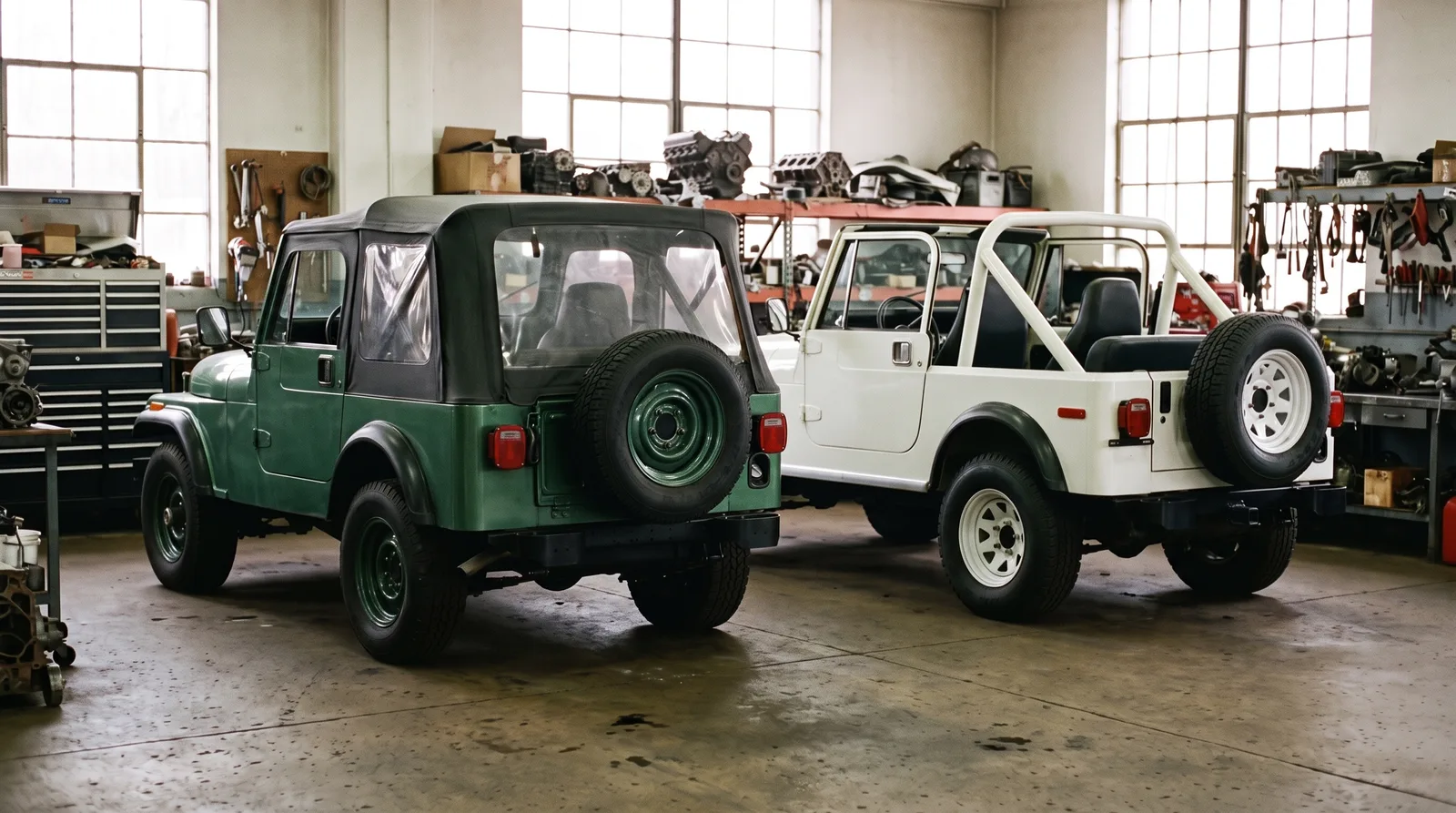
Two trucks, one bloodline
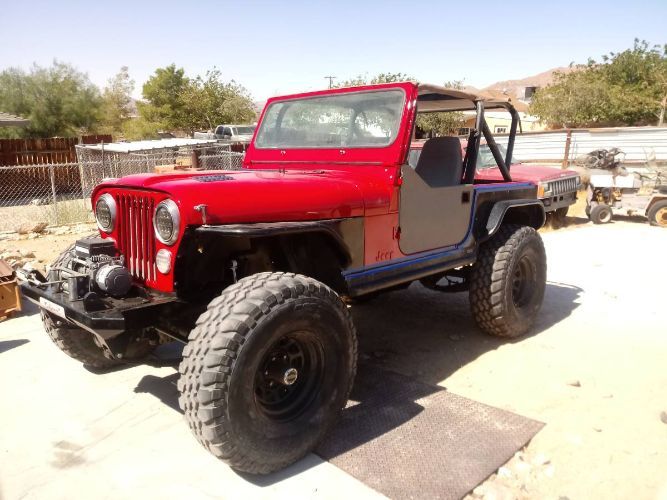
The CJ-7 didn't replace the CJ-5 overnight. AMC introduced it in 1976 as a longer-wheelbase sibling, and the two models ran side by side in showrooms for years before the CJ-5 finally ended production in 1983. The CJ-7 rode on a stretched wheelbase of just over 93 inches, noticeably longer than the CJ-5's 84-inch chassis after its own 1972 stretch. That extra length wasn't just about interior room, though it helped there too. It changed the whole character of the truck, trading some of the CJ-5's tight-turning trail agility for more stability and a more livable ride on the highway.
What the CJ-7 added
The bigger wheelbase let AMC offer things the CJ-5 platform couldn't easily accommodate. A removable hardtop became a real, well-fitted option rather than an afterthought, and full steel doors joined the lineup alongside the traditional soft doors and half doors that CJ buyers had lived with for decades. An automatic transmission became available too, something that opened the CJ-7 up to buyers who wanted off-road capability without a third pedal to manage in traffic. Later in its run the CJ-7 also picked up the Laredo trim package, leaning further into comfort and appearance rather than pure utility. None of this made the CJ-7 soft. It just meant AMC was chasing a wider slice of the market with one truck than the CJ-5 alone had ever tried to cover.
Why the CJ-5 still had its defenders
Not everybody wanted what the CJ-7 was selling. The CJ-5's shorter wheelbase meant a tighter turning radius and a more nimble feel picking a line through rocks or tight trail sections, the exact scenario where a few extra inches of length works against you rather than for you. Serious trail drivers who valued maneuverability over highway comfort kept buying CJ-5s right up until the model's final year, and plenty of them will tell you the shorter truck never stopped being the better tool for tight technical terrain. It's the classic short-wheelbase versus long-wheelbase trade-off that shows up across the entire off-road world, not something unique to Jeep, but the CJ-5 and CJ-7 running side by side gave buyers an unusually direct way to choose sides.
The reputations that followed each one
The CJ-5 carried the rollover controversy of 1980 into the rest of its production run, a reputation the longer, more stable CJ-7 mostly avoided simply by being a different shape with different handling characteristics. That controversy pushed some buyers toward the CJ-7 specifically because it felt safer at speed, even though both trucks shared plenty of engineering DNA. Meanwhile the CJ-5 held onto a purist reputation among off-road enthusiasts who saw the CJ-7's extra comfort features as evidence it was drifting away from the CJ line's utilitarian roots. Both reputations shaped resale value and collector interest for decades after either truck stopped being sold new.
"I've owned both, and I'll tell you straight, there's no wrong answer here. If you're chasing tight trails and don't mind a rougher ride getting there, the CJ-5 will always be the sharper tool. If you want to actually enjoy the drive to the trailhead, the CJ-7 earns its keep."
- Wayne Coburn
What the price gap looked like at the dealer
Buyers cross-shopping these two trucks weren't just weighing wheelbase and comfort, they were weighing sticker price too. The CJ-7, with its added length, additional standard equipment options, and the availability of features like the automatic transmission and steel doors, generally carried a somewhat higher base price than a comparably equipped CJ-5 through most of their overlapping production years. That price difference kept the CJ-5 relevant as the entry point into the CJ lineup even after the CJ-7 arrived, giving AMC a genuine good, better configuration within its own showroom rather than two trucks competing purely on preference. Budget-conscious buyers who wanted a Jeep but couldn't stretch to CJ-7 money kept the CJ-5 selling in real numbers all the way through its final 1983 model year.
That pricing structure also shaped how the two trucks aged in the used market. Because the CJ-5 was positioned as the more affordable, more basic option new, it often attracted buyers who used it hard and modified it heavily rather than babying it, which is part of why clean, unmolested CJ-5s from the late 1970s and early 1980s can be harder to find today than you'd expect given how many were built. The CJ-7, bought new by buyers who'd paid a premium for its extra comfort, more often got treated a little more gently over its service life, though plenty of exceptions exist on both sides of that generalization.
How it ended
When AMC finally retired the CJ-5 after the 1983 model year, the CJ-7 carried the CJ badge alone through 1986 before the Wrangler YJ took over the lineup for 1987. That timeline alone tells you which direction AMC's product planning was leaning, but it doesn't settle which truck was actually better, and it never will. The CJ-5 versus CJ-7 argument survives because it's rooted in a genuine design trade-off, not a simple case of one model being an upgrade over the other.
Where this fits the bigger story
For the whole picture of how the CJ-5 got to this rivalry in the first place, including the wheelbase stretch and rollover controversy that shaped how buyers saw it next to the newer CJ-7, the full model history covers the ground this comparison only touches on. And if this argument has you leaning one way or the other, the only real way to settle it for yourself is behind the wheel, so find a classic CJ and go see which one actually fits how you drive.
No winner, and that's fine
Seven years of side-by-side production settled plenty of things about how AMC saw the CJ line's future, but it never settled the argument between owners. That's not a failure of either truck. It's proof that AMC built two genuinely different answers to the same basic question, and both answers still have people defending them at every club meet where the two trucks happen to park next to each other.
Sources and notes
- Jeep CJ (Wikipedia)
- 1955-1971 CJ-5 General Specs (Kaiser Willys)
- How To Identify Jeep CJ-5, CJ-6, CJ-7 and CJ-8 Models and Years (ExtremeTerrain)
- February 5, 1970: AMC Acquires Kaiser Jeep (This Day In Automotive History)
- Highway Loss Reduction Institute Status Report on CJ Rollover Tests, December 1980
- CJ-5 1955 to 1975 (Vintage Jeep Parts)
Related Reading

About the author
Wayne Coburn
Longtime Corvette owner, judge and club figure who knows the cars, the records and the people behind them.
Related Listings - Jeep CJ





Comments
Be the first to comment on this article.