
The Jeep CJ-5 stayed on the Toledo assembly line for roughly twenty eight years, which is long enough that a farmer who took delivery of one in 1955 could have watched a grandchild buy a new one in 1982 and recognize most of the parts book. No other Jeep has that kind of run, and no other Jeep did more to fix the shape of the thing in the public mind. When somebody who has never owned a four wheel drive draws a Jeep on a napkin, they are almost always drawing a CJ-5. That is why the model matters more than its sales figures suggest, and why so much of the surrounding jeep cj history gets told through this one body style.
Car Features
11 min read
The Jeep CJ-5: The Model That Defined the Civilian Jeep
Twenty eight years on one assembly line, from a 1952 Army contract to the last car in 1983. The factory record behind the Jeep everyone pictures.
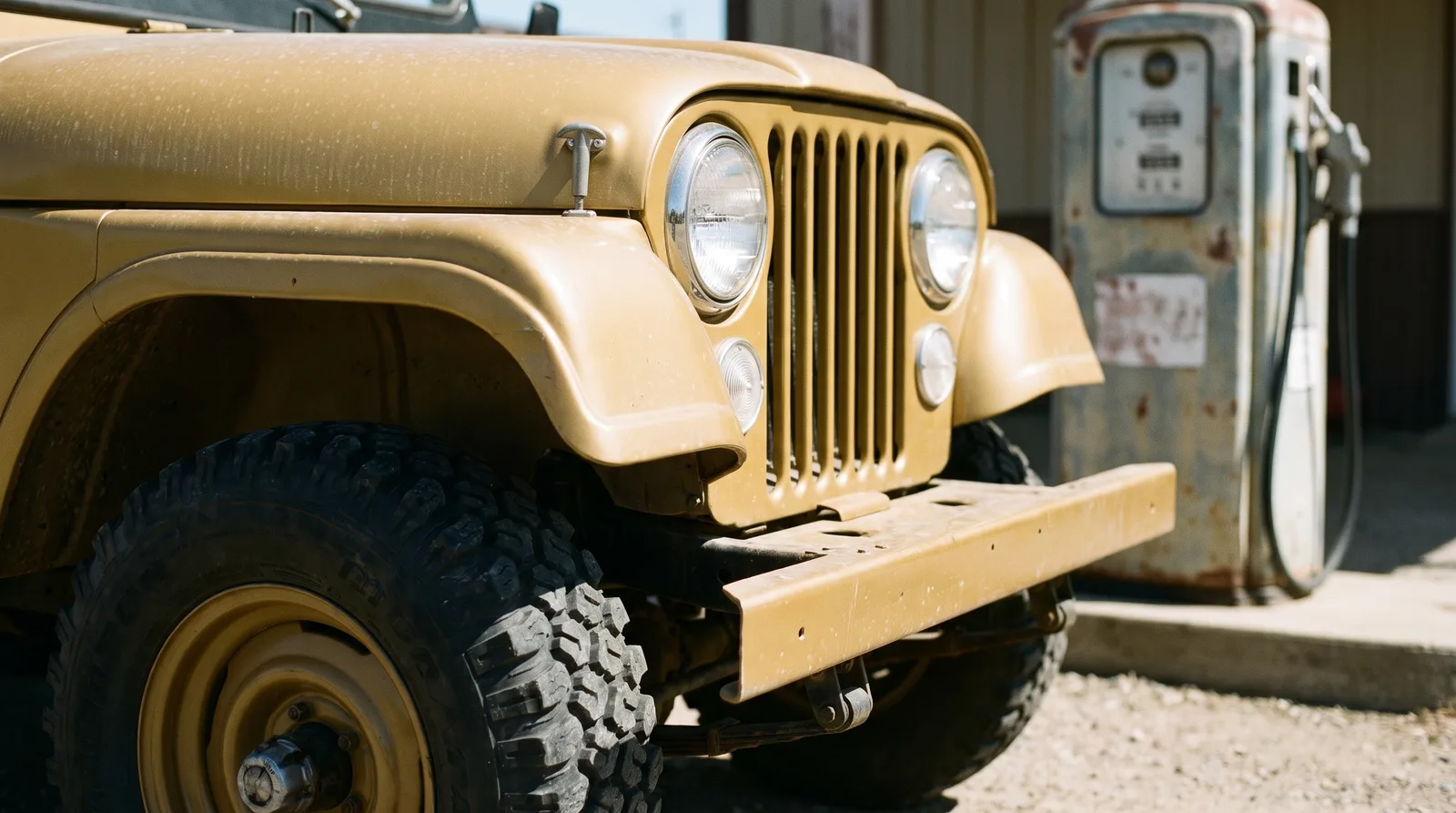
What follows is the factory record as best it can be reconstructed from sales literature, parts catalogs and the surviving production paperwork. A fair amount of what circulates about the CJ-5 online is folklore that got repeated until it hardened. Some of it is close. Some of it is not.
The military ancestor nobody talks about
The CJ-5 did not come out of a civilian design studio. It came out of a contract. In 1952 Willys Motors began building the M38A1 for the United States Army, a replacement for the flat fendered M38 that had itself replaced the wartime MB. The M38A1 is the vehicle that introduced the rounded front fenders, the taller hood and the softer body shoulder that people now think of as the classic Jeep look. It needed the extra hood height because the new F-head Hurricane four cylinder stood taller than the old L-head Go-Devil, with its intake valves moved up into the cylinder head.
So the sequence runs backwards from what most people assume. The Army got the shape first. The civilian buyer got it second, in October 1954, when Willys Motors announced the CJ-5 for the 1955 model year. The company was by then owned by Kaiser, which had bought Willys-Overland in 1953 and folded it into what became Willys Motors and later, in 1963, Kaiser Jeep Corporation.
Worth correcting gently: the CJ-5 did not replace the flat fender CJ-3B in 1955. The two were sold side by side for years, because the CJ-3B was cheaper and because overseas licensees kept building it. The high hood flat fender outlived the Kaiser era in export markets entirely.
What a 1955 buyer actually got
The first CJ-5 rode an 81 inch wheelbase and carried the F-head Hurricane four of 134.2 cubic inches, rated at 75 horsepower against the 60 horsepower of the wartime Go-Devil. Behind it sat a three speed manual and a Dana 18 transfer case with a Dana 25 front axle and a Dana 44 rear. Curb weight came in under 2,300 pounds. Nothing about that specification was exotic in 1955. That was the point. Every piece of it existed in dealer stock and in Army depots.
The literature of the period did not sell the CJ-5 as a recreational vehicle. It sold it as equipment. Willys catalogs listed a power take off, a governor, a belt pulley drive, a capstan winch, a front mounted plow and a hydraulic lift, and the dealer network included farm implement stores as often as it included car showrooms. The name Willys used in advertising was the Universal Jeep, and the argument was that one machine could plow in the morning, drive to town at noon and run a saw in the afternoon.
| Specification | 1955 CJ-5 | 1979 CJ-5 |
|---|---|---|
| Wheelbase | 81 in | 83.5 in |
| Base engine | 134.2 cu in F-head Hurricane four | 232 cu in AMC six |
| Base output | 75 hp | 100 hp |
| Top engine option | None at launch | 304 cu in AMC V8 |
| Transmission | Three speed manual | Three speed manual, four speed optional |
| Transfer case | Dana 18 | Dana 20 |
| Body | Open tub, folding windshield | Open tub, folding windshield |
Kaiser, the Tuxedo Park, and the Dauntless V6
Kaiser spent the early 1960s testing whether anyone would pay extra to make a work vehicle look pleasant. The answer arrived in the form of the Tuxedo Park, which started life in 1961 as a dress up option group with brightwork, a chrome bumper treatment and better seat trim. By 1965 it had been promoted to a model in its own right, the Tuxedo Park Mark IV, which is the first Jeep that can honestly be described as a lifestyle purchase rather than a tool purchase.
The bigger change came in 1966. Kaiser bought the tooling for Buick's 225 cubic inch V6 and put it in the CJ-5 as the Dauntless V6, rated at 160 horsepower and around 235 pound feet of torque. That is more than double the Hurricane's output in a body that had barely gained weight. Owners of odd fire Dauntless cars will tell you the engine shakes at idle and they are not wrong, because the crankshaft was a V8 unit with two cylinders removed and the firing intervals are uneven. It also completely changed how a CJ-5 behaves on a grade with a trailer behind it. General Motors bought the tooling back in 1974, which is why the V6 vanished from the option sheet.
Alongside all this, Kaiser continued the CJ-6, a CJ-5 stretched to a 101 inch wheelbase. It sold poorly in the United States and much better abroad, and it was dropped from the domestic lineup in 1975. Surviving domestic market CJ-6s are genuinely uncommon today, and they are one of the few CJ variants where scarcity actually shows up in the money.
"Every claim about CJ-5 production totals I have chased has led back to a single unsourced figure that got copied for thirty years. The safest thing you can say is that Toledo built more of these than of any other Jeep, and that the year by year records are far patchier than the internet pretends."
- Tom Ramirez
AMC buys Jeep and stretches the tub
American Motors acquired Kaiser Jeep in 1970. The purchase looked eccentric at the time, since AMC was a small independent buying an even smaller truck maker, and it turned out to be the single best decision AMC ever made. It also created an immediate engineering problem. AMC wanted its own engines in the CJ, and the AMC 232 and 258 cubic inch sixes and the 304 V8 were physically longer than the Hurricane and the Buick V6.
The fix arrived for 1972. The wheelbase went from 81 inches to 83.5 inches, roughly three inches of extra sheet metal went into the front clip, and the front axle moved forward. Front and rear axles were upgraded, brakes grew, and the CJ-5 quietly became a stronger vehicle. It is the single most consequential change in the model's life, and it is also the line most collectors use to sort early cars from late ones. A pre 1972 Kaiser car and a post 1972 AMC car are the same idea executed by two different companies with different priorities. If the AMC chapter interests you, that story continues in the CJ-7 and it is worth keep exploring from there.
How trim packages turned a tool into an identity
The 1970s are when the Jeep stopped being a machine you bought for a reason and started being a machine you bought because of who it made you. The Renegade name appeared first as a limited run in 1970, in small numbers, an estimated 250 to 500 units built as a special sales order, with bright paint, a roll bar and the V6. AMC brought it back as a regular option package with the 304 V8, and by the middle of the decade the Renegade was the default aspirational CJ.
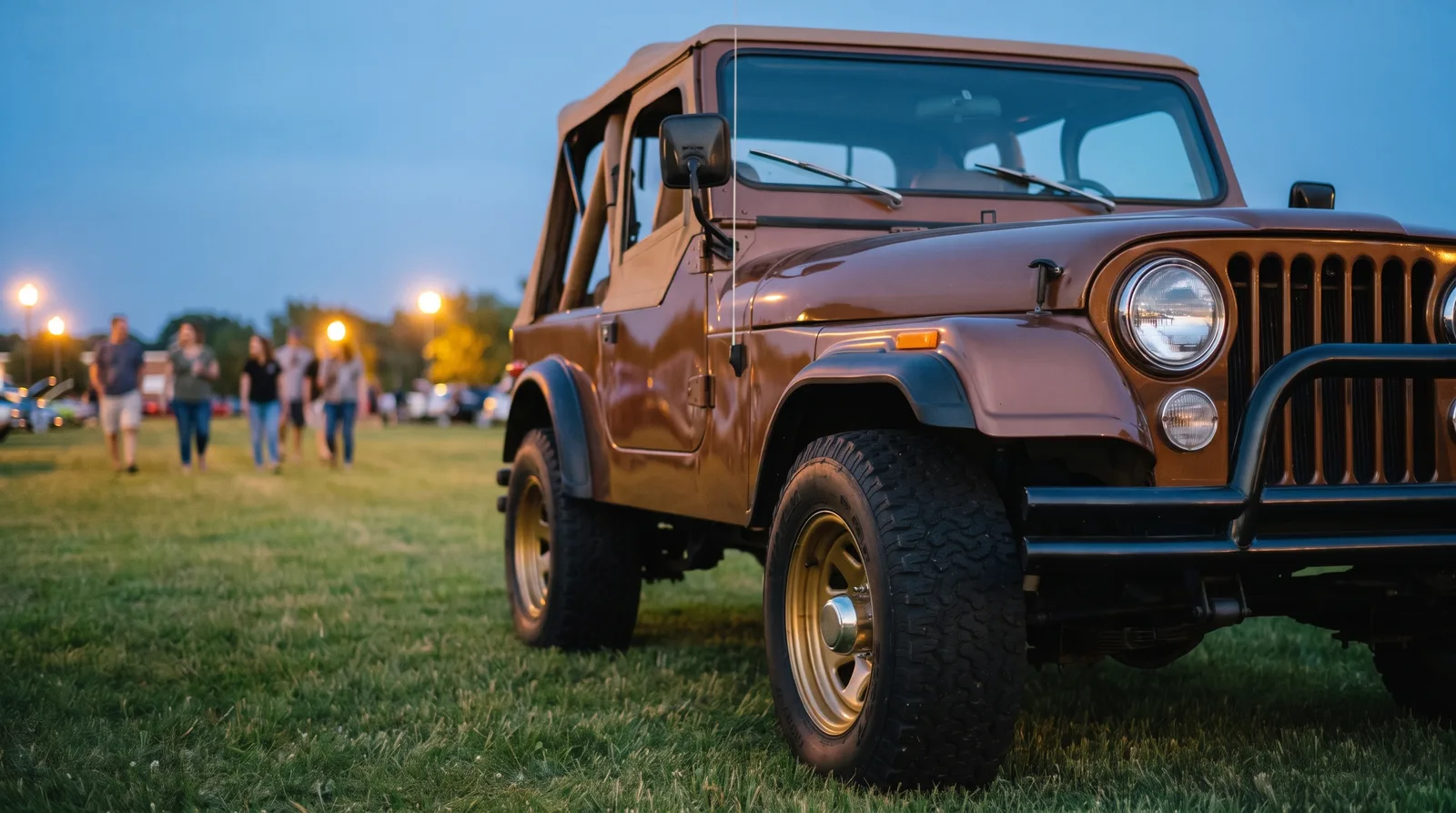
Then the decade got louder. The Super Jeep of 1973 wore striping that looks like a bowling shirt and was built in tiny numbers over a single summer, an estimated 200 to 300 units, with no surviving factory production count. The Levi's interior option, introduced in 1975, trimmed the seats and the top in a denim look fabric with the branding stitched in. The Golden Eagle package of 1977 to 1979 put a large eagle decal across the hood, gold wheels and a tan interior on a vehicle that had been sold twenty years earlier with a belt pulley option. None of this made the CJ-5 better at anything. All of it made the CJ-5 memorable, and every one of those packages now carries a premium over a plain CJ-5 in equal condition.
Why the CJ-5 stopped in 1983
Two forces ended it. The first was internal. The CJ-7, launched for 1976 on a 93.5 inch wheelbase, was more comfortable, easier to live with and available with an automatic and a removable hardtop. It steadily took the CJ-5's customers.
The second was external and much more public. In December 1980 CBS aired a segment on 60 Minutes built around Insurance Institute for Highway Safety testing that showed a CJ-5 tipping in an emergency maneuver, and Consumers Union petitioned federal regulators over the vehicle's stability. AMC disputed the methodology, arguing the tests did not reflect normal driving. The argument in the trade press ran for years. What is not disputed is what happened to the sales chart afterward. CJ-5 production ended in 1983, and the CJ-7 carried the line alone until 1986.
Collecting a CJ-5 now
The market sorts CJ-5s along three lines, and they are not the lines a newcomer expects. The first is era: a 1950s or early 1960s F-head Willys badged car is bought by people who want the earliest form of the shape, while a late AMC car is bought by people who want to drive it. The second is drivetrain: original Dauntless V6 cars and factory 304 V8 Renegades sit above four cylinder and six cylinder cars in equal condition. The third, and the one that decides most transactions, is the frame and the tub, because a Jeep CJ5 that spent its life on salted roads can look presentable and still be structurally finished underneath.
Documentation matters less here than it does with a European sports car and more than sellers admit. Build sheets rarely survive. Dealer paperwork, the original owner's manual and photographic history do a lot of work in a negotiation. Original trim packages are frequently claimed and less frequently proven, and a Golden Eagle decal set is available new, so a decal is not evidence of anything on its own.
Prices have hardened over the last decade rather than spiked. Rough but complete driver quality cars still trade in four figures in much of the country, clean honest examples sit comfortably in the middle five figures, and correct early V6 cars and documented factory V8 Renegades reach past that. If you want to see where the money actually sits rather than where forum opinion sits, watch what a well sorted classic CJ for sale asks and then watch what it closes at.
The lasting achievement of the CJ-5 is not any single specification. It is that a design conceived to meet a 1951 Army requirement stayed commercially viable through the Eisenhower administration, the Kaiser years, the AMC takeover, two fuel crises and a national argument about rollovers. Very little sold in 1983 could trace an unbroken line to 1955. This one could, and the shape it left behind is still the shape people mean when they say Jeep.
Sources and notes
Related Reading
Article
The Jeep CJ Story: How the Civilian Jeep Became an American Icon
Article
The Jeep CJ-7: The AMC-Era Jeep That Changed Everything
Article
Jeep CJ Trims and Culture: Renegade, Golden Eagle and the Off-Road Legend
Article
The 1955 Jeep CJ-5 Launch That Redrew the Civilian Jeep
Article
From Battlefield to Backroad: The CJ-5 Military Bloodline
Article
The Willys and Kaiser CJ-5 Years, 1955 to 1970
Article
When AMC Took the Wheel: The CJ-5 Under New Ownership
Article
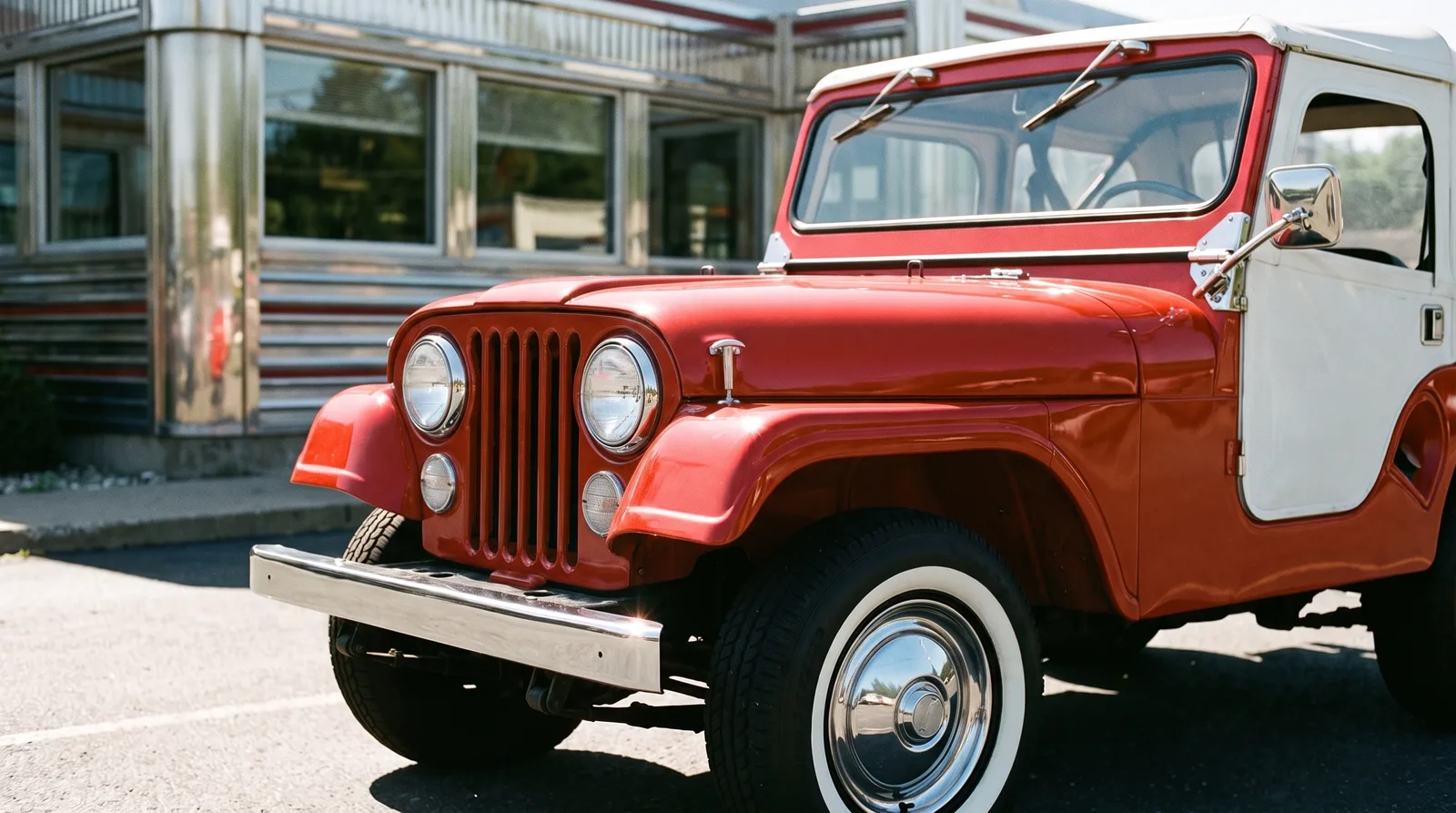
Tuxedo Park: The CJ-5 That Tried to Wear a Bow Tie
Article
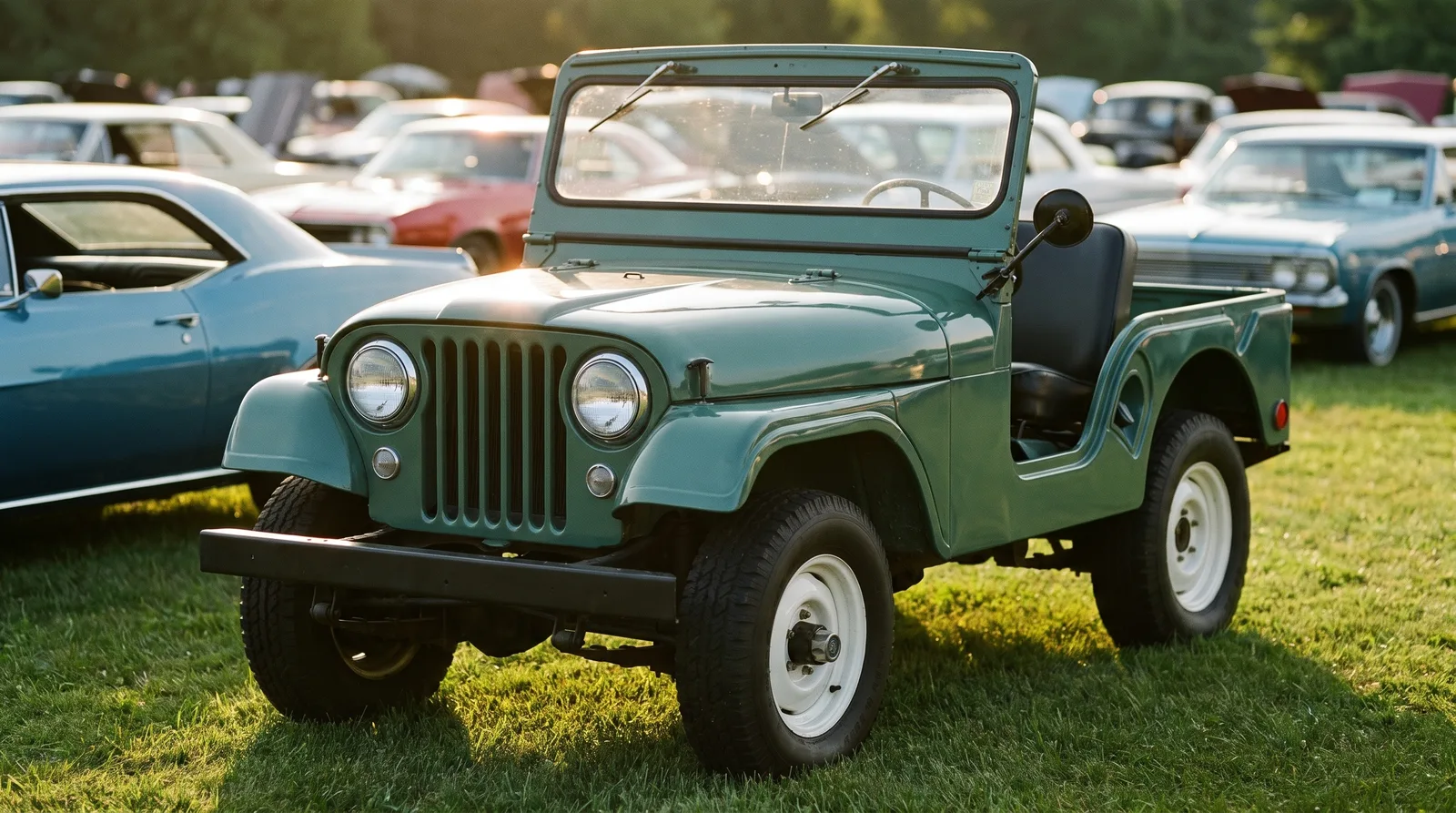
The Day the Dauntless V6 Woke Up the CJ-5
Article
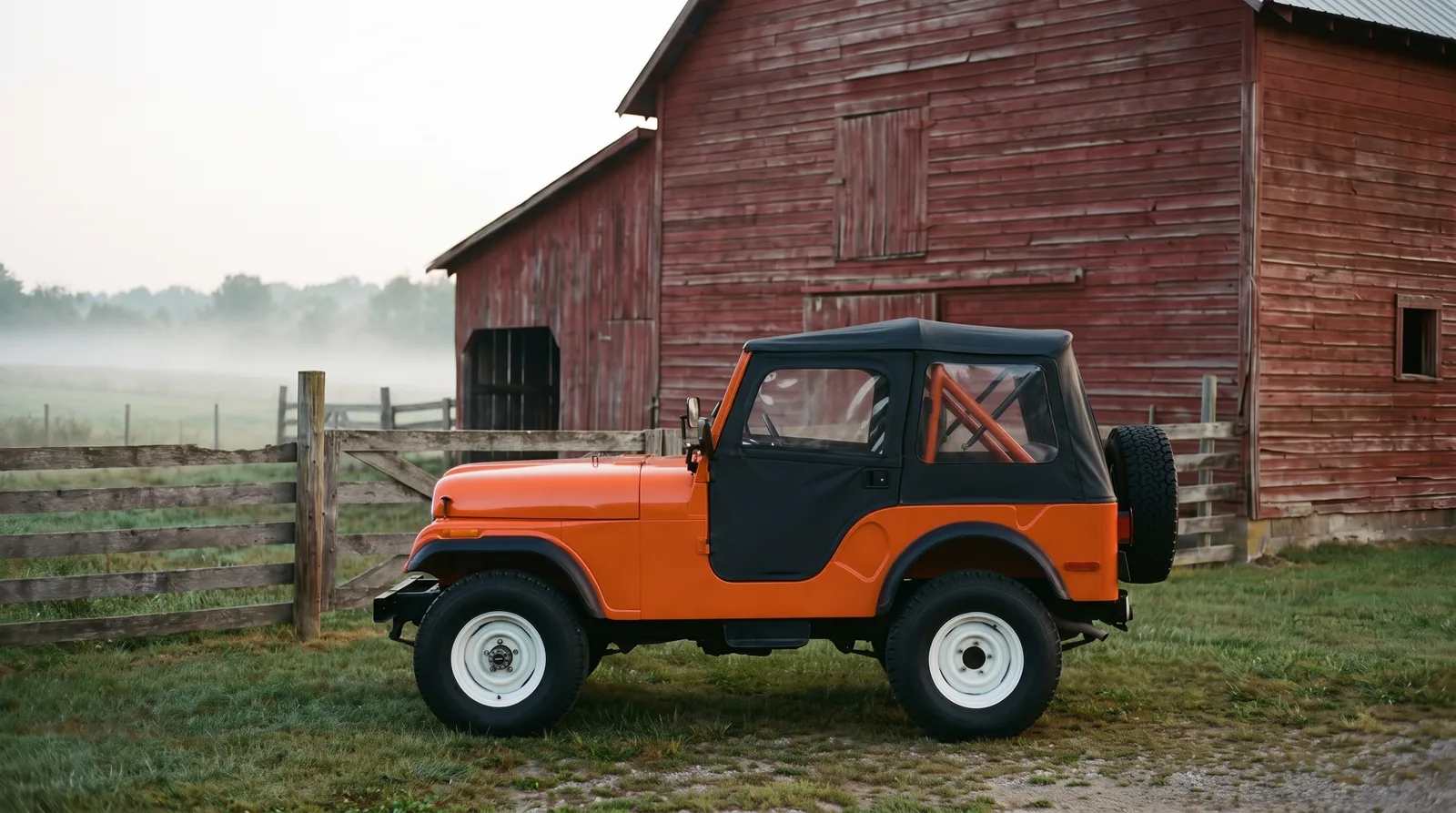
Renegade: The CJ-5 That Made a Name a Legend
Article
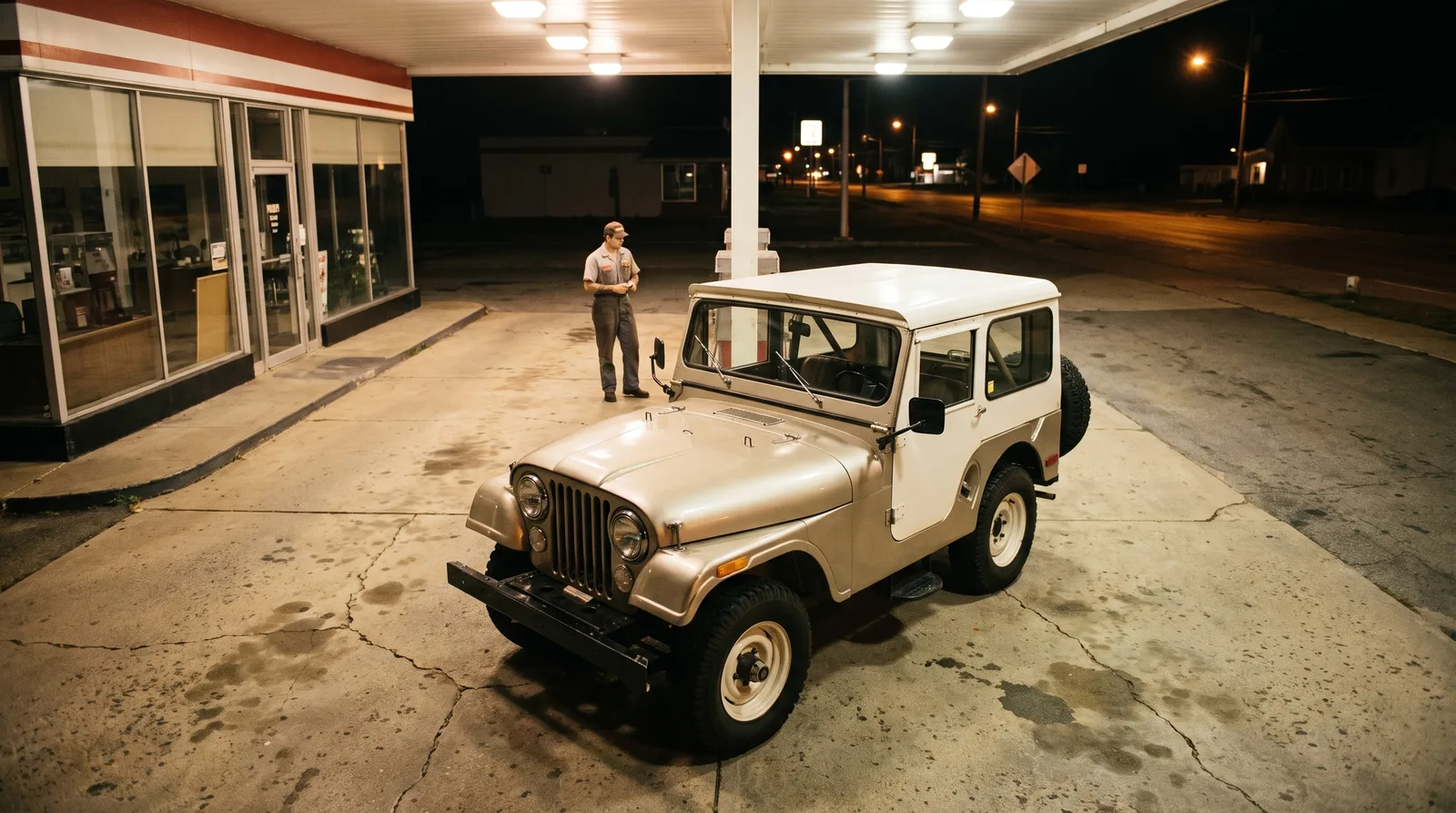
The Super Jeep: The 1973 CJ-5 Nobody Saw Coming
Article
Golden Eagle: The Hood Bird That Defined Seventies Jeep
Article
Twenty-Five Years On: The CJ-5 Silver Anniversary Story
Article
The Inch That Mattered: Stretching the CJ-5 in 1972
Article
The CJ-5 Under Fire: The Rollover Reputation Story
Article
The Last CJ-5: Closing the Book in 1983
Article
CJ-5 Versus CJ-7: The Family Feud That Split the Fanbase
Article
CJ-5 Versus the International Scout: The Trail Rivalry
Article
CJ-5 Versus the Early Bronco: Two Ways to Go Off-Road
Article
The CJ-5 on Screen: A TV and Movie Career
Article
Mail, Farms and Fleets: The Working-Class CJ-5
Article
Collecting the CJ-5: From Cheap Trail Toy to Blue Chip
Article
The CJ-5 Reborn: Inside the Restomod Movement
Article
Which CJ-5 to Chase: The Editions Collectors Prize Most

About the author
Tom Ramirez
Corvette researcher and historian based in Bowling Green, Kentucky. Two decades documenting Corvette production history from original factory records.
Related Listings - Jeep CJ





Comments
Be the first to comment on this article.