
Ask five appraisers which jeep cj cj5 most collectible editions actually deserve a premium and you will likely get five slightly different lists, but the disagreement is usually at the margins, not at the core. A handful of variants consistently pull stronger money than the average CJ-5, for reasons that hold up under scrutiny rather than just riding on nostalgia. Knowing which editions those are, and more importantly why, separates a buyer who overpays for a badge from one who correctly identifies genuine scarcity.
Car Features
6 min read
Which CJ-5 to Chase: The Editions Collectors Prize Most
An appraiser's ranked look at which CJ-5 editions genuinely command a premium, from the earliest 1955 production to the Tuxedo Park and Renegade-era special trims.
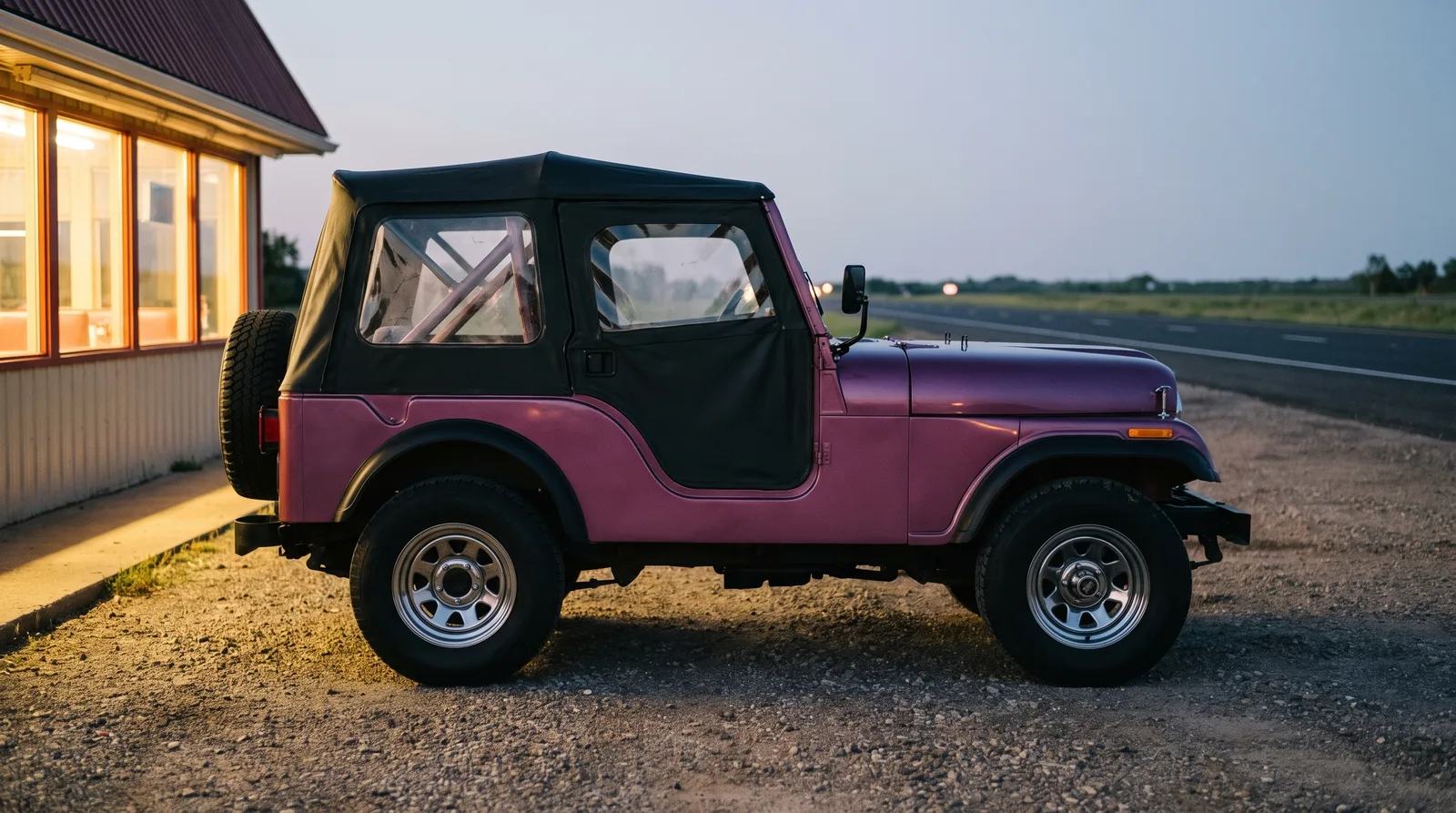
Early production, before the running changes piled up
The 1955 and 1956 model years sit at the top of most serious lists, and the logic is straightforward. These were the first CJ-5s off the line, closest to the original design intent, before decades of incremental engineering changes altered the specification. Very few survive in unmolested condition, because they were also the oldest examples on the road by the time anyone started caring about preserving them rather than just keeping them running. A clean, honestly early CJ-5 tells a more complete story than a later example, and buyers who understand that pay accordingly.
The Tuxedo Park editions
Jeep's Tuxedo Park trim, offered in the early 1960s, dressed the CJ-5 up with two-tone paint, chrome trim, and a nicer interior than the base work-truck spec, aimed squarely at buyers who wanted the capability without the entirely spartan presentation. These were never big sellers relative to base models, which makes surviving examples genuinely scarce today, and the added trim gives them a visual distinctiveness that photographs well and draws attention at shows. A documented, correctly equipped Tuxedo Park CJ-5 commands a real premium over an equivalent base model in similar mechanical condition.
Renegade and special-run trims from the 1970s
By the 1970s, Jeep began offering more aggressively styled special editions, wider tires, distinctive graphics, upgraded engines in some configurations, aimed at a younger buyer who wanted a sportier image than the utilitarian base CJ-5 offered. These editions were produced in meaningfully lower numbers than standard trims, and today they draw a dedicated following among buyers who want a CJ-5 that stands out visually without stepping outside the factory-original category. The trick with these is verification. Graphics packages get reproduced and applied to base models often enough that a buyer needs real documentation, not just a decal, before paying the premium a genuine example deserves.
| Edition / era | Why it draws a premium | Verification risk |
|---|---|---|
| 1955-1956 early production | Closest to original design, very low survival rate | Age-appropriate parts and casting numbers |
| Tuxedo Park (early 1960s) | Low original volume, distinctive trim | Correct chrome and two-tone paint scheme |
| Renegade-era special editions | Sportier image, lower production numbers | Graphics and options easily faked |
"The premium editions only hold their premium if the paperwork or the details back up the claim. I've seen plenty of base CJ-5s dressed up to look like something rarer, and the market has gotten sharper about catching that than it used to be."
- Marcus Feld
Regional and dealer specials worth a second look
Beyond the nationally marketed special editions, a handful of regional dealer packages and limited distribution trims occasionally surface at auction, and these deserve a more careful look than they usually get. A dealer in a specific market sometimes ordered a batch of CJ-5s with a distinctive combination of options that never appeared in national advertising, and tracking down the history on these requires regional knowledge that a generalist appraiser may not have on hand. I have seen these regional variants sell for less than they probably deserve simply because the buyer pool at a given auction did not recognize what they were looking at, and I have also seen the opposite, where a seller's inflated regional-rarity claim did not hold up once someone with real knowledge of that dealer's history looked closely. Either way, this corner of the market rewards buyers willing to do genuine research rather than relying on a listing description alone.
What does not automatically qualify as collectible
It is worth being honest about what does not belong on this list despite occasionally getting hyped as such. A heavily modified CJ-5, no matter how well built, is a different asset class entirely and should not be priced against factory-original special editions. Late-production examples from the final years before the CJ-5 was phased out are common enough that scarcity alone does not justify a premium, though exceptional original condition still can. And a base-model CJ-5 with aftermarket trim added to mimic a special edition is worth exactly what an honest base model is worth, regardless of what the seller's listing claims.
How to verify before you pay the premium
Serial number decoding, period-correct casting numbers on major components, and any surviving factory paperwork are the tools that separate a genuine special edition from a well-dressed impostor. Buyers should be especially careful with trim and graphics packages, since these are the easiest elements to reproduce and apply to an ordinary CJ-5. A seller asking a genuine premium should be able to produce more than a compelling story, and a buyer paying that premium should insist on it before the money changes hands, not after.
For background on how the CJ-5 line developed across these decades and where these special editions fit into the broader model history, the full story covers the whole arc. And if the earliest production years interest you specifically, the details of that original 1955 launch are worth a look too, since understanding what changed after that debut is exactly what lets you spot a genuinely early example.
Buying with this list in mind
None of this means a standard CJ-5 is a poor purchase. Most buyers are better served by an honest, well-maintained base model than by chasing a special edition they cannot fully verify. But if scarcity and long-term appreciation are genuinely part of your goal, understanding which editions actually earn their premium, and being able to prove one is what it claims to be, is the difference between a smart purchase and an expensive story. When you are ready to compare what is actually available against this list, you can shop classic CJ listings and start applying the same scrutiny an appraiser would.
The jeep cj cj5 most collectible editions conversation will keep evolving as more of these vehicles get properly documented and as auction data accumulates around specific trims that used to be treated as afterthoughts. What has not changed, and likely will not, is the underlying principle: scarcity plus verifiable documentation is what earns a premium, not a badge or a paint scheme alone. Buyers who internalize that distinction early save themselves from the most common and most expensive mistake in this corner of the collector market.
Sources and notes
Related Reading
#jeep cj-5
#Tuxedo Park
#vintage 4x4
#Jeep appraisal
#collectible Jeep editions
#classic Jeep values

About the author
Marcus Feld
Accredited collector-car appraiser who reads the market through hammer prices, condition tiers and risk.
Related Listings - Jeep CJ





Comments
Be the first to comment on this article.