
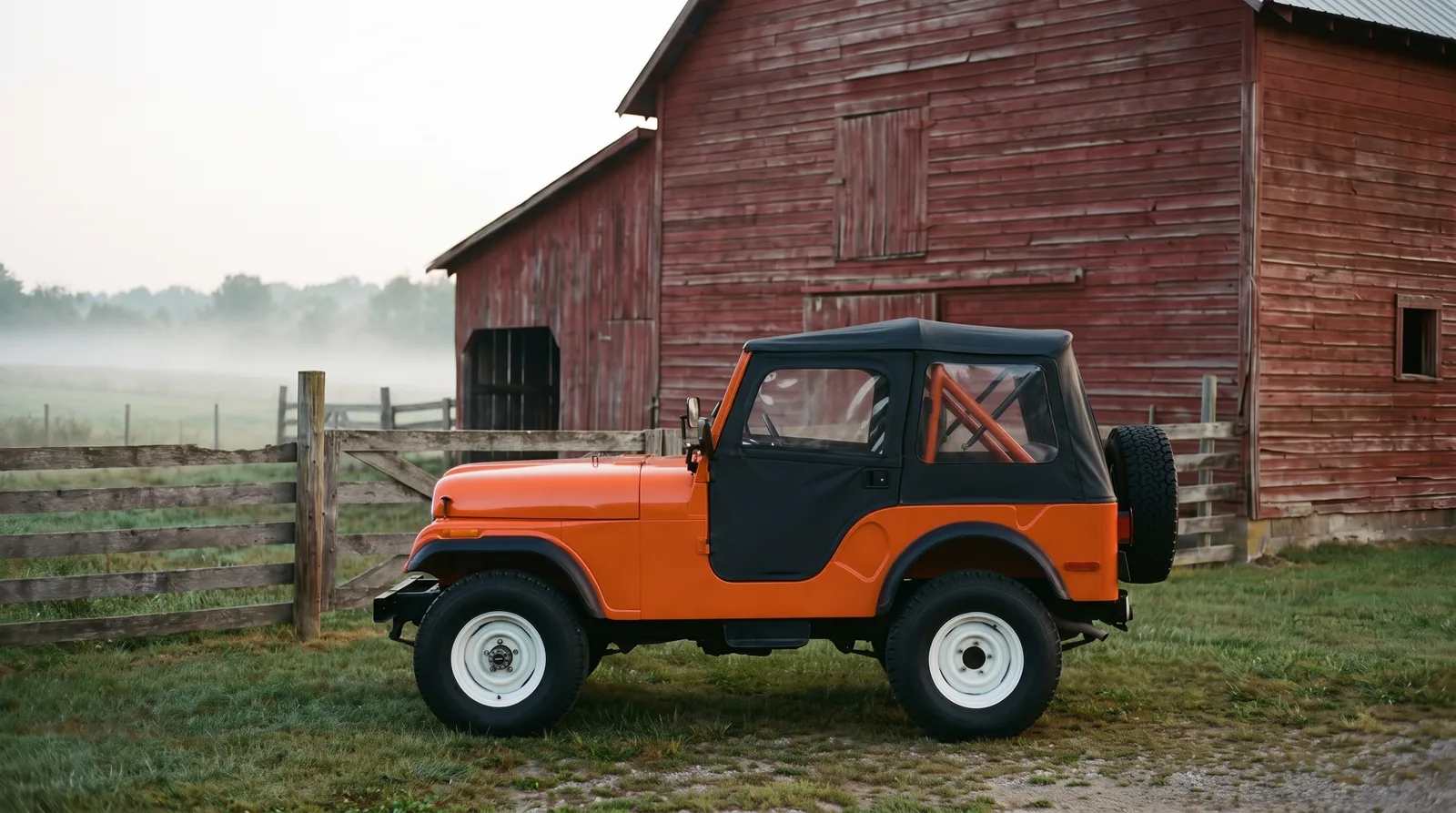
1970. American Motors takes a low-volume performance package it had quietly offered on the CJ-5 the year before, the "462," dresses it up with wide wheels, oversized tires, and a graphics package loud enough to turn heads on the highway, and relaunches it under a new name: Renegade. Nobody at AMC could have known they were about to create the single most durable trim name in the CJ-5's history. The jeep cj cj5 renegade started as a limited special sales order built in small numbers, not a splashy corporate launch, and that origin story is part of why the name means so much to people who actually dig into it rather than just recognizing it on a fender badge.
Car Features
7 min read
Renegade: The CJ-5 That Made a Name a Legend
Renegade started as a Denver dealer special before American Motors adopted it as an official CJ-5 factory trim in 1971, a name that has outlived the CJ-5 itself.
A limited special order becomes a factory decision
AMC understood something worth betting on: buyers wanted a CJ-5 that looked ready to leave the pavement even if most of them never actually would. The first Renegade, offered as a special sales order for 1970, leaned into that appearance hard, wide 8-inch wheels, G70x15 tires, a roll bar, heavy-duty frame and springs, front bucket seats, and hood stripes carrying the Renegade script, all offered in just two colors, Mint Green and Wild Plum. AMC built only an estimated 250 to 500 of that first run, but the reception was strong enough that the company doubled down almost immediately.
For 1971, AMC expanded the package into what collectors now call the Renegade II, adding new alloy wheels, a center hood stripe, and four fresh color choices, with roughly 600 units built across that model year. By 1972, Renegade had become a regular production option available through any AMC Jeep dealer rather than a scarce special order, and by 1974 it had grown into its own distinct model in the CJ lineup. This is not the usual path for a trim name to take. Most factory special editions launch fully formed. Renegade proved itself in small, limited runs before AMC committed to it as a mainstream option, which gave the badge a credibility that purely corporate trim packages rarely earn.
What made Renegade different from a standard CJ-5
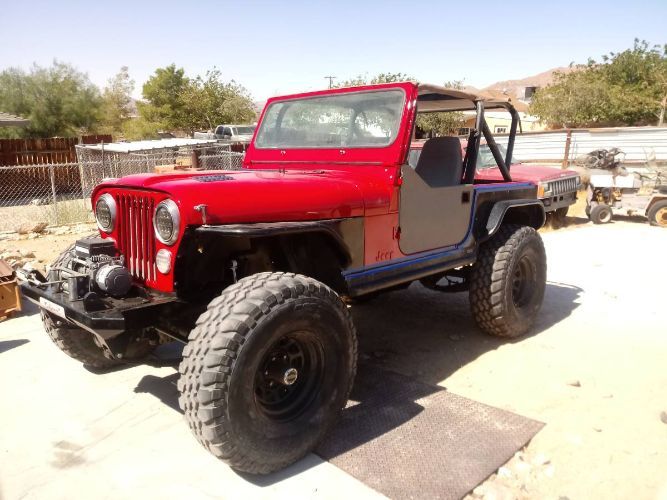
Once AMC took the package factory-official, Renegade CJ-5s typically carried wider wheels and larger tires than the standard truck, bold exterior graphics that varied somewhat year to year, and in many cases the Dauntless V6 or later AMC six as the expected engine choice rather than the base four-cylinder, since the whole point of the package was projecting capability and presence. The specifics shifted across the years the trim remained available, with AMC refining the graphics, wheel choices, and included options as the package matured through the early and mid-1970s.
What Renegade never became was a mechanically distinct model. Strip away the wheels, the tires, and the graphics, and a Renegade CJ-5 shared its frame, its body, and its core engineering with every other CJ-5 built the same year. The appeal was entirely about presentation, a factory-sanctioned way to buy a Jeep that looked the part of an off-road machine without requiring the owner to source and install aftermarket parts themselves. For readers tracking the full CJ-5 timeline that Renegade fits into, our jeep cj5 retrospective covers every trim and ownership era across the model's run.
| Feature | Standard CJ-5 | Renegade package |
|---|---|---|
| Wheels | Standard steel | Wider alloy or styled steel wheels |
| Tires | Standard road tires | Larger, more aggressive tread |
| Graphics | Minimal badging | Bold body striping and Renegade badging |
| Engine expectation | Base four-cylinder common | V6 or six-cylinder typical |
"There's something honest about a trim name that started as a scarce, low-volume special order instead of a splashy launch. Renegade earned its reputation in small numbers before AMC ever put real marketing weight behind it."
- Patrick Walsh
The name's staying power beyond the CJ-5
What separates Renegade from a package like Tuxedo Park, which quietly faded after a few years, is longevity. AMC kept the Renegade name alive well past the CJ-5's own production run, applying it to Wrangler models in later decades and eventually reviving it for modern Jeep vehicles built long after AMC itself had been absorbed into Chrysler. Few trim names in American automotive history have shown that kind of lasting power, surviving multiple corporate ownership changes and multiple generations of the vehicle it was originally created for. That longevity says something about how well AMC read what buyers actually wanted in 1970, a read the company backed up by expanding the package year after year rather than letting it fade as a one-off special order.
The Renegade era also overlapped with other bold CJ-5 special editions AMC experimented with through the 1970s, including the 1973 Super Jeep package that pushed the same appearance-focused formula even further. Readers curious about that parallel chapter can find a related story covering how AMC kept iterating on the dress-up formula Renegade helped establish.
Why the badge still moves the market
Talk to anyone who shops seriously in this corner of the hobby and you will hear the same pattern repeated. A plain CJ-5 in good condition draws steady interest. A documented Renegade in the same condition draws faster interest and a stronger final number, and the gap is not small. Part of that comes down to visual presence, since the wider wheels and bolder graphics simply photograph better and stand out more at a show than a base trim truck ever will. Part of it comes down to the story itself, the fact that buyers like owning a piece of a trim name that started with one dealer's idea and grew into something AMC leaned on for decades. Collectors respond to that kind of grassroots credibility in a way that pure marketing invention rarely earns.
None of that changes the underlying mechanics, though. A Renegade CJ-5 needs the same frame inspection, the same attention to matching numbers, and the same skepticism toward reproduction parts dressed up to look period-correct that any other CJ-5 purchase demands. The badge adds value. It does not substitute for due diligence.
What Renegade CJ-5s are worth today
Original, documented Renegade-package CJ-5s carry a genuine premium in the collector market over standard trucks of the same year, particularly examples that retain their original wheels, striping, and drivetrain rather than a later restoration that approximated the look with reproduction parts. Because the package changed somewhat year to year, buyers need to verify which specific Renegade configuration matches the model year in question rather than assuming any wide-wheel, striped CJ-5 automatically qualifies as an original factory package. Anyone hunting for a genuine example can look through current CJs for sale now and cross-reference any Renegade claim against period photos and factory documentation before paying the premium that badge commands.
Sources and notes
- RealTruck: The Rise and Fall of the Jeep Renegade
- Sports Car Market: 1972 Jeep CJ-5 Renegade
- Jeep: History in the 1970s
- Motor Authority: Best of the Jeep Wrangler and CJ Special Editions
- Jeep CJ - Wikipedia
- Hagerty: Your Handy 1955-83 Jeep CJ-5 Buyer's Guide
The lesson from Renegade extends beyond just this one trim level. It is a reminder that some of the most enduring identities in American automotive history did not come from a single splashy launch. Renegade started small, a few hundred units in two colors, proved itself on the strength of the truck rather than a marketing budget, and let the results speak loudly enough that AMC expanded it year after year until it became one of the most recognizable names in the Jeep lineup. Fifty years later, the badge is still doing exactly what it was built to do.
Related Reading

About the author
Patrick Walsh
Automotive journalist covering classic car shows, events, and the enthusiast community across North America.
Related Listings - Jeep CJ





Comments (1)
B
BrassEraBob
2 days ago
A question of nomenclature, since names are what historians cannot resist. The 1969 package you mention, the '462', is a curious designation for something that became Renegade a year later. Was it a part number, a code borrowed from the order sheet, or some salesman's private joke? Nomen est omen, as the Romans had it, and AMC seems to have understood that the second name would sell where the first could only be filed. My Model T, being of 1912, wears no such badge at all.