
I remember the first time a guy at a swap meet tried to give me a CJ-8 Scrambler. Not sell it. Give it. He had two, no room, and figured nobody else wanted a stretched CJ with a rusty bed anyway. That was the late 1990s. Try that today and you will get laughed out of the parking lot, because the jeep cj cj8 cult rise from unloved orphan to genuine collector favorite is one of the stranger turnarounds in the whole Jeep world.
Car Features
7 min read
From Slow Seller to Cult Hero: The Scrambler's Second Life
The Jeep CJ-8 Scrambler was once so unwanted that owners gave them away. Decades later it is one of the most sought-after classic Jeeps around.
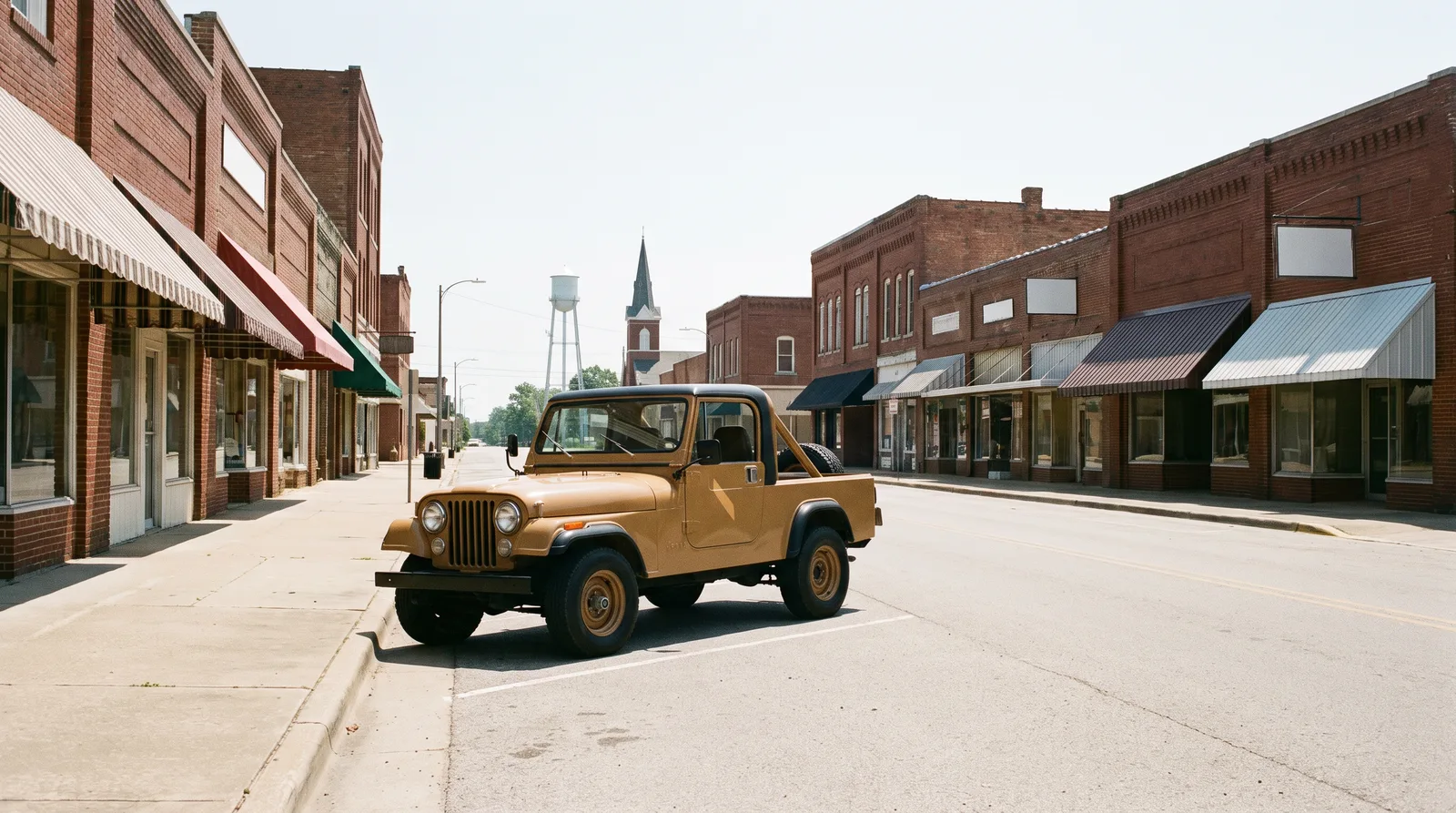
Nobody wanted them when they were new, either
The Scrambler's slow start was not a rumor cooked up after the fact to make its rise sound more dramatic. It genuinely struggled to find buyers when American Motors introduced it. The CJ-7 already covered the compact off-roader niche, and the CJ-8's stretched wheelbase and small pickup bed asked buyers to pay more for a truck that was neither a proper full-size pickup nor a nimble trail rig. Some dealers had trouble moving them off the lot, and by the time production wound down in 1986, the Scrambler had earned a reputation as the CJ family's odd cousin, the one nobody quite knew what to do with.
For our club, that reputation stuck around for decades after production stopped. Guys who ran CJ-5s and CJ-7s at events would look at a Scrambler on a trailer and ask what it even was. It was not rare in the sense of being valuable. It was rare because so few people bothered to keep them.
The turn nobody saw coming
What changed the Scrambler's fortunes was not one moment, it was a slow accumulation of small ones. Overland and off-road culture grew through the 2000s and 2010s into something much bigger than a niche hobby, and buyers looking for a classic platform with real cargo capacity started noticing that the CJ-8 had been solving their exact problem since 1981. A truck bed on a genuine short-wheelbase-adjacent chassis, capable four-cylinder and six-cylinder engines, and the visual pedigree of the CJ family all at once. Suddenly the thing that made the Scrambler hard to sell in 1983, its in-between size, made it exactly what a new generation of buyers wanted.
At the same time, general classic Jeep values across the board started climbing, and buyers who could no longer afford a clean CJ-5 or CJ-7 started looking sideways at the Scrambler as an underpriced alternative with genuinely useful bed space. Club members who had been quietly keeping their Scramblers running through the lean years suddenly found themselves getting offers from strangers at gas stations.
What the club scene remembers
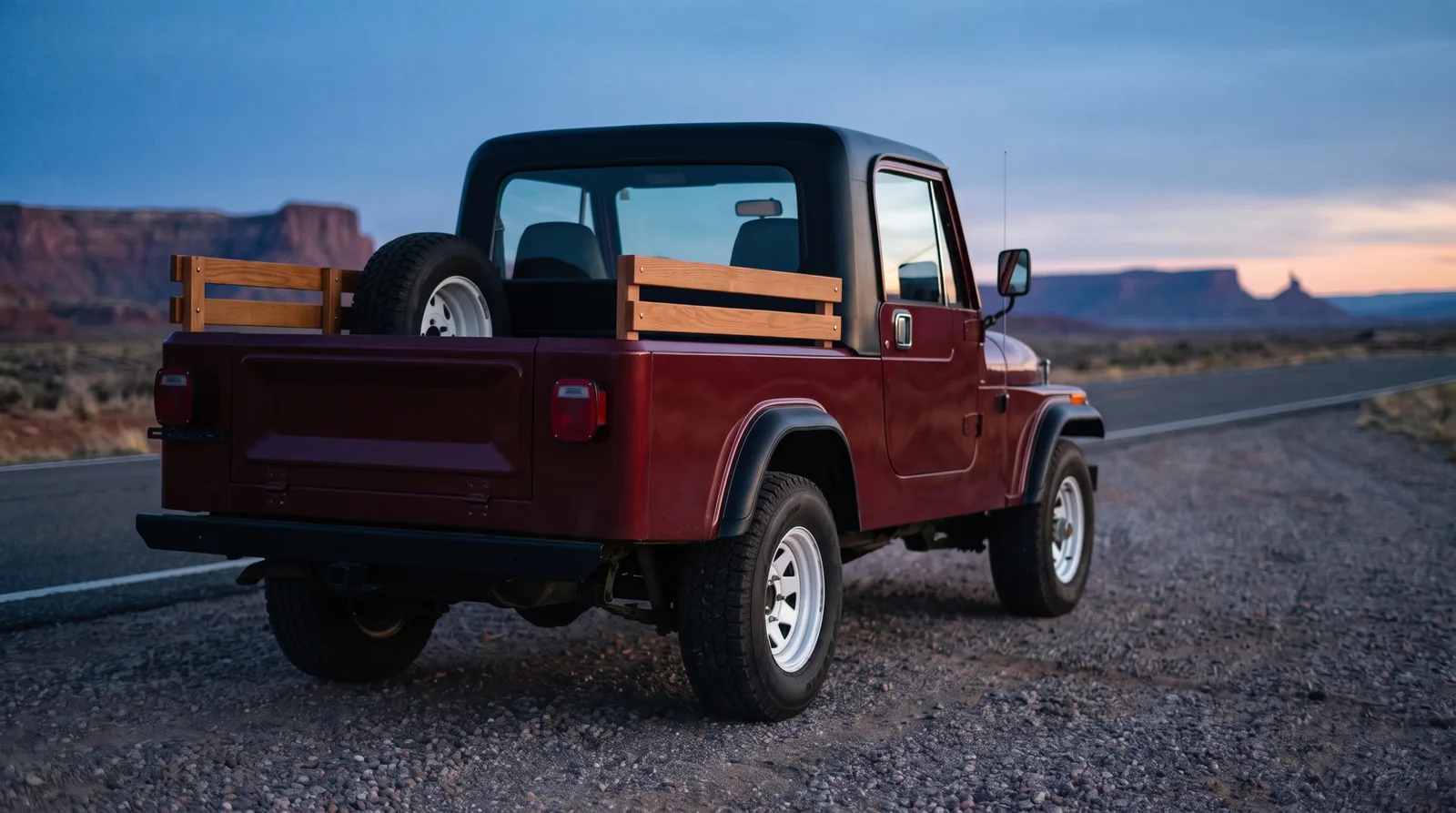
Our chapter has watched this shift up close for longer than most. There was a stretch through the 1990s and early 2000s when a decent running Scrambler might change hands for the price of a used lawnmower, parts truck included. Members who kept theirs original, rather than parting them out for CJ-7 swaps, did it more out of stubbornness than any expectation of future value. A few of those same trucks are now the anchor pieces of their owners' collections, insured for numbers that would have seemed absurd twenty years ago.
That patience gets talked about at every meet now, half joke and half genuine respect. The guys who held onto rough Scramblers through the years when nobody wanted them are the same ones fielding calls today from buyers three states away. For anyone who wants the whole picture on how the model came to be built in the first place, the full story of its design and production run explains a lot about why it eventually found its footing.
"I've told this story at more campfires than I can count. A guy tried to give me one for free once. Now people drive across three states hoping I'll sell mine. That's the CJ-8 story in a nutshell."
- Wayne Coburn
Documentation became the new currency
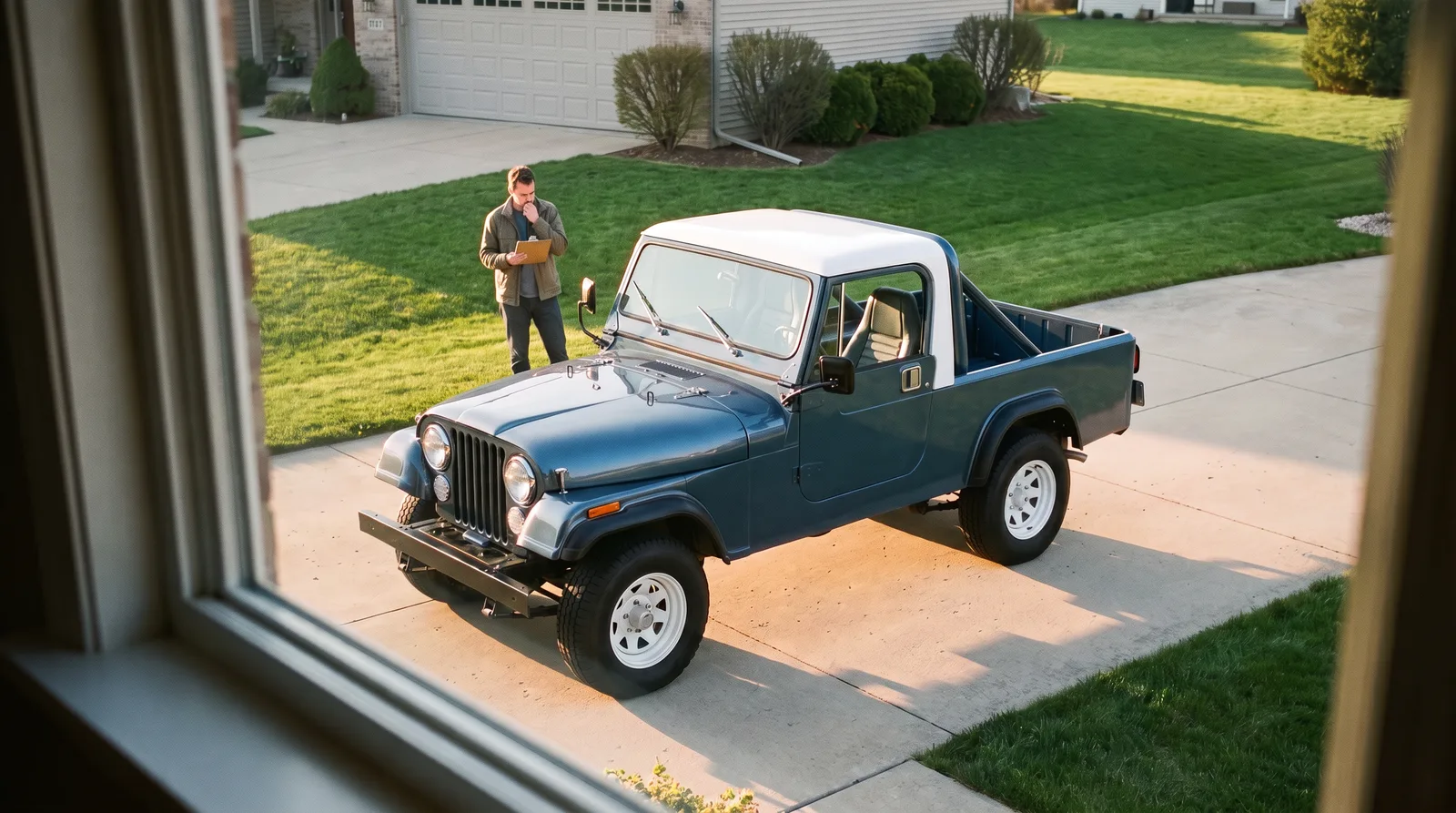
As values climbed, so did the importance of paperwork. Original window stickers, dealer invoices, and even old insurance cards started mattering in a way they never had when these trucks were treated as disposable work vehicles. Club networks became informal clearinghouses for that kind of documentation, members comparing VIN patterns and known dealer records to help each other confirm what a given truck actually was versus what a hopeful seller claimed it to be.
That shift changed the culture around the model too. Where Scramblers were once modified freely, cut up for trail builds or cannibalized for parts, more owners now think twice before altering an original example. The ones who do build them tend to do it with an eye toward keeping the truck's identity recognizable rather than erasing it under a lift kit and oversized tires.
Where things stand now
Today a genuinely clean, documented CJ-8 draws real bidding interest, a complete reversal from the truck's reception when new. Prices vary widely depending on condition, originality, and region, but the trend line has been consistently upward for over a decade. Buyers looking to get into the market, whether chasing an original survivor or a solid driver-quality example, should find a classic CJ and start comparing what is actually out there before setting expectations on price.
What the newcomers get wrong
Every rising market attracts newcomers who missed the slow years, and the Scrambler is no exception. I get calls now from people who found a rough CJ-8 online and assume it is automatically worth top-tier money just because the model has a hot reputation these days. That is not how it works, and our club spends a fair amount of time gently correcting that assumption. A rusted-out project truck with a mismatched engine is still a rusted-out project truck, cult status or not. The premium prices go to documented, well-preserved examples, not to anything wearing a Scrambler badge.
Longtime members tend to be the ones who can spot the difference quickly, having watched enough trucks come and go over the decades to recognize a genuine survivor from a rough resurrection project dressed up in fresh paint for a listing photo.
What keeps the community close
Beyond the money, what strikes me most about this whole shift is how it has not really changed the character of the people who show up to club meets. The Scrambler crowd is still mostly the same mix of stubborn old-timers and curious newcomers it always was, just with a lot more strangers now recognizing what they are looking at in a parking lot. That recognition, more than any dollar figure, is the real measure of how far this cult rise has actually come.
A slow build that finally paid off
There is something satisfying about watching an underdog earn its due, especially one that took this long. The CJ-8 spent most of its life being misunderstood by the very market that eventually came around to loving it. That kind of redemption story does not happen with every orphaned model. The Scrambler earned it the hard way, one stubborn owner at a time.
Sources and notes
Related Reading
Have a
Jeep CJ
for Sale?
Reach thousands of serious classic car collectors across the US.
Sell It Here →
Selling a classic? Here's how: sell my classic car
Are You a Classic Car Dealer?
List your full inventory and connect with targeted classic car buyers.
Join as a Dealer →

About the author
Wayne Coburn
Longtime Corvette owner, judge and club figure who knows the cars, the records and the people behind them.
Related Listings - Jeep CJ

Comments
Be the first to comment on this article.