
1986 closed out more than a model year for the Jeep CJ line. It closed out a naming convention that had run, in one form or another, since 1945. The jeep cj cj8 final year 1986 chapter of that story is a quiet one compared to the CJ-7's send-off, but it carries its own weight, because the CJ-8 Scrambler went out having never really found the audience Jeep hoped it would.
Car Features
7 min read
The Last Scrambler: Closing the CJ-8 in 1986
The CJ-8 Scrambler closed out its run in 1986 without fanfare, quietly ending both its own story and four decades of the CJ nameplate.
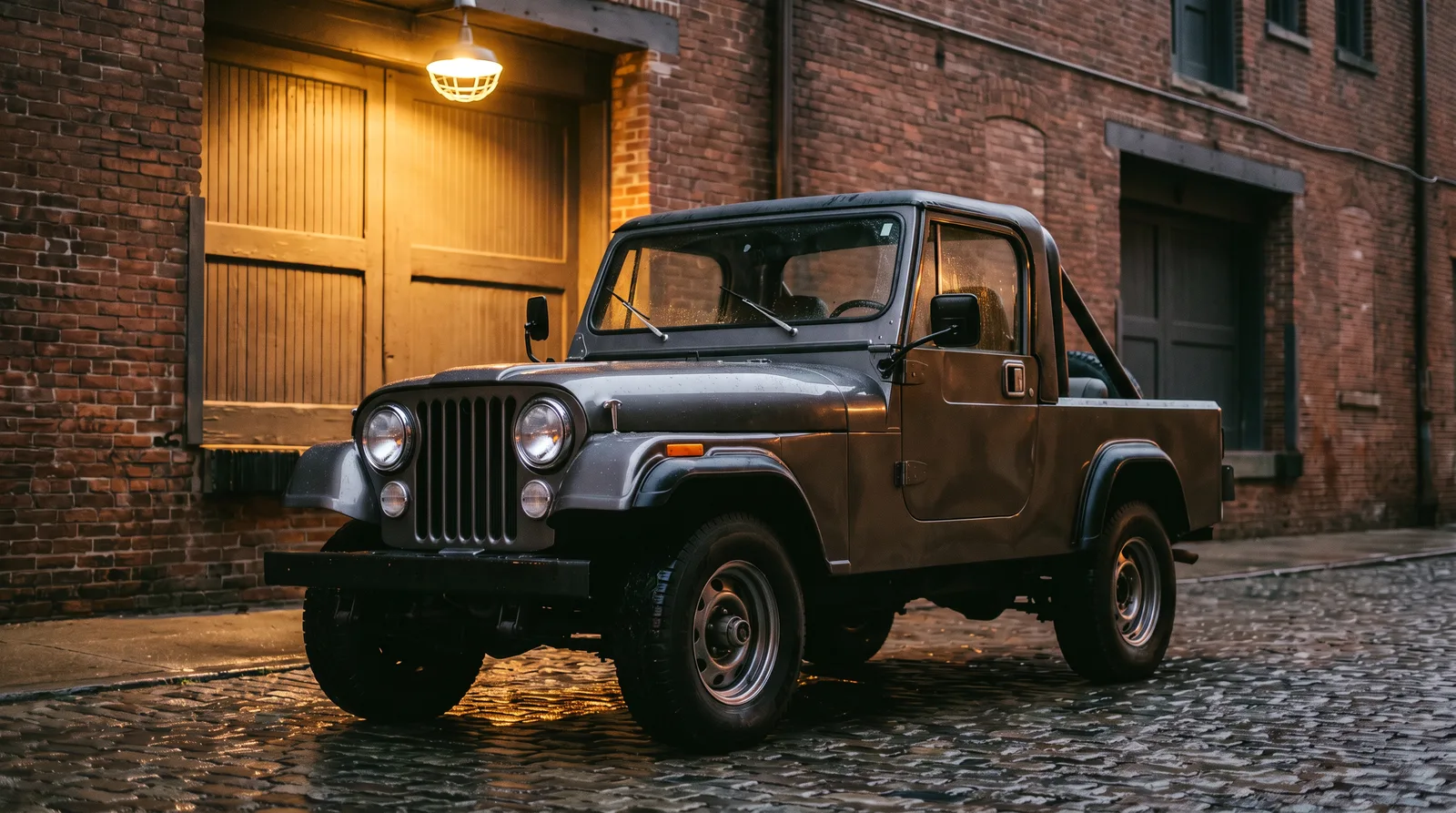
A model that was already fading before it ended
By the mid-1980s, American Motors Corporation had a decision to make about the entire CJ lineup, and the CJ-8 was caught up in it whether it wanted to be or not. Sales of the long-wheelbase Scrambler had never come close to matching the standard CJ-7, and the writing on the wall pointed toward a replacement platform that would eventually arrive as the Wrangler YJ. Production numbers for the CJ-8's final year were modest even by Scrambler standards, and dealers were not exactly clearing lots of them.
Part of the problem was positioning. The CJ-8 sat in an awkward spot between a true compact pickup and a stretched off-roader, and by 1986 the market had plenty of dedicated small trucks competing for the same buyer. AMC had also shifted marketing attention toward the CJ-7 and the newer XJ Cherokee, leaving the Scrambler to sell mostly on word of mouth among people who already wanted exactly what it offered.
What actually changed for 1986
The final model year did not bring sweeping mechanical changes. Buyers in 1986 got a truck that was, in most respects, a continuation of what the CJ-8 had been since its introduction, built around the same basic body, the same available four and six-cylinder engines, and the same removable soft top and half-cab options that had defined the model from the start. Federal emissions and safety requirements had tightened steadily through the early 1980s, and the last CJ-8s reflect those incremental updates rather than any dramatic redesign.
That continuity is actually part of what makes late-production CJ-8s appealing to collectors now. A 1986 example is, mechanically, close kin to earlier Scramblers, but it carries the distinction of being among the last built before AMC pulled the plug on the entire CJ nameplate in favor of the Wrangler. For the full jeep cj8 scrambler history, including how the model started and evolved through its run, the broader story fills in everything that led up to this closing chapter.
Why the CJ nameplate ended when it did
The decision to retire the CJ name was not purely about the Scrambler specifically. It was a company-wide reckoning with liability concerns tied to rollover lawsuits that had dogged the CJ line through the early 1980s, combined with a genuine desire to modernize the platform's suspension and handling characteristics for a buyer base that increasingly used these trucks on pavement as much as off it. The CJ-8, as the least mainstream member of the lineup, was never going to get a reprieve once that decision was made. Its final year was really the final year for the whole CJ family, and the Scrambler simply rode out the ending alongside its more popular CJ-7 sibling.
There is a certain symmetry in that. The CJ-8 had always been something of an outlier within the lineup, built for buyers who wanted cargo capacity the standard CJ-7 could not offer. It went out the same way it had lived, overshadowed by its own family, appreciated mainly by people who understood exactly why it existed.
What the ending meant for values later
Nobody buying a new CJ-8 in 1986 was thinking about collector value. They were thinking about a truck that did a job. But hindsight has been kind to these last-year trucks. Being the final examples of a nameplate that traces back to World War II gives late CJ-8s a natural appeal to buyers who want a defined endpoint to a story, the automotive equivalent of a final pressing. That appeal has only grown as the broader CJ-8 market has matured and buyers have started paying closer attention to production year, not just condition.
Anyone curious how that renewed attention connects to the truck's broader arc from underdog to sought-after collectible should look at a related story covering how the Scrambler's reputation shifted over time.
"Production records from that last year are thinner than people assume. AMC was winding down a nameplate, not documenting it for posterity, and that gap in the paper trail is exactly why serious buyers now chase original build sheets so hard."
- Tom Ramirez
Finding a genuine last-year example today
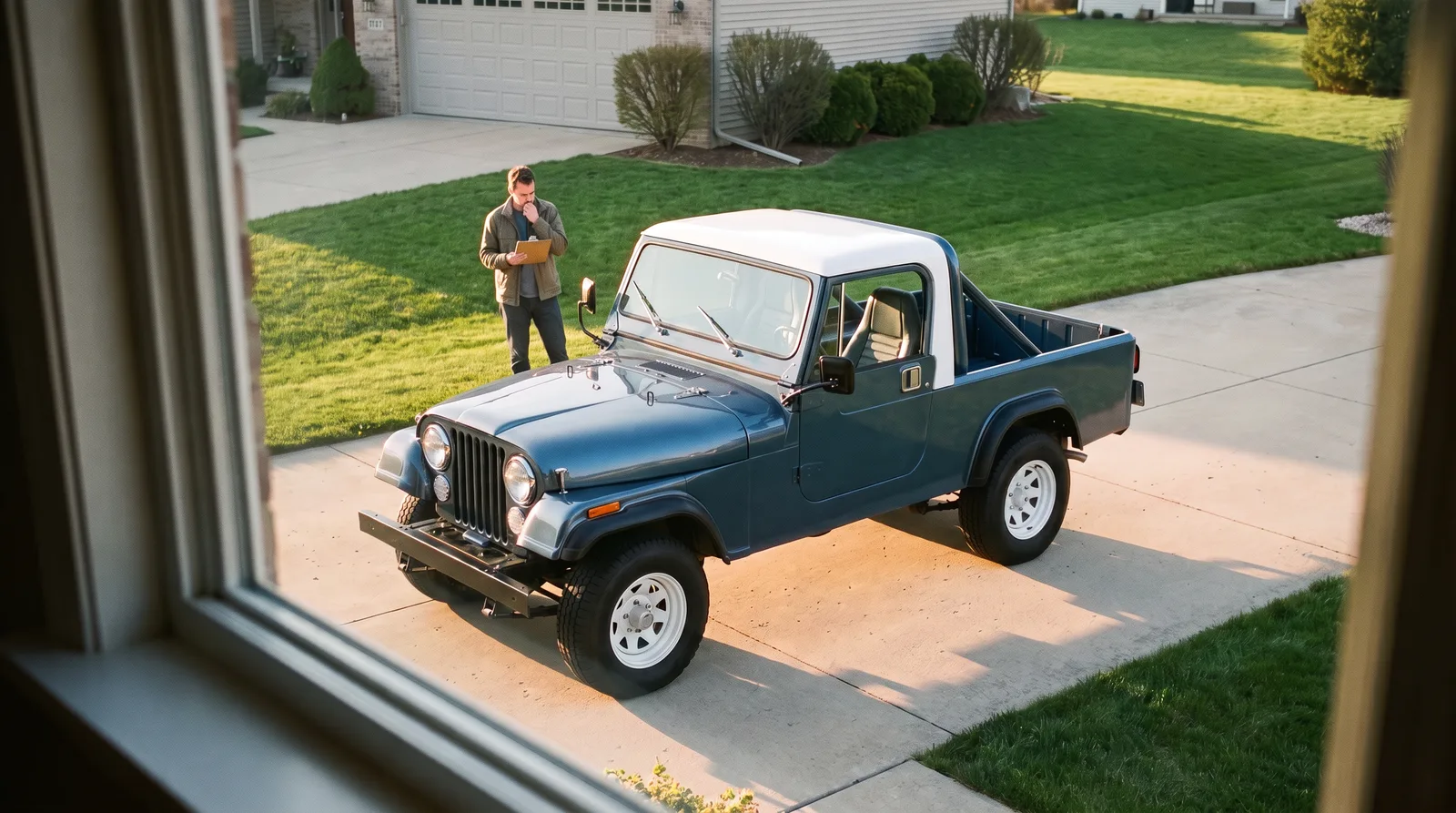
Verifying a true 1986 CJ-8 takes some homework. VIN decoding, dealer invoice paperwork, and any surviving Monroney sticker all help confirm production date against what a seller claims. Because the model year change happened mid-cycle in some cases, and because parts interchange freely across CJ-8 production years, a casual buyer can easily end up with an earlier truck dressed up as a final-year example without realizing it.
For buyers who want to see what is actually available right now, whether an early CJ-8 or one from that last documented model year, it is worth taking time to look through CJs for sale now and comparing paperwork across multiple listings rather than trusting a single seller's word on production year.
What dealers were telling buyers at the time
Sales literature from 1986 gives an odd little window into how AMC framed the CJ line in its final months. There was no farewell messaging, no acknowledgment that the badge was on its way out. Dealers pitched the CJ-8 the same way they had pitched it for years, as a versatile working truck with removable top options and genuine off-road capability. Whether individual salespeople knew the end was coming is hard to say with certainty, but the paperwork does not reflect any sense of occasion.
That lack of fanfare has actually helped authenticate surviving trucks in a strange way. Because AMC made no special final-edition trim or badge, a genuine 1986 CJ-8 looks essentially identical to a 1985 example apart from build date and minor running changes. Buyers hunting for a true last-year truck rely almost entirely on documentation rather than anything visible on the truck itself.
How the ending compares to other AMC decisions
AMC was navigating a difficult period through the mid-1980s more broadly, juggling limited resources across the CJ line, the newer XJ Cherokee, and its passenger car business. Retiring the CJ nameplate in favor of the Wrangler was consistent with a pattern of consolidation the company pursued elsewhere, concentrating engineering and marketing resources on fewer, more modern platforms rather than spreading them across an aging lineup. Viewed that way, the CJ-8's final year was not a unique event so much as one piece of a larger corporate recalibration that touched nearly every AMC product line in some fashion during that period.
The quiet close of a long run
The CJ-8's last year did not come with fanfare, a special edition, or a farewell badge. It came with a truck that looked and drove much like the ones before it, sold in small numbers, to buyers who had no idea they were closing out four decades of CJ history. That lack of ceremony is part of what makes the story worth telling now, decades after the fact, when the significance is finally obvious.
Sources and notes
Related Reading
Have a
Jeep CJ
for Sale?
Reach thousands of serious classic car collectors across the US.
Sell It Here →
Selling a classic? Here's how: compare the places to sell classic cars
Are You a Classic Car Dealer?
List your full inventory and connect with targeted classic car buyers.
Join as a Dealer →

About the author
Tom Ramirez
Corvette researcher and historian based in Bowling Green, Kentucky. Two decades documenting Corvette production history from original factory records.
Related Listings - Jeep CJ

Comments
Be the first to comment on this article.