
The dealer brochure called it versatile, which is the word manufacturers reach for when they are not entirely sure how to categorize what they built. The jeep cj cj8 scrambler launch in 1981 introduced a vehicle that was not quite a truck and not quite a sport utility, stretched longer than the CJ-7 it was based on and fitted with an actual pickup bed, aimed at a buyer who wanted Jeep capability without giving up cargo space. It was an unusual bet for American Motors to make on an already aging platform, and the fact that it worked, at least for a few years, says something about how much demand there was for exactly that combination.
Car Features
7 min read
The 1981 CJ-8 Scrambler: A Jeep With a Bed
AMC stretched the CJ-7 into a pickup in 1981, betting buyers wanted genuine Jeep capability with a real cargo bed attached.
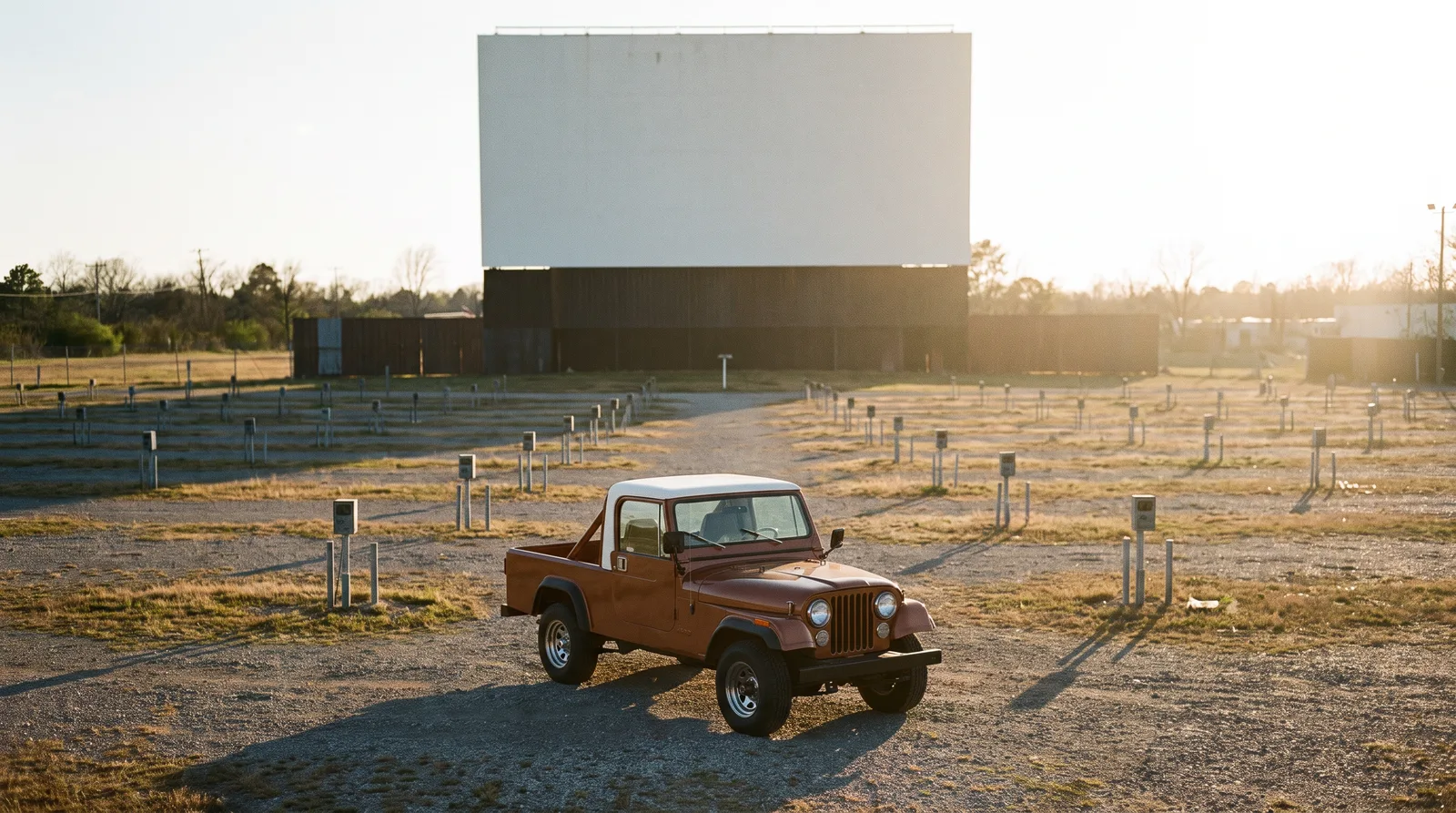
American Motors had acquired Jeep along with the rest of AMC's purchase of Kaiser Jeep back in 1970, and by the start of the 1980s the company was looking for ways to extract more market segments out of the existing CJ platform without the expense of an entirely new vehicle. Stretching the CJ-7's chassis and adding a bed was a relatively economical way to compete against small pickups from Ford, Chevrolet, and the Japanese manufacturers who were making real inroads into that segment, while still offering genuine Jeep four-wheel-drive capability that most of those competitors could not match.
Building a longer Jeep without losing the Jeep
The engineering challenge was straightforward in concept and harder in execution. Take the CJ-7's proven chassis, stretch the wheelbase to accommodate a proper cargo bed, and do it without losing the departure angle and articulation that made a Jeep a Jeep in the first place rather than just another compact pickup wearing a familiar grille. AMC engineers extended the wheelbase to 103.5 inches, a meaningful stretch over the CJ-7's shorter footprint, and the added length went almost entirely to the bed rather than the passenger compartment, which stayed close to standard CJ dimensions up front.
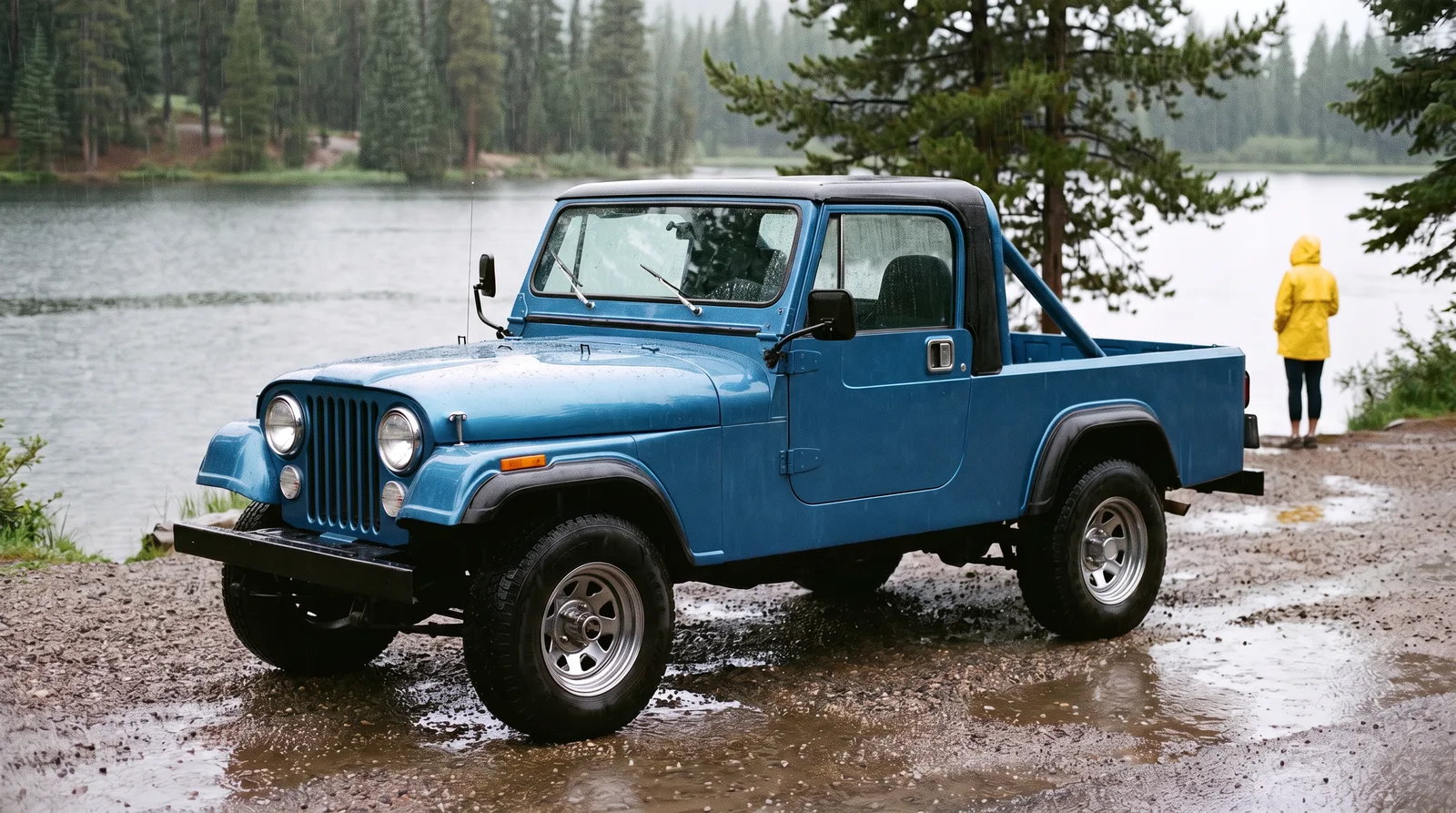
That stretch changed the vehicle's on-road manners in ways buyers noticed immediately, mostly for the better. The longer wheelbase settled the ride at highway speed compared to the notoriously twitchy short CJ models, without sacrificing enough off-road capability to disqualify it from serious trail use. Reviewers at the time generally praised the compromise, noting that AMC had managed to add real utility without turning the Scrambler into something a CJ loyalist would refuse to recognize.
What buyers could actually order
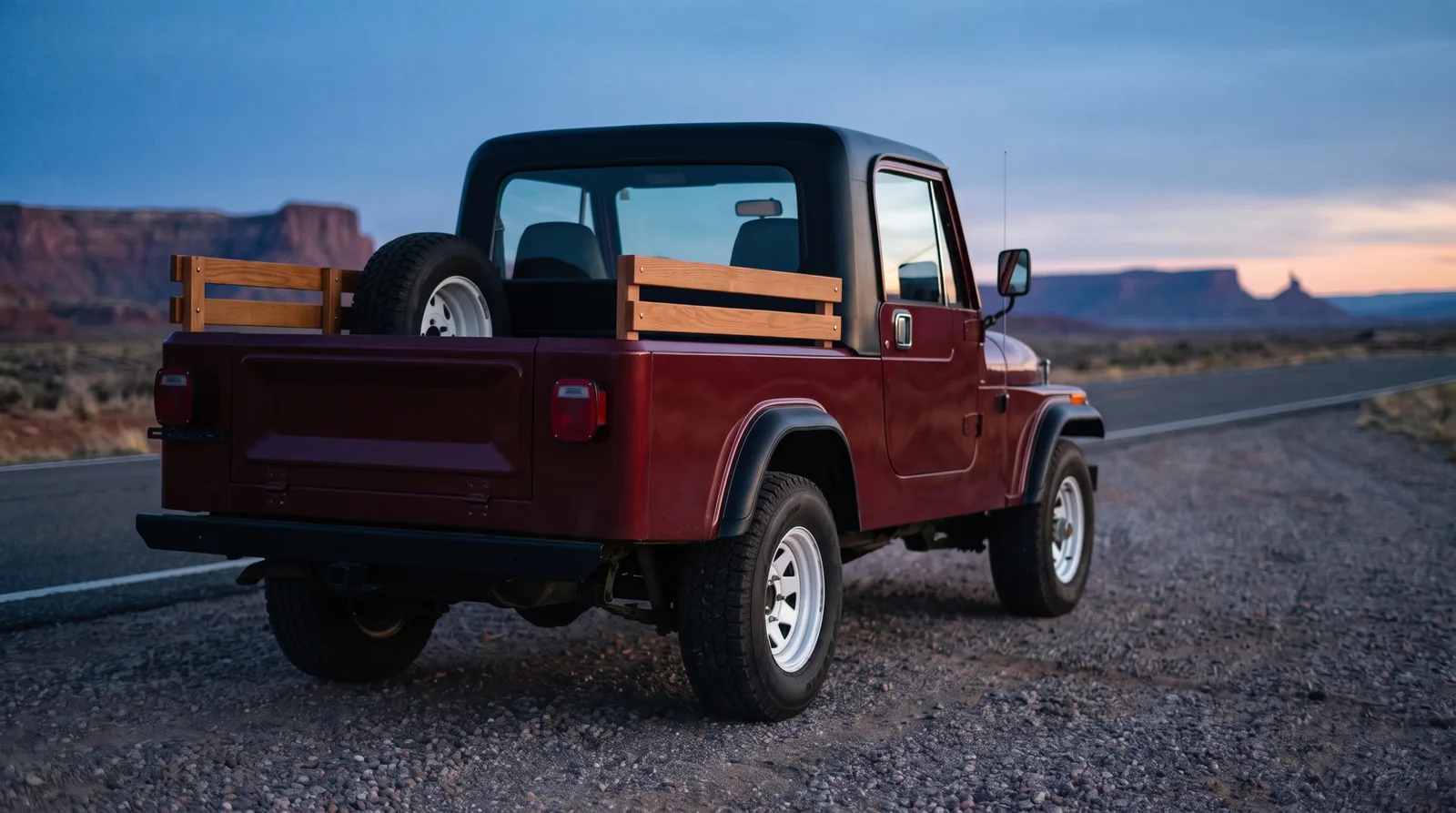
Powertrain options at launch included a base 151-cubic-inch four-cylinder rated around 82 horsepower and an optional 258-cubic-inch AMC inline six rated around 115 horsepower, with a 304-cubic-inch V8 rated around 150 horsepower available as a launch-year option for buyers who wanted more grunt for towing or hauling. The V8 was dropped from the lineup after that first model year, a configuration that had not always been standard fare on the smaller CJ models. Buyers could pair those engines with either a soft top or an optional hardtop, and the bed itself could be ordered with a factory-available cover for owners who wanted enclosed storage without giving up the pickup layout entirely.
| Spec | CJ-7 | CJ-8 Scrambler |
|---|---|---|
| Wheelbase | 93.5 inches | 103.5 inches |
| Body style | SUV, removable top | Pickup bed with optional hardtop |
| Launch year | 1976 | 1981 |
| Primary market pitch | Sport utility capability | Utility plus genuine cargo bed |
The Rancho del Cielo connection that gave it a spotlight
The Scrambler picked up an unusual bit of cultural visibility early in its run when President Reagan used one at his California ranch, Rancho del Cielo, photographed driving it around the property during his time in office. That image did more for the model's public profile than any advertising campaign AMC could have bought, putting a working pickup Jeep in front of a national audience that had mostly associated the CJ name with recreational off-roading rather than a sitting president's daily transportation around his own land. It reinforced the exact positioning AMC wanted, a Jeep that worked as hard as it played.
How dealers actually pitched it
Sales literature from the launch year worked hard to have it both ways, describing the Scrambler as equally suited to a construction site on Monday and a mountain trail on Saturday. That dual pitch was not just marketing spin. AMC genuinely believed there was a buyer who wanted both, someone who needed a work vehicle during the week but did not want to give up genuine off-road credibility on the weekend, and dealers leaned into that message in showroom displays that paired the Scrambler with camping gear in one corner and lumber and tools in another. Whether that buyer existed in large enough numbers to sustain strong sales volume is a separate question, but the pitch itself was coherent and reflected a real gap in the market at the time.
Regional dealers in mountain and rural markets tended to have an easier time moving the Scrambler than dealers in dense urban areas, which makes sense given the vehicle's core appeal. A buyer in Colorado or rural Pennsylvania could genuinely use both the bed and the four-wheel-drive capability on a regular basis. A buyer shopping a dealership in a major coastal city was more likely comparing it against smaller, cheaper imported pickups that never left pavement, and against that comparison the Scrambler's off-road pedigree was less of a selling point than its higher price tag was a drawback.
A market that never fully materialized
Despite the promising launch and the unexpected celebrity endorsement, the Scrambler never became a sales phenomenon on the scale AMC hoped for. It competed in a crowded compact pickup field against manufacturers with deeper marketing budgets and, in several cases, lower base prices, and the CJ platform underneath it was already showing its age against newer unibody and independent-front-suspension competitors entering the market. Sales stayed modest through the model's run, and AMC wound the CJ-8 down through 1986, with only a small run of leftover units built that final year, as the company pivoted its Jeep lineup toward the Wrangler that would replace the entire CJ line in 1987.
"Nobody in 1981 thought the Scrambler would become the collector piece it is now. It was just a practical answer to a question buyers were actually asking: can a Jeep haul something without stopping being a Jeep."
- Patrick Walsh
Why the launch story still matters to collectors
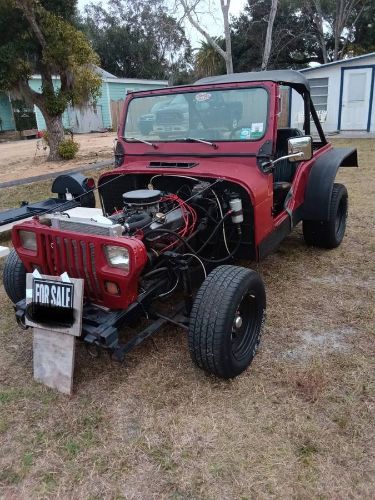
Looking back, the CJ-8 Scrambler launch represents one of the more interesting bets AMC made in its final decade running the Jeep brand independently, a genuine attempt to widen the CJ's appeal without abandoning what made the platform distinct. That short production run and modest original sales volume are exactly why collectors now chase clean examples with real enthusiasm decades later. Anyone who wants the fuller mechanical and historical picture should read our jeep cj8 scrambler history, and readers curious about the engineering risk AMC took stretching the platform should check out a related story on that decision. For buyers ready to chase one of their own, there are CJs for sale now worth a serious look.
Sources and notes
Related Reading
Have a
Jeep CJ
for Sale?
Reach thousands of serious classic car collectors across the US.
Sell It Here →
Selling a classic? Here's how: the best sites to sell a classic car
Are You a Classic Car Dealer?
List your full inventory and connect with targeted classic car buyers.
Join as a Dealer →

About the author
Patrick Walsh
Automotive journalist covering classic car shows, events, and the enthusiast community across North America.
Related Listings - Jeep CJ

Comments
Be the first to comment on this article.